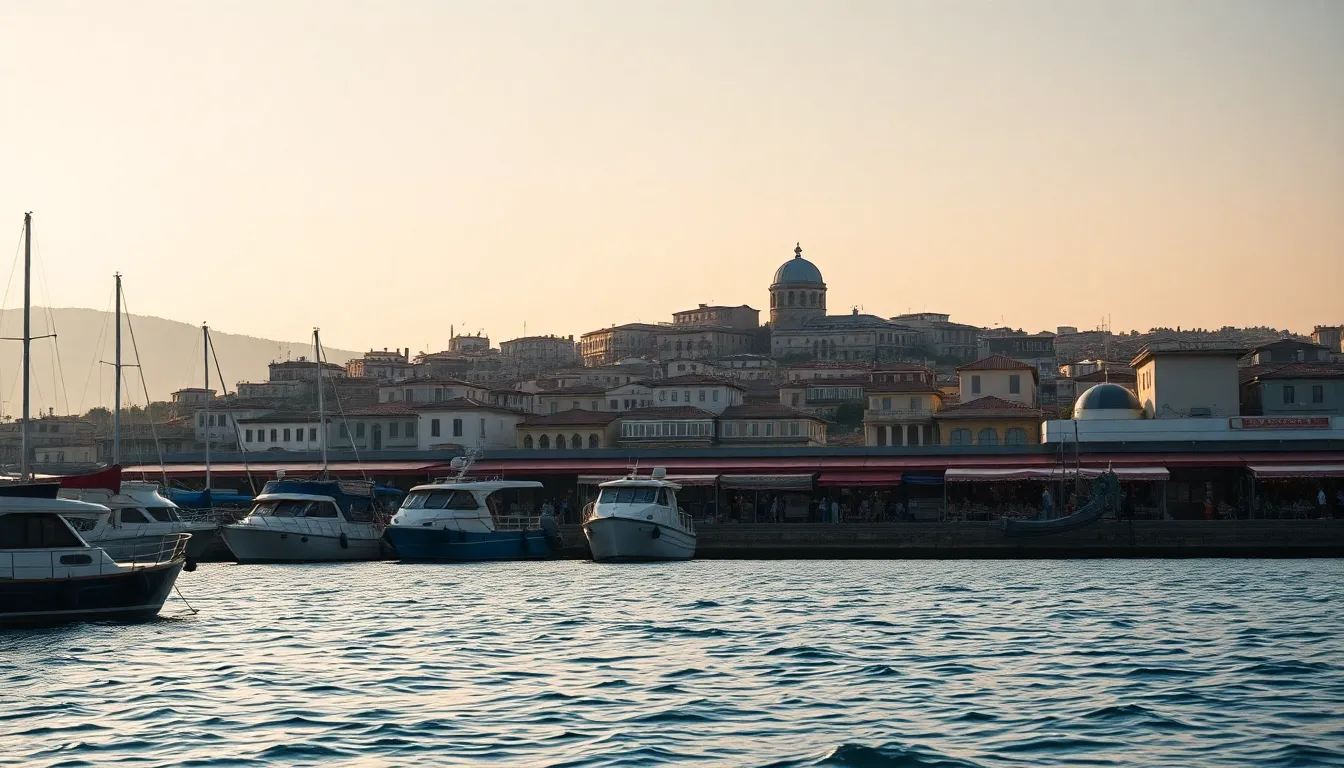
Most groups treat Izmir as the airport you fly into on the way to Ephesus. I understand why, and I also think it is a missed chapter. Izmir is biblical Smyrna, one of the seven churches of Revelation, and it is also one of the great Sephardic Jewish cities of the Mediterranean. The first time I gave a group a full day here instead of a quick transfer, a rabbi in the group stood in the old Jewish quarter and said quietly that he had not known any of this was still standing. That is the reaction I want to set you up for.
This guide is the orientation I give leaders who are deciding whether Izmir deserves real time on their itinerary. It does. Let me show you the layers.
Smyrna: The Church That Was Told to Be Faithful Unto Death
In the Book of Revelation, the risen Christ dictates short letters to seven churches in Asia Minor. The letter to Smyrna is one of only two that carries no rebuke, only encouragement to a suffering community: be faithful unto death, and you will receive the crown of life. For a Christian group, standing in the city that received those words is its own quiet kind of pilgrimage.
The ancient remains here are real and walkable. The Agora of Smyrna, in the center of modern Izmir, preserves the Roman marketplace where the city’s public life happened, with its basilica, its columns, and its underground vaults. Smyrna is also tied to Polycarp, the bishop and martyr who was a disciple of the Apostle John and was killed here in the second century for refusing to renounce his faith. There is a church dedicated to him in the city, and his story gives the Revelation letter a face and a date.
Izmir does not hand its Christian heritage to you the way Ephesus does. It asks you to look a little harder, and the reward is a layer of the early church that most travelers never notice. For the full sweep of early Christianity across the country, our Turkey heritage travel guide sets the wider map.
The Jewish Quarter: A Living Sephardic World in Kemeralti
Here is the part that surprises people. Izmir holds one of the most intact historic Sephardic communities in the eastern Mediterranean. After the expulsion from Spain in 1492, Jewish families settled here under Ottoman protection, and by the seventeenth century Izmir was a major center of Jewish learning, trade, and printing. The community spoke Ladino, the medieval Spanish that the Sephardim carried with them, and the city’s commercial culture was shaped by it for centuries.
What makes Izmir special is the cluster of historic synagogues in the Kemeralti market district, some of them dating back centuries and a number of them recently restored as part of a major heritage project. Several sit close enough together to walk between in an afternoon, which is rare anywhere in the world. A coordinated visit, arranged in advance, lets a group move through this concentrated Sephardic world in a way that simply is not possible in most cities.
For a rabbi or an educator, this is the heart of why Izmir matters. The synagogues are not all ruins. The community is smaller than it was, but its history is legible, and a knowledgeable guide can connect the doorways and the prayer halls to the families who built them. Istanbul holds a parallel Sephardic story in Balat, which I cover in the Istanbul heritage guide.
The Aegean Layer: A Crossroads City With Deep Roots
Izmir has been a port for three thousand years, and that history runs underneath everything. The city was Greek for much of its life, a fact written into its old name and its waterfront culture, and it remained a deeply mixed city of Greeks, Armenians, Jews, and Turks until the upheavals of the early twentieth century. The waterfront promenade, the Kordon, and the old neighborhoods climbing the hillside give a group a feel for a Mediterranean trading city that has reinvented itself many times.
The Kadifekale, the castle on the hill above the city, sits on the site of the ancient acropolis founded in the time of Alexander the Great, and the view from the top lays out the whole bay. I bring groups up here near the end of a day so they can see how the Christian, Jewish, and Greek layers all share the same geography, stacked along one harbor.
How Izmir Fits Into a Turkey Itinerary
Izmir is the natural base for the Aegean portion of a heritage trip. From here, Ephesus and Selcuk are an easy day trip to the south, and Pergamon, another of the seven churches of Revelation, lies to the north. That makes Izmir less of a destination in isolation and more of a hub.
Here is the shape I recommend for groups who want to give the Aegean its due.
- Day 1, Izmir itself. The Agora of Smyrna, the synagogues of Kemeralti, the Kordon waterfront, and Kadifekale for the long view. A full day, not a transfer.
- Day 2, Ephesus and Selcuk. The marble streets, the House of the Virgin Mary, and the Basilica of St. John, covered in detail in the Ephesus and Selcuk heritage guide.
- Day 3, optional Pergamon. For groups tracing all seven churches of Revelation, a day north to Pergamon rounds out the Aegean.
A practical note on access. The synagogue visits in Kemeralti need to be scheduled ahead, and some sites coordinate with the local Jewish community for entry. This is exactly the kind of arrangement that should be handled by your tour operator rather than improvised on the ground.
One thing worth knowing as you plan the budget. With Heritage Tours, the group leader travels free when you bring fifteen or more participants. For a pastor or rabbi assembling a congregation trip, that is worth factoring in from the start.
FAQ: Heritage Travel in Izmir
Is Izmir worth more than a quick stop on the way to Ephesus?
Yes. Izmir is biblical Smyrna, one of the seven churches of Revelation, and it holds one of the most intact historic Sephardic Jewish quarters in the Mediterranean. Giving the city a full day, rather than treating it as an airport transfer, opens up a Christian and Jewish heritage layer that most itineraries skip entirely.
What is the connection between Izmir and the Book of Revelation?
Izmir was ancient Smyrna, which received one of the seven letters in Revelation chapters two and three. The letter to Smyrna is one of only two with no rebuke, calling the church to be faithful unto death. The city is also tied to Polycarp, a disciple of the Apostle John who was martyred here in the second century.
Can a group visit the synagogues in Izmir?
Yes, with advance coordination. Izmir’s Kemeralti district holds a cluster of historic synagogues, several recently restored, that sit close enough to walk between in an afternoon. Visits are arranged ahead of time, often in coordination with the local Jewish community, which a tour operator handles for you.
How does Izmir fit with the rest of a Turkey trip?
Izmir works best as the base for the Aegean leg of a heritage tour. Ephesus and Selcuk are a short day trip south, and Pergamon, another of the seven churches, lies to the north. Many groups combine a few days here with time in Istanbul and Cappadocia for a full picture of the country.
When is the best time to visit Izmir with a group?
Late spring, from April to June, and early fall, from September to October, give you warm but comfortable Aegean weather for walking the Agora and the old quarters. Summer on the coast is hot and busy, and the shoulder seasons are kinder to older travelers and quieter at the sites.
If Izmir is starting to feel like a chapter you do not want your group to miss, I would be glad to help you build it in properly. The Smyrna story and the Sephardic story share one waterfront, and standing in both in a single day is something most travelers never get to do. You can see how we structure these journeys on our Turkey heritage page or learn how the group experience works on our group heritage tours page.
Contact us whenever you are ready to start planning.