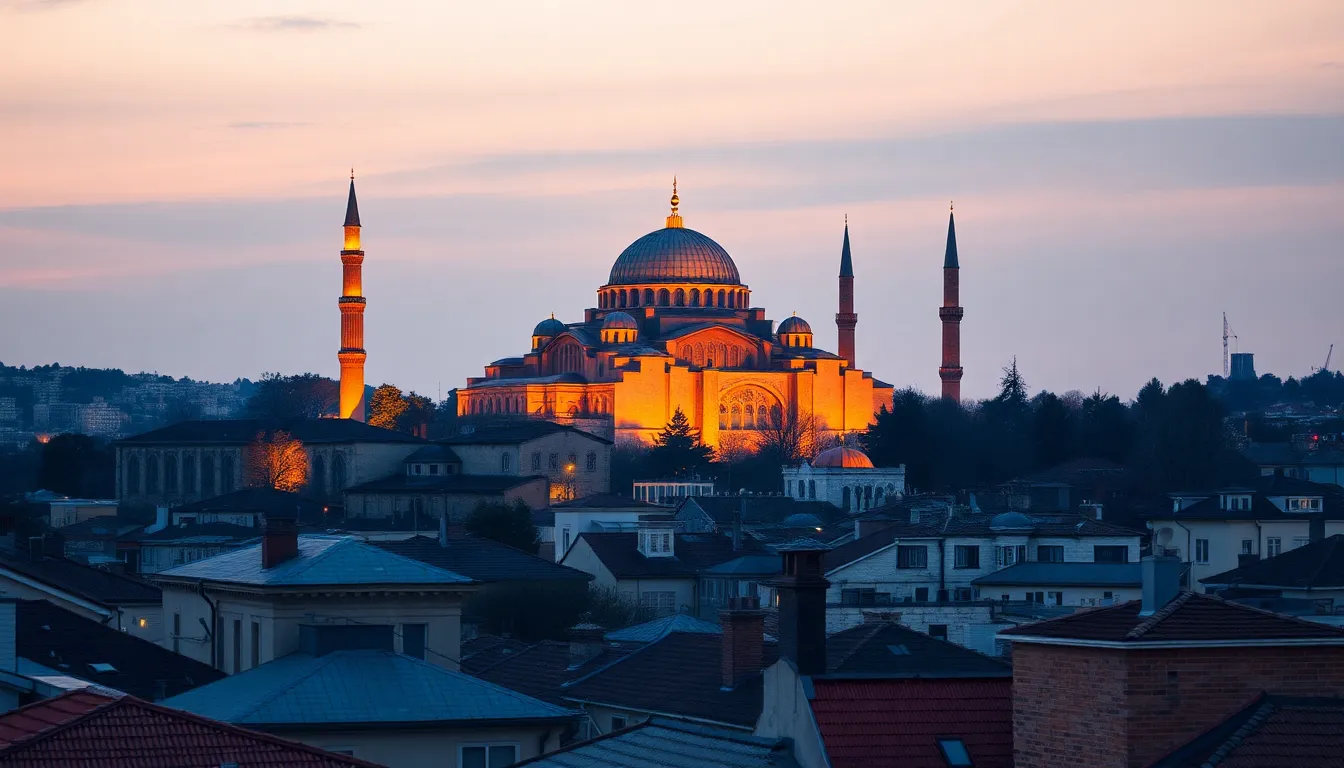
The first time I brought a group into Istanbul, we made a mistake I have never repeated. We tried to see everything in the order the map suggested, and by the second afternoon people were tired and a little numb. The city had given us more than we knew how to hold. Now I do it differently. I think of Istanbul not as a list of monuments but as a single conversation between three faiths that has been going on for sixteen centuries, and I help the group listen to one thread at a time.
That is what this guide is for. If you are a pastor, a rabbi, or an educator weighing Istanbul for your community, I want to give you the real orientation, the way I would lay it out for you over coffee before we ever booked a flight. Not the highlights reel. The shape of the place, so you can decide what your people most need to stand inside.
One City, Three Layers, Sitting On Top of Each Other
Most heritage cities make you drive between the chapters of their story. Istanbul stacks them. A Byzantine cistern sits under an Ottoman bazaar. A synagogue stands on a street named for a sultan. A church becomes a mosque becomes a museum becomes a mosque again, and that one building, the Hagia Sophia, tells you almost everything about how this city works.
For a group leader, that density is a gift and a trap. The gift is that a single day here can carry more spiritual and historical weight than a week somewhere flatter. The trap is that you can exhaust your people trying to honor all of it at once. The skill is sequencing. You take the Byzantine layer one day, the Jewish layer another, and you let each one breathe.
Let me walk you through the three.
The Byzantine Layer: Where the Early Church Became an Empire
For over a thousand years this city was Constantinople, the capital of Eastern Christianity. When your group stands in front of the Hagia Sophia, they are looking at what was, for nearly a millennium, the largest cathedral in the world. It was built under the emperor Justinian and dedicated in 537. The dome still does the thing it was designed to do, which is make you feel small in a way that lifts rather than crushes.
A short walk away is the Chora Church, which I tell leaders not to skip even though it sits off the main route. Its mosaics and frescoes are some of the finest surviving Byzantine art anywhere, and because the space is smaller, your group can actually slow down and read the images. Nearby, the old land walls of Theodosius still trace the edge of the medieval city. And underground, the Basilica Cistern holds its forest of columns in the dark, a quiet place that almost always stops a group cold.
This was also the city of the great councils and controversies of the early church. The conversations that shaped the creeds your congregation may still recite happened in and around this place. When I want a group to feel the weight of that, I do not lecture. I let the Hagia Sophia do the talking and keep my own words short.
For the wider arc of early Christianity across the country, our Turkey heritage travel guide sets the whole map in context.
The Jewish Layer: Five Centuries in Balat and Beyond
In 1492, Spain expelled its Jews. The Ottoman sultan, Bayezid II, sent ships to bring them to safety, and tens of thousands of Sephardic families settled here. For five centuries they held. They spoke Ladino, a medieval Spanish carried across the sea like a keepsake. They built synagogues, ran printing presses, and became central to Ottoman trade and civic life.
You can still read that story in the streets of Balat, the old Jewish quarter on the Golden Horn. The neighborhood has gentrified in parts, but the bones are there, and a knowledgeable guide can point out the doorways, the old school buildings, and the synagogues that anchored a whole community. The Neve Shalom Synagogue, in the nearby Galata area, is the central synagogue of Istanbul’s Jewish community today. Visiting requires advance coordination and security clearance, which is exactly why a group leader should never try to arrange it on the day.
A smaller Jewish community still lives in Istanbul. For a rabbi bringing a congregation, this is not a ruin to mourn. It is a living thread, and standing in Balat with someone who can explain what survived and what was lost is one of the most affecting hours the city offers. Izmir holds a parallel and equally deep Sephardic story, which I cover in the Izmir heritage guide.
The Ottoman and Islamic Layer: The Living Present
You cannot understand the other two layers without this one, because the Ottoman world is what preserved them. The Blue Mosque, with its six minarets and its sea of blue tile, sits directly across a small park from the Hagia Sophia, and the two of them facing each other is its own kind of sermon. Topkapi Palace, the seat of the sultans, holds relics and treasures and a view over the meeting of the Bosphorus and the Golden Horn that I have never gotten tired of.
The Grand Bazaar and the Spice Bazaar are not just shopping. They are the commercial engine that, for centuries, let Jews, Christians, Greeks, Armenians, and Muslims do business in the same lanes. I bring groups through them not to buy trinkets but to feel how a plural city actually functioned day to day.
How I Sequence Istanbul for a Group
Three to four days is the right amount of time for most heritage groups. Here is the shape I use.
- Day 1, the Byzantine and Ottoman heart. Hagia Sophia, the Blue Mosque, the Basilica Cistern, and Topkapi. This is the dense, famous core, and it is enough for one day.
- Day 2, the Jewish layer. Balat on foot, with a coordinated synagogue visit, and time to talk about the Sephardic arc. A slower, more reflective day.
- Day 3, the deeper Byzantine cut and the city’s edges. The Chora Church, the land walls, and a Bosphorus boat that lets your group see the whole geography at once.
- Day 4, optional. A flex day for a particular community’s interest, or a transition to Cappadocia or the Aegean coast.
A practical word on pace. Istanbul rewards stillness. Not every site needs an hour, and a few need five minutes of silence more than they need a guide’s commentary. Tell your people in advance that this is a city you absorb, not one you conquer.
For the journey beyond the city, Cappadocia and the Aegean sites near Ephesus pair naturally with Istanbul on a longer itinerary.
One more thing worth folding into your planning early. With Heritage Tours, the group leader travels free when you bring fifteen or more participants. For a pastor or rabbi building a trip for a congregation, that changes the math, and it is the kind of detail I would rather you know at the start than discover at the end.
FAQ: Heritage Travel in Istanbul
How many days should a group spend in Istanbul?
Three to four days is the sweet spot for a heritage group. That gives you one day for the Byzantine and Ottoman core, one for the Jewish quarter of Balat, and one for deeper sites like the Chora Church and the city walls, with a flex day for your community’s particular focus. Less than three and the city blurs together.
Can a group visit the synagogues in Istanbul?
Yes, but it requires advance coordination. The Neve Shalom Synagogue and other active synagogues need security clearance and scheduling ahead of time, which a tour operator arranges on your behalf. This is not something to organize on the day, and it is one reason groups travel with a planner who knows the local community.
Is Istanbul good for both Christian and Jewish heritage groups?
It is one of the few cities in the world that serves both deeply. The Byzantine and early-church layer runs through the Hagia Sophia, the Chora Church, and the councils that shaped Christian doctrine. The Sephardic Jewish layer runs through Balat and the living synagogues. A mixed or interfaith group can honor both in the same itinerary.
Is the Hagia Sophia open to visitors?
Yes. The Hagia Sophia functions as a working mosque again, and visitors are welcome outside of prayer times. Modest dress is expected, women should bring a head covering, and the main floor has prayer-time restrictions. A guide helps your group time the visit and understand what they are seeing across its Christian and Islamic history.
When is the best time to bring a group to Istanbul?
Late spring, from April to June, and early fall, from September to October, give you comfortable walking weather and thinner crowds than the summer peak. Istanbul winters are gray and damp but quiet, which some reflective groups actually prefer. Summer is hot and busy at the major sites.
If Istanbul is starting to take shape in your mind for your community, I would welcome the chance to talk it through. The city is layered, but it does not have to be overwhelming when someone helps you choose what to stand inside. You can see how we structure these journeys on our Turkey heritage page or learn how the group experience works on our group heritage tours page.
Contact us whenever you are ready to start planning.