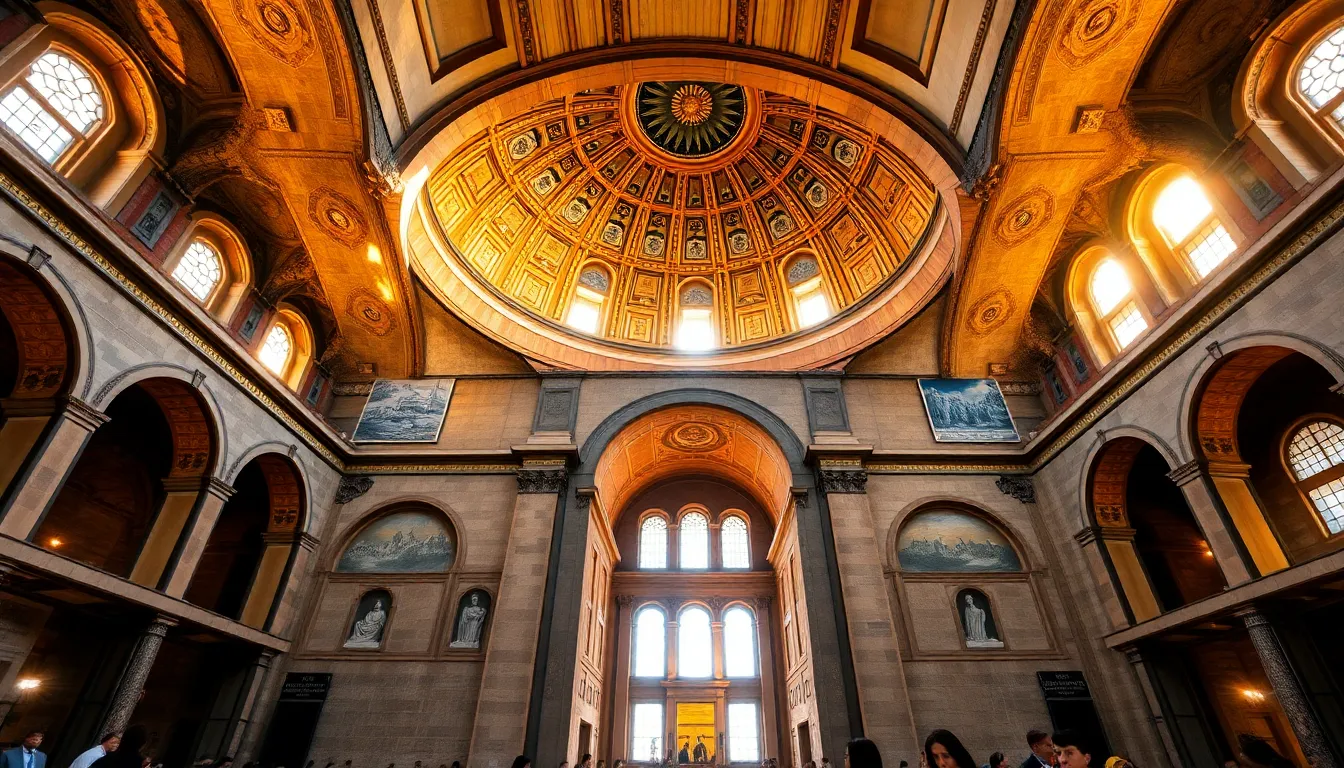
The first time I walked a group into Hagia Sophia, a retired pastor stopped just inside the door and did not say a word for a full minute. He told me later he had read about the building his whole life and never once pictured the scale of it correctly. That is the usual reaction. No photograph prepares anyone for the moment the dome opens up overhead and you understand that people built this in the sixth century.
For a faith group, Hagia Sophia is not a quick photo stop. It is one of the most layered religious buildings on earth, and it rewards a group that comes in knowing what they are looking at. Let me walk you through it the way I walk a group through it.
What Hagia Sophia Actually Is
Hagia Sophia, “Holy Wisdom,” was built as the cathedral of Constantinople by the emperor Justinian and dedicated in 537 AD. It went up in under six years, which for a structure of this size in the ancient world is hard to believe. For nearly a thousand years it was the largest enclosed space in the Christian world and the spiritual center of Eastern Orthodox Christianity.
The genius of the building is the dome. It seems to float, because the architects carried its weight on pendentives, curved triangular supports, that transfer the load down to four piers while leaving a ring of windows around the base. Light pours through that ring and the dome appears to hang from heaven rather than sit on stone. Justinian’s own architects, Anthemius of Tralles and Isidore of Miletus, were working at the edge of what was possible, and the first dome partly collapsed after an earthquake. The one you see was rebuilt slightly higher and has stood since 562.
This was where Byzantine emperors were crowned, where the patriarch led worship, and where the splendor of Eastern Christianity was on full display for envoys from across the world.
The Faith Weight of the Building
There is a story I tell every group. In the tenth century, the ruler of the Kievan Rus sent emissaries to compare the great faiths. When they returned from worship in Hagia Sophia, they reported that they did not know whether they were in heaven or on earth. That account, true or embellished, helped turn the Slavic world toward Orthodox Christianity. A single building shaped the religious map of Eastern Europe.
That is the faith weight here. Hagia Sophia was not just a place where Christians worshipped. It was the argument for Christianity made in stone and gold and light, and for centuries it worked.
In 1453, when the Ottomans took Constantinople, the building was converted into a mosque. Minarets went up outside, the Christian images were plastered over, and large calligraphic medallions naming God, Muhammad, and the first caliphs were hung beneath the dome. In 1934 Ataturk turned it into a museum. In 2020 it was reconverted to a working mosque, which is its status today.
For a Christian group, that history is not something to mourn or argue about on site. It is something to read honestly. The building holds the whole story at once, and standing inside it, you see the layers overlapping on the walls.
The Mosaics That Survived
The reason a heritage group lingers here is the surviving Byzantine mosaics. When the building became a mosque, Islam’s avoidance of figural images in worship space meant the Christian mosaics were covered rather than destroyed. Centuries later, much of that covering came off, and some of the finest Byzantine art in existence came back into view.
Look for the Deesis mosaic in the upper gallery, Christ flanked by Mary and John the Baptist, with faces rendered in a tenderness that still stops people cold. Over the imperial door as you enter, an emperor kneels before an enthroned Christ. In the apse, high above the prayer area, the Virgin and Child look down. Near the exit, the famous panel shows emperors offering the church and the city to Mary and Christ.
I want to be honest about the present situation. As a functioning mosque, some mosaics in the main prayer hall are now curtained or dimmed during prayer, and access to the upper gallery has changed over recent years. We confirm current conditions before every visit so your group knows what they will actually see.
How Groups Visit Hagia Sophia
Here is how I structure it.
We go early or late, never midday, because the crowds in the middle of the day flatten the experience. We brief the group outside first, standing in the square between Hagia Sophia and the Blue Mosque, so the history is settled before anyone walks in distracted by the dome.
Inside, I keep the group together near the center, look up, and say very little. The building does the teaching. Then we move slowly toward the mosaics, reading each one as we reach it. A short reflection works here, but it has to be quiet and brief, because this is an active place of prayer and the acoustics carry.
Hagia Sophia pairs naturally with the rest of Istanbul’s heritage core. For the wider city, see our Istanbul heritage guide. To place it in the bigger Christian story of the region, our overview of Turkey’s spiritual sites sets the context, and the nearby Chora Church holds Byzantine mosaics even finer than these.
A Practical Word on Access
Hagia Sophia is a working mosque, so the rules matter. Modest dress is required. Women cover their heads, and everyone covers shoulders and knees. Shoes come off before entering the carpeted prayer area, so easy footwear helps. Entry now involves a ticket for non-worshipping visitors and a separate arrangement during the five daily prayer times, when access is limited.
The floors are uneven old marble and there are some stairs to the gallery levels. For a mixed-age group this is manageable with a steady pace, and most of what matters can be seen from the ground floor. We handle the timing, the tickets, and the dress guidance ahead of time so your people arrive ready and spend their energy on the building rather than the logistics.
FAQ: Visiting Hagia Sophia
Is Hagia Sophia a church or a mosque now?
It is currently a working mosque, reconverted in 2020. It was built as a Christian cathedral in 537, became a mosque after the Ottoman conquest in 1453, served as a museum from 1934, and is a mosque again today. Non-Muslim visitors are welcome outside of prayer times.
Can Christian groups still see the Byzantine mosaics?
Yes, though access has shifted since the 2020 reconversion. The major mosaics, including the Deesis and the apse Virgin and Child, generally remain visible, while some in the prayer hall may be curtained during prayer. We confirm current conditions before each visit so groups know what to expect.
What should we wear to visit Hagia Sophia?
Modest dress is required because it is an active mosque. Women cover their heads, and everyone covers shoulders and knees. Slip-on shoes help, since you remove footwear before the carpeted prayer area. Carrying a light scarf solves the head covering simply.
How much time should a group plan for Hagia Sophia?
Plan for about an hour to ninety minutes. That allows an outside briefing, time under the dome, a slow look at the mosaics, and a short reflection without rushing. Going early or late in the day makes a real difference to the experience.
Why is Hagia Sophia so important to Christian heritage?
For nearly a thousand years it was the largest church in the world and the center of Eastern Orthodox Christianity. Its architecture, especially the floating dome, shaped sacred building for centuries, and accounts of worship here helped draw the Slavic world toward Orthodox faith. Few buildings carry more weight in Christian history.
Hagia Sophia is the kind of place a group talks about for years. If you are planning a Turkey heritage journey for your congregation, I would be glad to help you build Istanbul into it the right way. You can see how we shape these trips on our Turkey heritage page or explore our group heritage tours.
Contact us whenever you are ready to start the conversation.