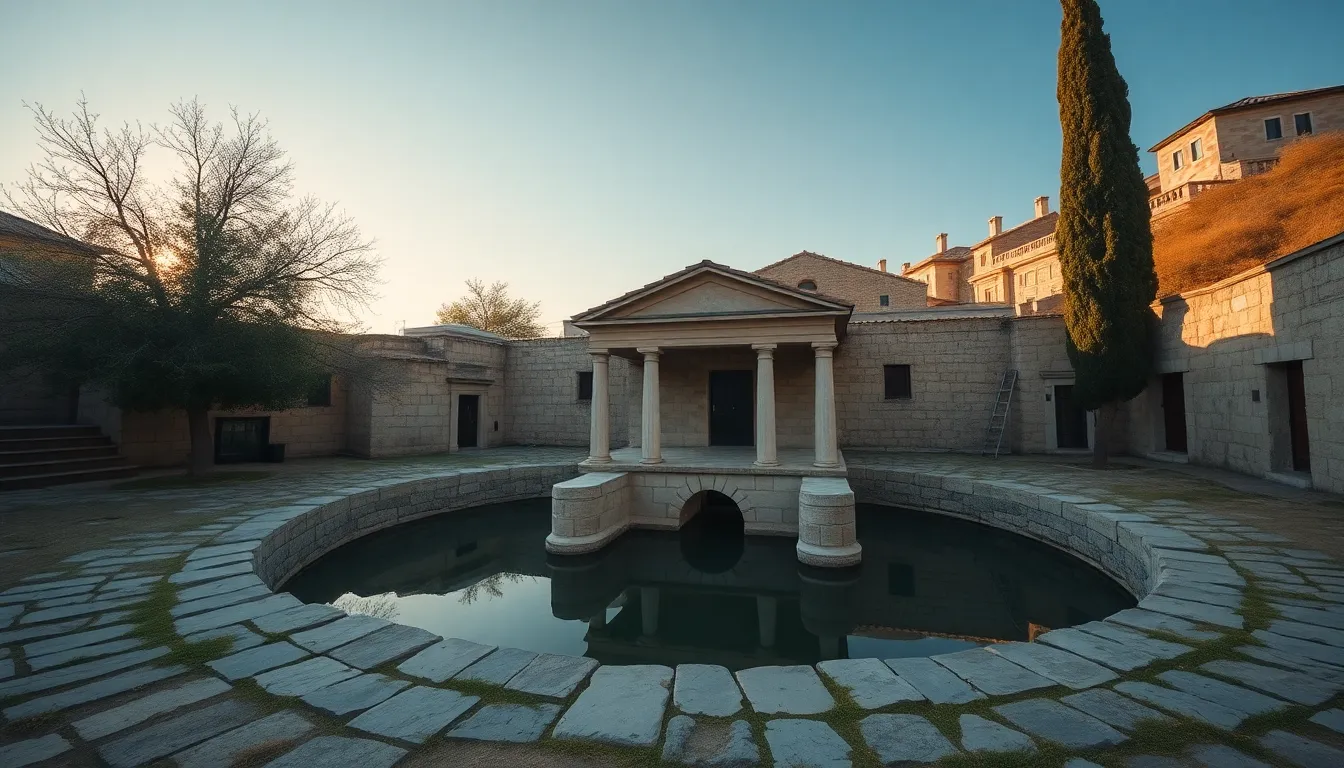
When I want a group to understand Paul as a person, not just an apostle, I take them to Cilicia. This is where he grew up. Tarsus, the city he was born in, the place he called “no mean city” when he stood before a Roman commander. The plain he walked as a boy. The mountain pass he must have crossed when he traveled north. Before the missionary journeys, before the letters, before the road to Damascus, there was a young man from a Jewish family in a Roman city on this coast, learning a trade and a faith. Standing in Cilicia gives a group the before of Paul’s story, and that changes how they read everything that came after.
Cilicia is not the most visited corner of Turkey, and its heritage is more scattered than the Aegean’s. But for a group that wants to know where Paul came from, it is essential ground. Here is how I would help you think about it.
Why Cilicia Matters: The Province That Formed Paul
Cilicia is the old name for the southeastern coastal region of Turkey, the fertile plain and the rugged coast running east from around Antalya toward Syria, backed by the Taurus Mountains. In Paul’s day it was a Roman province, and its chief city was Tarsus. Paul was born here, a Jew of the tribe of Benjamin, raised in a family that held Roman citizenship, which would matter enormously later in his life.
This is the province that shaped him before his ministry began. After his conversion, Acts tells us Paul returned to Tarsus and spent years here, in his home region, before Barnabas came to bring him to Antioch. So Cilicia holds not one chapter but two: the formation of the young man, and the quiet years between his conversion and his public work. For a group, that double significance is the reason to come.
For the wider frame of how Turkey’s regions connect, our Turkey heritage travel guide sets it out.
Tarsus: The Apostle’s Hometown
Tarsus today is a working Turkish city, and like Smyrna, it never stopped being lived in, so the ancient layer is partial. But the sites that survive are meaningful. The best known is St. Paul’s Well, a deep ancient well in a courtyard traditionally held to mark the location of Paul’s family home. Groups gather here and read from Acts, and the simple, domestic scale of the place, a well in a yard, brings Paul down to human size in a way the grand ruins elsewhere do not.
Nearby stands an excavated stretch of the ancient Roman road, the very kind of paved street Paul would have walked as a young man. There is the Cleopatra Gate, a Roman-era city gate, and the St. Paul Church, a nineteenth-century building that serves as a focal point for Christian visitors. Tarsus is not about scale. It is about presence, the sense of standing in the apostle’s own town.
It helps to set the scene for a group before they arrive, because the modern city can be a surprise. Tarsus in Paul’s day was a center of learning, a city with a reputation for philosophy and rhetoric that rivaled Athens and Alexandria. The young Paul did not grow up in a backwater. He grew up in a sophisticated, cosmopolitan place where Greek thought, Roman law, and Jewish faith all met. That education shows in his letters, in the way he could quote a poet to the philosophers at Athens or reason through a legal argument before a governor. Standing in Tarsus, a group begins to understand that the man who wrote Romans was shaped by a particular city, and this is the city.
The Cilician Gates and the Mountain Pass
North of Tarsus, the Taurus Mountains rise sharply, and the ancient road threaded through them by way of a narrow gorge known as the Cilician Gates. For thousands of years this pass was the main route between the Mediterranean coast and the Anatolian plateau beyond. Armies crossed it. Traders crossed it. And Paul, traveling between his home province and the regions to the north, would have crossed it too.
Standing at the Cilician Gates, looking up at the cliffs that funnel the road into a single narrow passage, gives a group a physical sense of how the ancient world moved, and how Paul moved through it. The journeys in Acts can read like a list of city names. The Cilician Gates turn them back into something a body did, on foot or by cart, over hard ground. I always pause here, because the pass tells the story the text cannot.
The Wider Cilician Coast and Its Layers
Beyond Tarsus, the Cilician coast holds more for a group willing to range a little. The region is dotted with Roman and Byzantine ruins, hilltop castles, and early Christian sites tied to the spread of the faith eastward toward Antioch in Syria, the city where the followers of Jesus were first called Christians. Antioch, modern Antakya, lies just beyond Cilicia’s eastern edge and pairs naturally with a Cilician itinerary.
The coast also carries the deep layering that defines Turkey: Roman cities, Byzantine churches, and the long Jewish presence tied to the trade routes of the eastern Mediterranean. For a group already moving through the Aegean or the southern coast, Cilicia connects the western journeys to the eastern roots of the church. Our Antalya and Pamphylia guide covers the neighboring coast to the west where the first journey landed, and the two regions pair well for a group following Paul’s early life. The eastern Turkey heritage region opens the deeper patriarch country further inland.
How to Fit Cilicia Into a Group Itinerary
Cilicia works best as a focused segment, often combined with Antioch and the southern coast. Here is the shape I recommend:
- Day 1: Arrive on the Cilician coast, visit Tarsus, St. Paul’s Well, and the Roman road.
- Day 2: The Cilician Gates and the mountain pass, with a coastal site or castle.
- Day 3: Continue east to Antioch (Antakya) and the Cave Church of St. Peter.
Two to three days covers the core of Cilicia. Most groups pair it with the southern coast to the west or with the deep east, depending on the story they want to tell. The internal flight to the region from Istanbul is straightforward. Our destinations Turkey page shows how we connect Cilicia to the rest of the country.
One thing worth knowing as you plan: with Heritage Tours, the group leader travels free when you bring fifteen or more participants. For a pastor building a trip around Paul’s life for a congregation, that is real budget room, and it is worth factoring in early.
FAQ: Cilicia Heritage Travel
Why is Cilicia important to Paul’s story?
Cilicia was Paul’s home province, and Tarsus, its chief city, was his birthplace. He was raised here in a Jewish family that held Roman citizenship, and after his conversion he returned to the region for several years before beginning his public ministry. Cilicia holds the formation of the young man and the quiet years before the missionary journeys.
What can you see in Tarsus today?
Tarsus is a working modern city with a partial ancient layer. The key sites are St. Paul’s Well, traditionally marking his family home, an excavated stretch of Roman road, the Cleopatra Gate, and the St. Paul Church. The town is about presence rather than scale, the experience of standing in the apostle’s own city.
What are the Cilician Gates?
The Cilician Gates are a narrow mountain pass through the Taurus range, north of Tarsus, that served for millennia as the main route between the Mediterranean coast and the Anatolian plateau. Paul would have crossed it traveling between his home province and the regions to the north. It gives a group a physical sense of how the ancient world, and the apostle, moved.
Should Cilicia be combined with other regions?
Yes. Cilicia is more scattered than the Aegean, so most groups pair it with the southern Pamphylian coast to the west or with Antioch (Antakya) just to the east, where the followers of Jesus were first called Christians. The combination tells the fuller story of Paul’s early life and the eastern roots of the church.
Do group leaders travel free on Heritage Tours Turkey trips?
Yes. With fifteen or more participants, the group leader travels free on all Heritage Tours group itineraries in Turkey, including programs that combine Cilicia with the southern coast, Antioch, or the deeper east.
If you want your community to know where Paul came from, I would welcome the chance to help you build it. Cilicia is quiet ground, but it gives a group the before of the whole story. See how we structure these trips on our group heritage tours page, and contact us whenever you are ready to plan.