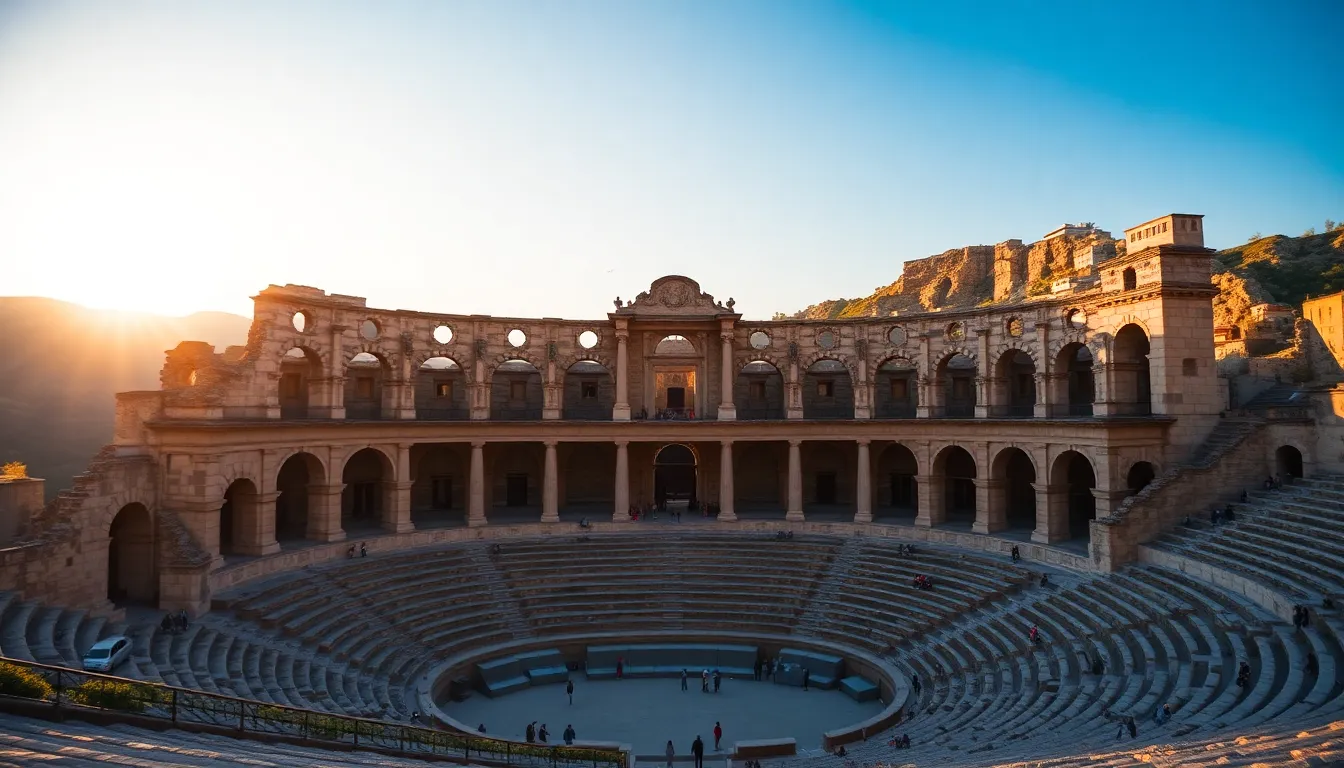
Most people know Antalya as a beach city, and it is. But I bring groups here for a different reason, one that Acts spells out plainly. When Paul and Barnabas sailed on the first missionary journey, they landed on this coast. They came ashore at Perga in Pamphylia, and later they sailed out from Attalia, the port that is now modern Antalya. This stretch of the southern coast is where the first journey touched land, and standing in the harbor at Antalya or walking the long colonnaded street of Perga puts your group at the literal starting points of the church’s first organized mission. That is what the Pamphylian coast offers underneath the resorts.
If you are weighing whether Antalya belongs in your community’s journey, here is the real picture, the biblical ground and the practical shape of a visit.
Pamphylia in Acts: Where the First Journey Landed
Pamphylia is the old name for the coastal plain around modern Antalya, a fertile crescent backed by the Taurus Mountains. Acts 13 and 14 put Paul here twice. On the outward leg of the first journey, he and Barnabas sailed from Cyprus and landed at Perga. It was here that John Mark left them and turned back to Jerusalem, a parting that would later cause a sharp disagreement between Paul and Barnabas. On the return leg, they preached in Perga and then went down to Attalia, the port, and sailed back to Antioch in Syria.
So this coast holds both an arrival and a departure, and a moment of human conflict in between. For a group, that texture matters. The first journey was not a smooth triumph. It had hard partings and hard decisions, and the geography here carries them. Reading those chapters on the spot makes the people in the story feel real.
For the wider frame of how Turkey’s regions connect, our Turkey heritage travel guide lays it out.
Perga: The Colonnaded City
Perga is the anchor site of the region, and it is far better preserved than most visitors expect. The ruins are extensive and walkable: a great Roman gate flanked by round towers, a long colonnaded main street with the channel that once carried water down its center, the agora, the baths, and a stadium that held thousands. Above the city sits the acropolis hill.
What I love about Perga for a group is the scale and the clarity. You can walk the main street the way the city was meant to be walked, and picture Paul and Barnabas arriving in a working Roman town, not a ruin. The theater and stadium nearby give a sense of how large and confident the place was. Perga deserves a relaxed half day at least. Do not rush it.
There is also a quieter detail at Perga that I like to point out. The city was a center for the worship of Artemis, much like Ephesus, and its great temple drew pilgrims from across the region. When Paul and Barnabas walked these streets, they were walking through a place whose entire economy and identity were tied to that cult. It frames what they were up against. The gospel did not arrive into a vacuum here. It arrived into a confident, prosperous, deeply religious Roman city that already knew exactly what it believed. Standing in the agora and reading Acts 13 with that in mind gives a group a fuller sense of the courage the first journey took.
Attalia, the Port That Became Antalya
Modern Antalya grew from the ancient port of Attalia, founded by a king of Pergamon and named for him. Paul sailed out from here at the end of the first journey. The old harbor still sits at the foot of the city, ringed now by the atmospheric old town of Kaleici, with its Roman-era Hadrian’s Gate, Ottoman houses, and the fluted Yivli Minaret rising above the streets.
Standing at the harbor, looking out at the same Mediterranean Paul crossed, is a quiet, grounding moment for a group. I often hold a short reading here at the end of a day, because the departure from Attalia is the close of the first journey. Paul came ashore at Perga full of purpose and parted ways with John Mark in disappointment, and he sailed home from this very harbor having planted the first churches of the mission. The arc of that journey, the high hope and the hard human friction, fits inside this one stretch of coast. A group that reads it here carries it differently.
The Antalya Archaeological Museum, one of the finest in Turkey, gathers the sculpture and artifacts from Perga and the surrounding sites under one roof, and it makes a strong companion to a day in the ruins. For older travelers, the museum is also a gentle, fully accessible way to take in the region’s depth without a long walk.
Aspendos, Side, and the Wider Coast
Beyond Perga, the Pamphylian plain holds more. Aspendos has the best-preserved Roman theater in the Mediterranean world, so complete that it still hosts performances. Sitting in those tiers, your group sees Roman engineering as the people of Paul’s century saw it. Nearby, the seaside ruins of Side combine ancient temples with a working beach town, the columns of the Temple of Apollo standing right at the water’s edge at sunset.
These sites are not all biblical, but they fill in the world Paul moved through, the prosperous, temple-crowded Roman cities of the southern coast. For a group, that context deepens the biblical ground rather than distracting from it. Our Cilicia heritage guide covers the neighboring province to the east where Paul grew up, and the two coasts pair naturally for a group following the apostle’s early life and first journey.
How to Fit Antalya Into a Group Itinerary
Antalya works well as a southern anchor, especially for groups tracing the first missionary journey. Here is the shape I recommend:
- Day 1: Arrive in Antalya, settle, walk the old harbor and Kaleici in the evening.
- Day 2: Perga in the morning, the Archaeological Museum in the afternoon.
- Day 3: Aspendos and Side, with time at the seaside temple.
Three days covers the region comfortably. Many groups combine Antalya with the Aegean coast to the west or with a Cyprus extension, since Paul sailed between them. The internal flight to Antalya from Istanbul or Izmir is short. Our destinations Turkey page shows how we connect the southern coast to the rest of the country.
One thing worth knowing as you plan: with Heritage Tours, the group leader travels free when you bring fifteen or more participants. For a pastor building a first-journey trip for a congregation, that is real budget room, and it is worth factoring in early.
FAQ: Antalya and Pamphylia Heritage Travel
Where did Paul land in Pamphylia?
Paul and Barnabas landed at Perga on the outward leg of the first missionary journey, recorded in Acts 13. It was at Perga that John Mark left them and returned to Jerusalem. On the way back, they preached in Perga and sailed out from Attalia, the port that is now modern Antalya, returning to Antioch in Syria.
Is Antalya worth visiting for a Christian heritage group?
Yes, especially for groups tracing the first missionary journey. Perga is one of the best-preserved Roman cities in Turkey and was a real stop on Paul’s route. The harbor at Antalya is where the first journey sailed home. The region pairs the biblical ground with extraordinary Roman sites like Aspendos and Side.
What is the most impressive site near Antalya?
Perga is the key biblical site, with its colonnaded street, gates, and stadium. For Roman engineering, Aspendos has the best-preserved ancient theater in the Mediterranean, still in use today. Side offers temple ruins right at the water’s edge. The Antalya Archaeological Museum ties the whole region together and is fully accessible.
How accessible is the Antalya region for older travelers?
Reasonably accessible with good planning. Perga involves walking on uneven ancient paving, but the distances are manageable and the ground is mostly level. The Antalya Archaeological Museum and the old harbor are gentle, and we structure the pace and the walking around the group you bring so no one misses the meaningful moments.
Do group leaders travel free on Heritage Tours Turkey trips?
Yes. With fifteen or more participants, the group leader travels free on all Heritage Tours group itineraries in Turkey, including programs that combine Antalya and Pamphylia with the Aegean coast or a Cyprus extension.
If the Pamphylian coast belongs in your community’s journey, I would welcome the chance to help you shape it. The biblical ground is real, the Roman sites are extraordinary, and the harbor where the first journey came home still looks out on the same sea. See how we structure these trips on our group heritage tours page, and contact us whenever you are ready to plan.