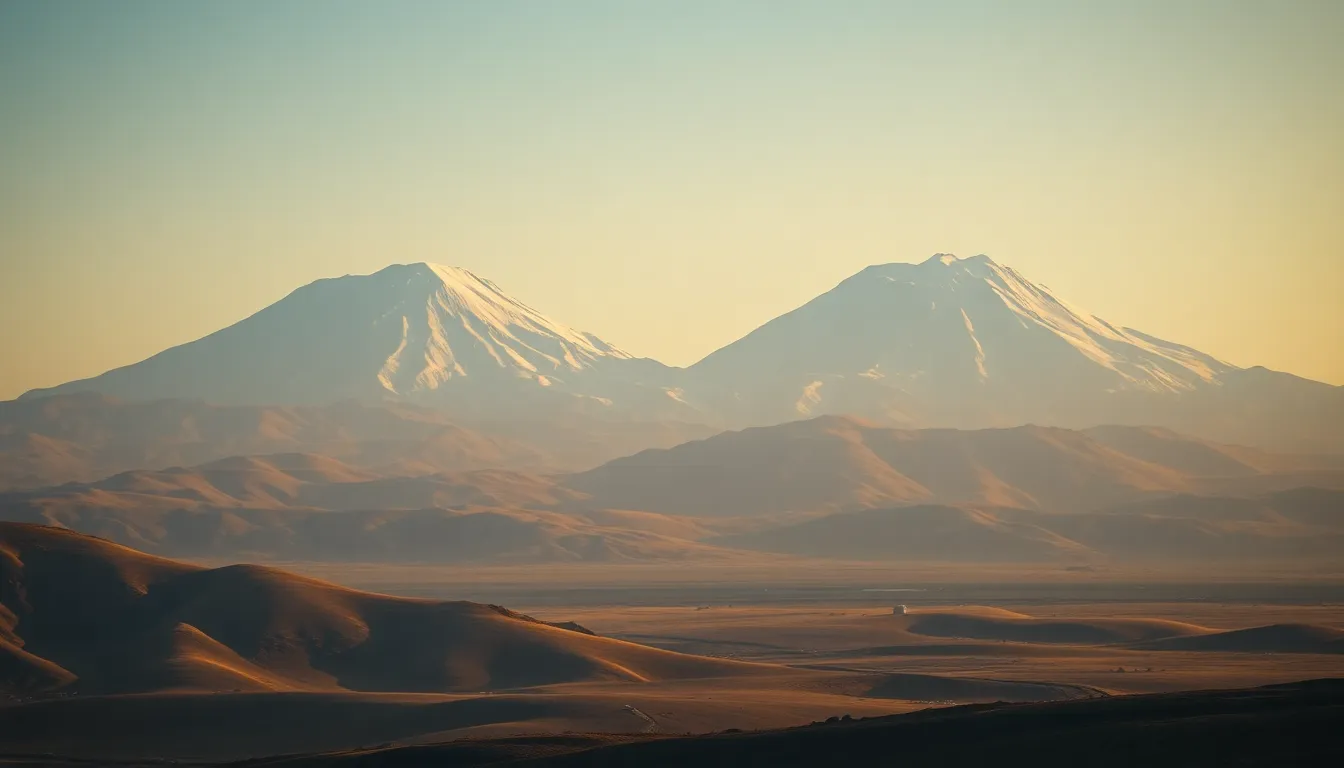
I do not take every group to eastern Turkey. I am honest with leaders about that from the first conversation. It is a long way from Istanbul, the distances on the ground are real, and the comforts are simpler than on the Aegean coast. But for the right group, the ones who have already done the easier trips and want to stand somewhere most travelers never reach, the deep east of Turkey holds ground that goes back to the very first pages of scripture. Harran, where Abraham lived. The plain below Mount Ararat. The hills around a city that tradition ties to Abraham’s birth. This is patriarch country, and it rewards the effort.
This guide is for ambitious group leaders. If you are weighing whether the east belongs in your community’s journey, here is the real picture, including the parts that take planning.
What “the East” Means and Why It Asks More of a Group
When I say eastern Turkey, I mean the broad region running from Sanliurfa and Harran in the southeast up toward Lake Van and the plain beneath Ararat in the far northeast. These are not day trips from anywhere convenient. They require internal flights, longer drives, and a willingness to trade some polish for depth.
I say that plainly because the worst version of an eastern trip is one where a group arrives expecting Ephesus and gets a six-hour drive instead. The best version is one where a group arrives knowing exactly what they came for: to stand in the oldest biblical geography on earth. Set the expectation early, and the east becomes one of the most moving journeys a community can take.
For the wider frame of how Turkey fits together, our Turkey heritage travel guide lays out the regions and how they connect.
Sanliurfa and Harran: Abraham’s Country
Sanliurfa, often just called Urfa, is the heart of the patriarch story. Local tradition holds it as the birthplace of Abraham, and the city is built around that memory. The Pool of Abraham, fed by springs and full of sacred carp, sits in a garden at the center of town, ringed by mosques and shaded walkways. Whatever one makes of the traditions, the sense of a place that has held Abraham’s name for millennia is unmistakable, and Muslim, Jewish, and Christian visitors all feel the weight of it.
A short drive away is Harran, and Harran is scripture itself. This is where Abraham’s family settled after leaving Ur, and where he lived before God called him to Canaan. It is also where Jacob worked for Laban and met Rachel at the well. The beehive-shaped mud-brick houses, some still in use, and the ruins of one of the world’s oldest universities, give the place a texture nothing else on a Turkey trip matches. Standing in Harran with Genesis open is a quiet, powerful thing. I have watched it land hard on people.
Nearby sits Gobekli Tepe, the astonishing megalithic site that pushed the date of monumental human building back thousands of years. It is not biblical, strictly speaking, but for a group already thinking about the deep human past, it adds a dimension that is hard to forget. The carved stone pillars, raised by people who lived long before the patriarchs, sit in the same landscape where Genesis later unfolds. I do not try to force a connection that is not there. I simply let a group stand in a place that stretches their sense of how old this ground is, and most people find that the silence does the work.
What I tell leaders before we reach Harran is to slow the day right down. The site is not large, and the temptation is to walk it in twenty minutes and move on. Resist that. Sit in the shade of one of the beehive houses, read the Genesis passages aloud, and let the group sit with the fact that this is the actual place the text names. Harran is not a reconstruction or a tradition layered over a guess. It is a continuously inhabited settlement that has carried the same name since Abraham’s family lived in it. That continuity is rare, and a group that lingers feels it.
Mount Ararat and the Far Northeast
Far to the north stands Mount Ararat, the snow-capped peak traditionally associated with the resting place of Noah’s ark. You do not climb it on a heritage trip. You stand on the plain below it, near the town of Dogubayazit, and you take it in. There is a site nearby, the Durupinar formation, that some hold as a candidate for the ark’s landing, and groups often visit it to talk through the question honestly.
The northeast holds more than Ararat. The Ishak Pasha Palace, a dramatic Ottoman-era complex perched on a ridge, makes a fine companion stop. And the region around Lake Van, with its island church of Akdamar and its tenth-century Armenian carvings, opens the Byzantine and Armenian Christian story that runs through eastern Anatolia. This is heritage few groups ever see, and it is unforgettable for the ones who do.
The Byzantine and Jewish Threads in the East
The east is not only patriarch country. Eastern Anatolia carried deep Christian roots through the Byzantine and Armenian centuries, and the churches and monastery ruins scattered across the region tell that story in stone. The Armenian cathedral on Akdamar Island, with its relief carvings of biblical scenes wrapping the exterior walls, is one of the great surviving works of medieval Christian art in the country.
Jewish heritage in the deep east is older and more dispersed than in Istanbul or Izmir, tied to ancient trade routes and the long memory of the patriarchs in this land. For groups whose interest runs to the full sweep of the region, the contrast between the Sephardic story on the coast and the patriarch geography in the east is part of what makes a combined Turkey journey so rich. Our Cilicia heritage guide covers the southern province where Paul grew up, a useful pairing for groups moving between the east and the Mediterranean.
How to Plan an Eastern Turkey Journey
The east works best as a focused extension, not a standalone first trip. Here is the shape I recommend:
- Days 1 to 2: Fly to Sanliurfa, see the Pool of Abraham, Gobekli Tepe, and the city.
- Day 3: Harran, the beehive houses, and the patriarch sites, unhurried.
- Days 4 to 5: Fly north toward Ararat and Lake Van, Akdamar Island, and Ishak Pasha Palace.
Five to six days covers the deep east at a workable pace. Most groups pair it with several days in Istanbul, since the contrast between the Ottoman capital and the patriarch plains is part of the point. The internal flights are essential here. Long overland drives between Sanliurfa and Van eat days you do not want to lose. Our destinations Turkey page shows how we combine the east with the rest of the country.
One thing worth knowing as you plan: with Heritage Tours, the group leader travels free when you bring fifteen or more participants. For an ambitious trip like this, where the logistics ask more of a leader, that support matters, and it is worth building into your numbers early.
FAQ: Eastern Turkey Heritage Travel
Is eastern Turkey suitable for a first-time heritage group?
It is better suited to groups that have already done an easier trip and want something deeper. The distances are real, the comforts are simpler than on the coast, and the rewards are for travelers who come knowing what they want. For a first Turkey journey, most leaders do better starting with Istanbul and the Aegean, then returning for the east.
What biblical sites are in eastern Turkey?
Harran, where Abraham and his family settled and where Jacob met Rachel, is the centerpiece. Sanliurfa is held by tradition as Abraham’s birthplace. Mount Ararat, traditionally linked to Noah’s ark, stands in the far northeast. These are some of the oldest biblical geographies you can stand in anywhere on earth.
How do you get around eastern Turkey?
Internal flights are essential. The region is vast, and overland drives between the southeast and the northeast can run many hours. A good itinerary flies between hubs like Sanliurfa and Van rather than driving the full distance, which keeps the pace sane and protects the meaningful time on the ground.
Is eastern Turkey safe for organized groups?
Organized heritage groups travel the main eastern routes regularly and safely with experienced local guides and drivers. We monitor conditions and structure routes accordingly. As with any destination, we build the itinerary around current realities and keep groups on well-traveled paths with people who know the ground.
Do group leaders travel free on Heritage Tours eastern Turkey trips?
Yes. With fifteen or more participants, the group leader travels free on all Heritage Tours group itineraries in Turkey, including the more ambitious eastern programs and combinations with Istanbul.
If your community is ready for the deeper journey, I would welcome the conversation. The east is not for every group, but for the right one it is unmatched. See how we structure these trips on our group heritage tours page, and contact us whenever you want to talk it through.