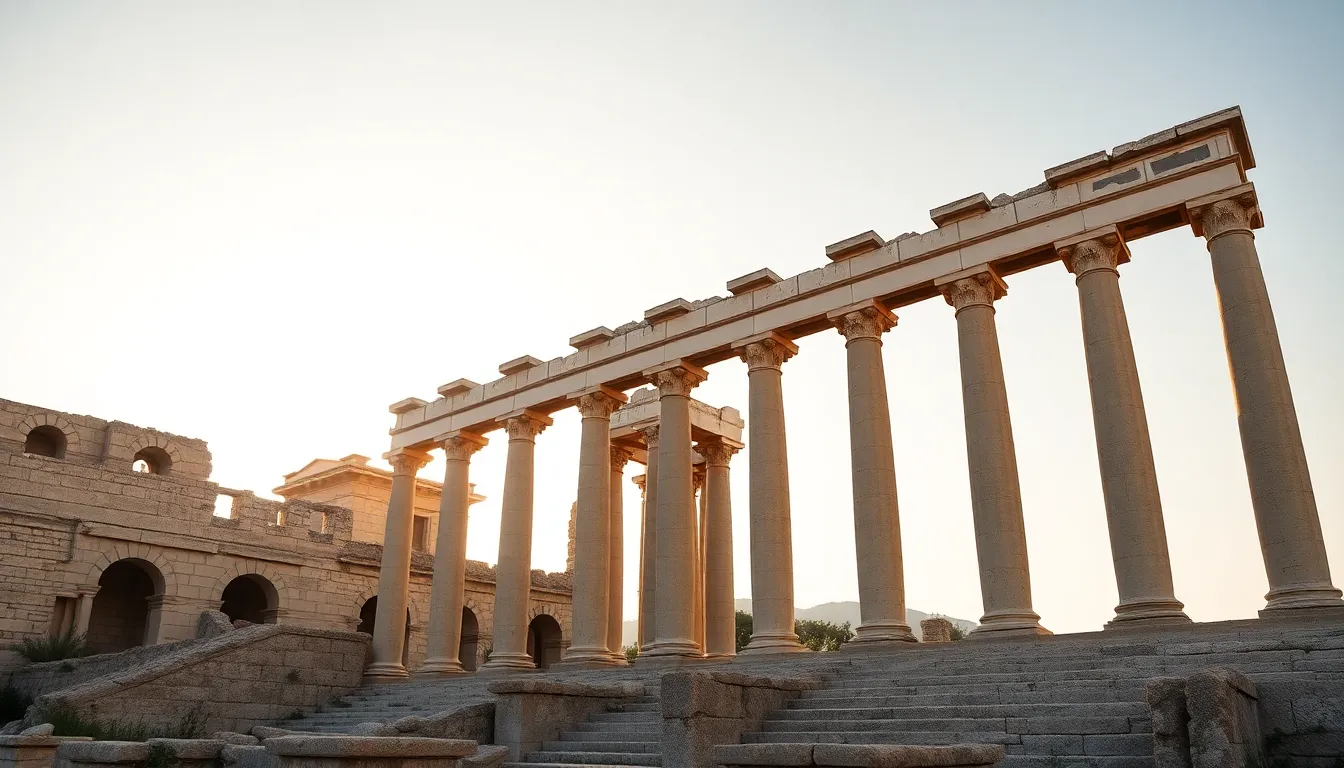
There is a marble slab set into the floor on a hilltop above the town of Selcuk, marked simply as the tomb of St. John. When I bring a group up here, I let them stand around it before anyone speaks. Most have spent their lives reading John’s Gospel and his letters and Revelation. The idea that the man behind those words may be buried under their feet does something quiet and real to people.
The Basilica of St. John gets far fewer visitors than the famous ruins of Ephesus just down the road, and that is part of its gift. It is one of the most moving stops on a Turkey heritage journey, and most groups have it nearly to themselves. Let me tell you what it is and how to visit it well.
What the Basilica of St. John Is
The basilica sits on Ayasuluk Hill above Selcuk, a few minutes from the main Ephesus archaeological site. The tradition behind it is old and consistent: the apostle John spent his final years in Ephesus and was buried on this hill. A small memorial church stood over the grave from the early centuries.
In the sixth century the emperor Justinian, the same emperor who built Hagia Sophia, replaced that modest structure with a vast basilica worthy of an apostle. It was laid out as a cross, roofed with six domes, and was one of the largest churches in the world in its time. Today it stands in ruins, but enough survives, the columns, the marble paving, the outline of the great cross plan, that a group can read the scale and feel what it once was.
The tomb itself sits at the center, where the domes met, marked by four columns and a slab in the floor. That placement, the grave at the heart of the church, tells you everything about why the building was raised.
The Faith Significance for a Group
John holds a special place for almost every faith group I lead. He is the disciple “whom Jesus loved,” the one who stood at the foot of the cross and took Mary into his home, the writer of the Gospel that opens with “In the beginning was the Word.” Tradition holds he lived to old age and died here in Ephesus, the last of the apostles.
Standing at his traditional tomb, a group can trace the whole arc of his life. He was a young fisherman on the Sea of Galilee, then a witness to the resurrection, then an exile on Patmos where he received Revelation, and finally an old man teaching this church in Ephesus. Early writers record that in his last years, too frail to preach long, he would simply repeat, “Little children, love one another.” That story tends to land hard at the tomb.
This is also the most natural place to read John’s own words. A passage from his Gospel or first letter, read aloud beside the grave, gives a group a connection to the text that no classroom delivers. For the wider Christian story of the region, our overview of Turkey’s spiritual sites sets the context.
Ephesus, John, and the Web of Sites Around It
The Basilica of St. John does not stand alone. It sits at the center of a cluster of sites that together tell the Ephesian story, and a group gets the most out of it by understanding how they connect.
Down the hill is the great ancient city of Ephesus itself, where Paul preached for nearly three years and where John is believed to have ministered and written. A short drive away is the House of the Virgin Mary, the hillside chapel where tradition holds Mary spent her final years under John’s care, which ties directly to the scene at the cross where Jesus entrusted his mother to John. And just below the basilica stand the lonely remains of the Temple of Artemis, once one of the Seven Wonders of the ancient world, a reminder of the pagan power the early church grew up against.
Seen together, these sites make Ephesus one of the richest single areas in all of Christian heritage. The basilica is the spiritual heart of the cluster, because it marks where one of the men who carried the whole story is believed to rest.
How Groups Visit the Basilica
Here is how I structure a visit.
We come up to the basilica either before or after the main Ephesus site, depending on the day’s heat and crowds. The hilltop is open and exposed, so morning is kinder in summer. We walk the outline of the church first, so the group grasps the scale, then gather at the tomb at the center.
The tomb is the place for the group’s quiet moment. I keep it simple: a reading from John, a short reflection from the pastor or rabbi, and room for silence. The setting is intimate and uncrowded, which makes it one of the better places in Turkey for a real devotional pause.
Before leaving, we usually walk up to the Byzantine fortress at the top of Ayasuluk Hill or at least take in the view, which stretches over Selcuk, the plain, and the single surviving column of the Temple of Artemis below.
A Practical Word on Access
The basilica is an open-air ruin on a hill, with uneven ancient paving and some gentle slopes and steps. For a mixed-age group it is manageable, but good footwear and an unhurried pace matter, and there is little shade, so hats and water are essential in the warm months.
The site is gated with a standard entry ticket and is rarely crowded, which makes it easy to give a group of fifteen or more the space to gather at the tomb without jostling. We plan the timing around the heat and around the larger Ephesus visit, and we make sure anyone who finds the slope hard can still reach the central tomb, which is the part that matters.
FAQ: Visiting the Basilica of St. John
Is the apostle John really buried at the Basilica of St. John?
Tradition consistently holds that John spent his final years in Ephesus and was buried on this hill, and a church has marked the spot since the early centuries. The tomb has not been definitively confirmed by archaeology, but the location has been honored as John’s burial place for well over a millennium and is recognized as a major site of his memory.
Where is the Basilica of St. John?
It stands on Ayasuluk Hill above the town of Selcuk in western Turkey, a few minutes from the main Ephesus archaeological site and a short drive from the House of the Virgin Mary. Groups usually visit all three in one Ephesus-area day.
What is left of the basilica to see?
The building is a ruin, but a substantial one. The columns, marble paving, and the cross-shaped outline of Justinian’s sixth-century church are clear, and the tomb at the center is marked by four columns and a floor slab. There is enough to read the original scale and feel the place.
Can our group hold a devotional at the tomb?
Yes, and it is one of the better places in Turkey for it. The site is uncrowded and intimate, which suits a reading from John’s Gospel or letters and a short reflection. We build in time for groups to gather quietly at the tomb.
How does the basilica connect to the House of the Virgin Mary?
At the cross, Jesus entrusted his mother to John, who took her into his care. Tradition holds John later brought Mary to Ephesus, where she lived her final years on a nearby hillside, the site now marked by the House of the Virgin Mary. The two sites tell two halves of one story and are usually visited together.
The Basilica of St. John is a quiet highlight that groups remember. If you are planning a Turkey heritage journey for your congregation, I would be glad to help you build the Ephesus area into it well. You can see how we shape these trips on our Turkey heritage page or explore our group heritage tours.
Contact us whenever you are ready to start the conversation.