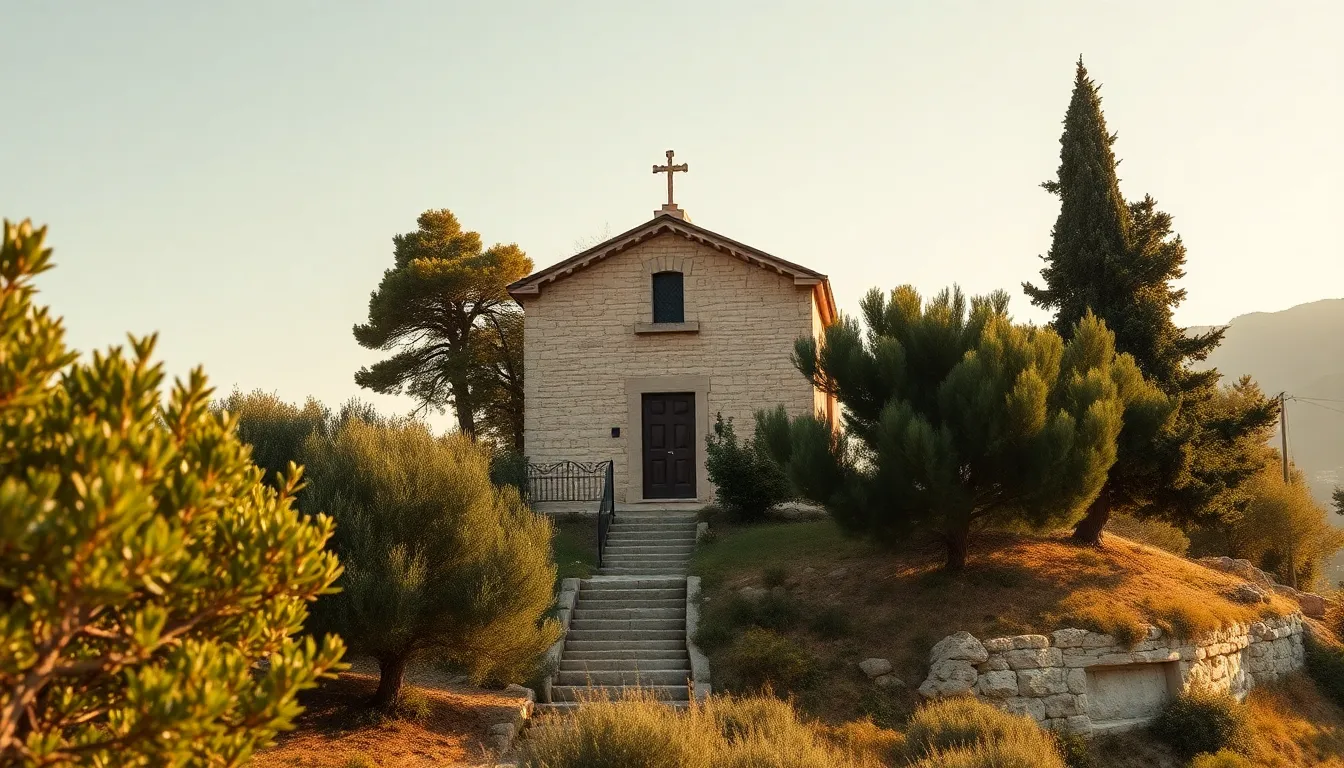
There is a moment on the drive up Mount Koressos, above Ephesus, when the road leaves the noise behind. The buses thin out, the trees close in, and by the time you reach the small stone house on the hillside, the whole atmosphere has changed. I have led a lot of groups to a lot of sacred sites, and this is one of the few where I say almost nothing on arrival. I let people walk in quiet. The House of the Virgin Mary does not need a guide talking over it. It needs space, and the hillside gives you that.
This is the place a strong and ancient tradition holds as the home where Mary, the mother of Jesus, spent her final years. It is not a site that depends on grandeur. It is small, plain, and still. For a pastor, priest, or rabbi leading a heritage group, it is often the most unexpectedly moving stop of an entire Turkey journey. Let me explain the tradition honestly and tell you how to lead a group here well.
The Tradition Behind the House
I always tell groups the truth about this site, because the honesty makes the visit richer rather than weaker.
The thread starts in Scripture. From the cross, John records that Jesus entrusted his mother to the beloved disciple: “Woman, here is your son,” and to the disciple, “Here is your mother.” From that hour, John 19 says, the disciple took her into his own home. The early church held that John later ministered in and around Ephesus, and the natural inference is that Mary came with him.
The specific house on this hillside owes its identification to a remarkable chain. In the early nineteenth century, a German nun named Anne Catherine Emmerich, who never traveled to Turkey, described in detail a small stone house where she said Mary had lived near Ephesus, including its setting and surroundings. Decades later, after her descriptions were published, priests went looking and found a ruined building on Mount Koressos that matched the account closely, including a foundation that some date to the first century with later rebuilding above it. The site has been a place of pilgrimage ever since.
I am careful to say that this has not been proven by archaeology, and the Church has never declared it a matter of certainty. What the Church has done is recognize it as a worthy place of pilgrimage. That is the right frame to give a group. You are not standing on a verified address. You are standing in a place where Christians have come to honor Mary for generations, on a hillside above the city where she most plausibly lived out her last years.
A Site Sacred to Christians and Muslims Alike
One detail moves groups every time, so I always mention it.
This is one of the few holy places in the world revered by both Christians and Muslims. The Quran honors Mary, Maryam, with deep respect and devotes a chapter to her. Muslim pilgrims come to this house with genuine reverence, and on any given day your group may share the path with Muslim visitors who hold Mary in honor. In a part of the world where faiths so often meet in conflict, this quiet hillside is a place where they meet in shared devotion. For a group leader, it opens a meaningful conversation about what is held in common.
Four popes have visited and prayed here: Paul VI, John Paul II, Benedict XVI, and Francis. That history gives the small chapel a weight far beyond its size.
What Your Group Will See
The site is simple by design, and that simplicity is the point.
The Chapel
The house itself is a small stone building, restored as a chapel. Inside there is a modest altar and a statue of Mary. It is dim and quiet, and groups move through slowly and in low voices. There is room for a brief pause but not for a large gathering inside, so plan to hold any spoken devotional outside.
The Wishing Wall
Below the house, a long wall is covered with thousands of small pieces of cloth and paper tied by pilgrims, each carrying a written prayer or intention. Whatever a group makes of the practice, the wall is a vivid picture of how many people bring their hopes to this place. I let people respond to it however feels right to them.
The Spring
Below the chapel, water flows from taps fed by a spring long associated with the site, and many pilgrims drink or carry some away. Traditions of healing attach to it. There is no need to make claims about the water. The act of pausing at it fits the contemplative mood of the visit.
How I Lead a Group at the House of Mary
This is a stop where less leading is better.
Before you arrive, while still on the bus, read John 19:25 to 27 and give the tradition honestly, the way I have laid it out here. Doing the explaining in advance means you can keep the site itself quiet.
On arrival, let people enter the chapel on their own, without commentary. Give them real time.
Then gather outside, away from the chapel door, for a short devotional or prayer. This is a fitting place to speak about Mary’s faithfulness, about being entrusted to one another as John and Mary were, and about quiet endurance. Keep it brief and unhurried.
Leave margin at the end for people to sit, to visit the wall, or to be still. Some of the most meaningful minutes I have witnessed here were entirely silent.
For where this fits the wider journey, see our guide to the spiritual sites of Turkey and our overview of Paul’s footsteps across Asia Minor, since the House of Mary pairs naturally with a day at Ephesus itself.
Practical Notes for Group Leaders
The house sits on Mount Koressos, a short drive above the main Ephesus site, so almost every group combines the two. I strongly recommend visiting the house in the early morning, before the larger tour buses arrive, because the quiet that makes this place is easily lost in a crowd. We coordinate timing to give your group that window whenever we can.
The walking is short, but the approach has some gentle slopes and steps, so for travelers with limited mobility we plan the pace and the route accordingly. Modest dress is appropriate, as it is a place of active worship. A group leader traveling with fifteen or more usually goes free on our group itineraries, and we build a calm, unrushed schedule around this stop because rushing it defeats the purpose.
FAQ: Visiting the House of the Virgin Mary at Ephesus
Is the House of the Virgin Mary the real home of Mary?
It has not been verified by archaeology, and the Church has never declared it certain. What the Church has done is recognize it as a legitimate place of pilgrimage. The tradition rests on the early church belief that John ministered near Ephesus and brought Mary with him, supported later by the detailed visions of Anne Catherine Emmerich that led searchers to the matching ruin on Mount Koressos.
Why do both Christians and Muslims visit the House of Mary?
The Quran honors Mary, Maryam, with great respect and devotes a chapter to her, so Muslim pilgrims revere the site alongside Christians. It is one of the few holy places shared in genuine devotion by both faiths, which makes it a meaningful stop for understanding the shared honor given to Mary.
Where is the House of the Virgin Mary located?
It is on Mount Koressos, a wooded hillside a short drive above the ancient city of Ephesus in western Turkey, near Selcuk. Faith groups almost always visit it together with the main Ephesus site on the same day.
What will my group see at the site?
A small restored stone chapel with an altar and statue of Mary, a long wall where pilgrims tie written prayers, and a spring below the house associated with traditions of healing. The site is intentionally simple, and its power comes from its quiet rather than its scale.
When is the best time for a group to visit?
Early morning, before the larger tour buses arrive. The stillness is what makes this place, and it is easily lost in a crowd. Heritage Tours coordinates timing to give groups that quieter window whenever possible.
The House of Mary is a small, still place that groups remember long after the larger sites blur together. If you are planning a Turkey heritage journey for your congregation, I would be glad to help you build Ephesus and this hillside into it well. See how we structure these trips on our Turkey heritage page or explore our group heritage tours.
Contact us whenever you are ready to start the conversation.