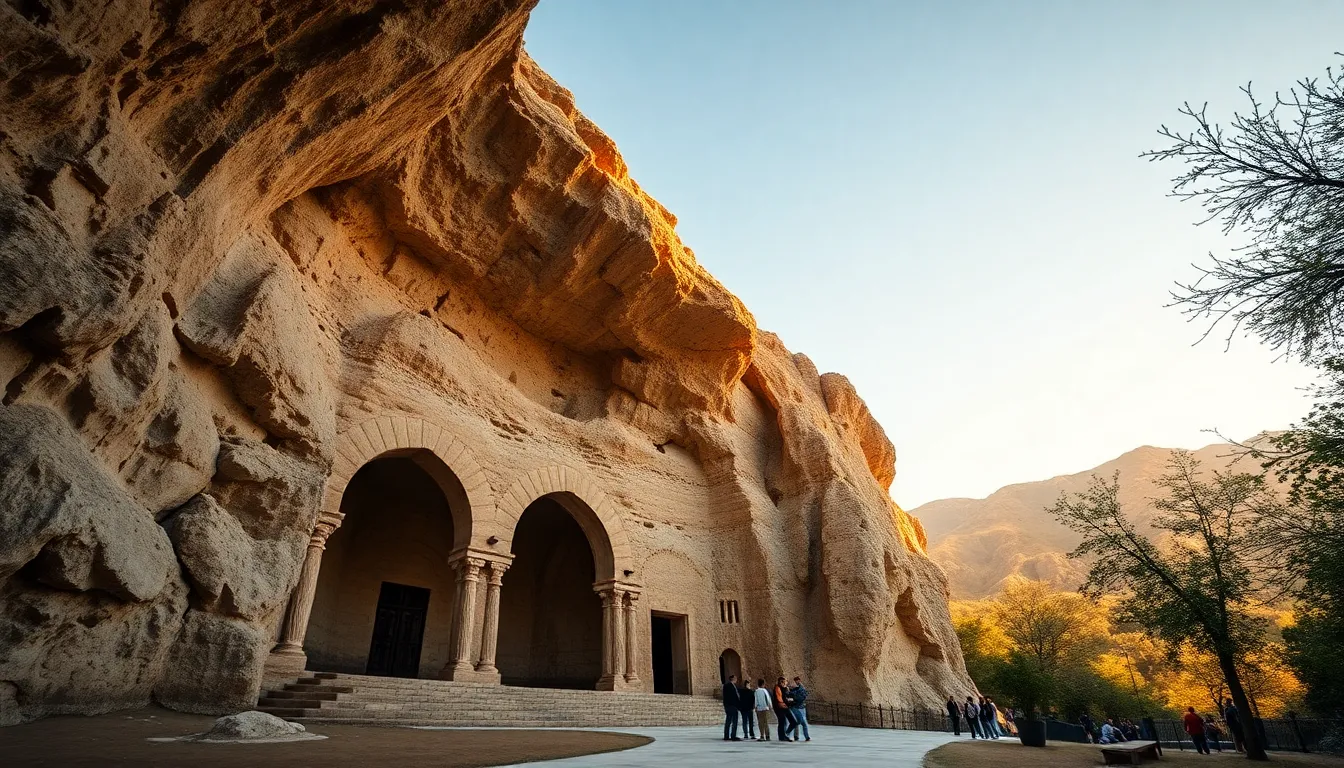
There is one verse I always save for Antakya. We stand at the mouth of St. Peter’s grotto, a cave church carved into the mountainside above the city, and someone reads Acts 11:26: “and the disciples were first called Christians in Antioch.” That word, Christian, the name your whole congregation lives under, was coined here. I have watched that land on people. It reframes the entire trip. Everything else they have seen in Turkey points back to this one city where the early church found both its name and its missionary engine.
This guide is the orientation I give leaders weighing Antakya for their itinerary. I will be honest with you about both the depth of what is here and the practical realities of reaching it, because this is the most remote of Turkey’s great heritage cities and it deserves a clear-eyed plan. Let me walk you through the layers.
Antioch: The Cradle of the Gentile Church
Ancient Antioch on the Orontes was one of the three or four largest cities of the Roman Empire, a cosmopolitan crossroads of Greeks, Romans, Jews, and Syrians. For the early church, it was the launchpad. After the persecution that scattered the believers from Jerusalem, many came to Antioch, and here the gospel was preached to Gentiles in a serious way for the first time. The church that grew was so significant that the leaders in Jerusalem sent Barnabas to see it, and Barnabas brought Paul.
This is where the story opens out. Antioch was the home base for Paul’s missionary journeys. He and Barnabas were commissioned and sent out from this church, and they returned here to report. The famous confrontation between Paul and Peter, recorded in Galatians, happened in this city. When your group grasps that Antioch was the hinge between the Jewish beginnings of the faith and its spread across the Roman world, the rest of a Turkey itinerary clicks into place. For the wider arc of early Christianity across the country, our Turkey heritage travel guide sets the full map.
St. Peter’s Grotto
The single most important site here is the Church of St. Peter, a cave carved into the slope of Mount Starius above the city. Tradition holds it as one of the earliest places where the Antioch Christians gathered to worship, and it may be among the oldest surviving Christian houses of prayer in the world. The stone facade was added by Crusaders centuries later, but the cave itself reaches back to the church’s beginnings, with traces of ancient floor mosaic and a small spring inside.
Standing in this cave, your group is standing in the kind of space where the first Gentile believers met, in the city where they were first called by Christ’s name. It is plain and small, and that plainness is the point. There is no grandeur here, only the bedrock of where the movement began. I plan this as a quiet, central moment of the visit, with time for a reading and a pause. Antakya pairs naturally with the imperial Christian heritage of Istanbul and the Pauline ground around Ephesus and Selcuk on a fuller itinerary.
The Jewish and Layered History of the City
Antioch held a large and ancient Jewish community for centuries, one of the most significant in the eastern Mediterranean, and that Jewish presence is part of why the early church took root here. The synagogue communities of Antioch were the bridge through which the gospel first reached this city. A small Jewish community remained in Antakya into the modern era, and the old synagogue stood in the city until recent years.
The city’s layers run deep in other ways too. Antakya was renowned in the Roman world for its mosaics, and the Hatay Archaeology Museum holds one of the finest collections of Roman mosaics anywhere, recovered from the villas of ancient Antioch. The old town, with its narrow lanes, its covered market, and its mix of churches, mosques, and synagogue history, long carried a reputation as one of Turkey’s most genuinely plural cities, where communities lived side by side.
I have to be direct with you about one thing. Antakya was struck hard by the major earthquake of February 2023, which caused devastating loss of life and heavy damage across the old city. Recovery and reconstruction are ongoing. Site access, museum hours, and the state of the old town change as rebuilding continues, and any responsible plan for this region has to be built on current, on-the-ground information rather than older guidebooks. This is precisely the kind of situation where a planner who checks conditions before you commit earns their keep.
How I Approach Antakya for a Group
Antakya sits in Turkey’s far south, near the Syrian border, well away from the Istanbul and Aegean circuit. That distance is the main planning fact. It is not a casual add-on to a standard itinerary, and reaching it usually means a dedicated domestic flight into the Hatay region and a focused visit. Here is how I think about it.
- Treat it as an intentional pilgrimage stop, not a detour. Groups that come to Antakya come specifically for the Antioch story. Build it as its own chapter.
- Anchor the visit on St. Peter’s grotto and a reading from Acts 11, with time for reflection on where the name Christian began.
- Confirm conditions before committing. Given the ongoing earthquake recovery, current access and logistics must be verified close to the travel date.
I will not oversell Antakya in its present state, and I will not undersell what it means. For some congregations, standing in the city where the church was first named is worth every mile of the journey. For others, the early-church story is better served by the more accessible sites further west. That is a decision I help leaders make honestly, based on their group and the current situation.
One detail worth folding in early. With Heritage Tours, the group leader travels free when you bring fifteen or more participants. For a pastor building a congregation trip, that is worth knowing from the start.
FAQ: Heritage Travel to Antakya (Antioch)
Why is Antakya important in the New Testament?
Antakya is ancient Antioch, where the Book of Acts says the disciples were first called Christians. It was the base from which Paul and Barnabas were commissioned and sent on their missionary journeys, and the first major center where the gospel was preached to Gentiles. For many groups, it is the cradle of the church beyond its Jewish beginnings.
What is St. Peter’s grotto?
It is a cave church carved into the mountainside above Antakya, traditionally held as one of the earliest places the Antioch Christians gathered to worship. It may be among the oldest surviving Christian houses of prayer in the world. The cave itself is ancient, with a Crusader-era stone facade added centuries later and a small spring inside.
Is Antakya accessible after the 2023 earthquake?
Antakya was heavily damaged in the February 2023 earthquake, and recovery is ongoing. Site access, museum hours, and the condition of the old town continue to change as reconstruction proceeds. Any visit must be planned on current, verified information rather than older guidebooks, which is why working with a planner who checks conditions matters here.
How does a group reach Antakya?
Antakya lies in Turkey’s far south, near the Syrian border, away from the main Istanbul and Aegean routes. Groups usually reach it by a dedicated domestic flight into the Hatay region for a focused visit. Because of the distance, it works best as an intentional pilgrimage chapter rather than a casual add-on to a standard itinerary.
Does Antakya have Jewish heritage as well?
Yes. Antioch held one of the most significant ancient Jewish communities in the eastern Mediterranean, and that community was the bridge through which the gospel first reached the city. A small Jewish presence remained into the modern era. The city was long known as one of Turkey’s most genuinely plural places, with churches, mosques, and synagogue history side by side.
If the Antioch story is pulling at you for your congregation, I would be glad to talk it through honestly, including the current realities of reaching and visiting the city. For some groups, standing where the church was first named is worth the whole journey. You can see how we structure these journeys on our Turkey heritage page or learn how the group experience works on our group heritage tours page.
Contact us whenever you are ready to start planning.