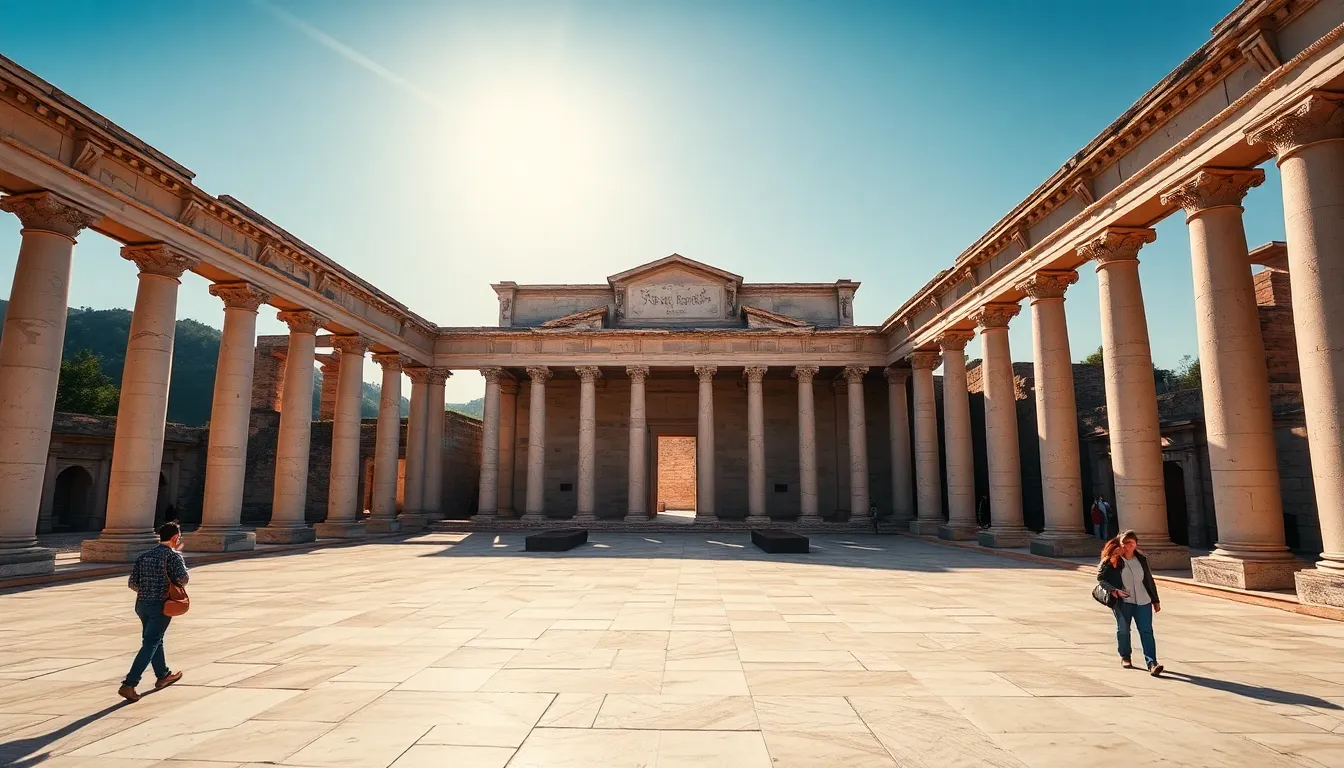
The first time I drove the Aegean coast with a group, somebody asked me near the end why we kept stopping at what looked like the same pile of marble columns. By the third day she had her answer, and it was not the one she expected. The point was not the columns. The point was that we were walking, town by town, through the early chapters of the church and through layers of Jewish and Greek life that sat one on top of the other for two thousand years. The Aegean coast is not a single site. It is a trail, and once your group understands it that way, the whole journey changes.
This is the stretch of western Turkey that runs roughly from Izmir down to the inland valleys around Pamukkale. Five of the seven churches of Revelation sit along it. Paul worked here. Jewish communities thrived here for centuries. If you are bringing a congregation and you want a route that builds rather than scatters, this is one of the best in the country. Let me walk you through it the way I would on the ground.
Why the Aegean Reads as a Trail, Not a Scatter of Ruins
Most of Turkey’s heritage is spread across regions you fly between. The Aegean is different. The sites cluster within a few hours of each other, connected by good roads, and they tell a connected story. Paul reached this coast on his third missionary journey. The Book of Revelation addresses seven churches, and five of them, Ephesus, Smyrna, Pergamon, Thyatira, and Sardis, are on or just inland from this coast. Philadelphia and Laodicea round out the seven a little further east.
That density is a gift for a group leader. You are not asking your people to hold seven disconnected places in their heads. You are walking them through a region the apostle John knew, addressing communities that knew each other, traded with each other, and faced the same pressures. The trail has internal logic. Use it.
Ephesus: The Anchor of the Whole Coast
Ephesus is where most groups spend the most time, and rightly so. This was one of the great cities of the Roman world, and Paul stayed here longer than almost anywhere, roughly three years. The riot of the silversmiths in Acts 19, when the crowd filled the theater chanting for Artemis, happened in the very theater you can still sit in. It holds twenty-five thousand people. Your group can sit on those stone tiers and read the account, and it lands.
The marble main street, the Library of Celsus with its restored two-story facade, the terraced houses with their mosaics, all of it is here and walkable. Above the ruins sits the House of the Virgin Mary, a pilgrimage site for Christians and Muslims alike. Nearby stand the remains of the Basilica of St. John, traditionally his burial place. I treat Ephesus as a full day, sometimes two. It deserves it.
There is also a Jewish layer to Ephesus that groups often miss. The city held a significant Jewish community in Paul’s day, and Acts records that he began his work here, as he so often did, in the synagogue, reasoning with the people there before the message spread to the wider city. Inscriptions and finds from the site point to that community’s presence. For a combined or interfaith group, it is worth naming. The early church did not arrive into empty ground. It grew out of the Jewish communities scattered through these Aegean cities, and Ephesus is one of the clearest places to see that the two stories were braided together from the start.
For a fuller picture of how Turkey fits together as a heritage destination, our Turkey heritage travel guide sets the wider frame.
Smyrna and Pergamon: The Northern Stops
Smyrna is modern Izmir, a working port city of millions. Unlike Ephesus, it never stopped being lived in, so the ancient layer is partial, an excavated agora in the middle of the city. But Smyrna matters for two reasons. Revelation calls it the church that would suffer and stay faithful, and it was one of the great centers of Sephardic Jewish life after 1492. Izmir’s synagogues and old Jewish quarter are a meaningful stop for any group tracing that story.
Pergamon sits to the north, dramatic on its hilltop, the acropolis crowned by a steep theater that seems to fall straight down the slope. Revelation calls this the place “where Satan’s throne is,” likely a reference to the great altar of Zeus or to the city’s role as a center of the imperial cult. Below the hill lies the Asclepion, an ancient healing center. Pergamon is worth the climb, and the cable car saves the legs of older travelers.
Sardis and the Inland Valleys
Sardis brings together the two stories better than almost anywhere on the coast. Here stands one of the largest ancient synagogues ever discovered, a vast hall with mosaic floors that sat at the heart of a Roman-era city. Steps away is the gymnasium with its restored marble court, and not far off, the columns of the Temple of Artemis. Standing in that synagogue, your group sees in stone that Jewish life in Asia Minor was not marginal. It was central, public, and old.
Further inland lie Hierapolis and Laodicea, near the white travertine terraces of Pamukkale. Laodicea is the lukewarm church of Revelation, and reading that passage while looking at the ancient water system that fed the city makes the metaphor click. These inland sites pair naturally with the coast and round out the seven churches. Our guide to Iznik and the council cities picks up the Byzantine thread further north if your group wants to follow it.
How to Sequence the Aegean for a Group
Here is the shape I recommend for most congregations:
- Day 1: Fly into Izmir, see Smyrna’s agora and the Jewish quarter, settle on the coast.
- Day 2: Pergamon and the Asclepion, with the cable car up the acropolis.
- Day 3: Sardis, the great synagogue, and the temple ruins.
- Days 4 to 5: Ephesus, in full, including the House of Mary and the theater.
- Day 6: Hierapolis, Laodicea, and the Pamukkale terraces.
Five to six days covers the trail without rushing. Many groups pair this with a few days in Istanbul at the start or end, since Istanbul holds the Jewish and Byzantine story at its richest. The internal flight from Izmir to Istanbul is short and cheap. For the wider regional picture, our Cilicia heritage guide covers Paul’s home province further east, and destinations Turkey lays out how we combine regions.
One practical note worth planning around early: with Heritage Tours, the group leader travels free when you bring fifteen or more participants. For a pastor or rabbi building a trip on a congregation’s budget, that changes the math, and it is worth factoring in from the start.
FAQ: The Aegean Coast Heritage Trail
Which of the seven churches of Revelation are on the Aegean coast?
Five of the seven sit on or just inland from this coast: Ephesus, Smyrna (Izmir), Pergamon, Thyatira, and Sardis. Philadelphia and Laodicea lie a little further east toward Pamukkale. A well-planned Aegean itinerary can take in all seven, which is why this region is the natural home for a Revelation-focused trip.
How many days do you need for the Aegean heritage trail?
Five to six days covers the core sites at a comfortable pace, with Ephesus getting a full day or two. Adding the inland valleys around Pamukkale and a short flight to Istanbul brings most groups to eight or nine days total. Rushing the coast is the most common mistake, and Ephesus alone rewards the slower pace.
Is the Aegean coast suitable for Jewish heritage groups?
Yes. Izmir was one of the great centers of Sephardic life after the 1492 expulsion, with synagogues and a Jewish quarter still present. Sardis holds one of the largest ancient synagogues ever excavated. The coast carries both the Christian and Jewish stories, which makes it strong ground for combined or interfaith groups.
When is the best time to visit the Aegean coast?
Late spring (May to June) and early fall (September to October) are ideal. The summer heat on the coast is intense and the crowds at Ephesus are heavy in July and August. The shoulder seasons give your group comfortable walking weather and thinner lines at the major sites.
Do group leaders travel free on Heritage Tours Aegean trips?
Yes. With fifteen or more participants, the group leader travels free on all Heritage Tours group itineraries in Turkey, including programs that combine the Aegean coast with Istanbul or other regions.
If you are starting to picture this trail for your community, I would welcome the chance to help you shape it. The route is coherent, the sites are real, and the story builds the way a good trip should. See how we structure these journeys on our group heritage tours page, and contact us whenever you are ready to start planning.