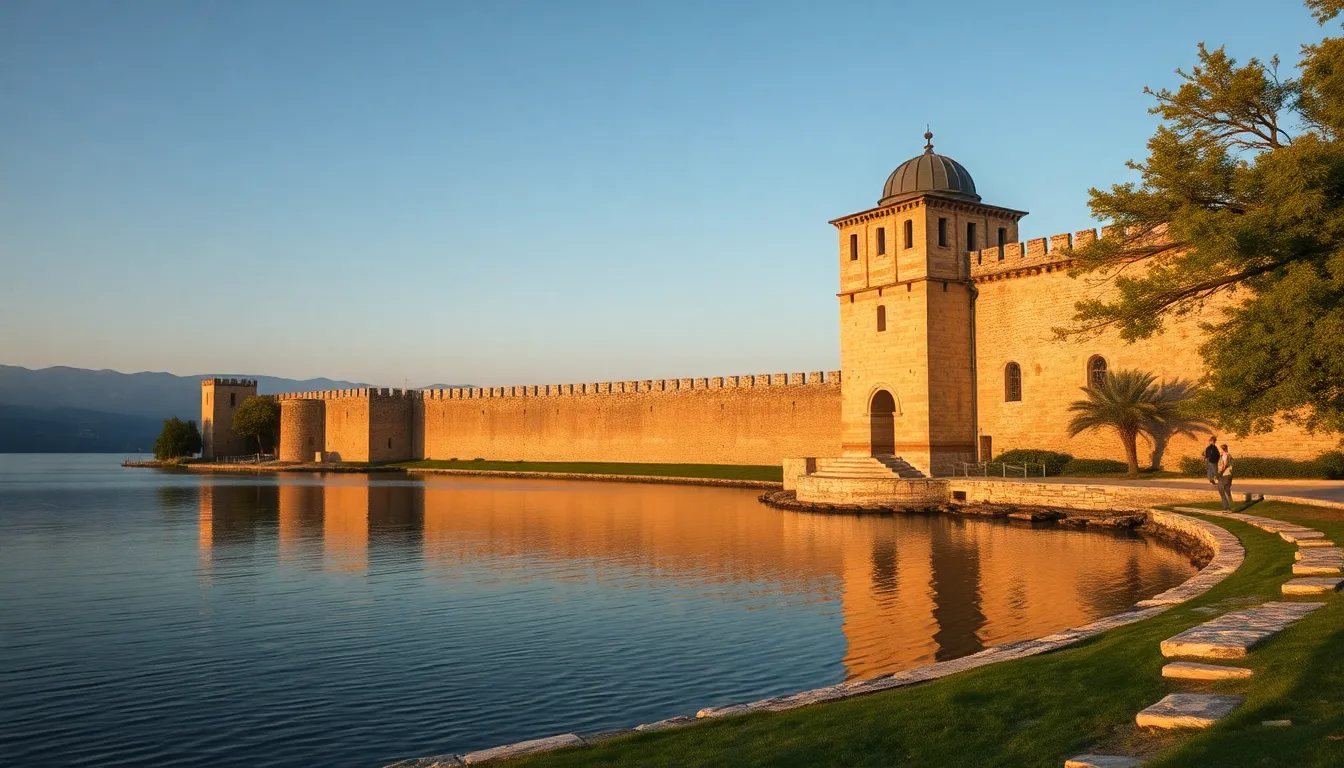
I bring groups to Iznik for one reason above all the others, and I tell them before we arrive so they are ready for it. This small lakeside town, a couple of hours from Istanbul, is where the church wrote the words that millions of Christians still say out loud every Sunday. The Nicene Creed was hammered out here, in this place, by bishops who had survived persecution and now had to decide together what the church actually believed. When a group stands inside those ancient walls and recites the Creed, the room goes quiet. That is what Iznik gives you. Not grand ruins. A doorway into the moment the church found its words.
Iznik is easy to overlook because it is small and because the big-name sites of Turkey shout louder. But for a Christian group, and for anyone interested in how the Byzantine world took shape, it is one of the most significant stops in the country. Here is how I would help you think about it.
Why Iznik Matters: The City That Named the Creed
In 325 AD, the Emperor Constantine summoned bishops from across the Christian world to the city then called Nicaea. The church had just emerged from generations of persecution, and it was divided over a hard question: who exactly was Jesus in relation to God the Father? The First Council of Nicaea met to settle it. What came out of that gathering was the core of the Nicene Creed, the statement of faith that has anchored Christian belief ever since.
A second great council met here in 787, the Seventh Ecumenical Council, which addressed the use of icons in worship. So Iznik is not the site of one turning point but two. For a pastor walking a congregation through church history, few places on earth carry this kind of weight in such a small footprint. The town is the Creed’s birthplace, and standing in it makes an abstract thing concrete.
For the wider picture of how Turkey’s Christian heritage fits together, our Turkey heritage travel guide sets the frame.
The Lakeside Walls and the Roman City
Iznik still sits inside its ancient walls. They run for miles, Roman in origin and reinforced through the Byzantine centuries, pierced by great gates you can still walk through. The Istanbul Gate and the Lefke Gate are the most impressive, monumental arches that once controlled entry to the city. Walking the walls gives a group a real sense of Nicaea as a fortified Byzantine city, not just a name in a textbook.
The town plan still follows the Roman grid, and the lake laps right up to the western edge. There is a Roman theater, partly excavated, and the remains of churches and civic buildings scattered through the modern town. Iznik is small enough to walk, which I like. Your group can take it in slowly, on foot, the way the city was meant to be experienced.
That walkability is part of why Iznik works so well for older congregations. After the scale of Istanbul or the long days at Ephesus, a town you can cross in a leisurely stroll is a gift. I often build Iznik in as a gentle day in the middle of a trip, a place where the group slows down, the pace eases, and the focus turns inward to the meaning of what happened here rather than the effort of getting around. The walls, the lake, and the central church all sit within an easy distance of each other, so no one is left behind.
The Underground Basilica Beneath the Lake
One of Iznik’s most remarkable discoveries lies just offshore, beneath the surface of the lake. In 2014, archaeologists identified the remains of a basilica submerged in the shallows, a church that may date to the fourth or fifth century and that some have connected to the early Christian community here. From the shore, and from the air, the outline of the sunken building is visible in the clear water.
It is a haunting thing to see, an early church resting under the lake that has held it for over a thousand years. There has been discussion of turning the site into an underwater museum. Whether or not your group can view it up close on a given visit, the story of the submerged basilica captures something true about Iznik: a place where the early church is layered into the very ground and water of the town.
Hagia Sophia of Iznik and the Byzantine Layer
In the center of town stands the Hagia Sophia of Iznik, a church that tradition links to the location of the Seventh Ecumenical Council. Like its famous namesake in Istanbul, it has lived several lives, a Byzantine church, later a mosque, with surviving fragments of frescoes and mosaic floors visible inside. It is modest compared to the great monuments of Istanbul, and that modesty is part of its power. This is where the church gathered, in a building scaled to a working town, not an imperial showpiece.
Iznik later became famous for something else entirely: its ceramics. From the fifteenth century, the town produced the brilliant blue-and-white and red tiles that decorate the great mosques of Istanbul, including the Blue Mosque. A stop at one of the workshops keeping that craft alive gives a group a different kind of connection to the place, the long continuity of skilled hands across the centuries.
How to Fit Iznik Into a Group Itinerary
Iznik works best as a focused day trip or overnight from Istanbul, or as a stop on the way to the Aegean coast. Here is how I usually place it:
- As a day trip from Istanbul: A long but doable day, roughly two and a half hours each way, with several hours in the town.
- As an overnight: Better for groups who want to walk the walls slowly, see the lake at dusk, and read the Creed without rushing.
- As a bridge: A natural stop when a group is moving from Istanbul toward the seven churches and Ephesus on the Aegean.
Pairing Iznik with Istanbul’s Byzantine sites, the Hagia Sophia, the city walls, the cisterns, makes the council story complete. Our guide to the Aegean coast heritage trail picks up the journey south, and destinations Turkey shows how we connect the regions.
One thing worth planning around early: with Heritage Tours, the group leader travels free when you bring fifteen or more participants. For a pastor building a church-history journey for a congregation, that is real budget room, and it is worth factoring in from the start.
FAQ: Iznik (Nicaea) Heritage Travel
What happened at the Council of Nicaea?
In 325 AD, bishops from across the Christian world gathered at Nicaea, today’s Iznik, to settle a dispute over the nature of Christ. The council produced the core of the Nicene Creed, the statement of faith still recited in churches today. A second council met here in 787 to address the use of icons. Iznik is the birthplace of the Creed.
Is Iznik worth visiting for a Christian group?
Yes, especially for groups interested in church history and the early councils. Few places carry the weight of having shaped a statement of faith that millions still recite. Standing inside the ancient walls and reading the Creed where it was written is a moment most congregations remember long after the trip.
How do you get to Iznik from Istanbul?
Iznik sits roughly two and a half hours from Istanbul by road, around the eastern end of the Sea of Marmara. It works as a long day trip or, better, as an overnight that lets a group walk the walls and see the lake without rushing. It also makes a natural stop when moving from Istanbul toward the Aegean coast.
What is the underground basilica at Iznik?
In 2014, archaeologists identified the remains of an early Christian basilica submerged in the shallows of Lake Iznik, possibly dating to the fourth or fifth century. The outline of the sunken church is visible in the clear water from the shore and from the air, a striking reminder of how deeply the early church is layered into this town.
Do group leaders travel free on Heritage Tours Turkey trips?
Yes. With fifteen or more participants, the group leader travels free on all Heritage Tours group itineraries in Turkey, including programs that pair Iznik with Istanbul and the Aegean coast.
If the council city belongs in your community’s journey, I would welcome the chance to help you place it well. Iznik is small, but for the right group it is one of the most meaningful stops in Turkey. See how we structure these trips on our group heritage tours page, and contact us whenever you are ready to plan.