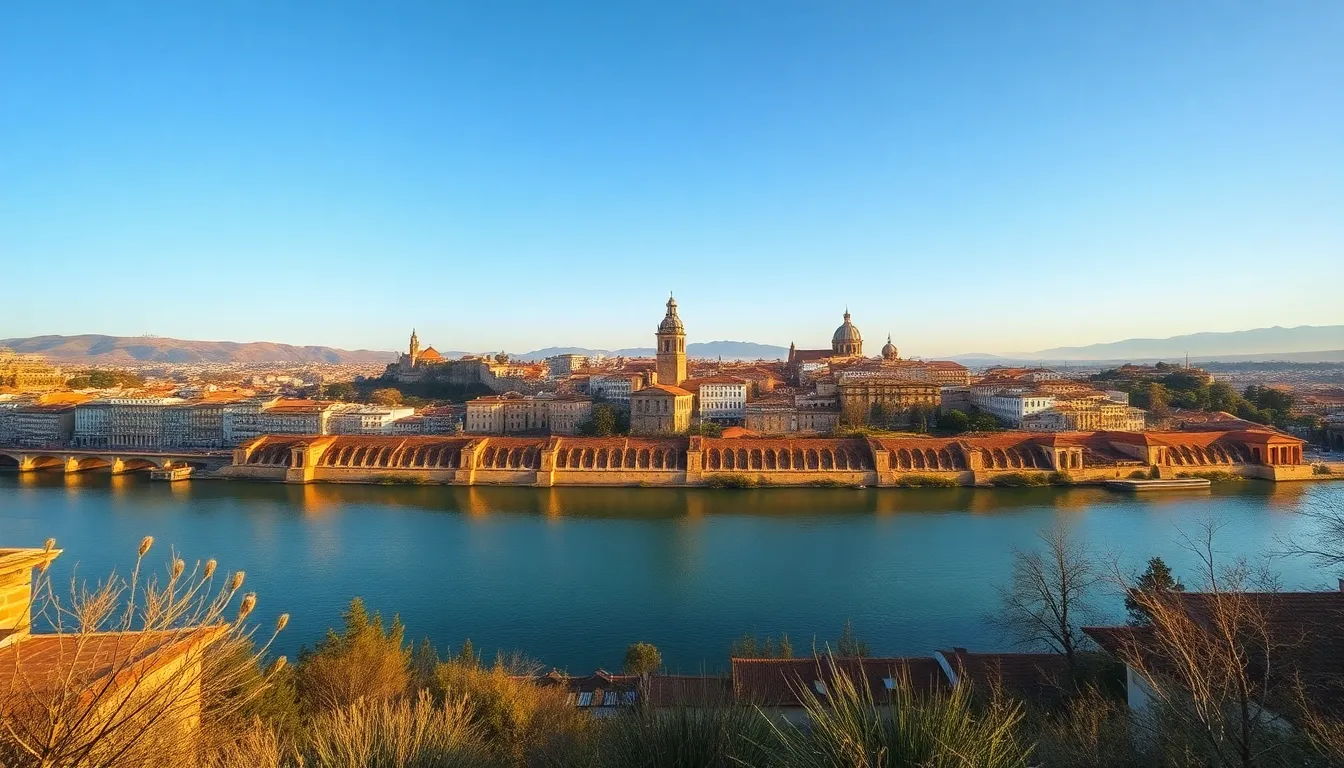
Most groups treat Toledo as a day trip from Madrid. They come down in the morning, rush the cathedral and one synagogue, and head back by dinner. I understand the impulse, but I’ve come to believe it’s a mistake. Toledo is the single richest heritage city in Spain, the place where three faiths lived in close quarters for centuries, and it does not reward rushing. Given a full weekend, it opens up in a way a day trip never allows.
This itinerary is for groups who want to do exactly that: give Toledo the time it deserves. Three days, two nights, staying in the old city itself rather than commuting in and out. It works as a standalone trip, a focused weekend for groups who can’t take a longer journey, or as the deep-dive core of a fuller Spain itinerary. I’ve run it both ways.
The advantage of staying overnight is the thing day-trippers never see: Toledo in the evening and early morning, when the crowds clear and the old city belongs to the people who slept there. That alone is worth the extra nights.
Day 1: Arrival, the Juderia, and the First Synagogue
The group arrives in Toledo, usually from Madrid, and we get everyone settled in a hotel inside the old city. Staying within the walls changes the whole experience. You walk everywhere, and the city becomes your neighborhood for the weekend rather than a stop on a route.
The afternoon begins in the Juderia, the old Jewish quarter. We start with El Transito synagogue, built in 1357 by Samuel ha-Levi, treasurer to King Pedro of Castile. The Hebrew inscriptions along the upper walls call it “a crown of beauty.” It survived the expulsion of 1492, partly because it was converted to a church, and still stands. The Sephardic Museum housed inside tells the fuller story of Jewish Toledo, a community that produced poets, philosophers, and translators whose work shaped Judaism far beyond Spain. I’ve watched groups go quiet the moment they step into that room, every time.
The afternoon leaves time to wander the Juderia’s narrow streets as the day cools and the crowds thin. This is the part day-trippers never get, the old quarter in the late light, when the bus tours have gone and the stones hold the day’s warmth. Walking it slowly, without a return schedule pulling at you, is the reason to stay the weekend.
Group leader note: Toledo’s old city is steep, uneven, and cobblestoned throughout. Comfortable shoes are not optional. For groups with older members, the slower weekend pace is a real advantage over the day-trip rush. Build in seated breaks, and note that mornings and evenings are far cooler than midday from May through September.
Day 2: The Second Synagogue, the Cathedral, and El Greco
Day two is the fullest day, and the overnight stay makes it possible to do it without rushing.
We begin at Santa Maria la Blanca, the second surviving synagogue, older than El Transito by about a century. Its white horseshoe arches reflect the deep Moorish influence on Jewish life in medieval Spain. Together, the two synagogues tell the story of a Jewish community that flourished here for centuries before 1492. No other city in Spain holds two surviving medieval synagogues within walking distance.
The Toledo Cathedral takes the late morning. It’s one of the great Gothic cathedrals of Europe, and it deserves real time, not a quick pass. The chapels, the choir, the sacristy with its El Greco and Goya works. For Christian groups, this is the heart of the trip. For mixed groups, it’s a reminder that Toledo’s identity was built by three faiths together.
The afternoon belongs to El Greco. The painter made Toledo his home, and his work is woven through the city. The Church of Santo Tome holds The Burial of the Count of Orgaz, one of the most important paintings in Spain, a canvas where the earthly and heavenly worlds meet in a single frame. The El Greco Museum fills in the rest, recreating the world the artist lived in. Standing in the city he painted, looking at his canvases, the group sees Toledo through the eyes of the artist who loved it most. For groups with a spiritual focus, El Greco’s intensity is a window into the religious fervor of sixteenth-century Spain, the same era that produced Spain’s great mystics.
Group leader note: This is a dense day. The overnight pacing lets you spread it comfortably, but still plan a real lunch break and don’t try to add more. Three major sites and the El Greco works are a full day on their own.
Day 3: The Mosque, the Walls, and a Slow Morning
The final day uses Toledo’s quieter early hours, before the day-trippers arrive from Madrid. This is the gift of staying overnight, and I build the last morning around it.
We visit the Cristo de la Luz, a small former mosque from the year 999, one of the oldest surviving buildings in the city and the third faith’s mark on Toledo’s story. Standing in it completes the three-faith picture the weekend has been building: the synagogues, the cathedral, and now the mosque, all within the same walled city. Toledo earned the name “city of three cultures” honestly. For roughly four centuries, Jews, Christians, and Muslims lived, traded, and translated here side by side. The famous Toledo School of Translators, where scholars of all three faiths rendered Arabic, Hebrew, and Greek texts into Latin, helped carry classical and Islamic knowledge into medieval Europe. The buildings the group has walked through over three days are what that coexistence left behind.
Then a slower walk along the city walls and across the bridges over the Tagus river, which loops around Toledo on three sides. The views back at the city, especially in morning light, are the image most groups carry home. It’s a fitting close, the whole of Toledo laid out before you before the day’s crowds arrive.
After lunch, transfers onward, whether back to Madrid for departure or to the next stop on a longer itinerary.
Group leader note: Use the early morning deliberately. By mid-morning the day-trip buses arrive and the narrow streets fill. A group that’s already out and moving by nine has the best of Toledo to itself. The walk along the walls involves some uneven ground, so pace it for your group.
FAQ: Toledo Weekend Heritage Itinerary
Is a weekend enough time for Toledo?
A full weekend, three days with two overnight stays, is the right amount of time for Toledo specifically. It lets you see both synagogues, the cathedral, the El Greco works, and the former mosque without rushing, and it gives you the city in its quiet early-morning and evening hours that day-trippers never experience. A single day, by contrast, forces you to skip most of what makes Toledo worth visiting.
Why stay overnight instead of doing a day trip from Madrid?
Because the day trip misses the best of the city. When the buses from Madrid leave in the late afternoon, Toledo’s old city empties and becomes genuinely peaceful. The same is true early in the morning before they arrive. Staying inside the walls means you walk everywhere, you’re not tied to a return schedule, and you experience Toledo as a place to live in for a weekend rather than a stop to tick off.
What makes Toledo so important for heritage groups?
Toledo was the place where Jewish, Christian, and Muslim Spain lived in close quarters for centuries, and the evidence is still standing. It holds two of Spain’s three surviving medieval synagogues, one of Europe’s great Gothic cathedrals, a thousand-year-old former mosque, and the artistic legacy of El Greco. No other Spanish city packs that much heritage into one walkable old town. Our 10-day Spain heritage itinerary gives Toledo two days within the longer route.
Is Toledo accessible for groups with older members?
The weekend pacing helps a great deal here, but Toledo’s old city is genuinely steep and cobblestoned, which is a real consideration for anyone with mobility concerns. The slower three-day rhythm, with seated breaks built in and morning visits to avoid the heat, makes it manageable for most mixed-age groups. For groups with significant mobility needs, our accessible Spain itinerary takes those constraints into account from the start.
Can a Toledo weekend connect to a longer Spain trip?
Easily. The weekend works as a standalone focused trip, but it also functions as the deep-dive core of a fuller itinerary. Many groups pair it with Cordoba, Granada, or Barcelona to build a longer journey. We design the transfers so the Toledo weekend flows naturally into the rest of the route. The Sephardic 1492 itinerary builds out from the same Toledo core for groups tracing Jewish heritage.
If your group wants to give Toledo the weekend it deserves rather than rushing it in a day, I’d be glad to help you plan it. You can learn more on our Spain destination page and our group heritage tours page, where group leaders travel free with fifteen or more participants.
Contact us when you’re ready to start planning.