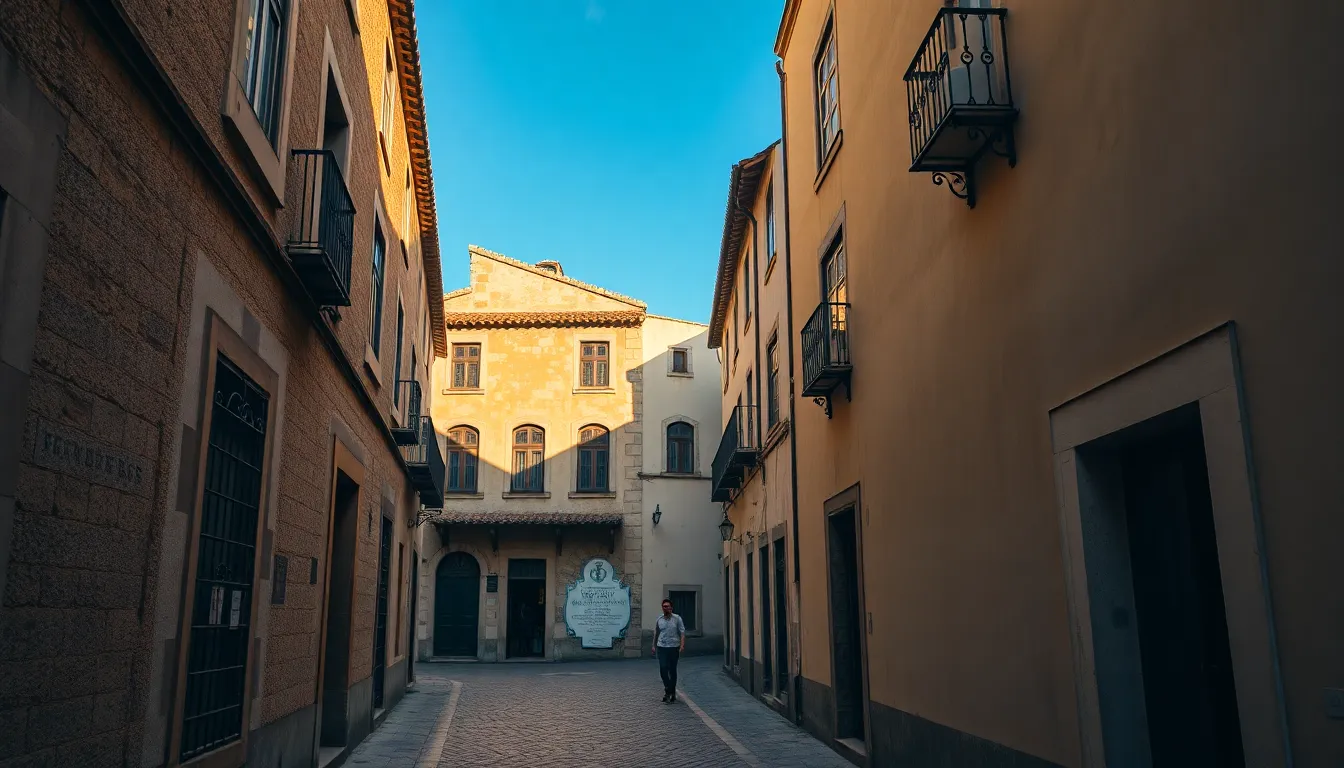
There is a problem with telling the Sephardic story inside Spain alone. The expulsion of 1492 did not end the story; it moved it. Many of the Jews driven out of Spain crossed the border into Portugal, only to face a forced conversion and a second expulsion a few years later. To follow the Sephardic arc honestly, you have to cross that border too. That is why I built this trip to run across both countries.
Two weeks is the length that lets the full story breathe. You start in the Castilian heartland where Sephardic life reached its height, move south into Andalusia, north into Catalonia, and then west across the border into Portugal, ending in Lisbon and the haunting memorial at Belmonte, where a community of secret Jews kept the faith alive for five centuries. It is a long trip, and it is the most complete Sephardic journey I know how to offer.
This is the cross-border expansion of our Spain-only 10-day heritage itinerary and a longer companion to the 7-day Jewish heritage route. If your community wants the whole Iberian arc, this is the one.
Day 1: Arrival in Madrid
Your group lands in Madrid and we handle the transfer and hotel. The arrival day is for rest. A fourteen-day trip is a marathon, and starting it tired sets a tone the group never shakes.
In the evening, if there is energy, an easy walk and a shared dinner is enough. I save the orientation for day two, when people can actually take it in.
Group leader note: On a trip this long, pacing is everything. Build the expectation on day one that there will be rest days and slow mornings. A group that thinks every day will be full will burn out by week two.
Days 2-3: Madrid and Toledo
Day two begins in Madrid, where the Prado holds works that document Jewish and Christian life in medieval Spain, a visual foundation for the journey. Then we drive south to Toledo, the heart of Sephardic Spain, and give it a full day and a half.
Toledo holds two of the three medieval synagogues still standing in Spain. El Transito, built in 1357 by Samuel ha-Levi, carries Hebrew inscriptions naming it a crown of beauty. Santa Maria la Blanca, older by a century, shows the Moorish influence on Jewish life in its white horseshoe arches. The Sephardic Museum beside El Transito and the old Juderia complete the picture of the city that was the intellectual capital of Sephardic life.
Group leader note: Toledo sits on a steep hill with cobblestoned streets. Plan a slower pace for older congregants and build in seated breaks. Two days here is not too much; this is the emotional center of the Spanish half of the trip.
Day 4: Cordoba
We drive south to Cordoba, city of Maimonides. The synagogue here is small, one of only three medieval synagogues left in Spain, with stucco work and Hebrew inscriptions that echo the Alhambra. The Juderia wears Maimonides openly, with his statue in the quarter and his memory in the streets.
The Mezquita stands next door, a mosque that became a cathedral, and even on a Sephardic trip I include it, because it explains the Andalusian world that Jewish Cordoba lived inside.
Group leader note: Cordoba gets brutally hot in summer, past 40 degrees Celsius in the old city. Schedule the synagogue and Mezquita for the morning and take an indoor lunch before the afternoon peak.
Day 5: Seville and Granada
Seville’s old Jewish quarter of Santa Cruz carries the memory of the community that lived there before the pogroms of 1391, the violence that foreshadowed the expulsion a century later. The narrow streets and the Alcazar tell the story of a city where power changed hands repeatedly.
Granada is the Alhambra, but the Alhambra has a Jewish chapter most guidebooks skip. Samuel ibn Naghrillah rose to become the first Jewish grand vizier of a Muslim kingdom, and Jewish scholars and physicians served the Nasrid court. The palace your group walks through was shaped in part by Jewish intellectual life.
Group leader note: The Alhambra requires advance booking and timed entry. We handle it, but it means the Granada day is structured around the assigned slot. Plan the rest of the day around that time, not the other way around.
Days 6-7: Barcelona and Girona
We fly north to Barcelona. Its Gothic Quarter holds El Call, the medieval Jewish quarter, with a small synagogue of debated but very early date. Girona, an hour north, has one of the best-preserved Jewish quarters in Europe and was a center of Kabbalah, home to Nachmanides. The Museum of Jewish History sits inside the Call. Girona is quieter than Barcelona and often becomes the high point of the Spanish half.
Group leader note: Barcelona has real pickpocketing near the Ramblas and the Gothic Quarter. Brief your group plainly: bags closed and close, no stopping for street performers, stay together in the crowds. Girona’s Call has steep stairs and rewards a slow pace.
Day 8: Rest and Transfer Toward the Border
After a full week, day eight is a deliberate rest and travel day. We move west toward the Spanish-Portuguese border region, breaking the long transfer so the group is not worn down. A lighter day here is what makes the second week possible.
Group leader note: Do not skip the rest day to add a site. I have learned this the hard way. The groups that push straight through arrive in Portugal exhausted and miss the emotional weight of what is the most moving part of the whole trip.
Day 9: Crossing into Portugal and Belmonte
We cross the border into Portugal and travel to Belmonte, and this is where the trip turns. Belmonte is home to a community of Crypto-Jews, descendants of those who were forcibly converted, who secretly kept Jewish practice alive for nearly five centuries, hidden even from their neighbors. The community only openly returned to Judaism in the twentieth century. There is a synagogue and a Jewish museum here, and the story they tell is unlike anything on the Spanish side.
Standing in Belmonte, the abstract history of the expulsion becomes a living, breathing thread of survival. For many groups this is the moment the whole journey has been building toward.
Group leader note: Give Belmonte time and silence. This is not a checklist stop. The story of secret faith kept across five hundred years lands hard. Build in space for the group to sit with it before moving on.
Day 10: Porto and the Northern Quarters
We travel to Porto, where the old Jewish quarter and the striking Kadoorie Mekor Haim synagogue, one of the largest in the Iberian Peninsula, tell the story of Jewish life and its modern revival in northern Portugal. The synagogue was built in the 1930s, a sign that the thread never fully broke.
Porto itself, with its river and its old town, gives the group a gentler day after the intensity of Belmonte.
Group leader note: After Belmonte, the group needs a day that is beautiful and a little lighter. Porto provides it. Read the room; this is a good day for a longer, slower lunch.
Days 11-12: Lisbon
We travel south to Lisbon and give it two days. Lisbon’s old Alfama district held the medieval Jewish quarter, and the city carries the memory of the 1506 Lisbon massacre, marked today by a memorial in the Largo de Sao Domingos. The line of the inscription, in dozens of languages, names tolerance as the only answer to that history.
Lisbon also tells the story of the Sephardic diaspora outward, the networks that ran from here to Amsterdam, to the Ottoman lands, to the New World. The Jewish thread that left Iberia is part of Lisbon’s story too.
Group leader note: Lisbon’s hills are steep and its trams are crowded. For older congregants, plan around the funiculars and the flatter Baixa district. Two days lets you balance the heritage sites with the rest the group needs by now.
Day 13: Sintra and Reflection
A lighter day out to Sintra, in the hills above Lisbon, with its palaces and gardens. After twelve days of dense and often heavy history, the group needs a day of beauty that asks nothing of them. I also use the evening for a closing reflection, where people name what the two weeks gave them.
Group leader note: The closing reflection on a long trip matters more than any final site. People have carried a lot. Give them the evening to say it out loud, together, before the trip ends.
Day 14: Departure from Lisbon
The final day is departure from Lisbon. We handle the transfer and time it around the group’s flights. If departures are late, a final morning walk through the Alfama or a quiet last gathering closes the journey.
Group leader note: Two weeks together forges a real group. Leave room on the last morning for goodbyes. The relationships formed on a trip like this often outlast the memories of any single site.
FAQ: Two-Week Spain and Portugal Sephardic Itinerary
Why include Portugal in a Sephardic heritage trip?
Because the Sephardic story did not end at the Spanish border. Many Jews expelled from Spain in 1492 fled into Portugal, where they faced forced conversion and a second expulsion. Portugal holds the most moving chapters of survival, especially Belmonte, where a community kept Judaism secret for nearly five centuries. A Spain-only trip tells half the story. Crossing into Portugal completes the arc.
Is two weeks too long for a congregation group?
For the right group, two weeks is exactly right, and it is the only honest length for the full Iberian Sephardic story. We build in rest days and lighter mornings so the pace is sustainable for mixed ages. That said, if two weeks is more than your community can manage, the Spain-only 10-day itinerary or the focused 7-day Jewish heritage route cover the core of the story in less time.
What makes Belmonte so significant?
Belmonte is home to descendants of Crypto-Jews who, after forced conversion, secretly preserved Jewish practice for nearly five hundred years, hidden even from neighbors, openly returning to Judaism only in the twentieth century. It is one of the most remarkable stories of faith survival anywhere in the world. For most groups, standing in Belmonte is the emotional peak of the entire two weeks.
How do you handle kosher meals across two countries?
We coordinate kosher arrangements where they are available and plan around the gaps where they are not. Madrid, Barcelona, and Lisbon have the most options. The smaller towns require advance planning, which we handle. Tell us your community’s specific needs early and we build the food logistics into the itinerary across both countries rather than improvising on the ground.
Can Heritage Tours customize this two-week itinerary?
Every itinerary we build is customized. If your group wants more time in Toledo, an extra day in Lisbon, additional rest days, or a different border crossing, we reshape it. You can read more on our Spain destination page and our group heritage tours page, where group leaders travel free with fifteen or more participants.
If your community is ready for the full Iberian Sephardic journey, across both countries, end to end, I would be honored to help you build it. Tell me about your group and what you hope they carry home, and we will shape the two weeks together. Contact us whenever you are ready to start.