When a rabbi calls me about Spain, the first thing I hear is usually a question about time. They have a congregation that wants to walk Sephardic ground, but they cannot ask working families to give up two full weeks. They want to know if a Jewish heritage trip can be done in a week without turning it into a blur of bus windows.
It can. I have run this exact seven-day route more times than I can count, and it holds together because it does not try to see all of Spain. It traces one thread: the Sephardic story, from Toledo through Cordoba up to Girona, with Madrid and Barcelona as the gateways on each end. Seven days is tight, but it is honest. You will stand in three of Spain’s surviving medieval synagogues, you will walk three of the best-preserved Jewish quarters in Europe, and you will not feel like the trip was a sprint.
This is the focused Sephardic version of our broader 10-day Spain heritage itinerary. If your community has more time or wants the Christian sites woven in, start there. If you want a week that stays inside the Jewish story, this is the route.
Day 1: Arrival in Madrid
Your group lands in Madrid. We handle the airport transfer and the hotel check-in, so the only job on day one is rest. I do not schedule anything serious for the arrival day. People are tired, the time change is real, and the week ahead asks a lot of them emotionally.
If the group has energy in the late afternoon, a slow walk through the center of Madrid is enough. No museum, no agenda. Let people eat a good dinner together and sleep.
Group leader note: Resist the urge to fill day one. I have watched leaders try to squeeze a site in on arrival day and it sets a rushed tone the group never fully shakes. The trip starts tomorrow.
Day 2: Madrid to Toledo
We leave Madrid in the morning and drive south to Toledo, about an hour by private coach. Toledo is the heart of this trip, and I give it real time on purpose.
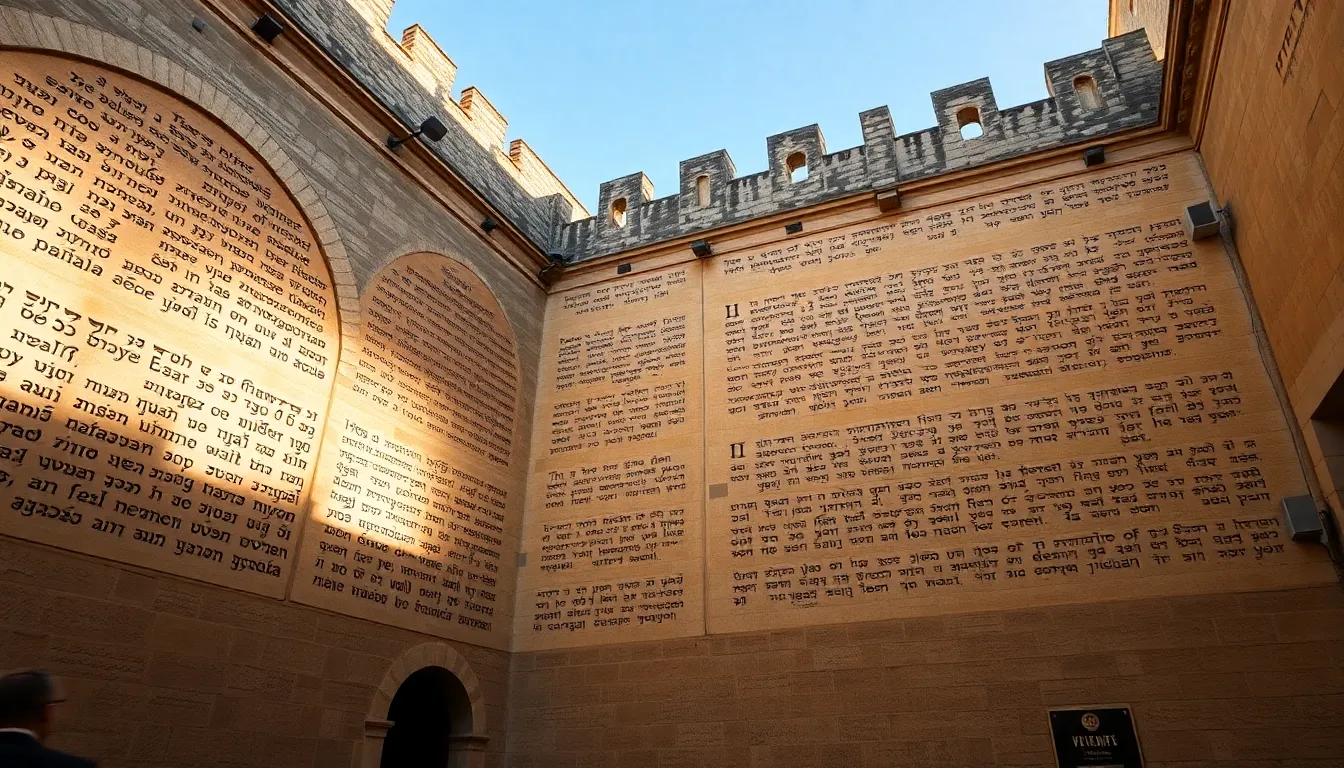
Toledo holds two of the three medieval synagogues still standing in Spain. El Transito, built in 1357 by Samuel ha-Levi, treasurer to the king of Castile, is the one that stops groups in their tracks. The Hebrew inscriptions along the upper walls name it a crown of beauty. It survived the expulsion of 1492. It is still standing, and your group will stand inside it.
A short walk away is Santa Maria la Blanca, older than El Transito by about a century, with white horseshoe arches that show how closely Jewish and Moorish artistic life were braided together in medieval Spain. Between the two synagogues sits the old Juderia, the Jewish quarter, with the Sephardic Museum attached to El Transito. I build in time to walk the quarter slowly, because the streets themselves carry the story.
Group leader note: Toledo’s old city sits on a steep hill, and the streets are cobblestoned and uneven. For older congregants, plan a slower pace and build in seated breaks. Morning visits are cooler, which matters from May through September.
Day 3: Toledo to Cordoba
We spend the morning finishing Toledo, then drive south to Cordoba in the afternoon. This is a longer transfer, so I keep the Cordoba arrival relaxed and save the heavy visits for the next morning.
Cordoba in the evening is one of the quiet pleasures of this route. The old Juderia empties out after the day-trippers leave, and walking it at dusk, before your group has even seen the synagogue, gives people a feel for the neighborhood as a place where life happened, not just a museum.
Group leader note: Use the evening for a short orientation talk. I like to set up the Cordoba story the night before, so when the group walks into the synagogue in the morning, they already understand who Maimonides was and why this small city mattered so much to Sephardic intellectual life.
Day 4: Cordoba
Cordoba’s synagogue is small, and most tourists give it fifteen minutes. Your group should give it more. It is one of only three medieval synagogues left in all of Spain, and the stucco work inside, with its Hebrew inscriptions and geometric patterns, carries the same artistic language you see in the Alhambra. Standing in a room this small, you feel the scale of a community that produced some of the greatest minds in Jewish history.
Cordoba was the city of Maimonides. There is a statue of him in the Juderia, and the quarter wears his memory openly. For a Jewish heritage group, the connection between this place and the Mishneh Torah is worth sitting with.
The Mezquita is next door, and I include it even on a Jewish-focused trip. A mosque that became a cathedral, built over a church, with Roman columns underneath, it is the physical history of every faith that ruled Spain. For Sephardic groups, it explains the world Jewish Cordoba lived inside.
Group leader note: Cordoba gets brutally hot. In summer the old city regularly passes 40 degrees Celsius. Schedule the synagogue and Mezquita for first thing in the morning and plan an indoor lunch before the afternoon peak.
Day 5: Cordoba to Barcelona
This is a travel day. We fly from the south up to Barcelona, which saves your group a very long drive and keeps the energy for the heritage sites. We handle the internal flight and all the transfers, so nobody navigates an airport alone.
By late afternoon the group is in Barcelona, and if there is time, I bring them into the Gothic Quarter to see El Call, the medieval Jewish quarter. The streets are narrow and easy to miss. There is a small synagogue here that some historians date very early, possibly to the centuries before the medieval Call took shape. The dating is debated, but the site is real, and it makes a good first taste of Catalan Jewish history before the deeper visit in Girona.
Group leader note: Barcelona is a big city with real pickpocketing near the Ramblas and the Gothic Quarter. Brief your group plainly before you go in: bags closed and held close, no stopping for street performers, stay together in the crowds.
Day 6: Girona
Girona, about an hour north of Barcelona, has one of the best-preserved Jewish quarters in all of Europe, and for many groups it becomes the emotional high point of the week. The Call here is quieter and more intact than Barcelona’s. Walking it, you genuinely feel like you are moving through a medieval neighborhood that was once entirely Jewish.
The Museum of Jewish History sits inside the quarter and tells the story of Catalan Jewry with care. Girona was also a center of Kabbalah, home to Nachmanides, and the museum and the streets together carry that mystical and scholarly weight.
I give Girona a full, unhurried day. After five days of dense history, this is the place where it all settles into something people can hold.
Group leader note: Girona’s Call has steep stairs and narrow lanes. It rewards a slow pace. Build in a long lunch in the old town so the group can rest before the afternoon walk through the museum.
Day 7: Departure from Barcelona
The last day is a departure day. Depending on flight times, some groups use the morning for a final walk through Barcelona’s Call or a closing reflection at the hotel before the airport transfer. I like to leave room for the group to say what the week meant to them before everyone scatters home.
Group leader note: If flights are late in the day, a closing session in the morning is worth more than one more site. People process a heritage trip out loud, together, and that conversation often matters more than anything on the schedule.
FAQ: 7-Day Jewish Heritage Itinerary for Spain
Is seven days enough for a Jewish heritage tour of Spain?
Yes, if you keep the focus tight. Seven days is enough to do Toledo, Cordoba, and Girona properly, which together hold the core of the Sephardic story and all three of Spain’s surviving medieval synagogues. What seven days will not do is add Seville, Granada, and a Christian track on top. If your community wants those, look at the longer 10-day itinerary or the 5-day Toledo and Cordoba route if you have even less time.
Which cities are essential for a Sephardic heritage trip?
Toledo first. It holds two of the three surviving medieval synagogues and was the intellectual capital of Sephardic life for centuries. Cordoba is the city of Maimonides and holds the third synagogue. Girona has one of the best-preserved Jewish quarters in Europe and was a center of Kabbalah. Those three carry the story. Barcelona’s Call is a worthwhile addition because it is on the route to Girona.
Can a Jewish heritage group keep kosher on this trip?
We coordinate kosher meal arrangements where they are available and work around the gaps where they are not. Madrid and Barcelona have the most options. Toledo, Cordoba, and Girona require more planning, which we handle in advance. Tell us your community’s specific needs early and we build the food logistics into the itinerary rather than improvising on the ground.
Does this trip work for a mixed Jewish and Christian group?
This particular route is built for a Jewish heritage focus. The sites are chosen for the Sephardic story. A mixed group is better served by our 10-day itinerary, which weaves the cathedrals and Christian sites alongside the synagogues, since in most Spanish cities those sites sit a short walk apart.
Can Heritage Tours adjust this itinerary for my congregation?
Every itinerary we build is customized. This seven-day route is a framework. If your group wants a second day in Toledo, or wants to add a rest day, or needs to start and end in the same city, we reshape it. You can read more about how we structure these journeys on our Spain destination page and our group heritage tours page, where group leaders travel free with fifteen or more participants.
If you are thinking about leading your congregation through Sephardic Spain in a single focused week, I would welcome that conversation. Tell me about your community and the time you have, and we will build the week that fits. Contact us whenever you are ready to start.