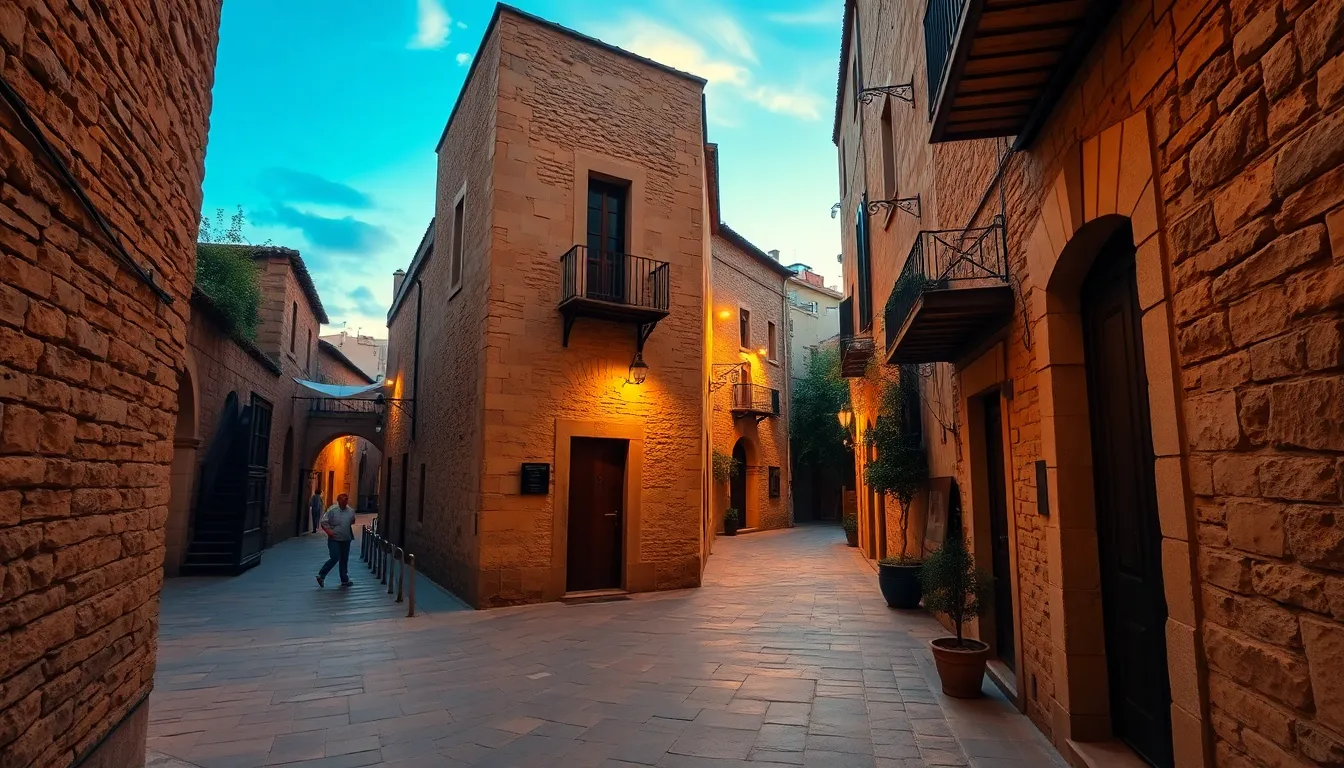
Not every group has ten days. Sometimes a pastor or a rabbi has a congregation that can give up a long weekend stretched into a work week, and no more. When that is the situation, the worst thing I can do is try to cram seven cities into five days. The bus wins and the people lose.
So I built this route to do the opposite. Five days, two cities, done deeply. Toledo and Cordoba are the two richest heritage cities in central and southern Spain, and they sit on a clean line south from Madrid. Between them they hold three of Spain’s surviving medieval synagogues, the Mezquita, two of its great cathedrals, and the layered story of Jewish, Christian, and Muslim Spain in one tight loop. You will not see everything. You will understand what you do see.
This is the short version of our full 10-day Spain heritage itinerary. If your group can give more time, that route adds Granada, Seville, and the Catalan cities. If five days is what you have, this loop is the most heritage you can absorb without rushing.
Day 1: Arrival in Madrid
Your group lands in Madrid and we handle the transfer and hotel. On a five-day trip every hour counts, but the arrival day still belongs to rest. Tired travelers do not absorb heritage, they endure it.
If the group has energy in the late afternoon, an easy walk through central Madrid and a good dinner together is the right amount. Nothing on the schedule. The work starts tomorrow.
Group leader note: On a short trip the temptation to add a Madrid museum on day one is strong. Resist it. A rested group on day two gets more out of Toledo than a jet-lagged group that saw the Prado in a fog.
Day 2: Toledo
We drive south to Toledo in the morning, about an hour by private coach, and give the city a full day. Toledo earns it.
Toledo holds two of the three medieval synagogues still standing in Spain. El Transito, built in 1357, carries Hebrew inscriptions along its upper walls that name it a crown of beauty. It survived the expulsion of 1492. Santa Maria la Blanca, older by a century, has white horseshoe arches that show how braided Jewish and Moorish artistic life were in medieval Spain. The Sephardic Museum sits beside El Transito and ties the two together.
Toledo is also one of the great Gothic cathedrals of Europe, and its choir and chapels are worth a slow morning for any Christian group. The genius of Toledo is that the synagogues, the cathedral, and the old mosque all sit within a short walk, because the city was shaped by three faiths living in close quarters for centuries.
What makes a full day here matter, rather than the half-day most bus tours give it, is that Toledo only opens up when you slow down. The first hour is the famous sites. The next few hours, walking the lanes of the old Juderia, looking up at doorways and street signs that still carry their medieval names, is where the city stops being a checklist and starts being a place people lived. I have watched groups come alive in that second stretch, when the rush is gone and the streets are theirs. On a five-day trip you cannot give every city this kind of room, which is exactly why Toledo gets it.
Group leader note: Toledo’s old city sits on a steep hill with cobblestoned, uneven streets. For older congregants, plan a slower pace and seated breaks. Morning is cooler, which matters from May through September. We stay overnight in Toledo so the group is not rushed by a same-day return to Madrid.
Day 3: Toledo to Cordoba
We finish Toledo in the morning, then drive south to Cordoba. This is the longest transfer of the trip, so I keep the Cordoba arrival relaxed and hold the major visits for the next day.
Cordoba in the evening rewards an unhurried walk. After the day-trippers leave, the old Juderia empties out, and the narrow whitewashed lanes feel like the living neighborhood they once were. Walking the quarter at dusk, before you have even entered the synagogue, gives the group a feel for the place that the daytime crowds erase.
Group leader note: Use the evening for a short orientation. I set up the Cordoba story the night before, so when the group enters the synagogue in the morning they already know who Maimonides was and why this small city carried so much weight in Sephardic and Andalusian history.
Day 4: Cordoba
Cordoba is the heart of day four. The synagogue is small, one of only three medieval synagogues left in all of Spain, and most tourists give it fifteen minutes. Your group gives it more. The stucco work inside, with its Hebrew inscriptions and geometric patterns, speaks the same artistic language as the Alhambra. This was the city of Maimonides, and the Juderia wears his memory openly.
Steps away stands the Mezquita, Cordoba’s defining site. A mosque that became a cathedral, with Roman columns, a forest of red and white Moorish arches, and a Renaissance nave built inside it. For faith travelers it is the physical history of Spain’s religious transformations in a single building. With a guide who can read each layer, the visit changes from sightseeing into understanding.
I always tell groups to walk the Mezquita twice. The first pass, you take in the scale, the hundreds of arches receding in every direction, the sheer strangeness of a cathedral grown inside a mosque. The second pass, you slow down and read the layers: the Roman columns reused from older buildings, the mihrab pointing toward Mecca, the Christian chapels added after the reconquest. Two cities and five days does not let you do this everywhere, but it lets you do it here, and the Mezquita rewards the second look more than almost any building in Spain.
Group leader note: Cordoba gets brutally hot. In summer the old city regularly passes 40 degrees Celsius. Schedule the synagogue and Mezquita for first thing in the morning and plan an indoor lunch before the afternoon peak. The Mezquita is large and cool, which makes it a good midday refuge.
Day 5: Cordoba to Madrid and Departure
The final day is a return to Madrid for departure. The drive north is direct, and we time it around the group’s flights so there is no rushing for the airport.
If flights are late in the day, I use the Cordoba morning for a final walk through the Juderia or a closing reflection before the coach leaves. On a short, intense trip, people need a moment to gather what they saw before they scatter home.
Group leader note: If your group is flying out of Madrid in the evening, the drive from Cordoba leaves comfortable margin. If flights are early, we leave Cordoba the night before and overnight near the airport. We build the timing so the last day never feels like a scramble.
FAQ: 5-Day Toledo and Cordoba Heritage Itinerary
Is five days enough for a heritage trip to Spain?
It is enough to do two cities deeply, and that is the right goal for five days. Toledo and Cordoba together hold three of Spain’s surviving medieval synagogues, the Mezquita, two great cathedrals, and the full layered story of Jewish, Christian, and Muslim Spain. What five days will not do is add Granada, Seville, and the Catalan cities. For those, look at the 10-day itinerary or the 7-day Jewish heritage route.
Why Toledo and Cordoba instead of other cities?
Because they sit on a clean line south from Madrid and between them carry the densest heritage in central and southern Spain. Toledo was the intellectual capital of Sephardic life and a meeting point of three faiths. Cordoba was the city of Maimonides and the heart of Andalusian culture, with the Mezquita as its crown. In five days, these two give you more depth per day than any other pairing in Spain.
Does this trip work for both Jewish and Christian groups?
Yes, and that is part of why these two cities fit a short trip so well. In both Toledo and Cordoba the synagogues, cathedrals, and the Mezquita sit a short walk apart, so the same day holds meaning for Jewish and Christian travelers alike. The shared geography reflects the shared history. We weight the guiding toward your group’s focus without cutting the other tradition out.
How do you handle the travel between cities on such a short trip?
By private coach with hotel pickup and dropoff, so your group never navigates train stations or rental cars. We overnight in Toledo and in Cordoba rather than running same-day returns, because the overnight stays are what keep a five-day trip from feeling like a sprint. The only long drive is Toledo to Cordoba, and we keep that afternoon light.
Can Heritage Tours customize this five-day itinerary?
Every itinerary we build is customized. If your group wants two nights in Toledo instead of one, or wants to add a half-day in Madrid, or needs to fly home from a southern airport, we adjust. You can read more on our Spain destination page and our group heritage tours page, where group leaders travel free with fifteen or more participants.
If your community can only spare a short trip but still wants to walk real heritage ground, this Toledo and Cordoba loop is the most I can give you in five days. Tell me about your group and the dates you are weighing, and we will shape it to fit. Contact us whenever you are ready to start.