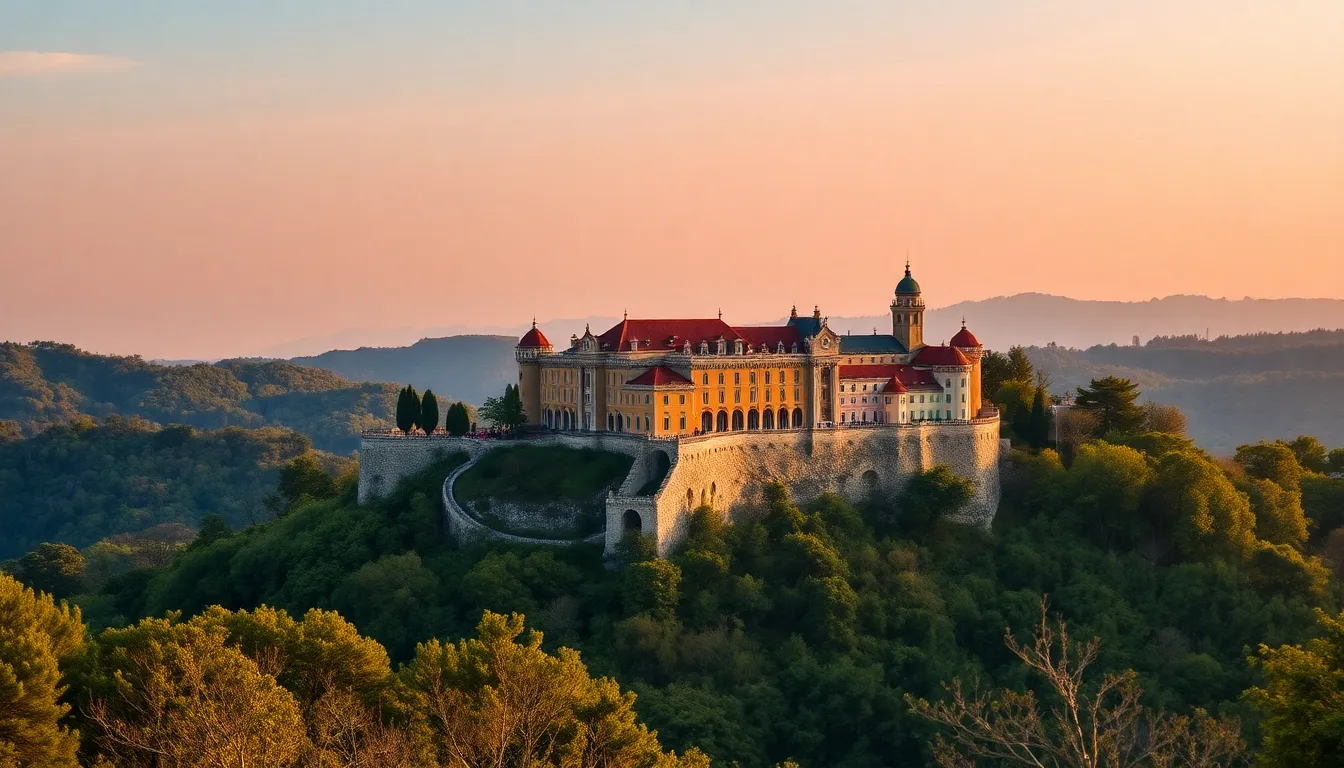
I almost left Sintra off the first itinerary I ever built for Portugal. It sat in the “nice if there is time” column, the kind of place you visit because the guidebook says you should. Then I went, and I understood my mistake within an hour. Sintra is not a side trip. For a group that has spent days in the weight of Fatima and the silence of the heritage towns, Sintra is the place where Portugal exhales. The hills are cool and green, the palaces look like something out of a dream, and the whole town carries a strange, layered history that turns out to be richer than its postcard reputation suggests.
Let me orient you to it the way I now orient every group, because Sintra rewards travelers who understand what they are walking into. This is a town where Moorish, Christian, and romantic-era history are stacked on top of each other in the hills above the coast, less than an hour from Lisbon. Knowing those layers is the difference between a pretty day out and a meaningful one.
Where Sintra Sits and Why It Matters
Sintra lies in the wooded hills just west of Lisbon, close enough that you can fold it into a Lisbon-based itinerary without long travel days. That proximity is part of why it works so well for groups. After the intensity of a pilgrimage week, you want a day that is lighter on the spirit without being empty of meaning, and Sintra delivers exactly that.
The whole cultural landscape of Sintra is a UNESCO World Heritage Site, recognized not for a single monument but for the way palaces, gardens, and ruins are woven into the forested hills. Kings and nobles came here for centuries to escape the heat of Lisbon, and each generation left something behind. The result is a town that reads like a timeline you can walk through, from the Moorish period to the Christian reconquest to the romantic imagination of the nineteenth century.
For a faith group, the value of Sintra is not a single sacred site. It is the chance to see how power, faith, and beauty intertwined across a thousand years of Portuguese history, all in one walkable cluster of hills.
The Pena Palace: Romanticism on a Hilltop
The image most people carry of Sintra is the Pena Palace, and it earns its fame. Perched on one of the highest points above the town, painted in vivid reds and yellows, it looks less like a building than an invention. It was built in the nineteenth century by King Ferdinand II on the ruins of an old monastery, and that origin matters. Underneath the romantic fantasy is a Hieronymite monastery that had stood on the site since the sixteenth century before an earthquake left it in ruins.
I point that out to groups because it captures something true about Sintra. Nothing here is only one thing. The Pena Palace looks like pure nineteenth-century imagination, but it sits on genuine religious foundations, and you can still find the old monastery chapel and cloister woven into the structure. The faith layer is there if you know to look for it.
The views from the terraces stretch all the way to the Atlantic, and on a clear day a group can see the whole western edge of Portugal from up there. It is a good place to talk about how far the country once reached, and how its age of exploration was bound up with both Christian mission and Jewish navigational knowledge.
The Moorish Castle: The Older Story Underneath
Across a neighboring ridge sit the walls of the Castle of the Moors, and this is the site I do not let groups skip. The castle was built by the Moors in the eighth and ninth centuries, during the long period when much of the Iberian Peninsula was under Muslim rule. Its ramparts climb along the spine of the hill, and walking them gives you a physical sense of how contested this land was for centuries.
The Christian reconquest reached Sintra in the twelfth century, when the castle was taken during the broader campaign that founded the Portuguese kingdom. So within a short walk you have the Moorish builders, the Christian conquerors, and the romantic kings who came centuries later. Three faiths and three eras, layered into the same hillside.
There is something else worth knowing. Near the castle walls, archaeologists have identified a medieval church and a small associated cemetery, including evidence of the communities who lived here across these shifting periods. It is a quiet reminder that history in Iberia was never tidy, that Muslim, Christian, and Jewish life overlapped and collided across these same hills. For groups interested in that fuller Iberian story, our Portugal heritage travel guide traces how the Jewish chapter in particular unfolded across the country.
The National Palace and the Town Below
Down in the heart of the old town stands the National Palace of Sintra, recognizable by the two enormous white conical chimneys rising over the kitchens. This is the oldest surviving royal palace in Portugal still largely intact, lived in by Portuguese kings from the medieval period onward. Its rooms carry both Moorish and Christian decorative traditions, the famous tiled walls reflecting the Mudejar craftsmanship that Iberia inherited from its Muslim centuries.
The town below the palace is worth unhurried time. The streets are steep and narrow, lined with cafes and shops, and after days of heavier sites a group benefits from an afternoon that allows for wandering. I usually build in time here deliberately. Pilgrimage trips need their lighter hours too, and Sintra’s old town is a gentle place to take one.
If your itinerary is moving south afterward, our guides to the Alentejo and to Faro and the Algarve pick up the heritage thread in the plains and along the southern coast.
Practical Orientation for Group Leaders
A few things make or break a Sintra day, and I learned most of them the hard way.
First, the hills are real hills. The Pena Palace and the Moorish Castle both involve climbing, and the cobbled paths are uneven. For a mixed-age group, this matters. Shuttle buses run up to the hilltop sites from the town, and I always arrange transport rather than asking older travelers to walk the steep approaches. Plan footwear and pacing accordingly.
Second, Sintra gets crowded, particularly in the warm months and on weekends. An early start is the single best decision you can make. Reaching the hilltop palaces before the day-trip crowds arrive from Lisbon changes the whole experience. By mid-morning the narrow paths fill up.
Third, do not try to do everything. The temptation is to cram the Pena Palace, the Moorish Castle, the National Palace, and the gardens all into one day. You can, but the group will be exhausted and will remember none of it well. I usually choose two hilltop sites and the town below, and leave the rest for another visit. Depth beats coverage every time.
Sintra works beautifully as a one-day component within a longer Portugal heritage itinerary, most naturally paired with Lisbon. You can see how the full picture comes together on our Portugal destination page, and how the group structure works on our group heritage tours page.
For groups of 15 or more, the group leader travels free. That is how Heritage Tours honors the spiritual leader who gathers the community and carries the responsibility of the trip.
FAQ: Sintra Heritage Guide
What is Sintra known for?
Sintra is known for its romantic palaces and castles set into wooded hills just west of Lisbon. The whole cultural landscape is a UNESCO World Heritage Site, recognized for the way palaces, gardens, and ruins are woven into the forested terrain. The most famous sites are the colorful Pena Palace, the ancient Castle of the Moors, and the medieval National Palace in the old town.
How far is Sintra from Lisbon?
Sintra sits in the hills just west of Lisbon, close enough to visit as a day trip from a Lisbon base without long travel. That proximity makes it easy to fold into a Lisbon-centered portion of a Portugal heritage itinerary.
Is Sintra worth it for a faith heritage group?
Yes, though in a different way than a pilgrimage site like Fatima. Sintra’s value is the layered history of Moorish, Christian, and romantic-era Portugal stacked into one walkable cluster of hills. It also works as a lighter, restorative day within a heavier pilgrimage itinerary, which mixed-age groups often appreciate.
How much time do you need in Sintra?
One full day is enough if you choose carefully. I recommend selecting two hilltop sites (often the Pena Palace and the Moorish Castle) plus time in the old town below, rather than trying to see everything. Depth and a relaxed pace serve a group better than rushing through every monument.
Is Sintra physically demanding?
The hilltop sites involve climbing on steep, uneven cobbled paths, so for mixed-age groups it pays to arrange shuttle transport up to the palaces and to start early before crowds arrive. With good pacing and the right footwear, it is comfortable for most travelers. We plan the logistics around your group’s needs.
If Sintra is on your mind for a Portugal trip, or if you are weighing how to balance heavier pilgrimage days with lighter ones, I would be glad to talk it through. Building a rhythm that fits your community is one of the most rewarding parts of planning these journeys.
Contact us whenever you are ready to start.