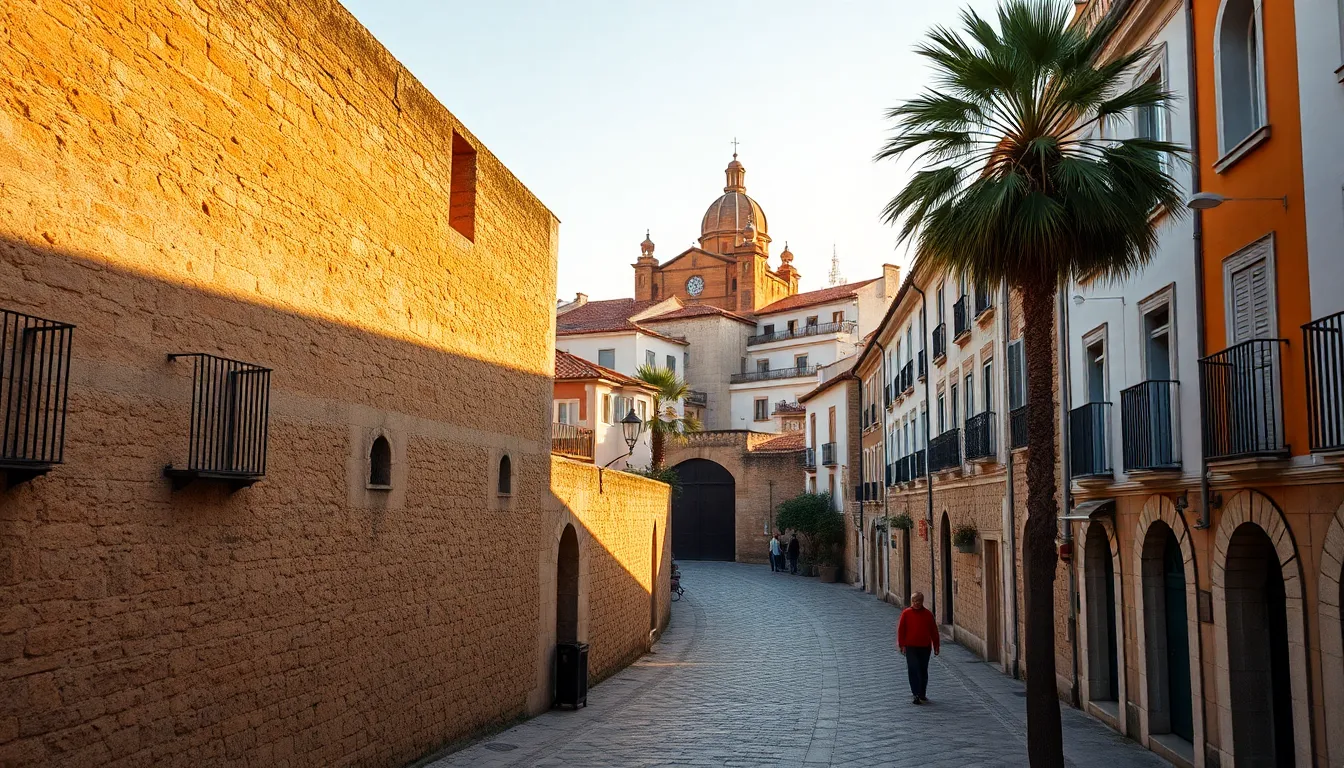
Most people think of the Algarve as beaches, and they are not wrong. The southern coast of Portugal is famous for its golden cliffs and resort towns, and for a lot of travelers that is the whole story. But the first time I walked through the old walled town of Faro, past the cathedral and into the quiet courtyards behind the gates, I realized how much heritage hides underneath the holiday reputation. The Algarve was a frontier between faiths and empires for more than a thousand years, and Faro is where that long history is easiest to read.
I bring this up because group leaders sometimes write off the Algarve as not serious enough for a heritage trip. That is a mistake. Faro and the towns around it hold Roman, Moorish, Jewish, and Christian history layered as deeply as anywhere in the country, and the coast gives a pilgrimage group a gentler, lighter close to a journey that may have begun in the intensity of Fatima or the weight of Belmonte. Let me orient you to the heritage that the beach brochures leave out.
The Algarve as a Crossroads of Faiths
The Algarve is the southernmost region of Portugal, a strip of coast and low hills along the Atlantic. Its very name tells you its history. “Algarve” comes from the Arabic al-Gharb, meaning “the west,” because for centuries this was the western edge of the Muslim world in Iberia. The Moors held the Algarve longer than almost any other part of Portugal, and they shaped its towns, its agriculture, and its architecture in ways still visible today.
When the Christian reconquest finally reached the far south in the thirteenth century, the Algarve became the last piece of the Portuguese kingdom to fall into Christian hands. That late conquest left a deep Moorish imprint that never fully faded. And as in the rest of Portugal, Jewish communities lived and traded throughout the region across these centuries, until the forced conversions of 1497 drove that life underground here as everywhere else.
So when you bring a group to the Algarve, you are bringing them to a true crossroads, a place where Muslim, Christian, and Jewish history overlapped along the same coast for a thousand years. Our Portugal heritage travel guide sets out the national story that the Algarve completes at the country’s southern edge.
Faro: The Old Town and the Cathedral
Faro is the capital of the Algarve and the right base for a heritage visit to the region. Most travelers pass through its airport on the way to the beaches and never see the old town at all, which is their loss and your opportunity.
The historic core, the Cidade Velha, is a walled town entered through a grand arched gate, the Arco da Vila, built over the site of a medieval Moorish gate. Inside, the streets are quiet and the centuries are close to the surface. At the heart of the old town stands the Cathedral of Faro, the Se, built in the thirteenth century after the Christian reconquest, raised on the site of a former mosque, which had itself been built over a Roman temple. That single building holds three faiths and a thousand years stacked one on top of another. I always take a moment there to let a group sit with what those layers mean.
Climbing the cathedral tower gives a view across the old town, the lagoon, and the coast beyond, and it is a good place to talk about how this frontier shifted hands across the centuries. Faro also has its own quieter chapel of bones, attached to a church just outside the old walls, echoing the more famous one in Evora and offering the same honest meditation on mortality.
Faro had a Jewish presence in the medieval period, part of the wider Sephardic story that ran throughout southern Portugal. The traces are subtle today, but the history is real, and worth a guide who can place it. For the fuller account of that Sephardic heritage, including the towns where it survived in secret, our Trancoso and the walled towns guide carries the story north into the interior.
Beyond Faro: The Heritage Towns of the Coast
The Algarve rewards a group willing to explore beyond Faro, and several nearby towns deepen the heritage picture.
Silves, inland to the west, was the great Moorish capital of the Algarve, and its red sandstone castle still dominates the town from a hilltop, one of the best-preserved Moorish fortifications in Portugal. Walking those walls gives a group a vivid sense of the centuries when this was a center of Muslim Iberia. Below the castle, the cathedral and the old streets tell the story of what came after the reconquest.
Tavira, to the east, is one of the most graceful towns on the coast, set on a river with a Roman bridge, a castle, and an old town full of churches. It carries the same layered history in a quieter, more intimate setting than Faro, and many groups find it the most charming stop in the region.
Lagos, on the western Algarve, holds a heavier chapter. It was a center of Portugal’s age of exploration, and also a site connected to the early Atlantic slave trade, a history that a thoughtful group should not look away from. Heritage travel means encountering the difficult parts of the past alongside the inspiring ones, and the Algarve coast holds both.
If your itinerary is moving up from the south, our Alentejo heritage guide picks up the trail in the plains to the north.
The Coast as a Close to the Journey
There is a practical and a spiritual case for ending a Portugal heritage trip on the Algarve coast. Practically, it sits at the southern end of the country, a natural final region before heading home. Spiritually, after the intensity of the pilgrimage sites and the weight of the heritage towns, the open coast gives a group room to absorb what they have seen.
I often plan a slower final day or two on the Algarve into longer itineraries on purpose. A heritage journey takes something out of people, in the best way, and the southern coast is a gentle place to come down from it, to talk over what the trip meant, to watch the Atlantic at the western edge of where the old explorers once set out. The lightness is not a lapse in seriousness. It is part of letting the journey land.
Planning an Algarve Trip for Your Group
A few practical notes. Faro is the natural base, with the heritage towns of Silves, Tavira, and Lagos within comfortable day drives. Two to three days lets a group see Faro’s old town and reach two or three of the surrounding towns without rushing.
The Algarve is Portugal’s most popular holiday region, which means the coast gets crowded and expensive in the high summer months. For a heritage group, spring and fall are far better, with comfortable weather, smaller crowds, and easier logistics. The heritage sites themselves are never as busy as the beaches, but the towns and roads are calmer outside the peak.
As across Portugal, the deeper heritage here, the layered history of the cathedral, the Moorish story at Silves, the Jewish presence, the difficult chapters at Lagos, comes alive with a guide who knows the region. You can see how the Algarve fits into a full Portugal itinerary on our Portugal destination page, and how the group experience works on our group heritage tours page.
For groups of 15 or more, the group leader travels free. That is how Heritage Tours honors the pastor, rabbi, or educator who gathers the community and gives the journey its meaning.
FAQ: Faro and the Algarve Heritage Guide
Is the Algarve worth visiting for heritage, not just beaches?
Yes. Beneath its holiday reputation, the Algarve holds Roman, Moorish, Jewish, and Christian history layered as deeply as anywhere in Portugal. Faro’s old town and cathedral, the Moorish castle at Silves, and the graceful streets of Tavira give a faith group a rich heritage experience that most beach travelers never see.
What is there to see in Faro?
Faro’s walled old town, the Cidade Velha, is the highlight, entered through the grand Arco da Vila gate. At its heart stands the Cathedral of Faro, built after the Christian reconquest on the site of a former mosque that had itself stood over a Roman temple, three faiths and a thousand years in one building. The town also has a chapel of bones and a quiet, layered old quarter worth unhurried time.
Does the Algarve have Jewish heritage?
Yes. Jewish communities lived and traded throughout the Algarve in the medieval period, part of the wider Sephardic story of southern Portugal, until the forced conversions of 1497 drove that life underground. The physical traces in Faro and the coastal towns are subtle today, but the history is real and worth a guide who can place it within Portugal’s larger Jewish story.
What towns should I visit beyond Faro?
Silves, the former Moorish capital with its red sandstone castle, is the standout for Moorish heritage. Tavira, set on a river with a Roman bridge and an old town full of churches, is the most graceful. Lagos holds a heavier history tied to the age of exploration and the early Atlantic slave trade, which a thoughtful group should engage with rather than avoid.
When is the best time to visit the Algarve?
Spring and fall are best for a heritage group. The Algarve is Portugal’s most popular summer holiday region, so the coast is crowded and expensive in July and August. In spring and fall the weather is comfortable, the crowds thin, and the logistics are easier, while the heritage sites stay calm year-round.
If you are picturing the Algarve as a gentle close to your community’s Portugal journey, or wondering how to balance its lighter days against the weight of the pilgrimage sites, I would be glad to talk it through. Helping a group end their journey well, with room to absorb what they have seen, is one of the quiet privileges of this work.
Contact us whenever you are ready to begin.