There is a doorway in Trancoso that I always take groups to see. It looks like nothing, an ordinary stone lintel on an ordinary house in the old walled town. But carved into the stone, faint and easy to miss, is a symbol that a converso family left there centuries ago, a quiet sign of a Jewish faith that was supposed to have been erased in 1497. Every time I stand in front of it with a group, the same thing happens. People go silent. Because that doorway is not history in a book. It is the actual mark of people who refused to disappear.
That is what the walled towns of the Beira region offer that almost nowhere else does. This is the part of Portugal where the crypto-Jewish story is written into the streets and stones, alongside the Christian and military heritage of the medieval frontier. Trancoso, Belmonte, Guarda, and the towns around them form a heritage trail through the fortified interior, and for a faith group, especially one with Sephardic roots, it is among the most moving regions in the country. Let me orient you to it.
The Beira Frontier: Why These Towns Were Fortified
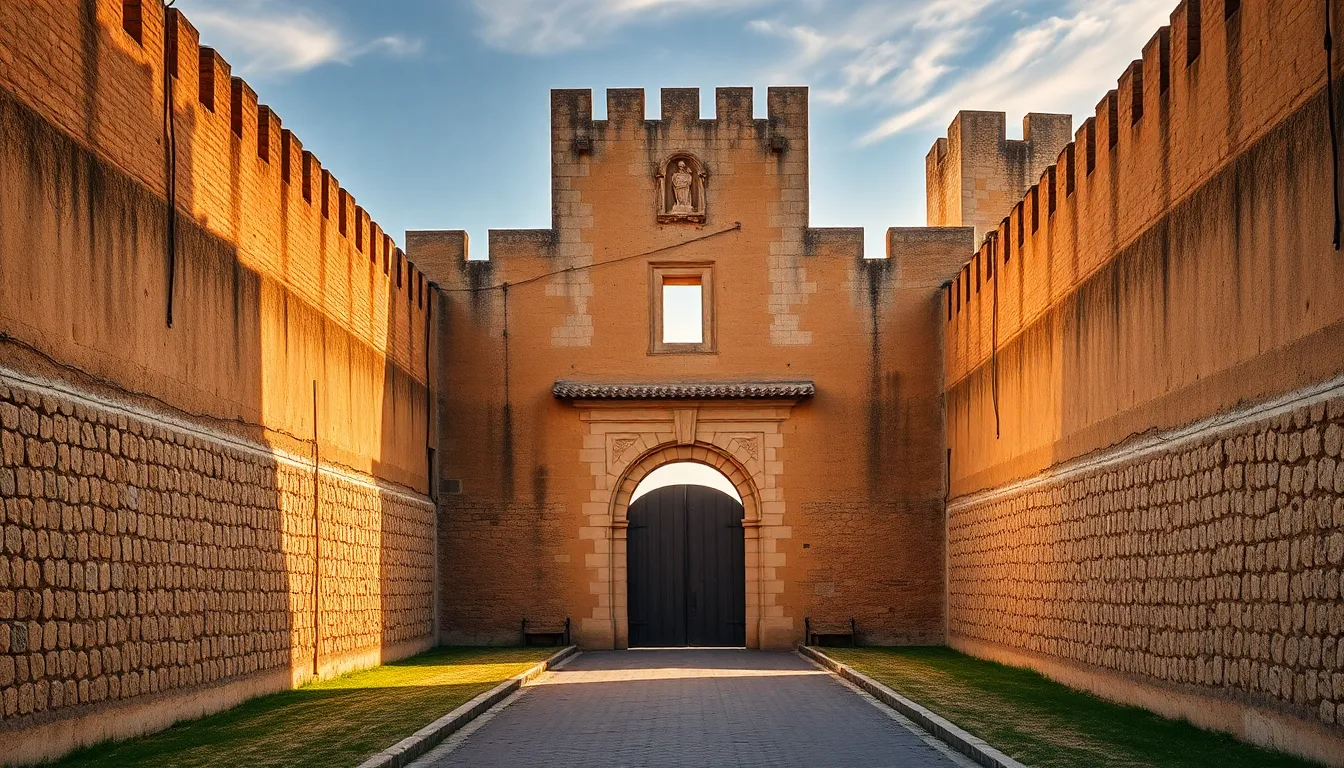
The Beira region sits in the northern interior of Portugal, a high, rugged landscape near the Spanish border, in the shadow of the Serra da Estrela mountains. For centuries this was contested frontier country, fought over between the emerging Portuguese kingdom and the kingdoms of Spain to the east. That is why the towns here are walled. Trancoso, Guarda, and their neighbors were built as fortresses, their ramparts and castles meant to hold a dangerous border.
That frontier character matters for the heritage story. Border regions were often places where Jewish communities found a measure of room to live and trade, a little further from central authority. When the forced conversions came in 1497, these same remote towns became places where crypto-Jewish families could practice in secret with less scrutiny than they would have faced in Lisbon. The geography that made these towns fortresses also made them refuges.
A group traveling this trail is following both stories at once: the Christian military history of the frontier, and the hidden Jewish survival that unfolded behind those same walls. Our Portugal heritage travel guide sets out the national arc that these towns bring to ground level.
Trancoso: The Walled Town and Its Hidden Symbols
Trancoso is the town I send groups to first, because it holds the heritage trail’s heart in the most concentrated form. The medieval walls still ring the old town, and you enter through stone gates into a tangle of narrow streets that have changed little in centuries.
Trancoso had a substantial Jewish community in the medieval period, one of the most important in the region. After 1497, many of its families converted outwardly while keeping their faith alive in secret. The traces of that double life are still visible in the old town for those who know to look. Carved into the doorways and lintels of certain houses are crosses, symbols, and markings that scholars connect to the converso families who lived there, quiet declarations of an identity that could not be spoken aloud.
The town also holds the Casa do Gato Preto, the House of the Black Cat, a building with notable carved facades tied to the period’s Jewish history, and in recent years Trancoso has opened an interpretive center dedicated to the Jewish heritage of the region. That center is worth time. It gives a group the context to read what they are seeing in the streets.
Standing in Trancoso, you are not looking at a reconstruction or a museum set. You are walking through the actual town where families kept their faith hidden through the Inquisition. There is nothing else quite like it, and it asks for an unhurried visit.
Belmonte: The Community That Never Disappeared
A short distance from Trancoso lies Belmonte, and Belmonte is the reason many Jewish groups come to this region at all. This is the small town where crypto-Jewish families practiced Judaism in secret for more than five hundred years after 1497, longer than the United States has existed, until they were rediscovered in the twentieth century.
The story still astonishes me every time I tell it. Mothers passed prayers to daughters in whispers. Shabbat candles were lit inside closed cupboards so no light escaped to the street. Passover was kept under the cover of spring cleaning. Generation after generation, in secret, the faith was held. And when the outside world finally found them, the Belmonte community emerged and, in time, returned openly to Judaism. There is a synagogue in Belmonte today, and a Jewish museum that tells the story with care.
I do not rush Belmonte. For a Jewish group, and especially for travelers with Sephardic roots, this is not a sightseeing stop. It is a meeting with a community that did what should have been impossible. Even for Christian groups, the moral weight of Belmonte, faith held through five centuries of persecution, speaks to something universal.
For the wider picture of what the Sephardic story means for Jewish travelers, including Portugal’s citizenship law for descendants of the expelled, our Portugal heritage travel guide covers it in full.
Guarda and the Surrounding Towns
The trail continues to Guarda, the highest city in Portugal, perched in the mountains with a great fortress-cathedral at its center, a granite Gothic structure that doubles as a stronghold. Guarda too had a Jewish quarter in the medieval period, and like its neighbors it carries the layered history of the frontier.
Around these anchor towns are smaller villages, each with its own fragment of the story, its own gates and ramparts and quiet traces of the communities that once lived there. Castelo Rodrigo, near the border, is another fortified village with Jewish heritage worth a stop for groups with time. The whole region rewards a traveler willing to move slowly between towns, reading the stones.
This is interior Portugal at its most authentic, far from the crowds of the coast and the major pilgrimage sites. Groups that reach the Beira often tell me it was the part of the trip they did not expect and could not forget. If your itinerary also reaches the south, our Alentejo heritage guide picks up the Jewish-quarter story in the southern plains.
Planning the Walled Towns Trail for Your Group
A few practical points, because this region asks more of the planning than the well-trodden sites do.
The Beira is remote. These towns are in the northern interior, a few hours from Lisbon and from Porto, and the drives between them, while not long, wind through mountain country. I usually build the walled towns into an itinerary as a dedicated multi-day segment rather than a quick detour. Two to three days lets a group see Trancoso, Belmonte, and Guarda properly, with time for the slower pace these places deserve.
The heritage here genuinely depends on a knowledgeable guide. The carved symbols in Trancoso’s doorways, the full story of Belmonte’s community, the layered history of the frontier, these are not on plaques. In Belmonte especially, a guide who knows the community and the local context makes the difference between a respectful, meaningful visit and a confused one. This is the kind of region Heritage Tours built its local relationships for.
The mountain interior is cooler than the coast, which is a relief in summer but means spring and fall are the most comfortable seasons overall. Winter can be cold and harsh up here.
You can see how the walled towns fit into a complete Portugal itinerary on our Portugal destination page, and how the group experience works on our group heritage tours page.
For groups of 15 or more, the group leader travels free. That is how Heritage Tours honors the rabbi, pastor, or educator who gathers the community and carries the weight of the journey.
FAQ: Trancoso and the Walled Towns Heritage Trail
What are the walled towns of the Beira region?
They are the fortified medieval towns of Portugal’s northern interior, built as frontier strongholds near the Spanish border. The heritage trail centers on Trancoso, Belmonte, and Guarda, with smaller fortified villages such as Castelo Rodrigo nearby. Each carries both Christian military history and significant Jewish heritage, including the traces of crypto-Jewish families who lived there.
Why is Trancoso important for Jewish heritage?
Trancoso had one of the most important Jewish communities in the region, and after the forced conversions of 1497 many families practiced in secret. The old walled town still bears carved symbols and markings in its doorways that scholars connect to those converso families. Trancoso also has an interpretive center dedicated to the region’s Jewish heritage.
What makes Belmonte unique?
Belmonte is the town where crypto-Jewish families practiced Judaism in secret for more than five hundred years after 1497, until they were rediscovered in the twentieth century. The community eventually returned openly to Judaism, and Belmonte today has a synagogue and a Jewish museum. It is one of the most remarkable stories of faith survival anywhere in Europe.
How many days do you need for the walled towns trail?
Two to three days lets a group see Trancoso, Belmonte, and Guarda properly, with time for the slower pace these remote towns deserve. The Beira sits a few hours from Lisbon and Porto, so it works best as a dedicated multi-day segment of an itinerary rather than a quick detour.
Do I need a guide for the walled towns?
Yes, strongly. The most meaningful heritage here, the carved symbols in Trancoso, the full story of Belmonte’s community, the layered frontier history, is not signposted. A guide who knows the region and, in Belmonte, the local community, is what turns this trail from a confusing drive into one of the most moving parts of a Portugal trip. Heritage Tours works with local operators throughout the interior.
If your community has Sephardic roots, or if the story of faith held in secret moves you, the walled towns of the Beira may be the most important part of any Portugal trip you plan. I would welcome the chance to talk through how to build this trail into your itinerary in a way that honors what these places hold.
Contact us whenever you are ready to begin.