The synagogue at Castelo de Vide is small. That is the first thing I tell groups before we walk in, because people sometimes expect a grand building and then feel let down by a modest room. The smallness is the point. This was never a cathedral of a synagogue. It was a neighborhood house of prayer, built into the dense lanes of a working Jewish quarter, and it has survived not because it was protected but because it was forgotten, repurposed, and quietly waited for. Walking in, you are walking into one of the oldest surviving synagogue spaces in Portugal, a room that held a community that no longer exists.
Castelo de Vide sits in the high Alentejo, near the Spanish border, on a hillside of white houses stacked above one another. Most travelers never reach it, and that is part of why its medieval Jewish quarter is among the best preserved in the Iberian Peninsula. This article is about the synagogue at the heart of that quarter, the inscriptions cut into its stone, and how a group can visit a place like this with the care it asks for.
A Thirteenth-Century House of Prayer
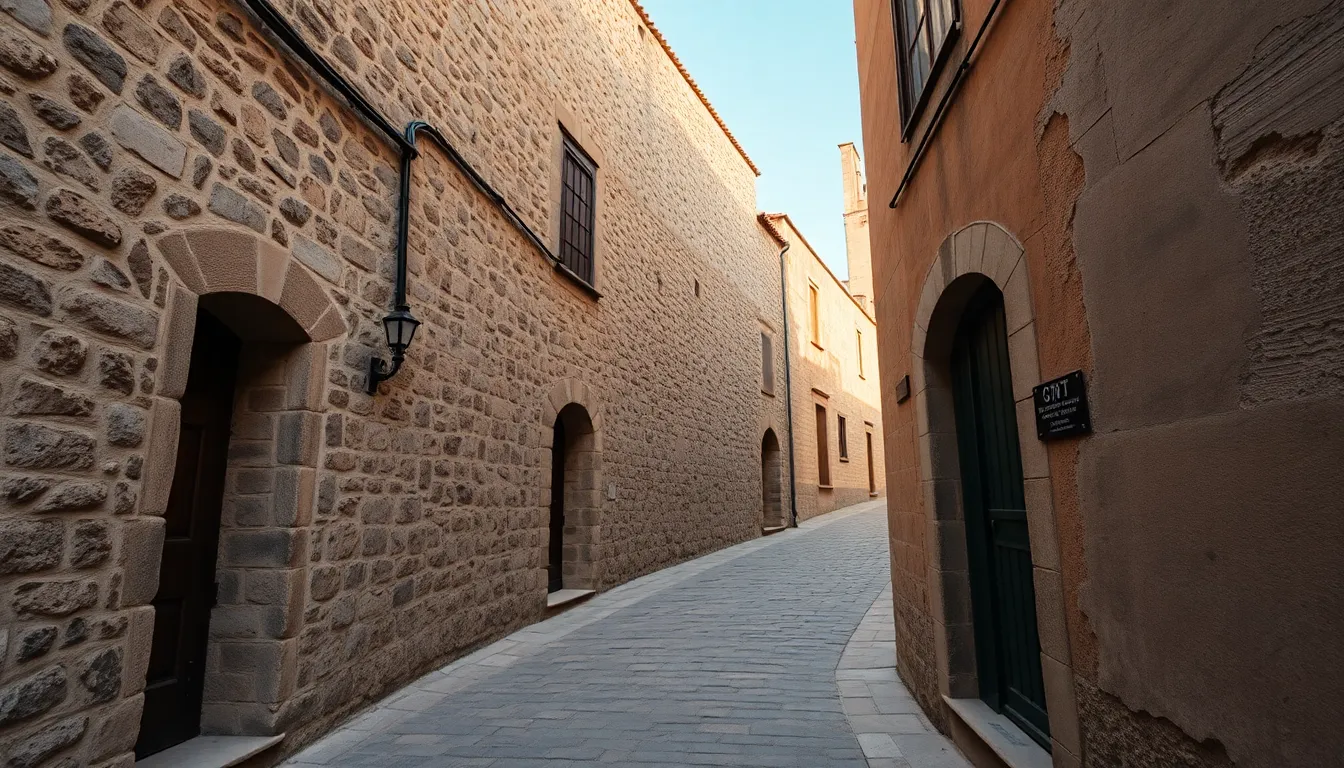
The synagogue dates to around the thirteenth and fourteenth centuries, when Castelo de Vide had a substantial Jewish community drawn by its position on the trade roads near the frontier. The building sits at the meeting of two of the steepest lanes in the old quarter, the Rua da Judiaria and its neighbors, hemmed in by houses on every side. It is built from local granite, plain and solid, the architecture of a community that wanted a place to gather and pray rather than a monument.
Inside, the space is simple. A room for worship, with a niche cut into the eastern wall where the Torah ark would have stood, oriented toward Jerusalem as Jewish practice requires. A small adjoining room is understood to have served the women of the community. There is no soaring ceiling, no rich decoration. There is stone, light, and the orientation toward the east that turns a plain room into a synagogue.
What makes the building unusual is simply that it lasted. After the events of the late fifteenth century, synagogues across Portugal were destroyed, converted into churches, or put to ordinary use as barns, shops, and homes. Many vanished entirely. This one was absorbed into the fabric of the quarter and survived, and in the modern era it was identified, studied, and opened as a small museum of the town’s Jewish heritage. The room you stand in is largely the room they prayed in.
Inscriptions and Marks in the Stone
The deeper interest of Castelo de Vide is not only the synagogue but the quarter around it, where the Jewish past is written into the stone of ordinary houses. Walk the lanes of the old judiaria with someone who knows what to look for and the marks begin to appear.
On many of the granite doorframes you can find the small carved recess where a mezuzah once held the parchment that observant Jewish homes place on their doorposts. The mezuzah is long gone. The cut for it remains, an empty groove in the stone that once marked a Jewish household. The doorways themselves often follow the Gothic arched form typical of medieval Jewish homes here, and some carry carved symbols and inscriptions whose meaning scholars are still reading. There is an old communal fountain that served the quarter, and the tight, stepped streets preserve the layout a medieval resident would still recognize.
These marks are quiet. They do not announce themselves. A visitor walking through alone would pass them without a second glance. But once they are pointed out, they change the whole quarter. Each empty mezuzah groove is the trace of a family, a doorway someone touched on the way in and out for years, in a community that was here and then was not.
Holding the Loss With Dignity
I want to be plain about what happened, because a heritage group deserves the truth of a place, not a softened version.
In 1496 and 1497, under King Manuel I, the Portuguese crown ordered that all Jews must convert to Christianity or leave the kingdom. What followed in many towns was not orderly emigration but forced baptism, the seizure of children, and the violent end of public Jewish life. The community of Castelo de Vide, like communities across Portugal, was broken. Some families fled. Many were converted by force and became known as New Christians, living for generations under the suspicion of the Inquisition, some keeping fragments of their faith in secret. The synagogue stopped being a synagogue. The lane stayed, the doorways stayed, the people did not.
When I stand with a group in that small room, I do not rush it. There is a difference between a ruin you photograph and a loss you stand inside. This is the second kind. For Jewish travelers it can be a moment of real grief and connection, the recovery of a place their people were driven from. For Christian travelers it is an honest reckoning with what was done in the name of faith, and that honesty is part of why heritage travel matters. We let the room be quiet for a while. Some groups read a psalm. Some say Kaddish. Some simply stand. There is no wrong way to be present to it, and there is a wrong way to hurry past it.
How Groups Visit and Practical Access
Castelo de Vide rewards a group that comes with intention. The synagogue is open as a small museum, the entrance is free or carries only a token fee, and it is staffed modestly, so a guide who can interpret the building and the quarter is what turns the visit into something more than a look at an old room.
Practically, the town is built on a steep hillside and the Jewish quarter is its steepest part, narrow cobbled lanes and steps that a coach cannot enter. Groups park below or at the town edge and walk in, which takes some climbing, so steady shoes matter and the least mobile travelers need pairing up and a slower pace. Allow an hour to ninety minutes for the synagogue and a guided walk through the quarter. The town is small enough that you absorb it on foot.
Castelo de Vide pairs naturally with the nearby walled village of Marvao and the town of Portalegre, and it sits well within an Alentejo leg alongside Evora. It is remote, which is exactly why it is so well preserved, so it works best as a planned stop rather than a passing one. For groups of 15 or more, your group leader travels free, which helps when reaching a town this far off the usual route.
FAQ: The Synagogue of Castelo de Vide
How old is the Castelo de Vide synagogue?
The synagogue dates to roughly the thirteenth and fourteenth centuries, making it one of the oldest surviving synagogue spaces in Portugal. It sits in the heart of the town’s medieval Jewish quarter and is built of plain local granite, with a niche in the eastern wall where the Torah ark stood, oriented toward Jerusalem.
What inscriptions and marks can you see in the Jewish quarter?
The most telling are the small carved recesses on stone doorframes where mezuzahs once held parchment scrolls in observant Jewish homes. The mezuzahs are gone, but the grooves remain. The quarter also preserves Gothic arched doorways typical of medieval Jewish houses, some carved symbols and inscriptions still being studied, and an old communal fountain, all within the original stepped street layout.
What happened to the Jewish community of Castelo de Vide?
In 1496 and 1497, King Manuel I ordered all Jews in Portugal to convert or leave, and in many places this meant forced baptism and violence rather than orderly departure. The community here was broken. Some fled, many were converted by force and lived under the Inquisition’s suspicion as New Christians, and public Jewish life ended. The synagogue ceased to function and the quarter’s families were scattered.
Is the synagogue open to visitors?
Yes. It is preserved as a small museum of the town’s Jewish heritage, with free or token-fee entry. Because the building and the quarter speak quietly, a guide who can interpret them makes the visit far more meaningful. We treat the space with care, allowing time for reflection rather than a quick walk-through.
How do groups reach and visit it?
Castelo de Vide is a remote hill town in the high Alentejo near the Spanish border. Its Jewish quarter is steep, with narrow cobbled lanes and steps that vehicles cannot enter, so groups park at the edge and walk in. Allow an hour to ninety minutes, wear steady shoes, and plan to pace for less mobile travelers. It pairs well with Marvao, Portalegre, and a wider Alentejo route.
A place like Castelo de Vide asks to be visited slowly and with respect, and that is exactly the kind of stop we build into a heritage trip. If you are a rabbi, pastor, or educator planning a journey into Portugal’s Jewish past, we can reach these remote towns and brief your guide to hold the weight of them. Start with our Portugal destination page, see how we run a group tour, and contact us when you want to plan.
For more of this story, read our guides to Jewish heritage in Portugal, the medieval Jewish quarter of Castelo de Vide, and the hidden heritage sites of Portugal.