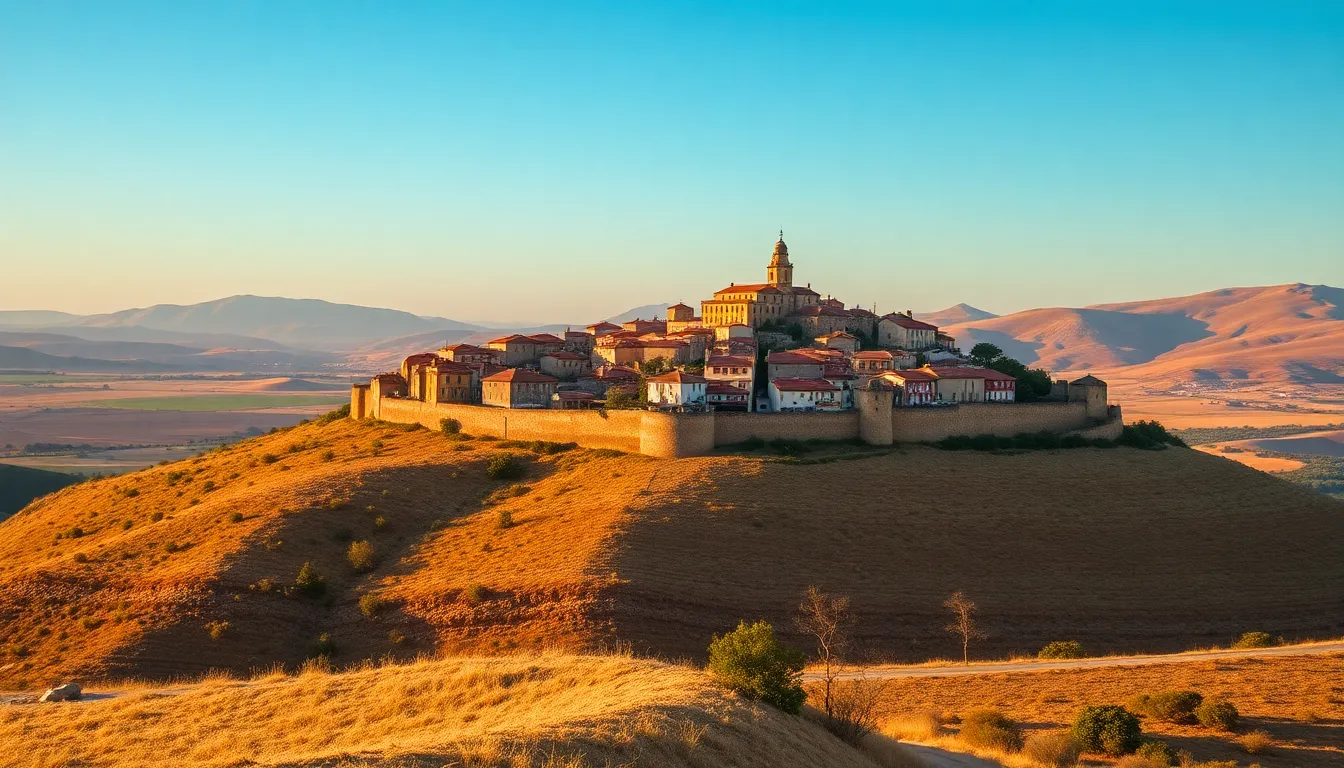
In the far northeast of the Alentejo, where Portugal pushes up against Spain in a range of rounded green hills, sit two towns that I consider among the most rewarding stops in the whole country for a heritage group. They are close together, fifteen minutes apart by road, and they offer two very different experiences. Castelo de Vide holds one of the best-preserved Jewish quarters in Portugal, a medieval Judiaria you can walk through almost intact. Marvao is a tiny walled town perched on a crag so high it seems to float above the plain, with a view that has stopped every group I have ever brought there.
Together they make a single, unforgettable day. One town for the Jewish story, told in stone with unusual clarity. One town for the sheer drama of a medieval hilltop fortress and the Christian frontier it guarded. Let me walk you through both.
Castelo de Vide: The Judiaria
The Best-Preserved Jewish Quarter in Portugal
Castelo de Vide was home to a substantial Jewish community in the Middle Ages, and the town earned the nickname the Sintra of the Alentejo for its greenery and its grand houses. But what brings heritage groups here is the Judiaria, the medieval Jewish quarter, which survives in a state of preservation that is rare anywhere in Europe.
The quarter spreads down the slope below the castle in a network of narrow, steep lanes lined with whitewashed houses and granite doorways. Many of those Gothic doorways are original, dating from the fourteenth and fifteenth centuries, and walking among them gives a vivid sense of a working medieval Jewish neighborhood in a way that few sites in Portugal can match. This is not a reconstruction. These are the streets where Jewish families lived, worked, and worshipped before 1497.
The Medieval Synagogue
At the heart of the Judiaria stands a small medieval synagogue, one of the oldest in Portugal, now preserved as a museum. The building is modest, as it had to be, but stepping inside it is a powerful moment for a Jewish group. You can see the niche that held the Torah scrolls, the layout of a medieval house of prayer, and a small exhibition that tells the story of the community and of the forced conversion that ended its open life.
When King Manuel I ordered the conversion of all Jews in Portugal in 1497, Castelo de Vide’s community, like every other in the country, became New Christians. Many stayed and practiced in secret. The town’s position near the Spanish border also made it a route of escape, a place where families could slip across into Spain or, later, away from the reach of the Inquisition. The synagogue holds all of that history in a single small room.
For groups tracing the Sephardic story across Portugal, Castelo de Vide is essential, the southern Alentejo counterpart to the inland villages of Belmonte and Trancoso. Our historic villages trail covers those northern communities, and the Evora heritage guide covers the major urban Jewish quarter to the southwest. Together they map the full reach of Jewish life in this part of Portugal.
The Fonte da Vila and the Castle
Below the Judiaria sits the Fonte da Vila, a graceful Renaissance fountain that was the social and practical heart of the old town, where the Jewish quarter met the wider community. Above it all stands the castle, with its keep and walls, offering both a defensive history and a view over the red roofs of the town and the green hills toward Spain. The walk from the castle down through the Judiaria to the fountain is the classic route through Castelo de Vide, and it carries you through the whole layered story in about an hour on foot.
Marvao: The Hilltop Fortress
A Town in the Clouds
Fifteen minutes from Castelo de Vide, Marvao sits on a narrow granite crest at nearly nine hundred meters. The approach is a series of switchbacks up the mountain, and when you reach the top you enter a complete walled town that the writer Jose Saramago described as the place from which you can see the whole land of Portugal. On a clear day the view from the castle ramparts stretches deep into both Portugal and Spain, an immense sweep of plain and sierra in every direction.
The town itself is tiny, a few hundred people living inside medieval walls, with whitewashed houses, a small main street, and almost no concession to the modern world. For a group, the experience is partly the heritage and partly the simple wonder of standing somewhere so high and so old and so quiet.
The Castle and the Frontier
Marvao’s castle is the reason the town exists. This was a key fortress on the eastern frontier, fought over by Moors and Christians and later central to the wars between Portugal and Spain. The walls and keep are remarkably preserved, and walking the ramparts gives a group a clear physical understanding of how the medieval and early-modern frontier worked. Faith and defense were inseparable here, as they were throughout the borderlands, and the small churches within the walls sit alongside the military architecture as part of a single way of life.
Marvao also holds a small Jewish history of its own, a medieval community that shared the fate of all the others in 1497, though the visible traces are far slighter than in Castelo de Vide. For most groups, Marvao is the Christian and frontier counterpart to Castelo de Vide’s Jewish quarter, and the contrast between the two towns, fifteen minutes apart, is exactly what makes the pairing so good.
Planning Your Visit
How to Structure the Day
Castelo de Vide and Marvao work best as a pair, and a full day lets you do both without rushing. I usually start in Castelo de Vide in the morning, when the Judiaria is quiet and the light is soft on the white houses, walking from the castle down through the Jewish quarter to the fountain. After lunch we drive up to Marvao for the afternoon, timing the castle ramparts for the long light of late day, when the view across the plain is at its best.
Both towns are walkable but steep. The lanes of the Castelo de Vide Judiaria climb sharply, and Marvao is built on a summit, so comfortable shoes and a reasonable level of mobility matter. For groups with members who find steep cobbles difficult, a good guide can plan a gentler route through each town.
Getting There and When to Come
This corner of the Alentejo is remote, which is part of its charm and part of its planning challenge. The towns are roughly three hours from Lisbon and well placed for a route that connects to Evora to the southwest or crosses into Spain toward Caceres and the Extremadura. Most groups reach them by private coach as part of a wider itinerary rather than as a standalone day trip.
As with the rest of the Alentejo, summer here is hot, and spring and fall are far better for a day spent walking and climbing. April through June brings green hills and wildflowers across the borderlands. September and October give warm days and the golden Alentejo light. For Jewish groups, the fall window after the High Holidays works naturally with this region.
For groups of 15 or more, the group leader travels free. That is how Heritage Tours honors the spiritual leader who brings the community together and gives the journey its meaning.
FAQ: Castelo de Vide and Marvao Heritage Travel
What is the Judiaria of Castelo de Vide?
The Judiaria is the medieval Jewish quarter of Castelo de Vide, one of the best-preserved in Portugal. It survives as a network of steep, narrow lanes lined with whitewashed houses and original Gothic doorways from the fourteenth and fifteenth centuries. At its heart stands a small medieval synagogue, now a museum, one of the oldest in the country. It gives groups an unusually vivid picture of Jewish life before the forced conversions of 1497.
Is the synagogue in Castelo de Vide still standing?
Yes. The medieval synagogue is preserved as a museum at the center of the Judiaria. It is a modest building, as medieval synagogues had to be, but inside you can see the niche that held the Torah scrolls and an exhibition on the community and the 1497 conversion that ended its open life. For Jewish groups, it is one of the most meaningful stops in southern Portugal.
What makes Marvao worth visiting?
Marvao is a tiny medieval walled town set on a granite crest at nearly nine hundred meters, with a well-preserved frontier castle and a panoramic view that reaches deep into both Portugal and Spain. It was a key fortress on the eastern border, fought over for centuries. For groups, it offers both the Christian and military heritage of the frontier and the simple drama of standing in a near-untouched town high above the plain.
Should I visit Castelo de Vide and Marvao together?
Yes. The two towns sit fifteen minutes apart and complement each other perfectly. Castelo de Vide offers one of the finest Jewish quarters in Portugal, and Marvao offers a dramatic hilltop fortress and Christian frontier history. A full day lets you experience both: Castelo de Vide in the morning and Marvao in the afternoon, when the light over the plain is at its best.
How do I get to Castelo de Vide and Marvao?
The towns lie in the remote northeast of the Alentejo, roughly three hours from Lisbon and near the Spanish border. Most groups reach them by private coach as part of a wider itinerary, often connecting to Evora to the southwest or crossing into Spain toward the Extremadura. Spring and fall are the best seasons, since summer in the Alentejo is hot and both towns involve steep walking.
If these two borderland towns sound right for your community, I would welcome the conversation. Start with our Portugal heritage guide, explore the Portugal destination page, or see how our group heritage tours work.
Contact us whenever you are ready to begin planning.