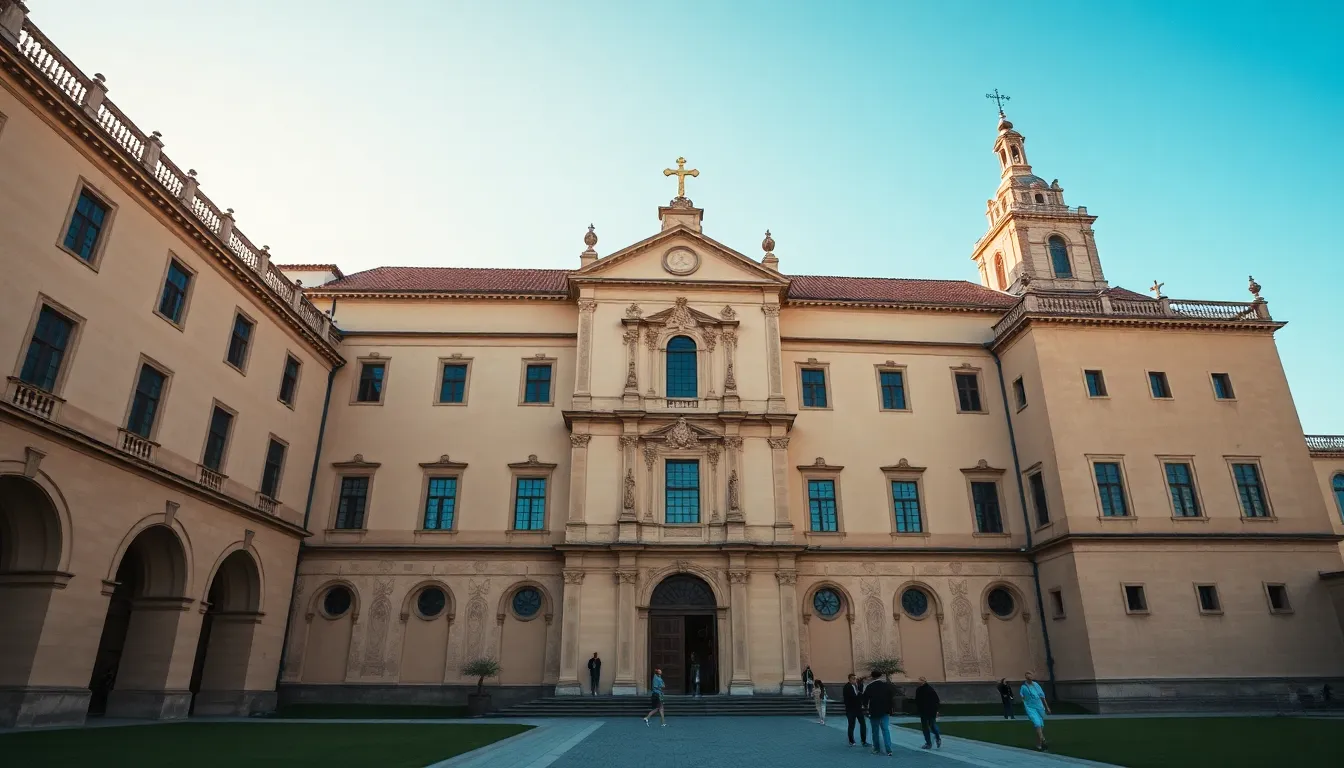
There is a moment I wait for every time I bring a group into Alcobaca. We come in from the bright, busy square outside, through the doors, and into the nave, and the noise just stops. The church at Alcobaca is enormous and almost completely bare. No gold, no painted saints crowding the walls, no carved drama. Just stone, height, light, and silence. After the dense ornament of Batalha, groups often do not know what to make of it at first. Then they understand. This emptiness is not poverty. It is a choice, and it is theology built in stone.
Alcobaca rewards a group that knows how to look at it. Let me give you the story and the two things your people will remember most.
The Cistercians and the Birth of a Kingdom
The Monastery of Alcobaca was founded in 1153 by Afonso Henriques, the first king of Portugal, and given to the Cistercian order. The timing matters. Afonso Henriques had only recently won Portugal’s independence and was still pushing the borders south against the Moors. Founding this abbey was both an act of devotion and an act of nation-building, settling a powerful, disciplined religious order in newly won territory to anchor it as Christian land.
The Cistercians were reformers. They had broken away from the wealthier, more elaborate Benedictine houses to return to a stricter, simpler observance of the Rule of Saint Benedict. They believed that a church should draw the soul to God through proportion, light, and silence rather than through images and gold. When you stand in the bare nave at Alcobaca, you are standing inside that conviction. The austerity is the point. The monks held that beauty stripped to its essentials is a form of prayer, and that ornament could become a distraction from God rather than a path to him.
For centuries Alcobaca was the wealthiest and most influential monastery in Portugal, its lands vast, its abbots powerful. The community cleared forests, planted orchards, and shaped the agriculture of the whole region. The kitchen, which your group can still see, was built on a scale to feed hundreds, with a channel of the river running straight through it so the monks always had fresh water and fish.
What a Group Sees Inside
The Nave and the Cistercian Ideal
The church is the largest in Portugal, and it is the purest expression of Cistercian Gothic in the country. The columns rise to a simple vaulted ceiling. The light falls clean through plain windows. There is almost nothing to look at, and that is exactly what makes it powerful. I tell groups to walk it slowly and in quiet, because this is a building designed to be experienced rather than examined. The proportions do the work. After a few minutes, most people stop trying to find something to photograph and simply stand in it.
The Cloister and the Daily Life of the Monks
The Cloister of Silence, the Claustro do Silencio, gives a group a window into how the monks actually lived. From here you reach the chapter house, the dormitory, the refectory where meals were taken in silence while one monk read aloud, and the great kitchen. Walking these spaces, your people get a feel for a life ordered entirely around prayer, work, and silence, the Cistercian rhythm of ora et labora. For groups led by pastors or rabbis, the monastic discipline of the place often opens a rich conversation about what it means to structure a whole life around devotion.
The Tombs of Pedro and Ines
The other thing every group remembers at Alcobaca is a love story that ended in murder, and the two tombs that hold it.
In the fourteenth century, the heir to the Portuguese throne, the future King Pedro I, fell in love with Ines de Castro, a Galician noblewoman in the service of his wife. After his wife died, Pedro and Ines lived together and had children, but Ines was politically dangerous, a foreign noble whose family had ambitions at court. Pedro’s father, King Afonso IV, fearing her influence, had Ines murdered in 1355.
Pedro’s grief became legend. When he came to the throne, he took terrible revenge on her killers. And according to the most famous version of the story, he had Ines’s body exhumed, crowned her as queen, and forced the court to pay homage to her as their rightful sovereign, kissing the hand of a corpse. Whether that last scene is fully historical or grew in the telling, the tombs are real, and they are extraordinary.
Pedro and Ines lie in two of the finest Gothic tombs in Europe, carved with astonishing detail, scenes from the life of Christ and the Last Judgment running along their sides. And they are placed foot to foot rather than side by side. The tradition is that Pedro arranged them this way so that on the day of resurrection, when the dead rise, the first thing each of them will see, when they sit up and open their eyes, is the other. There is an inscription tied to the legend: “Ate ao fim do mundo,” until the end of the world.
I have never had a group stand at these tombs unmoved. The Cistercian austerity all around makes the two ornate tombs land even harder. It is a story of love, power, grief, and faith in the resurrection, all carved in stone in the largest church in the country.
Why Alcobaca Belongs on Your Itinerary
Alcobaca completes a set. With Batalha and the Jeronimos Monastery, it forms a trio that lets a group read the whole range of Portuguese religious architecture and feeling. The Jeronimos is the wealth and confidence of the Age of Discovery. Batalha is the Gothic-Manueline grandeur of a royal vow. Alcobaca is the older, austere, contemplative register of the Cistercians, the road less traveled in both senses.
For a faith group, that contrast is the gift. After the intensity of Fatima and the ornament of Batalha, Alcobaca invites a different kind of reflection. The monks who built it believed silence and proportion were forms of worship. Walking through their church, your people understand why, without anyone having to explain it.
Practical Notes for Group Leaders
Alcobaca is a UNESCO World Heritage Site, well maintained and largely accessible. The town sits about an hour north of Lisbon and close to both Batalha and Fatima, which makes the three easy to combine over a day or two. Allow at least an hour, more if your group lingers at the tombs, which they will. The church interior is cool year-round. The local pastry, the famous conventual sweets of the region, makes a good after-visit stop and connects to the monastic kitchens your group has just seen.
I most often pair Alcobaca with Batalha and Fatima in the same central-Portugal stretch, and it sets up beautifully against the very different mood of the Jeronimos Monastery in Lisbon.
FAQ: The Monastery of Alcobaca
What is special about Alcobaca Monastery?
Alcobaca is the largest church in Portugal and the purest example of Cistercian Gothic architecture in the country. Its deliberate austerity, bare stone, clean light, and almost no ornament, reflects the Cistercian belief that beauty should come from proportion and silence rather than from images and gold. It is also home to the tombs of Pedro and Ines, two of the finest Gothic tombs in Europe, which hold one of the most famous love stories in Portuguese history.
What is the story of Pedro and Ines?
Pedro, heir to the Portuguese throne, loved Ines de Castro, a Galician noblewoman. Because she was seen as politically dangerous, Pedro’s father had her murdered in 1355. When Pedro became king he took revenge on her killers and, according to legend, had her body crowned and the court pay homage to her. Their two tombs at Alcobaca are placed foot to foot so that, by tradition, they will see each other first when they rise at the resurrection.
Why are the tombs placed foot to foot?
Tradition holds that King Pedro arranged the two tombs facing each other, foot to foot rather than side by side, so that on the day of resurrection, when the dead rise, the first thing each of them sees will be the other. It is a profession of faith in the resurrection as much as a gesture of love, which is part of why the tombs resonate so strongly with faith groups.
Who founded Alcobaca Monastery?
It was founded in 1153 by Afonso Henriques, the first king of Portugal, who gave it to the Cistercian order shortly after winning the country’s independence. The foundation was both an act of devotion and a way of anchoring newly won land as Christian territory. For centuries Alcobaca was the wealthiest and most powerful monastery in Portugal.
How far is Alcobaca from Lisbon and the other monasteries?
Alcobaca sits about an hour north of Lisbon by road, and it is close to both Batalha and Fatima, so the three are easily combined over one or two days. Its contemplative Cistercian mood makes a strong contrast with the ornate Jeronimos Monastery in Lisbon, and many itineraries pair them to show a group the full range of Portuguese religious architecture.
If you are planning a route through central Portugal, Alcobaca gives your group a quieter, deeper register that balances the grander sites beautifully. It pairs naturally with Batalha and Fatima and sets up the contrast with Lisbon’s monasteries. You can see how it fits the wider journey on our spiritual sites in Portugal guide and our Portugal destination page.
We build these itineraries around groups, and through our group heritage tours the group leader travels free with fifteen or more participants. Contact us when you are ready to start planning.