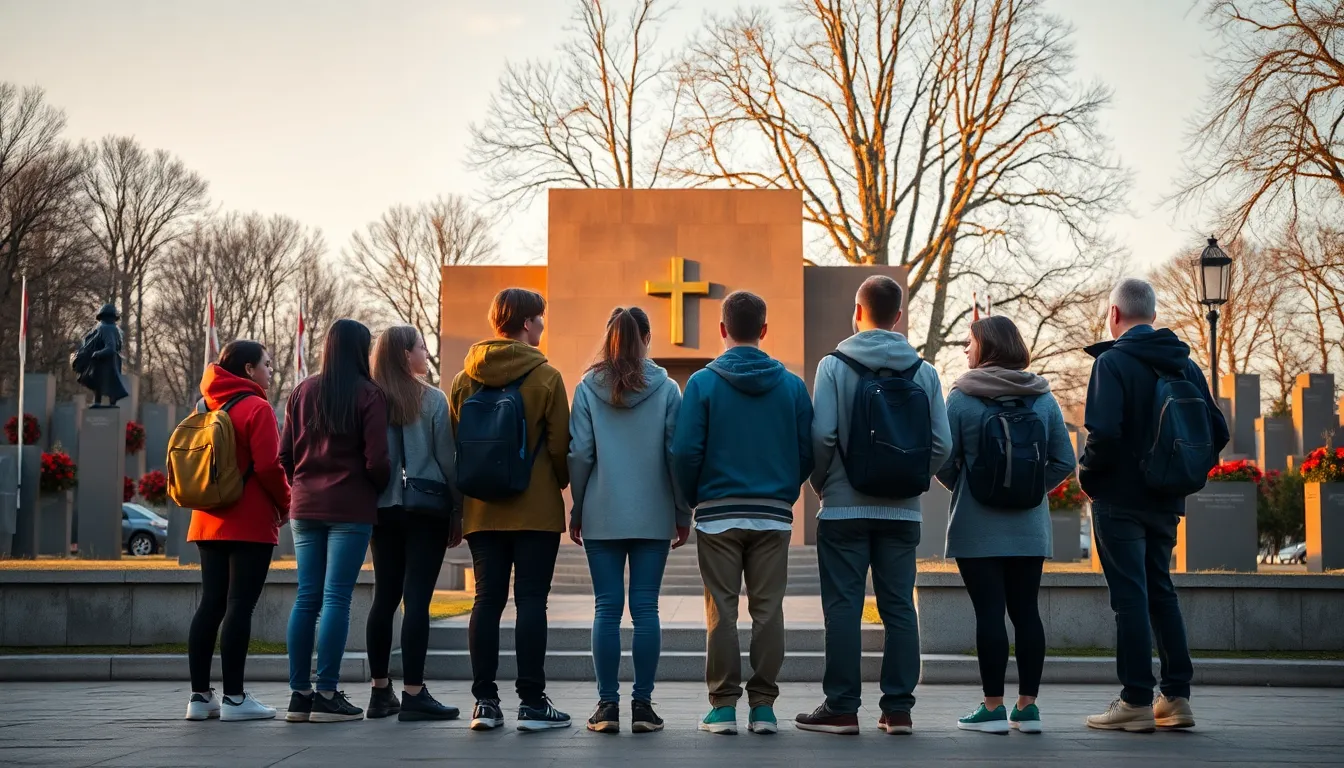
There is a reason March of the Living exists, and a reason youth pilgrimages to Poland keep growing. Something happens to a sixteen-year-old when they stand where the history actually happened that no classroom and no documentary can produce. I have watched it many times. A teenager who scrolled through the whole flight goes quiet at Birkenau in a way their teachers have never seen, and they carry that quiet home for years.
Leading young people through Poland is different from leading adults, and it asks for a different itinerary. Teens and young adults have more physical energy and shorter emotional fuses. They need movement, they need each other, and they need the heavy days handled with more structure, not less. Give a youth group an unstructured afternoon after Auschwitz and you will lose them. Give them a guided way to process it and you will give them something they keep for life.
This plan is built for teen and young-adult faith groups, with remembrance days framed carefully and the social energy of young travelers used as a strength rather than fought against. It follows the same emotional arc as our 10-day Poland heritage itinerary, tightened and re-paced for young people.
Planning Principles for a Youth Group
A few things I hold to with every youth trip. Keep the group together and keep them busy, because idle time is where focus dissolves. Build in physical movement, because young bodies process emotion through motion. Use peer reflection, not just leader lectures, because teens open up to each other before they open up to an adult. And give the remembrance days more scaffolding than you would an adult group, with clear expectations set the night before.
I also tell youth leaders to plan for the lighter moments without guilt. A heritage trip is not lessened by laughter at dinner. Young people need the contrast. The trip teaches precisely because it holds both.
One more principle, and it is the one leaders most often miss. Young people need a reason the trip matters to them, not only to their parents or their tradition. The teenager who understands that they are about to become one of the last people on earth who can stand in these places and then go home and tell others carries themselves differently. I name this for youth groups early, usually on the first night. You are not tourists here. You are witnesses, and after this trip you become the ones who remember out loud. That frame turns a school-trip mindset into something they take seriously, and it is the single most effective thing I do with young travelers.
Day 1: Warsaw, Arrival and Group Building
Your group lands and settles in. For a youth group, I do not waste this evening. After dinner, run a group-building session, a circle where everyone says why they came and what they hope to find. This sets the trip up as something the group does together, which is the single most important frame for young travelers. We arrange airport pickup so the leaders are not managing logistics on day one.
Day 2: Warsaw, POLIN Museum and the City
The POLIN Museum in the morning, and it works well for teens because it is interactive and tells a thousand years of Jewish life as a story, not a lecture. Give it the morning. A trick that keeps young people engaged here: give them a small task, a question to answer or a single life to follow through the exhibition, so they move through it actively rather than drifting. Teens who walk a museum with a purpose remember it.
In the afternoon, walk the ghetto area and the Umschlagplatz memorial, then leave time for the group to move through the rebuilt Old Town. Young people need the city, not just the sites. Let them feel that Warsaw is alive. The contrast between the memorial in the early afternoon and the living square at dusk is itself a teaching, and young people feel it without being told.
Day 3: Warsaw to Krakow
A travel day by train. For a youth group, the train is a social space, and that is fine. They will bond on this leg. You arrive in Krakow by early afternoon. Keep the evening active with a walk through the market square and dinner together. Krakow at night has an energy young travelers love, and letting them feel it builds the trust that carries through the harder days.
Day 4: Krakow, Kazimierz
The historic Jewish quarter. The morning covers the Remuh Synagogue and old cemetery, five centuries of Jewish life in one place. For teens, the key is making this concrete, so I let the guide tell the human stories, the individual lives, not just the dates. In the afternoon, show them the living Kazimierz, the cafes and the market. Young people connect to the neighborhood when they see it is still alive. This matters before the remembrance day, because it teaches them what was lost was not abstract.
Day 5: Krakow, Schindler’s Factory and Free Evening
The Schindler’s Factory Museum in the morning tells the occupation story at street level, and it lands well with young people because it is built around real individuals. In the afternoon, I keep things lighter, a guided walk or some structured free time in small groups. The evening before Auschwitz, I gather the group early for preparation, because the night before is when the framing has to happen.
Day 6: Auschwitz-Birkenau, Handled With Structure
For a youth group, this day needs the most scaffolding of the whole trip. The evening before, you have already gathered them. Tell them plainly what they will see. Tell them that every reaction is normal, that some will cry and some will feel numb and some will feel nothing at first and then everything later. Take their phones out of the experience, not as punishment but as a way to be present. Our guide to preparing a group for Auschwitz covers the specifics, and our piece on the March of the Living speaks to what these days mean for young people.
The visit moves from Auschwitz I to Birkenau. With young people, I keep them close together and let the guide carry the pace, allowing for silence and stopping. Frame the whole day with dignity. These are sacred grounds, and teens rise to that expectation when it is set clearly.
That evening, do not leave them alone with it. Run a structured peer reflection, in small groups, where each person says one thing they felt. This is the difference between a youth trip that scars and one that forms. Young people need to externalize the day with their peers, that same night. Keep the groups small, four or five, and put an adult leader in each one who listens more than they speak. The goal is not to teach anything that evening. It is to let young people hear that what they feel is shared, that the person next to them felt numb too, or cried too, or could not stop thinking about the children’s shoes. When a teenager learns their reaction is not strange, the experience settles into something they can carry rather than something they have to push down.
Day 7: Krakow, Closing and Sending Out
The final day belongs to integration. In the morning, a closing circle where each person names what they are carrying home and, just as important, what they will do with it. Young people need the trip to point somewhere, toward action, toward telling the story, toward remembering out loud. That forward turn is what makes the experience stick.
The afternoon is free for last walks and final time together as a group. We handle the airport transfers so the leaders can stay focused on their young people to the very end.
If you lead a youth ministry, a confirmation class, or a young-adult group and you are considering Poland, I would be glad to walk through how this itinerary fits the age and maturity of your group. You can see how we structure group heritage tours, read the Poland destination overview, or look at the group leader’s guide for pastors and rabbis for how we support leaders through these trips. Group leaders travel free with fifteen or more participants, which matters when you are building a youth group from a congregation. When you are ready, contact us here.
FAQ: Youth Group Heritage Trip to Poland
What is the right age for a youth heritage trip to Poland?
Roughly fourteen and up works well, with the maturity to handle Auschwitz being more important than the exact age. Confirmation-age teens, high schoolers, and young adults all do this trip meaningfully. For younger children, our multigenerational itinerary is a better fit.
How do you prepare teenagers for visiting Auschwitz?
Set clear expectations the night before, tell them every reaction is normal, and keep phones out of the experience so they can be present. The most important step is the peer reflection that same evening, where young people process the day together. Structure, not free time, is what a youth group needs around remembrance days.
How is a youth itinerary different from an adult one?
It keeps the group together and busy, builds in physical movement, uses peer reflection instead of only leader-led discussion, and gives the heavy days more scaffolding. It also allows the lighter moments young people need, because the contrast is part of how the trip teaches.
Should phones be allowed on the trip?
Mostly yes, since young people document and share, which is part of how they remember. The exception is the remembrance days, especially Auschwitz, where I ask groups to put phones away so the experience stays present rather than mediated through a screen.
Is Poland safe for a youth group?
Yes. Poland is a safe, welcoming country for organized groups, and we keep youth groups together with experienced local guides throughout. We handle transport, accommodation, and site logistics so leaders can focus on their young people rather than on navigation.