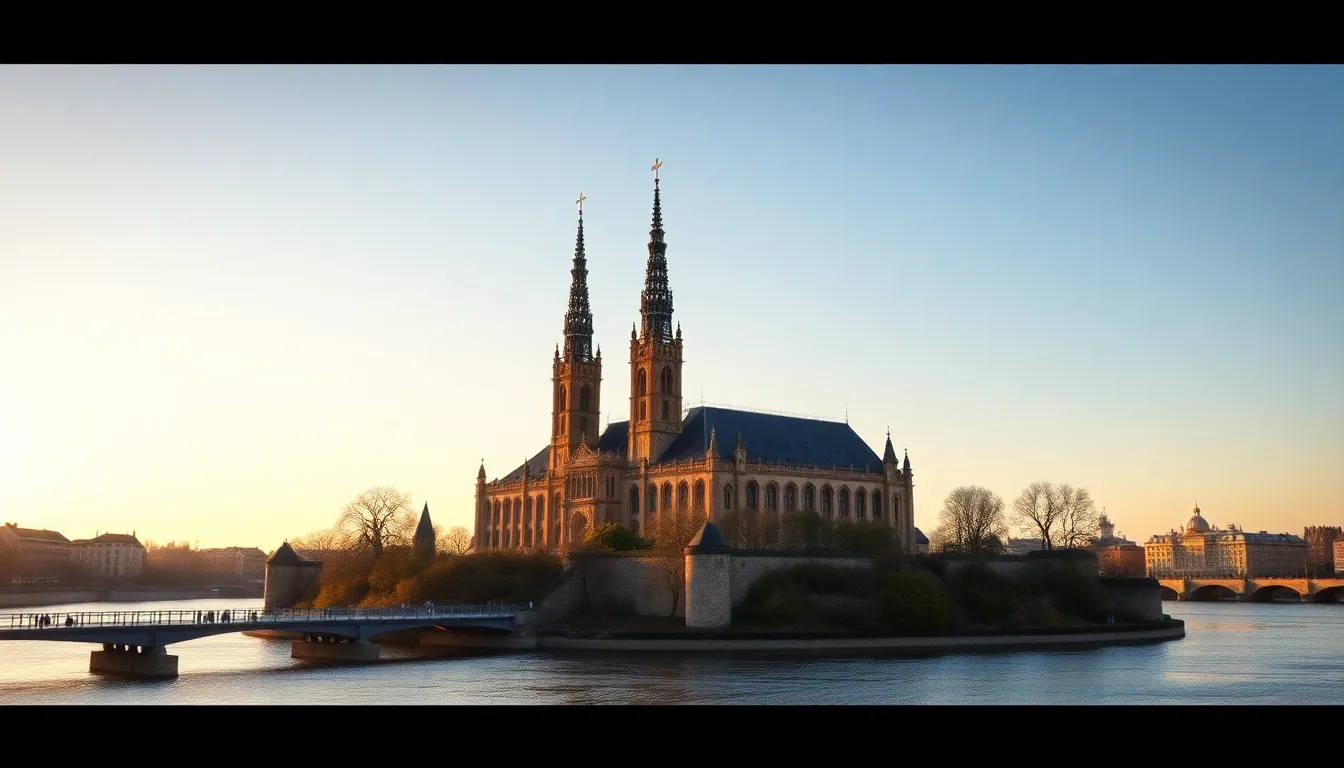
Wroclaw is the city that surprises my groups, because it does not fit the picture they arrive with. People come to Poland expecting Polish Catholic and Polish Jewish heritage, and they find both here. But they also find a city that was German for centuries, called Breslau, before its border and its people changed entirely after the war. Wroclaw teaches a group that the heritage of this region is layered, contested, and shared across cultures that did not always choose to share it.
That complexity is exactly why I value Wroclaw on a wider itinerary. It widens the lens. A leader who can help a group hold the German, Polish, Jewish, and Christian threads at once gives their community a richer understanding of what this part of Europe actually was. So let me orient you to the city.
Understanding Wroclaw Before You Arrive
Wroclaw sits in southwestern Poland, in the region of Silesia, and it is built across a dozen islands woven together by more than a hundred bridges over the Oder river. The heritage that matters to a faith group sits in two main areas: Cathedral Island, the ancient religious heart of the city, and the Old Town with its market square, near which stands the restored White Stork Synagogue and the old Jewish quarter.
What makes Wroclaw distinctive is its layered identity. This was a German city for most of its history, and it became Polish only after the war, when the borders moved and the populations were exchanged. That history sits underneath everything a group sees here. If you are mapping out Poland for your community, the Poland heritage travel guide gives the country-wide picture. Wroclaw adds the dimension of a shared and shifting border city.
Cathedral Island: The Christian Heart
Cathedral Island, Ostrow Tumski, is where Wroclaw began, and it remains the spiritual center of the city. It is one of the most atmospheric places in Poland, especially in the evening, when a lamplighter still lights the gas lamps along the streets by hand.
The Cathedral of St. John the Baptist, with its tall twin spires, dominates the island. It has been the seat of the bishops of Wroclaw for centuries, rebuilt many times across wars and fires, most recently after heavy damage in 1945. For Christian groups, Cathedral Island offers a deep and unbroken thread of faith in a city where almost everything else changed hands. The cathedral, the Church of the Holy Cross, and the archbishop’s palace cluster together on the island, giving a group a concentrated encounter with the religious history of Silesia.
I like to bring groups to Cathedral Island toward the end of a day, when the crowds thin and the lamps come on. There is a stillness to it that suits reflection, and it grounds a Christian group in the continuity of faith across centuries of upheaval.
The White Stork Synagogue and Jewish Wroclaw
Near the Old Town stands the White Stork Synagogue, the only synagogue in Wroclaw to survive the war, and its survival is a story worth telling your group. Built in the 1820s, it sat at the heart of a large and prosperous Jewish community in what was then German Breslau. On the night of the November pogrom in 1938, when synagogues across Germany burned, the White Stork was spared the torch only because it stood surrounded by other buildings, and setting it alight would have endangered German property nearby.
The building survived the war battered and was later restored. Today it is once again a center of Jewish life in the city, with a small but active community, and it houses exhibitions on the history of Breslau’s Jews. For a Jewish group, the White Stork offers something rare: a surviving synagogue that has returned to use, a thread of continuity in a city where so much was severed.
The surrounding courtyard and the old Jewish quarter give a group the shape of the community that lived here. Breslau’s Jews were largely German-speaking and deeply integrated into the city’s intellectual and commercial life, a different story from the shtetls of the east, and one that broadens a group’s understanding of the many forms Jewish life took across this region.
The Old Town and the Market Square
Wroclaw’s Market Square is one of the largest and most beautiful in Poland, ringed by tall, colorful merchant houses and crowned by an ornate Gothic Old Town Hall. Like much of the city, it was heavily damaged in 1945 and carefully rebuilt afterward, so a group is again standing inside an act of reconstruction.
The square is where the city gathers, and I treat it the way I treat the Old Towns of Krakow and Warsaw: as a place to give a group some unstructured time. After the heavier sites, an evening in the market square lets people sit together, talk, and process. Wroclaw also has a charming detail that groups enjoy, the small bronze dwarf figures scattered throughout the streets, a lighthearted local tradition that gives a group a moment of ease amid weightier themes.
Holding the Layered Heritage
The thing I most want a leader to understand about Wroclaw is its layered character, because it is what makes the city teach. For nearly a thousand years this was a German city, Breslau, with a German population and a German Jewish community. After the war, the German population left or was expelled, Polish settlers arrived, many of them themselves displaced from the east, and the city became Polish almost overnight.
This means the heritage here is genuinely shared and genuinely complicated. The cathedral served German Catholics and now serves Polish ones. The White Stork Synagogue served German-speaking Jews and now serves a Polish Jewish community. A group that grasps this comes away with a more honest picture of Central Europe, where borders and peoples moved, and heritage is rarely as simple as one nation, one story. As a leader, naming this complexity rather than smoothing it over gives your community a deeper and truer encounter.
Practical Orientation for Group Leaders
Wroclaw is walkable in its center, and the island setting makes it a pleasure to move through on foot, though a group of fifteen or more benefits from a guide who knows the bridges and routes. Cathedral Island, the Market Square, and the White Stork Synagogue all sit within a manageable area. Plan for comfortable walking and weather layers.
One to two nights in Wroclaw is comfortable. That covers Cathedral Island and the Christian heritage, the White Stork Synagogue and Jewish quarter, and the Old Town, with room for reflection. Wroclaw works well as part of a wider Polish route, especially for groups that want to understand the western, formerly German regions alongside the better-known eastern story.
If you are organizing a group of fifteen or more, your travel is covered. You fly free, stay free, and tour free. For a congregation working within a budget, that changes the planning conversation, because the leader who does the organizing does not also pay for the privilege.
You can see how we structure these journeys on the Poland destination page, and the group heritage tours page explains how the leader experience works.
How Wroclaw Fits a Wider Poland Itinerary
Wroclaw is a strong addition for groups that want more than the core route. Most journeys center on Krakow and Warsaw, and the Krakow heritage guide and Warsaw heritage guide cover those cities in this same orientation style. Wroclaw broadens the picture westward, into the shared German and Polish heritage of Silesia, a layer the eastern cities do not hold. Groups building the fullest possible itinerary often combine all of these.
FAQ: Wroclaw Heritage Travel
What is the White Stork Synagogue?
The White Stork Synagogue is the only synagogue in Wroclaw to survive the war. Built in the 1820s, it served the large Jewish community of what was then German Breslau, and it was spared destruction in 1938 only because burning it would have endangered surrounding German property. Restored after the war, it is once again a center of Jewish life and houses exhibitions on the city’s Jewish history.
What is Cathedral Island in Wroclaw?
Cathedral Island, Ostrow Tumski, is the oldest part of Wroclaw and its spiritual heart. The Cathedral of St. John the Baptist, with its twin spires, has been the seat of the city’s bishops for centuries. The island is known for its atmosphere, including a lamplighter who still lights the gas lamps by hand each evening, and it offers Christian groups a deep thread of continuity in a city that changed hands.
Why was Wroclaw a German city?
For most of its history Wroclaw was the German city of Breslau, with a German population and a German-speaking Jewish community. After the war, the borders moved, the German population left or was expelled, and Polish settlers arrived. The city became Polish almost overnight. This layered history makes Wroclaw’s heritage genuinely shared between German, Polish, Jewish, and Christian threads.
Is Wroclaw worth adding to a Poland heritage trip?
Yes, especially for groups that want more than the core Krakow and Warsaw route. Wroclaw broadens the picture westward into Silesia and the shared German and Polish heritage of the region, a layer the eastern cities do not hold. One to two nights covers Cathedral Island, the White Stork Synagogue, and the Old Town with room for reflection.
How many days should a faith group spend in Wroclaw?
One to two nights is comfortable. That allows a day for Cathedral Island and the Christian heritage, time at the White Stork Synagogue and the old Jewish quarter, and an evening in the Old Town and Market Square. Most groups add Wroclaw to a wider route alongside Krakow and Warsaw.
If Wroclaw fits the journey you are imagining for your community, I would welcome the chance to talk it through. Not to sell you a trip, just to help you think about how this layered city fits your group and your purpose. You can reach us through our contact page whenever you are ready.