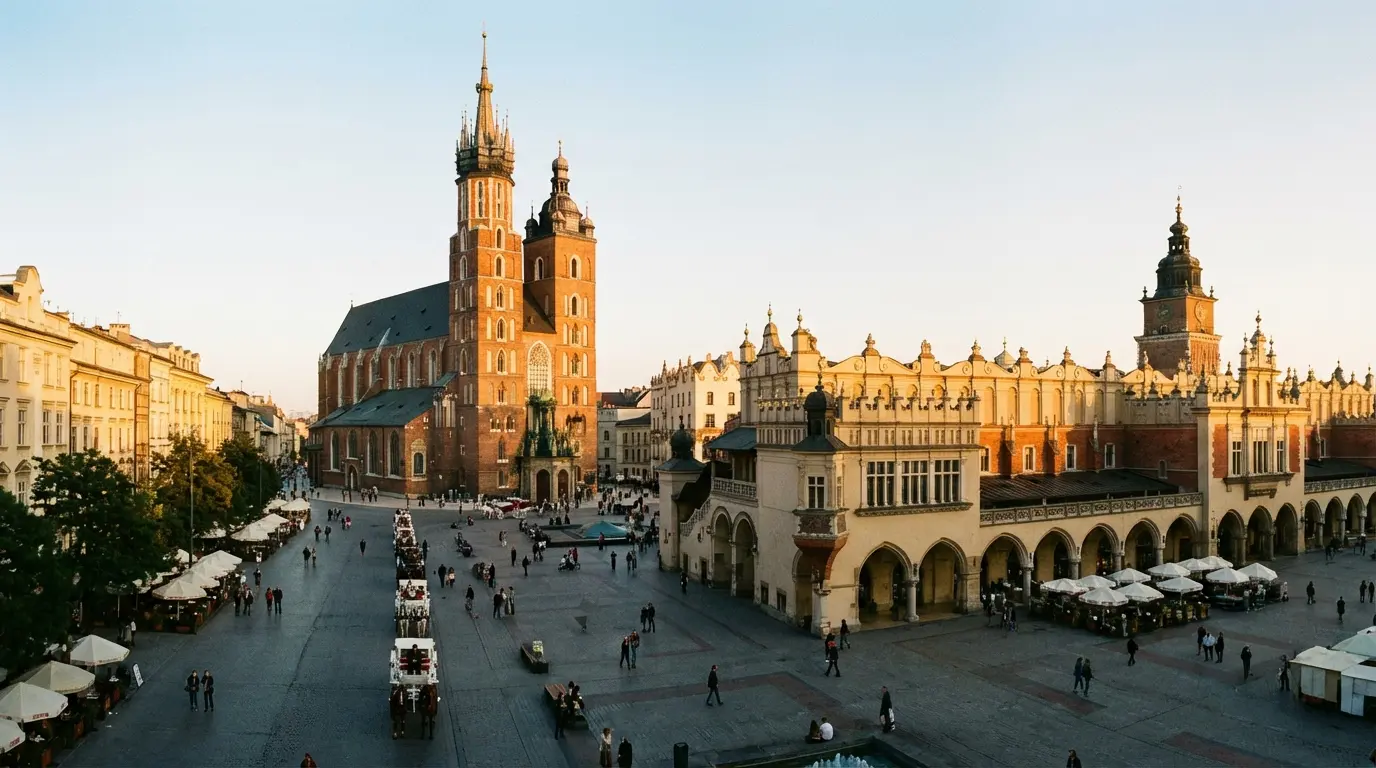
Poland is not a destination you choose lightly. If you are a rabbi or a pastor thinking about bringing your community here, you already sense that. Something about Poland sits differently than Israel or Greece or even Rome. It asks more of you. It asks more of your group. And it gives back something that no other destination can.
I have been helping group leaders plan heritage journeys for over forty years, and I can tell you this honestly: Poland is the trip that changes people. Not because of any single site, but because of what the country holds all at once.
Poland as a Heritage Destination: What You Need to Understand First
Two Stories in One Country
Poland carries two stories that cannot be separated from each other.
The first story stretches across a thousand years. For centuries, Poland was home to the largest Jewish community on earth. Not a small minority clinging to the margins, but a civilization. Yeshivas in Lublin trained the greatest minds in European Judaism. Krakow’s Kazimierz district was a city within a city, full of synagogues, markets, and daily life. Hundreds of shtetls across the countryside held communities that prayed, argued, traded, married, and built something lasting.
The second story took five years to unfold. The Holocaust did not happen in the abstract. It happened in specific places, to specific people, in a country where Jewish life had been woven into the fabric of daily existence for generations.
Poland holds both of these stories. You cannot visit one without encountering the other. And that is what makes this destination unlike any other place on earth.
Why Group Leaders Choose Poland
The group leaders I work with come to Poland for different reasons. Some lead Jewish communities and feel a responsibility to bring their congregations to the places where their ancestors lived and died. Some lead Christian groups who want to understand what happened on European soil and what their faith asks of them in response.
What they share is a conviction that heritage travel is not about checking sites off a list. It is about standing in a place and letting it speak. Poland has more to say than almost any country I know.
If you are exploring Poland as a destination for your group, this guide will walk you through the major sites, the practical realities, and the emotional preparation that this trip requires.
Jewish Heritage Sites
Auschwitz-Birkenau: The Site Every Group Must Prepare For
There is no way to write about Auschwitz-Birkenau that does the place justice. I will not try. What I will tell you is what I tell every group leader who plans to bring their community here.
Auschwitz is not a museum in the way that word usually works. The buildings are real. The shoes behind the glass are real. The hair is real. Your group members will walk through rooms that hold the physical evidence of what happened, and no amount of reading or documentary footage fully prepares a person for that.
What I have learned over the years is that the preparation matters as much as the visit itself. Groups that arrive at Auschwitz having already talked together about what they will see, what emotions may come up, and how they will support each other through the day, those groups come away with something they can carry. Groups that arrive unprepared sometimes struggle to process the experience at all.
Your guide at Auschwitz-Birkenau matters enormously. Heritage Tours works with local educators who understand both the history and the emotional weight of walking people through it. This is not a site where you want a generic tour.
Warsaw: The Ghetto, the Uprising, and POLIN Museum
Warsaw tells the story of Jewish Poland through what was destroyed and what has been rebuilt.
The area that was once the Warsaw Ghetto is now a modern neighborhood. There are markers and memorials, but the physical space itself has been built over. Walking those streets, knowing that 400,000 people were confined to a few square blocks, requires imagination and a good guide who can help your group see what was there.
The Warsaw Ghetto Uprising Memorial stands where the fighting began in April 1943. For Jewish groups, this site carries a particular weight. It represents resistance, and for many community members, it is one of the most emotionally significant moments in the journey.
POLIN Museum of the History of Polish Jews is, in my experience, the single most important museum a heritage group can visit in Poland. It does not begin with the Holocaust. It begins a thousand years earlier, with the first Jewish communities settling in Poland. The museum walks you through centuries of flourishing, creativity, scholarship, and daily life before it arrives at destruction. That structure matters. It means your group meets the people before they encounter what happened to them.
I recommend scheduling POLIN early in your itinerary. It gives your group context for everything else they will see.
Krakow’s Kazimierz: Where Jewish Life Still Has a Heartbeat
Kazimierz is the historic Jewish quarter of Krakow, and unlike so many other Jewish districts across Poland, it survived the war largely intact. The buildings are still there. The synagogues are still there. Some are active. Others serve as museums. The streets still carry the shape of what the neighborhood was.
Today, Kazimierz is alive again. There are Jewish bookshops, kosher restaurants, cultural centers, and an annual Jewish Culture Festival that draws people from around the world. It is not a reconstruction or a memorial. It is a place where Jewish presence continues, even if in a different form than before the war.
For your group, Kazimierz offers something that the memorial sites cannot: a sense of what Jewish life in Poland looked and felt like when it was thriving. Walking those streets with a knowledgeable guide who can point out the Remuh Synagogue, the Old Synagogue, and the market square gives your community a living picture of the world that existed before.
Lublin: The Jerusalem of Poland
Lublin earned the title “Jerusalem of Poland” because of the depth and intensity of its Jewish scholarly life. The Chachmei Lublin Yeshiva, founded in 1930, was one of the great centers of Jewish learning in Europe. The building still stands, beautifully restored, and visiting it gives your group a sense of the intellectual and spiritual ambition of Polish Jewry.
Before the war, Jews made up a third of Lublin’s population. The city had dozens of synagogues, a rich Hasidic tradition, and a Jewish community that was central to the city’s identity. Almost all of it was erased during the Holocaust.
What remains in Lublin today is both the restored Yeshiva and the Grodzka Gate, which once separated the Jewish and Christian parts of the city. The “Grodzka Gate, NN Theatre” center preserves the memory of Jewish Lublin through oral histories, photographs, and community records. It is a quieter site than Auschwitz or POLIN, but for groups that want to understand the depth of what was lost, Lublin is essential.
Treblinka: A Memorial Site with No Surviving Buildings
Treblinka is different from Auschwitz in a way that affects how your group will experience it. The Nazis dismantled the camp before the war ended. There are no buildings, no barracks, no gas chambers to walk through. What remains is a field of 17,000 stones, each representing a Jewish community that was destroyed.
The absence is the point. Standing in that field, surrounded by stones with the names of towns and cities carved into them, your group confronts the scale of what happened in a way that no building can convey. It is one of the most affecting memorial sites in Poland, and many group leaders tell me it stays with their community longer than any other stop on the journey.
Christian Heritage Sites
Czestochowa and the Black Madonna: Europe’s Great Catholic Pilgrimage
For Christian heritage groups, Czestochowa is one of the most significant pilgrimage sites in Europe. The Jasna Gora Monastery houses the icon of the Black Madonna, which has drawn millions of pilgrims over the centuries.
What makes Czestochowa important for heritage travel, beyond its religious significance, is its role in Polish identity. The monastery survived wars, sieges, and occupations. For many Poles, it represents continuity, faith under pressure, and the survival of something sacred through centuries of upheaval.
Christian groups visiting Poland often begin or end their journey at Czestochowa. It grounds the trip in faith and gives your community a pilgrimage experience that connects Poland’s Christian heritage to the broader story of European Christianity.
Krakow’s Wawel Cathedral
Wawel Cathedral sits on Wawel Hill in Krakow and has been the spiritual heart of Poland for nearly a thousand years. Polish kings were crowned and buried here. Pope John Paul II served as Archbishop of Krakow before his papacy, and the cathedral holds deep significance for Catholics around the world.
For a Christian heritage group, Wawel Cathedral provides architectural grandeur, centuries of Polish religious history, and a direct connection to one of the most beloved popes in modern history. It pairs naturally with a visit to Kazimierz, which is just a short walk away, giving your group both the Christian and Jewish dimensions of Krakow in a single day.
The Churches of Warsaw and Gdansk
Warsaw’s Holy Cross Church holds particular significance: it contains the heart of Frederic Chopin, sealed in a pillar. Beyond this detail, it is a church that was destroyed in the Warsaw Uprising and rebuilt from rubble, a story that echoes across the entire city.
Gdansk’s St. Mary’s Church is one of the largest brick churches in the world, and its interior tells the story of Hanseatic trade, Reformation-era faith, and the resilience of a city that has been fought over for centuries.
Both cities offer Christian groups a heritage story that extends beyond any single era. Poland’s Christian roots are layered, complex, and deeply woven into the country’s architecture, art, and national identity.
What Group Leaders Need to Know Before They Book
The Free Leader Program
If you are organizing a heritage group of 15 or more participants, your travel is covered. You fly free, stay free, and tour free. For synagogues and churches working within a congregational budget, this changes the math entirely. It means the person doing the work of organizing, preparing, and leading does not also have to pay for the privilege.
This is one of the things Heritage Tours does that most tour companies do not. We believe the group leader’s role is too important to be an afterthought.
Emotional Preparation: This Is Not a Standard Heritage Trip
I want to be direct with you. Poland will affect your group in ways you cannot fully predict. People respond to Auschwitz differently than they expect to. Some are silent. Some weep. Some feel anger. Some feel nothing at all and then feel guilt about feeling nothing.
As a group leader, your role is not to manage those responses. It is to create space for them. That means having conversations with your community before you leave, being intentional about the order in which you visit sites, and building in time for reflection throughout the journey.
Heritage Tours builds itineraries with this emotional arc in mind. We do not schedule Auschwitz on the first morning. We do not pack the days so tightly that there is no room to breathe. The sequence of sites matters as much as the sites themselves.
Poland Season by Season
Poland’s seasons shape the experience of heritage travel in ways that go beyond weather.
Spring (March through May) is the most popular season for heritage groups, and for good reason. The weather is mild, the days are long enough for full site visits, and late April brings Yom HaShoah, Holocaust Remembrance Day, when memorial ceremonies take place across the country.
Summer (June through August) brings warm weather and long days, but also large crowds at Auschwitz-Birkenau. The Krakow Jewish Culture Festival in late June or early July is worth planning around.
Fall (September through October) offers a quieter window after the Jewish High Holidays. The colors in the Polish countryside are beautiful, and sites like Treblinka carry a particular stillness in autumn.
Winter (November through February) is the starkest season. January 27 is International Holocaust Remembrance Day. Visiting Auschwitz in snow is a different experience than visiting in summer. Fewer tourists. Bitter cold. A silence that changes what the place communicates.
For a detailed season-by-season guide, including how Jewish and Christian calendar dates affect planning, see our guide to the best time to visit Poland.
Is Poland Right for Your Group?
Not every group is ready for Poland. That is not a criticism. It is a recognition that this destination asks something real of the people who visit.
If your community has members who are descendants of Polish Jews, Poland will carry personal weight that other heritage destinations do not. If your community includes first-time heritage travelers who have never visited a Holocaust memorial site, you will need to prepare them.
If you are a pastor considering Poland for a Christian heritage group, know that this trip will confront your community with questions about faith, suffering, and witness that go beyond standard pilgrimage.
The groups that get the most from Poland are the ones whose leaders have thought carefully about why they are going, what they hope their community will carry home, and how they will continue the conversation after the plane lands.
If you are considering Poland for your community, I would welcome the chance to talk it through with you. Not to sell you a trip, but to help you decide whether this is the right journey for your group right now. You can reach us through our contact page or call directly. I am happy to listen.
Frequently Asked Questions
What are the main Jewish heritage sites in Poland?
The most significant sites include Auschwitz-Birkenau, the POLIN Museum of the History of Polish Jews in Warsaw, Krakow’s Kazimierz district, Lublin’s restored Chachmei Lublin Yeshiva, and Treblinka. Each site tells a different part of the thousand-year story of Jewish life in Poland, from the communities that flourished for centuries to the memorials that mark what was destroyed.
Is Poland a good destination for a faith-based group tour?
Poland is one of the most meaningful destinations a faith-based group can visit. For Jewish groups, it holds the full arc of Jewish European history. For Christian groups, it offers major pilgrimage sites like Czestochowa’s Black Madonna alongside the chance to witness and reflect on the Holocaust. What makes it especially suited to group travel is that the emotional weight of the experience is better shared than carried alone.
What is Kazimierz in Krakow known for?
Kazimierz is the historic Jewish quarter of Krakow. Unlike many Jewish districts in Poland, its buildings survived the war largely intact. Today it is a living neighborhood with active synagogues, Jewish cultural organizations, kosher restaurants, and an annual Jewish Culture Festival. For heritage travelers, it is the closest thing to experiencing what a thriving Jewish community in Poland looked and felt like.
What is the POLIN Museum in Warsaw?
POLIN is the Museum of the History of Polish Jews, located on the site of the former Warsaw Ghetto. What makes it distinctive is its scope. It does not begin with the Holocaust. It tells the full thousand-year story of Jewish life in Poland, starting with medieval settlement and moving through centuries of community, scholarship, and culture before arriving at the destruction of the twentieth century. Many group leaders consider it the essential first stop on a Poland heritage journey.
What Christian pilgrimage sites are in Poland?
Poland’s most significant Christian heritage sites include the Jasna Gora Monastery in Czestochowa, home of the Black Madonna icon, one of Europe’s most important Catholic pilgrimage destinations. Krakow’s Wawel Cathedral has been the spiritual center of Polish Christianity for nearly a thousand years. Warsaw’s Holy Cross Church and Gdansk’s St. Mary’s Church both offer deep connections to Poland’s Christian history and architectural heritage.