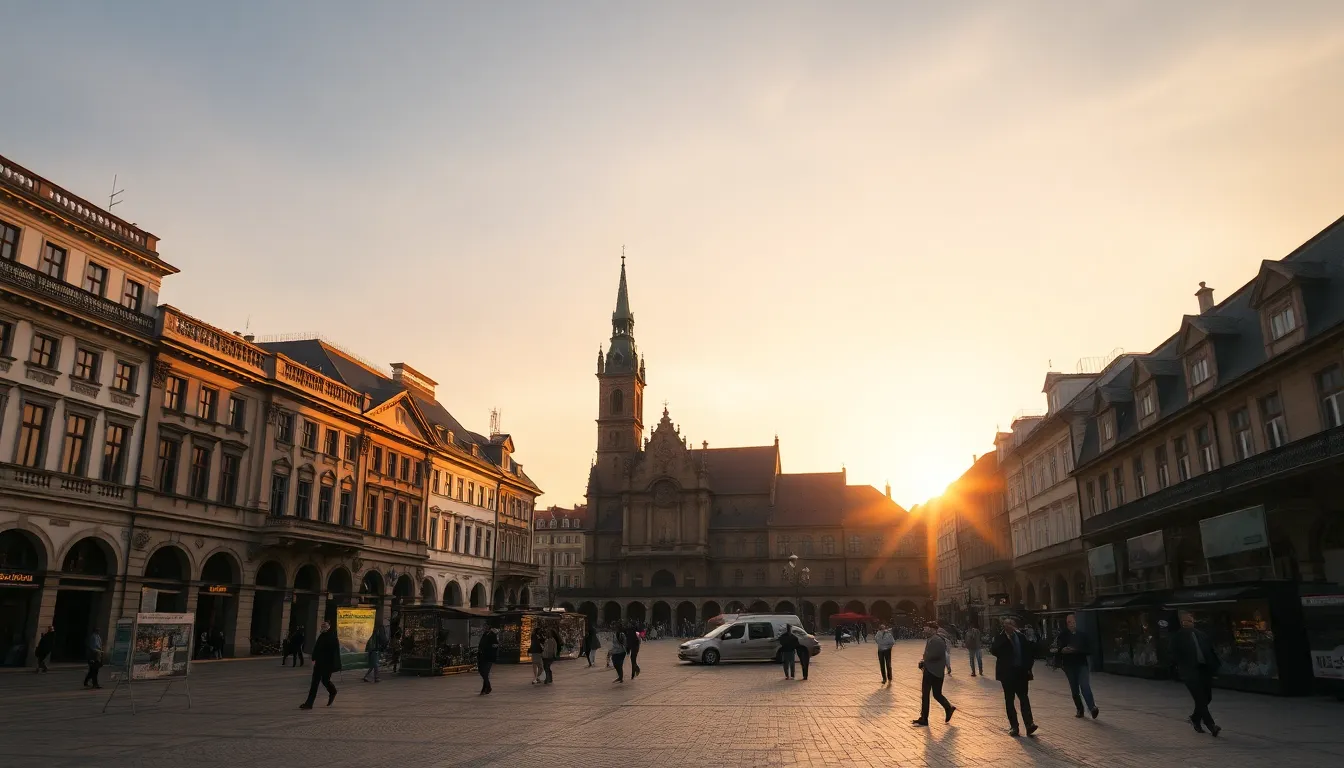
Of all the cities I have brought groups to in Poland, Krakow is the one people fall in love with. That sounds like a strange thing to say about a place that sits an hour from Auschwitz. But it is true, and over the years I have come to understand why. Krakow survived. The war did not flatten it the way it flattened Warsaw. The buildings your group will walk past are the real ones, standing where they stood five hundred years ago and one hundred years ago and on the morning the occupation began.
That survival is the gift and the weight of Krakow at the same time. You stand in a living city, and right beside you is the memory of what was taken from it. I have led enough groups through these streets to know that a leader who understands the layout, the rhythm, and the emotional sequence of Krakow gives their community a far deeper experience than one who arrives and improvises. So let me walk you through it.
Understanding Krakow Before You Arrive
Krakow is compact, walkable, and layered. The heritage that matters to a faith group sits in three areas that are close enough to cover on foot or with a short transfer: the Old Town, Wawel Hill, and Kazimierz. Auschwitz-Birkenau sits about an hour and a half to the west, and most groups treat it as a full day of its own.
What makes Krakow work for a group is that you can hold the whole arc here. The flourishing of Jewish life. The depth of Polish Catholic faith. The Holocaust. All within a small radius. That proximity is rare, and it shapes how you plan the days. You do not race between cities. You settle in, and you let the place unfold.
If you are still deciding whether Poland fits your community, the Poland heritage travel guide lays out the full picture across the country. Krakow is usually the anchor.
Kazimierz: The Jewish Quarter That Survived
Kazimierz is where I begin most Krakow itineraries, and I do it on purpose. Before a group encounters the scale of loss, I want them to meet the life that was lost.
Kazimierz was the Jewish district of Krakow for nearly five hundred years. Unlike so many Jewish quarters across Poland, its physical fabric came through the war largely intact. The synagogues are still standing. The streets still carry the shape of the neighborhood. Walking here, your group is not looking at a reconstruction. They are looking at the actual world that Polish Jewry built.
What to See in Kazimierz
The Remuh Synagogue and its adjoining cemetery are the heart of it. The Remuh is one of the few synagogues in Krakow still active for prayer, and the cemetery beside it holds graves dating back to the sixteenth century, including the grave of Rabbi Moses Isserles, the Remuh himself, whose legal rulings shaped Ashkenazi practice to this day. For many Jewish travelers, standing at his grave is a quiet, powerful moment.
The Old Synagogue is the oldest surviving synagogue building in Poland and now serves as a museum of Krakow Jewish history. The Tempel Synagogue, the Izaak Synagogue, and the High Synagogue each tell a different chapter of the community’s religious and social life.
Today Kazimierz is alive again. There are Jewish bookshops, kosher and Jewish-style restaurants, cultural centers, and the annual Jewish Culture Festival that fills these streets every summer. It is not a memorial frozen in time. It is a neighborhood where Jewish presence continues. For your group, that gives Kazimierz a texture the memorial sites cannot offer: a sense of what a thriving community looked and felt like.
A Note on Schindler’s Factory
Just across the river from Kazimierz, in the Podgorze district, sits Oskar Schindler’s Enamel Factory, now a museum about Krakow under Nazi occupation. The Podgorze area was the site of the Krakow Ghetto, and Ghetto Heroes Square, with its memorial of empty chairs, marks where the ghetto’s residents were assembled before deportation. I treat this as a bridge between the living memory of Kazimierz and the heavier days that follow. Handle it with care, and give your group room to absorb it.
Wawel Hill: The Spiritual Heart of Catholic Poland
A short walk from Kazimierz brings your group to Wawel Hill, and the shift in register is part of why Krakow teaches so well. Within a single morning you can move from the Jewish quarter to the spiritual center of Polish Catholicism.
Wawel Cathedral has been the heart of Polish faith and statehood for nearly a thousand years. Polish kings were crowned and buried here. The cathedral holds royal tombs, chapels layered across centuries, and the bones of saints and national heroes. For Catholic groups, the connection to Karol Wojtyla matters most: he served as Archbishop of Krakow here before becoming Pope John Paul II. Standing in the cathedral where he prayed and ministered gives a Christian heritage group a direct link to one of the most beloved figures in modern church history.
Beside the cathedral sits Wawel Royal Castle, the seat of Polish kings for centuries. For most faith groups the castle is a shorter stop than the cathedral, but it grounds the whole hill in the story of Polish identity and endurance.
The Old Town: Where the City Gathers
Krakow’s Old Town centers on the Main Market Square, one of the largest medieval squares in Europe. St. Mary’s Basilica dominates it, with its famous altarpiece by Veit Stoss and the trumpet call that sounds from its tower on the hour. The Cloth Hall runs down the middle of the square, and the streets around it hold churches, cafes, and the daily life of the city.
I like to give a group unstructured time here, usually in the evening. After heavier days, the Old Town is where people exhale. They sit together, they talk, they process. As a group leader, do not underestimate the value of an unscheduled evening in a beautiful, living square. Some of the most honest conversations on a Poland trip happen over dinner in the Old Town, not at the formal sites.
Auschwitz-Birkenau: Preparing Your Group
Auschwitz-Birkenau sits about ninety minutes west of Krakow, and almost every group that comes to the city makes this journey. I will not try to describe Auschwitz in a way that does it justice, because nothing written can. What I will do is tell you what I tell every leader.
Auschwitz is not a museum the way that word usually works. The buildings are real. The shoes behind the glass are real. The hair is real. Your group will walk through rooms holding the physical evidence of what happened, and no documentary or book fully prepares a person for that.
Preparation matters as much as the visit. Groups who arrive having already talked together about what they will see, what may rise up in them, and how they will hold one another through the day come away with something they can carry. Groups who arrive unprepared sometimes struggle to process it at all. Do not schedule Auschwitz on your first morning in Krakow. Let your group find their footing in the city first, build trust within the group, and approach the camp with the context that Kazimierz and the ghetto sites provide.
Your guide at Auschwitz-Birkenau matters enormously. Heritage Tours works with local educators who understand both the history and the emotional weight of leading people through it. This is not a site where you want a generic tour.
Practical Orientation for Group Leaders
Krakow is one of the easier Polish cities to manage with a group. Distances are short. The Old Town and Wawel are pedestrian, so plan for comfortable walking shoes and weather layers. Kazimierz is a short walk or transfer from the center. The Auschwitz day requires coach transport and a booked entry slot, which we handle for you.
Three to four nights in Krakow is a comfortable base. That gives you the Auschwitz day, a full day across Kazimierz and the ghetto sites, a Wawel and Old Town day, and breathing room for reflection. Resist the urge to compress it. The sequence and the spacing are what let a group absorb what they encounter.
If you are organizing a group of fifteen or more, your travel is covered. You fly free, stay free, and tour free. For a congregation working within a budget, that changes the planning conversation entirely, because the person doing the hard work of leading does not also carry the cost.
You can see how we structure these journeys on the Poland destination page, and the group heritage tours page explains how the leader experience works.
How Krakow Fits a Wider Poland Itinerary
Most groups pair Krakow with Warsaw, and the two cities complement each other. Warsaw shows you a city rebuilt from rubble and the full thousand-year arc of Polish Jewry at the POLIN Museum. Krakow shows you what survived. If your itinerary allows, Lublin adds the story of Jewish scholarship, and the Lublin heritage guide walks through that. The Warsaw heritage guide covers the capital in the same orientation style as this one.
FAQ: Krakow Heritage Travel
How many days should a faith group spend in Krakow?
Three to four nights works well for most groups. That covers a full day at Auschwitz-Birkenau, a day in Kazimierz and the former ghetto in Podgorze, a day at Wawel and the Old Town, and time built in for reflection. Krakow rewards a slower pace, so resist packing the days too tightly.
What is Kazimierz in Krakow?
Kazimierz is the historic Jewish quarter of Krakow, home to the community for nearly five hundred years. Its synagogues and streets survived the war largely intact, and today it is a living neighborhood with active synagogues, Jewish cultural life, and an annual culture festival. For heritage groups it offers the closest sense of what a thriving Jewish community in Poland looked like.
How far is Auschwitz from Krakow?
Auschwitz-Birkenau is about ninety minutes west of Krakow by road. Most groups make it a full day with coach transport and a pre-booked entry time. We strongly recommend not scheduling it on your first day in the city, so your group can prepare emotionally before the visit.
Is Krakow good for both Jewish and Christian heritage groups?
Yes. Krakow holds Jewish heritage in Kazimierz, deep Catholic heritage at Wawel Cathedral and its connection to Pope John Paul II, and the memory of the Holocaust at Auschwitz nearby. Few cities let a group encounter all of these within such a small radius, which is part of what makes Krakow such a strong anchor for a Poland journey.
Can we combine Krakow with other Polish cities?
Most groups pair Krakow with Warsaw, and many add Lublin for the story of Jewish scholarship. The cities complement each other: Warsaw shows a capital rebuilt from rubble, Krakow shows what survived. We help you sequence the itinerary so the emotional arc holds across the whole journey.
If Krakow is on your mind for your community, I would welcome the chance to talk it through with you. Not to sell you a trip, but to help you think about whether the timing and the shape are right for your group. You can reach us through our contact page whenever you are ready.