There is a morning I think about often. Our group reached Treblinka in the second week of October, and the field of seventeen thousand stones was wet with overnight rain, the surrounding birch trees half gold and half bare, the air cold enough to see your breath. We were the only people there. No buses. No other voices. Just our community, the stones, and the low gray sky. A woman in the group told me afterward she had never felt a silence like it. I have brought groups in every season, and autumn keeps giving me moments like that one.
Fall is, in my experience, the most underappreciated season for Poland heritage travel. If you have already read our season-by-season Poland guide, you know I rank late September through mid-October as one of the two strongest windows of the year. This article goes deeper into that window itself, so you understand what early September feels like versus late October, why so many Jewish groups time their journey to fall, and what the season asks of you in return.
The Case for Going in Fall
Autumn offers something the peak spring season cannot: quiet. The summer crowds have cleared out. The school groups have gone home. The tourist machinery that fills Auschwitz-Birkenau in July and August winds down through September and into October, and what is left is space. Space to stand in a room without forty other people pressing behind you. Space to let a place work on you at its own pace.
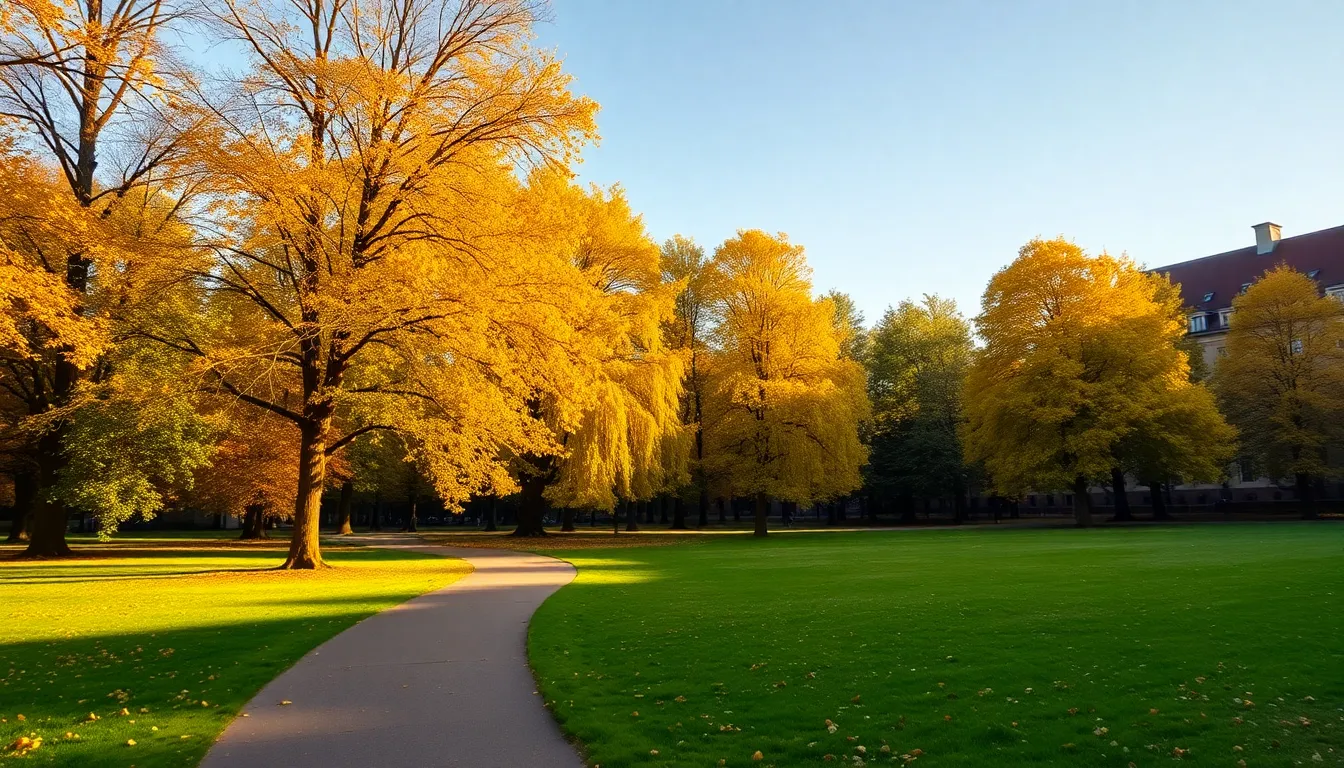
The weather cooperates more than people expect. Through September and into mid-October, Krakow and Warsaw stay mild during the day, often in the range of 10 to 16 degrees Celsius, the low 50s to low 60s Fahrenheit. The light turns long and golden. The trees along the Vistula and through Krakow’s parks shift to amber and rust. There is a melancholy to the season that, frankly, suits this kind of journey. The landscape itself seems to be remembering something.
The Post-High-Holiday Window
Here is the reason so many Jewish groups choose fall, and it has nothing to do with weather.
The High Holidays, Rosh Hashanah and Yom Kippur, fall in September or early October. For most congregations, that stretch keeps everyone close to home. But when it lifts, something opens. The community has just moved through the Days of Awe, through repentance and prayer and renewal. People are spiritually fed, reflective, and ready for something deeper than an ordinary vacation.
That readiness is, in my view, the best possible emotional groundwork for Poland. A community that arrives in Krakow in late October, having just come through Yom Kippur, brings a kind of prepared attentiveness that is hard to manufacture any other time of year. The spiritual work is already underway. The trip continues it rather than starting it cold.
This is why our calendar fills with Jewish groups in late October and November. The timing is not a coincidence. It is the natural rhythm of the year working in the group’s favor.
The Fall Window, Month by Month
Early to Mid-September: Late Summer’s Tail
September often still carries summer’s warmth in its first half. Days can reach the low 20s Celsius, the low 70s Fahrenheit, and the crowds, while thinning, have not fully cleared. If your High Holidays fall late, early September may be off the table for Jewish groups anyway. For everyone else, it is a pleasant, mild window, though it lacks the golden quiet that the later weeks bring.
Late September to Mid-October: The Sweet Spot
This is the heart of the fall window and the stretch I recommend most often. The weather is reliably cool but not yet cold. The autumn color is at its peak. The crowds have genuinely thinned. And for Jewish groups, this lands squarely in the post-High-Holiday window when the community is ready to travel.
If I could pick two weeks of the year to bring a first-time group to Poland for the most balanced, contemplative experience, late September into mid-October would be one of my two answers. The other is mid-spring.
Late October to November: Quiet Deepens, Cold Arrives
By late October the color is falling from the trees and the temperature is dropping. Daytime highs in Krakow settle around 8 to 12 degrees Celsius, the upper 40s to mid-50s Fahrenheit, and the gray, overcast days become more common. The crowds are nearly gone.
This is a beautiful, somber window for the right group. Treblinka and Birkenau in late October, under low cloud and bare trees, communicate something that the same sites in summer simply cannot. But you are edging toward winter conditions. Days are shortening, the outdoor sites are exposed and cold, and your group needs to be prepared for raw weather. For communities that value depth over comfort, it is worth every degree of chill.
What Fall Asks of You
The trade-off for autumn’s quiet is the weather’s unpredictability and the shortening days.
Pack for cold and wet. Even in the sweet-spot weeks of early October, mornings at the open memorial sites can be sharp, and the wind across Birkenau and Treblinka has nothing to slow it down. Warm layers, a rain shell, and comfortable waterproof footwear are not optional. The ground at Birkenau can be muddy after autumn rain.
Mind the daylight. As you move into late October, the days grow noticeably shorter. We build itineraries that front-load the outdoor, exposed sites into the warmer, brighter middle of the day and save the indoor museums, like POLIN in Warsaw or the Galicia Jewish Museum in Krakow, for later afternoon. It is a small adjustment that makes a real difference.
Confirm site hours. As the tourist season winds down, some smaller sites and rural memorials move to reduced autumn hours. We verify these in advance for every itinerary, but it is worth knowing that the off-season flexibility comes with this one caveat.
For the broader practical picture across any season, our Poland heritage travel tips cover the ground rules that apply year-round. If your group includes members with mobility considerations, read our accessibility guide early, and our travel insurance guide is worth a look for any group with older congregation members.
Why Fall Often Has More Availability
One practical advantage that group leaders weighing budget and logistics should know. Because fall sits outside the spring and summer peaks, there is generally more flexibility in the calendar. Hotel blocks are easier to secure. Auschwitz-Birkenau guided slots, which are tightly contested in spring and summer, open up more readily. If your community’s schedule allows an autumn departure, you often gain both a quieter experience and a smoother planning process. For a group of fifteen or more, where the group leader travels free with us, that easier path to filling and confirming the trip matters.
FAQ: Poland Heritage Travel in Autumn
What is the best part of fall to visit Poland?
Late September through mid-October is the sweet spot, with peak autumn color, thinned crowds, reliably cool weather, and the post-High-Holiday timing that suits Jewish groups. Late October into November is quieter and more somber but colder, suited to groups that value depth over comfort. Early September is mild but still carries some summer crowds.
Why do so many Jewish groups travel to Poland in fall?
Because the High Holidays fall in September or early October, and the period right after creates a natural travel window. A community that has just moved through Rosh Hashanah and Yom Kippur arrives spiritually prepared, with a reflective attentiveness that is ideal emotional groundwork for what they will encounter in Poland.
How cold does it get in Poland in autumn?
Through September and into mid-October, daytime temperatures generally sit between 10 and 16 degrees Celsius, the low 50s to low 60s Fahrenheit. By late October highs drop to around 8 to 12 degrees Celsius, the upper 40s to mid-50s Fahrenheit, with more overcast, raw days. The open memorial sites are exposed and windy, so layers matter in any fall week.
Are the sites really less crowded in fall?
Yes, noticeably. The summer crowds clear through September, and by October many sites are quiet enough that your group may have a place like Treblinka largely to itselves. This is one of the main reasons fall is so well suited to contemplative heritage travel.
Is fall a good time for older members of the group?
The early and middle weeks of fall, with mild days and dry conditions, work well for mixed-age groups. As you move into late October, the cold and shorter days ask more of everyone, so groups with older members are usually most comfortable in the late-September to mid-October window. Comfortable footwear and warm layers help in any case.
Let’s Talk About Your Fall Window
Autumn rewards the groups that choose it. The quiet is real, the light is extraordinary, and the calendar gives Jewish communities a rhythm that aligns almost perfectly with the journey.
If you are weighing a fall departure, I would be glad to look at where your High Holidays land in your target year, help you choose between the golden sweet spot and the somber late-October weeks, and walk through the practical planning. Reach out through our contact page whenever you are ready.