When a group leader asks me when to go to Poland, I always ask the same question back: what kind of experience do you want your community to have?
For most heritage destinations, the answer to “when” comes down to weather and crowds. Poland is different. The season you choose will shape the emotional texture of your group’s journey in ways that have nothing to do with temperature. Standing in the open fields of Birkenau on a gray January morning is a fundamentally different experience than standing there in July sunshine. Arriving in late April means your group may be in Poland during Yom HaShoah. Planning around the High Holidays in autumn opens a quieter window that many group leaders prefer.
The weather matters. But for heritage travel, the calendar matters more.
If you are just beginning to research Poland as a heritage destination, our full Poland heritage travel guide covers the major sites and what to expect. This guide focuses specifically on when to go and why timing matters.
The Short Answer for Group Leaders in a Hurry
If you need a quick answer: late April through early June and late September through mid-October are the two best windows for heritage group travel to Poland.
Late April offers mild weather, manageable crowds, and the possibility of being in Poland during Yom HaShoah. Late September and October give you quieter sites, beautiful fall conditions, and a natural post-High-Holiday window for Jewish groups.
Summer works but comes with trade-offs. Winter is the most demanding season but also the most striking for groups who want the full emotional weight of the memorial sites.
Now, the longer answer.
Spring (March through May): The Peak Heritage Season
Spring is when most heritage groups visit Poland, and the reasons are practical and profound.
By mid-April, the weather in Krakow and Warsaw has turned mild. Daytime temperatures sit in the low to mid-teens Celsius (upper 50s to low 60s Fahrenheit). The days are long enough for full touring without the exhaustion of summer heat. Rain is possible but rarely heavy enough to disrupt an itinerary.
But weather is not the main reason spring is the peak heritage season.
Yom HaShoah and the Power of Being There in Late April
Yom HaShoah, Holocaust Remembrance Day, falls in late April or early May each year, depending on the Jewish calendar. In 2027, it falls on April 21. In 2028, May 9.
Being in Poland during Yom HaShoah is a decision, not a coincidence. Some group leaders specifically plan their journey around this date so their community can participate in memorial ceremonies at Auschwitz-Birkenau, at the Warsaw Ghetto memorial, and at sites across the country. The experience of standing at Auschwitz on the day set aside by the Jewish people for remembrance carries a weight that no other timing can replicate.
If this is something your group is considering, Heritage Tours can build the itinerary around Yom HaShoah. We have done this many times. The day requires careful planning, both in terms of access and in terms of emotional preparation. But for groups who want it, there is nothing else like it.
Weather in Krakow, Warsaw, and Auschwitz
Krakow in April and May is generally pleasant. Mornings can be cool, so layers are essential. Warsaw is slightly cooler. Auschwitz-Birkenau, which includes significant outdoor walking at Birkenau, requires comfortable shoes and weather-appropriate clothing. The site is exposed, with little shade or shelter.
Spring is also when the Polish countryside comes alive. If your itinerary includes smaller towns or rural sites like Tykocin or Treblinka, the landscape in spring softens the experience without diminishing it.
Jewish Calendar Considerations
Passover falls in spring, typically in April. Jewish group leaders should check whether their planned travel dates overlap with Passover, as this affects meal planning, Shabbat observance, and the ability to find kosher-for-Passover food. Heritage Tours can arrange Passover-friendly accommodations and meals when needed, but it requires advance planning.
Summer (June through August): High Season with Trade-Offs
Summer in Poland means warm weather, long days, and large crowds. For heritage groups, the trade-offs are worth understanding before you commit to a summer departure.
Crowds at Auschwitz-Birkenau
Auschwitz-Birkenau is Poland’s most visited site. In July and August, it can feel overwhelmed. Large school groups, international tourists, and organized tours compete for space in the corridors of Auschwitz I and the pathways of Birkenau.
For a heritage group seeking a contemplative experience, summer crowds can be a real obstacle. The intimacy of standing in a room and letting the place speak to you is harder to achieve when there are forty other people pressing in behind you.
Heritage Tours addresses this by scheduling early-morning or late-afternoon visits when possible, and by working with guides who know how to navigate the site during busy periods. But the reality is that July and August at Auschwitz are the most crowded months of the year.
Krakow Jewish Culture Festival (Late June / Early July)
If summer is your only option, here is a reason to lean into it. The Krakow Jewish Culture Festival, held annually in late June or early July, is one of the most significant Jewish cultural events in Europe. For ten days, Kazimierz fills with concerts, lectures, workshops, and performances celebrating Jewish culture.
For a heritage group, timing your visit to overlap with the festival adds a layer of living Jewish culture that balances the weight of the memorial sites. Your group experiences not only what was lost but what continues. The festival draws Jewish musicians, scholars, and artists from around the world, and the atmosphere in Kazimierz during those days is genuinely special.
School-Year Calendars for Congregational Groups
Summer is often the only realistic window for congregational groups whose members have school-age children. If that is the case for your community, plan early. Summer departures to Poland book quickly, and Auschwitz requires advance reservation for guided group visits.
Fall (September through October): The Second Window
Fall is, in my experience, the most underappreciated season for heritage travel to Poland. The groups that go in fall often have the best experience.
Post-High-Holiday Travel for Jewish Groups
The Jewish High Holidays, Rosh Hashanah and Yom Kippur, typically fall in September or early October. For many Jewish communities, the period after the holidays is a natural time for a heritage journey. The spiritual intensity of the Days of Awe creates a readiness for reflection that carries naturally into a trip to Poland.
Planning a Poland journey for late September or October means your community arrives having just moved through the cycle of repentance, prayer, and renewal. That spiritual preparation is, in a sense, the best possible emotional groundwork for what they will encounter in Poland.
October in Warsaw and Krakow
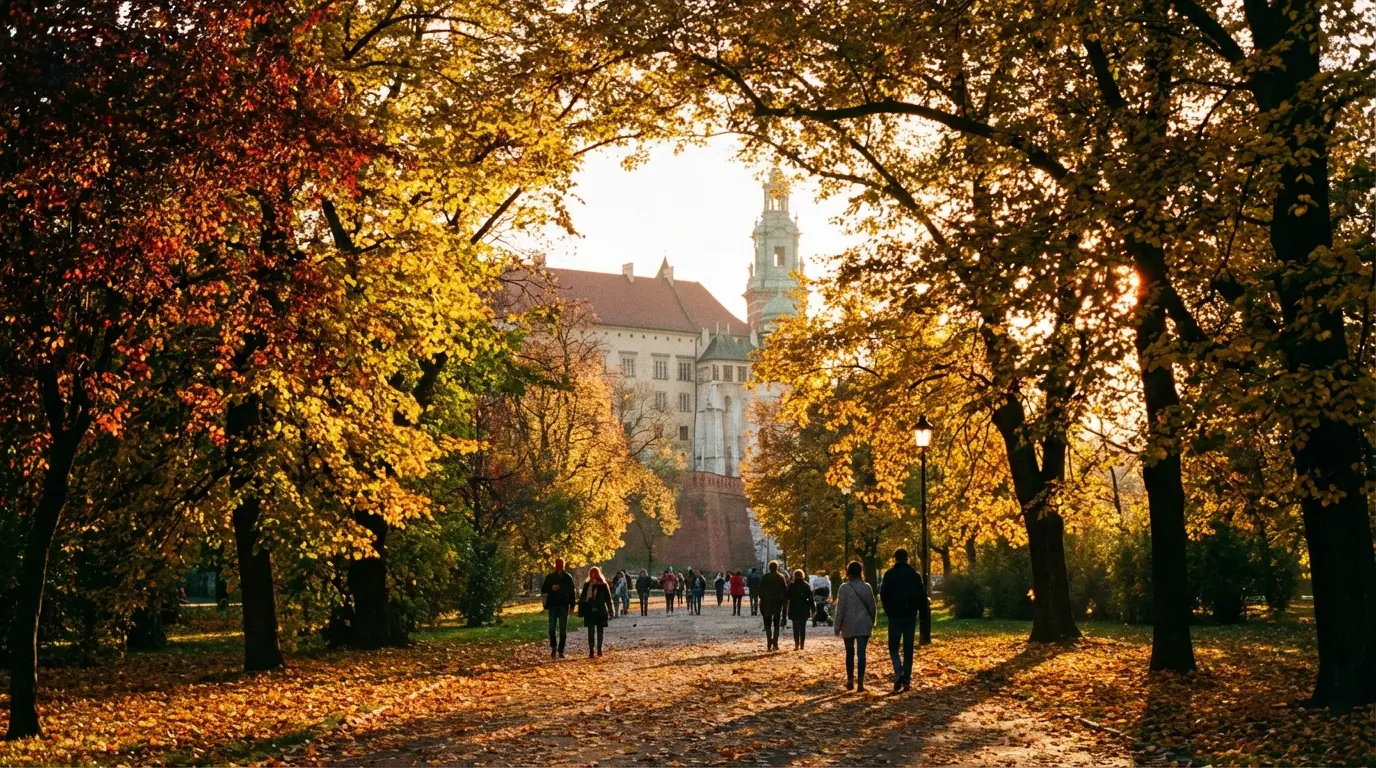
October in Poland is cool, often gray, and increasingly quiet as the tourist season winds down. Daytime temperatures in Krakow hover around 10 to 14 degrees Celsius (low 50s Fahrenheit). The trees along the Vistula and in Krakow’s parks turn gold and amber.
Sites that are crowded in summer become reflective in fall. Treblinka in October, with its 17,000 stones standing in a field under low clouds, communicates something that the same site in August cannot. The colors of the landscape, the chill in the air, and the absence of crowds create conditions for the kind of contemplation this trip deserves.
Heritage Tours has availability in October that is often more flexible than summer. If your schedule allows, I recommend this window strongly.
Winter (November through February): The Starkest Season
Winter in Poland is cold, dark, and quiet. It is also, for certain groups, exactly right.
January 27: International Holocaust Remembrance Day
January 27 is the date on which Auschwitz-Birkenau was liberated in 1945. It has been designated by the United Nations as International Holocaust Remembrance Day.
Some group leaders choose to bring their community to Poland around this date. The annual ceremony at Auschwitz on January 27 draws survivors, dignitaries, and community groups from around the world. For groups that can manage the logistical challenges of winter travel, being present on this date is an experience unlike any other in the calendar.
Heritage Tours can plan a journey around January 27, including access to remembrance ceremonies and complementary heritage site visits in the days before and after.
What It Means to Visit Auschwitz in Snow
I want to be honest about this. Auschwitz in winter is a different place than Auschwitz in summer. The ground at Birkenau is frozen. The wind cuts across the open fields without obstruction. Snow covers the rail tracks that brought the transports. The cold itself becomes part of the testimony, because the prisoners who were held here endured that cold with almost nothing to protect them.
Some group leaders find this unbearable. Others find that the winter conditions strip away any remaining distance between the visitor and the history. You are cold. You are exposed. And for a moment, in a small and imperfect way, your body understands something that your mind has been processing all day.
Winter at Auschwitz is not for every group. But for communities that choose it, the experience is often the one they talk about for years afterward.
Lower Crowds, Deeper Quiet
From November through February, Poland’s heritage sites are nearly empty of tourists. Your group may be the only visitors at Treblinka. At POLIN, you can move through the galleries without rushing. In Kazimierz, the streets are quieter, and the sense of walking through a historic neighborhood rather than a tourist destination is stronger.
The practical challenges are real. Days are short. Outdoor sites like Birkenau and Treblinka require warm clothing and early starts. Some smaller sites may have reduced hours.
But the quiet is genuine, and for groups that value contemplation over convenience, winter in Poland has something that no other season offers.
When Heritage Tours Recommends You Go
After four decades of helping group leaders plan Poland journeys, here is what I tell people.
If this is your community’s first trip to Poland and you want the most balanced experience, go in late April through May or late September through October. The weather is manageable, the sites are accessible without being overwhelmed by crowds, and the calendar aligns well with both Jewish and Christian heritage rhythms.
If you want to build your trip around a specific commemorative date, plan around Yom HaShoah (late April/early May) or January 27 (International Holocaust Remembrance Day). Heritage Tours can design an itinerary around either date.
If the Krakow Jewish Culture Festival matters to your group, plan for late June or early July.
If you want the starkest, most contemplative experience and your group is prepared for cold weather, January or February will give your community something no other season can.
Whatever timing you choose, I recommend beginning the planning conversation at least six to eight months in advance. Poland requires coordination with local guides, advance reservations at Auschwitz, and enough lead time for your community to prepare emotionally.
If you are ready to start that conversation, or if you just want to talk through the options, you are welcome to reach out. I am happy to listen to what your community needs and help you find the right time for the right journey. You can reach us through our contact page or by calling directly.
Frequently Asked Questions
What is the best time of year to visit Poland for a heritage trip?
Late April through early June and late September through mid-October are the two strongest windows. Spring offers mild weather and the possibility of being in Poland for Yom HaShoah. Fall provides quieter sites, beautiful autumn conditions, and a natural post-High-Holiday window for Jewish groups. Summer is workable but brings large crowds at Auschwitz-Birkenau.
Is it worth visiting Auschwitz in winter?
For some groups, yes. Winter at Auschwitz strips away the distraction of crowds and tourist activity. The cold and the exposed landscape at Birkenau communicate something that other seasons cannot. However, winter visits require warm clothing, shorter touring days, and a group that is prepared for the physical demands of outdoor memorial sites in freezing temperatures. It is not the right choice for every community.
What is Yom HaShoah and when is it observed in Poland?
Yom HaShoah is Holocaust Remembrance Day, observed annually according to the Jewish calendar, typically in late April or early May. In Poland, memorial ceremonies are held at Auschwitz-Birkenau, the Warsaw Ghetto memorial, and other sites. Some heritage groups specifically time their Poland journey to coincide with Yom HaShoah, allowing their community to participate in these ceremonies as part of their heritage experience.
What is the Krakow Jewish Culture Festival?
The Krakow Jewish Culture Festival is an annual event held in late June or early July in the Kazimierz district. For approximately ten days, Kazimierz hosts concerts, lectures, film screenings, workshops, and performances celebrating Jewish culture. The festival draws Jewish artists and scholars from around the world and is one of the most significant Jewish cultural events in Europe. For heritage groups visiting in summer, it offers a powerful complement to the memorial dimension of the trip.
What month should a Jewish group visit Poland?
The best months depend on your community’s priorities. Late April to May aligns with Yom HaShoah and offers mild weather. Late September to October provides a natural window after the High Holidays when your community has already moved through a period of reflection and spiritual preparation. Summer offers the Krakow Jewish Culture Festival but also the largest crowds at major sites. Heritage Tours works with each group leader to identify the timing that best serves their community’s needs and calendar.