A few years ago a rabbi called me about a trip for his congregation. Before we talked dates or sites, he said, “I have three members who use walkers and one in a wheelchair. I am not leaving them behind. So tell me honestly, can we do this?” That is the right question, and I respect every leader who asks it early. The honest answer is yes, you can bring a mixed-mobility group to Poland, but only if you plan it site by site with clear eyes. Some places are straightforward. Some require workarounds. And a couple require real decisions.
This article walks through the mobility reality of the major Poland heritage sites, because vague reassurance helps no one. If you are still mapping out the broader logistics of your journey, our Poland heritage travel tips cover the wider ground. Here I want to be specific about access.
Start With an Honest Group Assessment
Before I can plan well, I need to know who is traveling. Mobility is not one category. A member who walks slowly with a cane has very different needs from a full-time wheelchair user, and both differ from someone with stamina limits who can walk but not for hours on uneven ground.
I ask every group leader to gather a few honest details for each member with mobility considerations. Can they manage stairs, and how many? Can they walk on cobblestones and uneven ground? How far can they walk before needing to rest? Do they use a wheelchair full-time, part-time, or only for long distances? Is the wheelchair manual or powered?
None of this is bureaucratic box-ticking. The answers shape everything, from which hotels we book to how we structure each day to whether we arrange a wheelchair for the long outdoor sites even for someone who normally walks. The more honest the picture, the better the trip.
Site by Site: The Mobility Reality
Krakow Old Town and Kazimierz
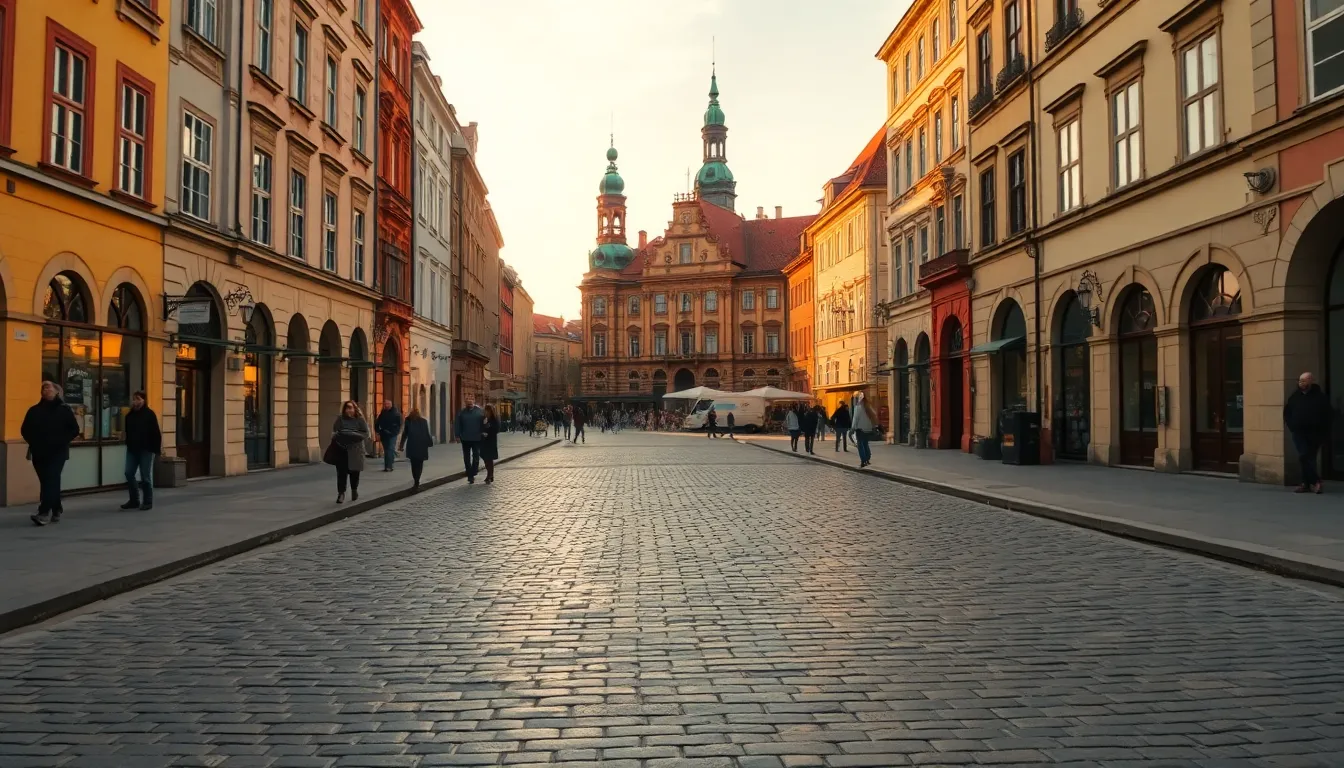
The historic heart of Krakow is beautiful and, in places, hard on wheels and unsteady feet. The main market square and the surrounding streets are cobblestone, and Kazimierz, the old Jewish quarter, has uneven historic paving throughout. A wheelchair user can move through these areas, but a companion pushing a manual chair over cobbles works hard, and someone with a cane needs to take it slowly.
The good news is that we can pace this. We build in rest stops, keep the walking segments short, and use the coach to shorten distances between points. Most of Kazimierz’s key sites, the synagogues, the museums, the squares, are reachable with planning. Some of the historic synagogue interiors have steps at the entrance and no ramp, which we flag in advance so no one is surprised at the door.
Auschwitz I
Auschwitz I, the original camp with the brick buildings, is the more accessible of the two Auschwitz sites. Much of the visit moves through ground-floor exhibitions, and there are paved paths between buildings. That said, several of the exhibition buildings have stairs to upper floors, and not all are served by lifts. A wheelchair user or someone who cannot manage stairs will be able to experience most but not every part of the site.
The memorial administration provides accessibility information and some accommodations, and we coordinate with them in advance for every group that needs it. The paved paths help, but the distances within the site are still meaningful, so stamina matters even for those who can walk.
Birkenau
Birkenau is the hard one, and I will not pretend otherwise. It is a vast open site of mostly unpaved ground, gravel paths, grass, and rough terrain across a very large area. The distance from the entrance gate to the far memorial is long. There is little shade and few places to sit.
For wheelchair users, the unpaved ground is genuinely difficult, and a manual chair needs a strong, willing companion or, better, the powered assistance we can sometimes arrange. For members who can walk but not far, Birkenau will exceed their range unless we plan around it. What we do, and what works, is arrange a wheelchair for the duration of Birkenau even for members who normally walk, so they can experience the full site without being defeated by the distance. We also identify the parts of the site that can be reached with the least difficulty, so that even a member who cannot cross the whole camp still stands where it matters.
Weather compounds this. In wet or frozen conditions the ground at Birkenau becomes harder still, which is one more reason mixed-mobility groups are often best served by the milder, drier windows. Our seasonal guides cover that timing.
Warsaw: POLIN and the Ghetto Sites
POLIN, the Museum of the History of Polish Jews, is modern and fully accessible, with lifts, ramps, and accessible facilities throughout. For a mixed-mobility group it is one of the easiest and most rewarding stops on any Poland itinerary.
The Warsaw Ghetto memorial sites vary. The main monument area is reachable, with some uneven surfaces nearby. We map the specific points each group will visit and confirm access for each in advance.
Treblinka and Rural Sites
Treblinka is an open memorial in a forest setting, a field of stones reached by paths through wooded ground. Like Birkenau, the terrain is natural and uneven, and the distances, while shorter than Birkenau, still challenge wheelchair users and members with limited range. We assess each rural site individually, because these smaller memorials vary widely and some have very limited accessible infrastructure.
The Practical Tools That Make It Work
Several things turn a difficult trip into a workable one.
A dedicated accessible coach matters. We arrange transport appropriate to the group, which for some groups means a coach with a lift or low entry. Shortening the distances people have to walk on foot is the single biggest lever we have.
Wheelchairs for the long sites, even for walkers, are a quiet game-changer. A member who is perfectly mobile around town may still be unable to cross Birkenau on foot. Arranging a chair for that one site lets them stay fully present rather than exhausted or left behind.
Hotels chosen for access, not just location, prevent a hundred small daily frustrations. We look at lifts, step-free entrances, accessible rooms, and bathroom layouts before booking, not after.
Pacing built into the itinerary protects everyone. Rest stops, seated breaks, and realistic timing keep the day sustainable for members with limited stamina, and honestly they make the trip better for everyone, mobility considerations or not.
For groups with older members, accessibility and health planning go hand in hand, so I recommend reading our travel insurance guide alongside this one, and thinking about group size, since a well-sized group is easier to pace for mixed needs.
A Word on Dignity
I want to say one thing plainly. Accessibility planning is not about logistics for its own sake. It is about making sure that every member of your community can stand in these places with dignity, fully present, not struggling at the back or waiting in the coach. The whole point of bringing your congregation to Poland is that they witness this history together. That word, together, is what good accessibility planning protects.
When a group leader tells me they will not leave anyone behind, I tell them that with honest planning, they will not have to.
FAQ: Accessibility on Poland Heritage Tours
Can a wheelchair user visit Auschwitz-Birkenau?
Yes, with planning. Auschwitz I has paved paths and mostly ground-floor exhibitions, though some buildings have stairs to upper floors. Birkenau is a large open site with unpaved, uneven ground that is genuinely difficult for manual wheelchairs, so we arrange appropriate assistance and identify the most reachable areas. We coordinate with the memorial administration in advance for every group that needs accommodations.
What is the hardest site for mobility on a Poland trip?
Birkenau, by a clear margin. It is vast, mostly unpaved, and exposed, with long distances and little seating. Treblinka and other rural memorials also have natural, uneven terrain. The old town and Kazimierz cobblestones in Krakow are challenging but manageable with pacing.
Should a member who can walk but not far still use a wheelchair at some sites?
Often, yes. Birkenau in particular exceeds the walking range of many members who are otherwise mobile around town. Arranging a wheelchair just for the long outdoor sites lets those members experience the full place rather than being exhausted or unable to reach key areas. It is one of the most useful things we plan.
Are the hotels and museums accessible?
Modern sites like POLIN in Warsaw are fully accessible with lifts and ramps. Hotels vary, so we choose accommodations specifically for step-free access, lifts, and accessible rooms when a group needs them. Some historic synagogue interiors have steps at the entrance with no ramp, which we flag in advance.
What information do you need from us to plan for accessibility?
For each member with mobility considerations, we need an honest picture: ability to manage stairs and how many, comfort on cobblestones and uneven ground, walking range before needing rest, and wheelchair use, whether full-time, part-time, manual, or powered. The more honest the detail, the better we can plan a trip where no one is left behind.
Let’s Plan a Trip Where Everyone Belongs
A mixed-mobility group can absolutely make this journey, and the planning to get there is work I am glad to do. If you tell me who is traveling and what they need, I will walk you through each site honestly and build an itinerary that keeps your whole community together.
Reach out through our contact page and tell me about your group. The sooner we start, the more we can plan around.