I get this request a few times every year. A congregation wants Poland, but someone in the planning committee has always wanted to see Prague, and they ask me whether the two can be done together. The honest answer is yes, and it works better than most people expect, because Poland and the Czech lands share a single thread of Central European Jewish and Christian history. You are not stitching two unrelated trips together. You are following one story across a border.
What I tell every group leader who asks is this: do Poland first, then Prague. Not the other way around. Poland carries the heavier weight, and Prague gives your group a place to land afterward. If you reverse the order, you arrive at Auschwitz already tired from a city you fell in love with, and then you fly home raw. The order I lay out below carries the emotional arc the way it should move.
This is a fourteen-day plan. It assumes a group of fifteen or more, which is the threshold where the group leader travels free with us. If you are still working out the basic shape of a Poland trip before adding Prague, read the 10-day Poland heritage itinerary first, because this plan builds on that backbone.
How the Two Countries Connect
Before the days, a word on why this pairing holds together. The Jewish communities of Bohemia and Poland were not separate worlds. Scholars, rabbis, and merchants moved between Prague, Krakow, and Lublin for centuries. Prague’s Jewish quarter is one of the oldest in Europe, and Krakow’s Kazimierz grew alongside it. The Christian story connects too, through the shared Catholic culture of Central Europe and the way both nations lived under the same twentieth-century occupations.
So when your group crosses from Poland into the Czech Republic, they are not leaving the subject. They are seeing another chapter of it, told in a different key.
Day 1: Warsaw, Arrival
Your group lands in Warsaw. Most flights from North America arrive in the afternoon, so I keep this day open. Hotel, rest, and a first evening walk through the rebuilt Old Town. Warsaw was almost entirely destroyed in the war and reconstructed afterward, and I always share that fact on the first night. It sets the tone for a trip about loss and what gets rebuilt.
Day 2: Warsaw, POLIN Museum and the Ghetto
Give the POLIN Museum a minimum of three hours. It does not start with the Holocaust. It starts a thousand years earlier, with Jewish life arriving in Poland, and it builds the foundation your group needs for everything that follows. In the afternoon, walk to the Umschlagplatz memorial and the ghetto area, where your guide explains what happened here between 1940 and 1943.
Day 3: Warsaw to Krakow
A travel day. The train south takes under three hours and is comfortable enough that I prefer it to the bus for this leg. You arrive in Krakow by early afternoon with time to settle in. Have dinner together and walk the market square in the evening light.
Day 4: Krakow, Kazimierz
The historic Jewish quarter. Start at the Remuh Synagogue and the old cemetery, built in the 1500s and still an active house of prayer. The fragments of tombstones recovered after the war are set into the cemetery wall as a memorial. In the afternoon, see how Kazimierz lives today, with its cafes, bookshops, and weekly market. This is a living neighborhood, not a memorial district, and your group should feel both sides of it.
Day 5: Krakow, Schindler’s Factory and Free Time
The morning is the Schindler’s Factory Museum, which tells the story of Krakow under Nazi occupation at street level. The afternoon I keep free. Your group has been moving for five days, and a half day to wander, rest, and absorb matters more than another scheduled site.
Day 6: Auschwitz-Birkenau
I place this on Day 6, after your group has spent a week understanding what Jewish life in Poland looked like before the war. That context changes the visit entirely. The evening before, gather your group and tell them what the day holds. Let people know that every reaction is normal, whether tears, silence, or numbness that arrives and then feels like guilt. If you are a rabbi or pastor, a short reading the night before gives people permission to arrive open.
The day begins at Auschwitz I and moves to Birkenau, the larger extermination site, where the scale is something photographs do not prepare anyone for. Your guide moves at a pace that allows for stopping and silence. We schedule nothing for the evening. Some groups eat together, some want to be alone. Both are right. Our guide to preparing a group for Auschwitz walks through this in more detail.
Day 7: Krakow, Reflection and Departure for Prague
The morning is a closing reflection on the Poland portion of the trip. Gather in a quiet room and let each person name one thing they are carrying. This is the hinge of the whole two weeks, the moment your group sets down the weight of Poland before crossing into the next country. Do not skip it.
In the afternoon, travel to Prague. The drive is around six hours, or you can take a train. Either way, arrive in the evening and let people rest.
Day 8: Prague, The Jewish Quarter
Josefov, Prague’s Jewish quarter, is one of the oldest in Europe. The morning belongs here. The Old-New Synagogue, completed around 1270, is the oldest active synagogue in Europe. The Old Jewish Cemetery holds graves stacked twelve layers deep because the community was forbidden to expand the grounds, so they buried generation upon generation in the same small plot. Walking it is unlike anything in Poland. The Pinkas Synagogue, now a memorial, carries the names of nearly 80,000 Bohemian and Moravian Jews murdered in the Shoah, written by hand on the walls. Frame this with the dignity it asks for. Many groups stand in silence here longer than anywhere else in Prague.
Day 9: Prague, Terezin
Terezin, the town the Nazis called Theresienstadt, sits about an hour north of Prague. It was a ghetto and transit camp, and the regime used it as a propaganda showpiece, dressing it up for a Red Cross visit while deporting tens of thousands onward to the death camps. The children’s drawings preserved here, made in secret art classes, are among the most affecting things your group will see on the entire trip. Walk this site slowly. Your guide will know how to pace it. Like the camps in Poland, Terezin deserves to be met without rushing.
Day 10: Prague, Christian Heritage
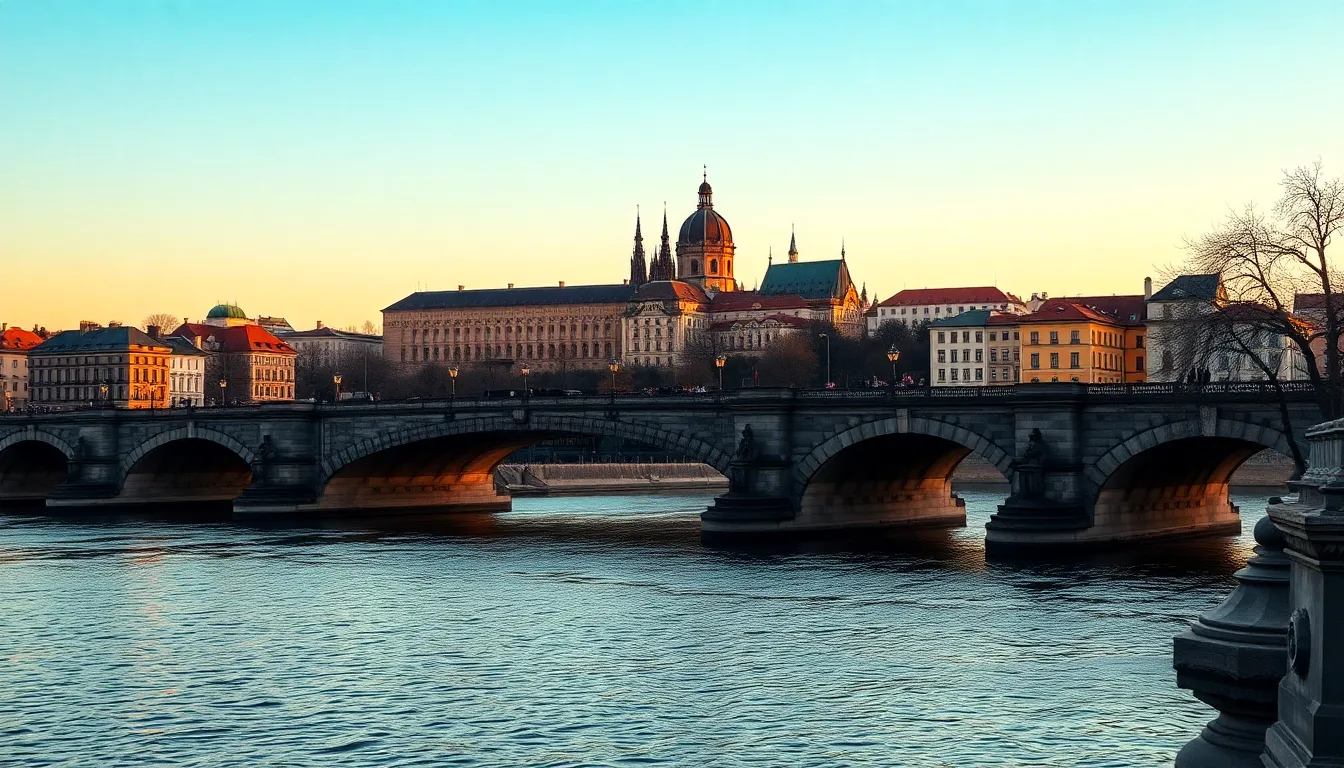
A shift in subject and weight. Prague Castle, St. Vitus Cathedral, and the Charles Bridge tell the Christian story of Bohemia. St. Vitus holds the tomb of St. Wenceslas, the patron of the Czech lands. For Christian groups this is a rich day. For everyone, it is a chance to see the same city’s other thousand-year tradition standing alongside the Jewish one you walked through two days earlier.
Day 11: Prague, Free Day
A full free day. After ten days of structured history, your group has earned it. Some will revisit the Jewish quarter on their own. Some will sit in a cafe in the Old Town Square. Let them. This is also where the conversations happen, the ones people are finally ready to have once the schedule loosens.
Day 12: Day Trip, Kutna Hora or Pilgrimage Option
A day trip out of Prague. Kutna Hora, with its medieval silver-mining history and the Sedlec Ossuary, suits some groups. For pilgrimage-minded groups, I can arrange a Marian site instead. Tell me your group’s focus and I will shape this day to it.
Day 13: Prague, Closing Reflection
The final full day. Morning for a closing session that gathers the whole arc, Poland and Prague together. People say things on Day 13 they could not have said on Day 3, because the weight has had time to accumulate and now there is space to set it down. The afternoon is free for last walks and final shopping.
Day 14: Departure
We handle airport transfers so the last hours belong to your group, not to logistics.
If you lead a congregation and this two-country journey fits what you have been imagining, I would be glad to walk you through how it adapts to your group’s size and faith tradition. You can see how we structure group heritage tours, read the full Poland destination overview, or look at the group leader’s guide for pastors and rabbis for how the planning process works. When you are ready to start the conversation, contact us here.
FAQ: Poland and Czech Heritage Itinerary
How many days do you need to combine Poland and the Czech Republic?
Two weeks is the comfortable minimum. You need a full week in Poland to build context before Auschwitz, plus the better part of a week in Prague to do Josefov, Terezin, and the Christian sites justice. A rushed ten-day version exists, but it shortchanges both countries.
Should you start in Poland or Prague?
Start in Poland. It carries the heavier emotional weight, and Prague gives your group a gentler place to land afterward. Reversing the order means arriving at Auschwitz already attached to a city, then flying home raw.
How do you travel between Krakow and Prague?
By train or private coach, both around six hours. We usually arrange a private coach for groups because it lets us stop along the way and keeps the group together, but the train is comfortable if your group prefers it.
What is Terezin and how does it compare to the Polish camps?
Terezin, or Theresienstadt, was a ghetto and transit camp north of Prague that the Nazis used for propaganda. It is smaller and different in character from Auschwitz or Majdanek, but no less affecting, particularly the preserved children’s drawings. We frame it with the same care we give the Polish sites.
Can this trip work for a Christian group as well as a Jewish one?
Yes. Both countries hold deep Christian heritage alongside the Jewish story, from Polish Catholicism to St. Vitus Cathedral in Prague. We adjust the balance of sites to your community’s focus while keeping the shared history that connects the two nations.