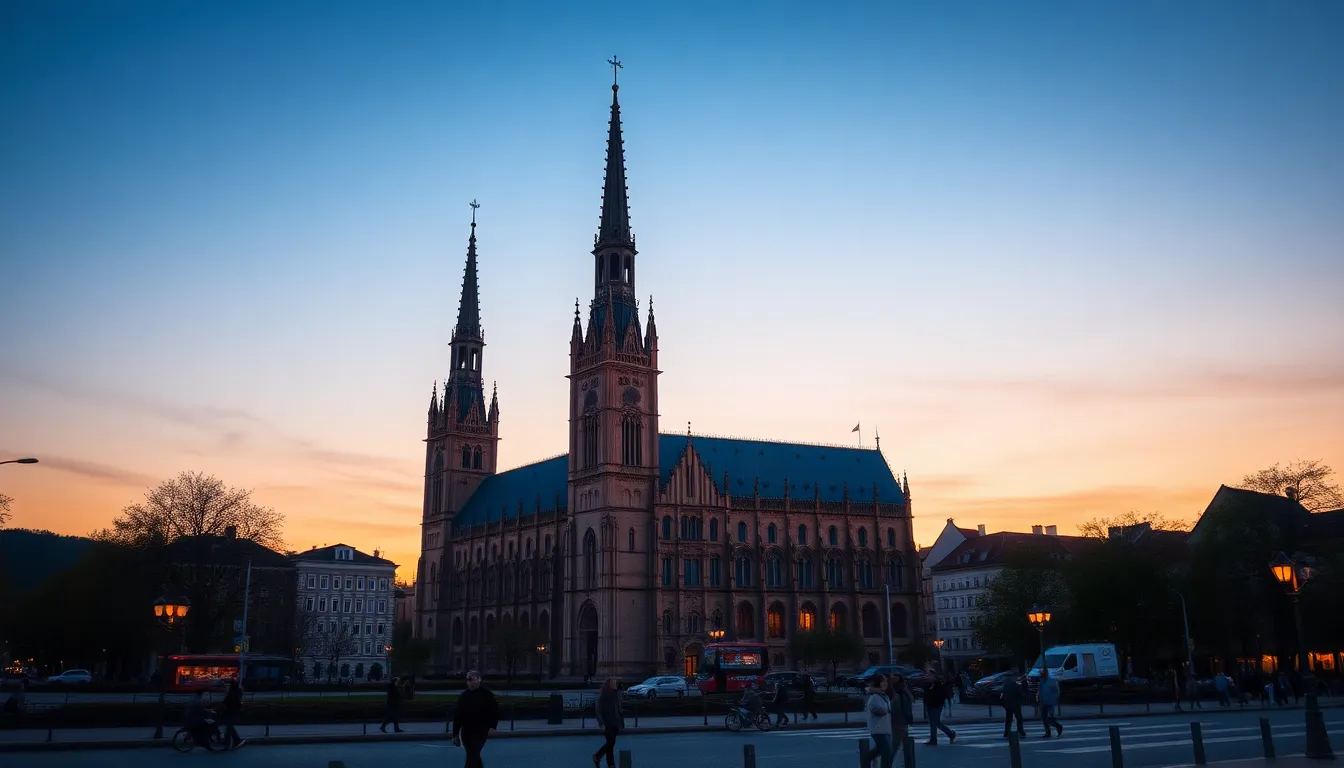
I tell my groups that if they want to understand a Polish city, they should find the oldest church and stand near it. In Wroclaw, that means crossing a bridge onto a small island in the Oder River, and the moment you do, the noise of a modern university city falls away. This is Ostrow Tumski, Cathedral Island, and it is the spot where Wroclaw began.
I have brought faith groups to Wroclaw for years, and it is one of the stops people do not expect to love. They have heard of Krakow and Warsaw. Wroclaw rarely makes their mental map of Poland. Then they walk onto Ostrow Tumski at dusk, when a lamplighter still lights the gas lamps by hand, and they understand why I put it on the itinerary.
This guide will tell you what Cathedral Island is, why it matters to Christian history, and how to walk it well with a group. For the broader picture of sacred Poland, our overview of spiritual sites across Poland is the place to start.
What Ostrow Tumski Is
Ostrow Tumski means “Cathedral Island,” and the name tells you its whole purpose. This is the oldest part of Wroclaw, settled more than a thousand years ago, and for centuries it was the ecclesiastical center of the city, the seat of the bishop and the cluster of churches and clergy houses around him.
A note for accuracy, because I always give it to groups: the island is no longer technically an island. One arm of the Oder was filled in during the 19th century, so today you reach it on foot across the Tumski Bridge. But the character of an island remains. It is quiet, walkable, and set apart from the commercial heart of the city.
For a thousand years this was where Christian Wroclaw was governed and where its faith was centered. Standing here, you are at the source.
The Cathedral of St. John the Baptist
The anchor of the island is the Cathedral of St. John the Baptist, the seat of the Archdiocese of Wroclaw and one of the most important Gothic churches in Poland.
A Long History on One Site
Christian worship on this spot goes back to the beginnings of the Wroclaw bishopric, founded around the year 1000. The bishopric of Wroclaw was established as part of the same wave that organized the Polish church under the first Christian rulers, the same period that shaped Poznan Cathedral and the first Polish bishops. Several churches stood on this ground before the present one. The Gothic cathedral you see today was begun in the 13th century, making it one of the earliest Gothic buildings in this part of Europe.
War and Rebuilding
I am always honest with groups about this: much of what they see is a reconstruction. Wroclaw, known for centuries as Breslau under German rule, was devastated in 1945 during the siege at the end of the Second World War. The cathedral was heavily damaged. What stands today is the result of decades of painstaking rebuilding. That story of destruction and patient restoration is, in its own way, part of the faith heritage of the place, and worth naming for your group.
Climbing the Tower
The cathedral’s towers can be climbed, with a lift for part of the way, and the view over the island, the river, and the city is one of the better panoramas in Poland. For groups with the energy and the time, it is worth doing. For older travelers, the cathedral interior alone is reward enough.
The Other Churches of the Island
Ostrow Tumski is not a single church. It is a small district of sacred buildings, and walking among them is the real experience.
Church of the Holy Cross and St. Bartholomew
This striking two-level Gothic church, founded in the late 13th century, is one of the most distinctive buildings on the island. The lower and upper churches stacked on one site make it unusual, and it is a fine example of the Gothic that defines Cathedral Island.
Church of St. Giles
The small Church of St. Giles is the oldest surviving church in Wroclaw, a modest Romanesque and Gothic building from the early 13th century. Groups walk past it without realizing they are looking at the oldest standing church in the city. I always stop here, because the small and ancient often says more than the grand.
Walking the Island With a Group
This is a place to slow down. Cathedral Island rewards an unhurried walk far more than a checklist of interiors.
Timing the Visit
If you can, come toward the end of the day. As dusk falls, a lamplighter in period dress lights the gas lamps along the streets by hand, one of the few places in Europe where this is still done. It is a small thing, and it lands every time. Groups go quiet and reach for their cameras, and the island takes on the atmosphere it must have had a century ago.
What to See and How Long
Plan two to three hours. That covers the cathedral interior, the tower if your group is up for it, the two-level church, St. Giles, and an unhurried walk across the bridge and through the streets. Modest dress is expected in the churches, as in any active Catholic site, and quiet during any service in progress.
Reading the Place
Give your group the context before they cross the bridge: this is the oldest part of the city, the seat of the bishop for a thousand years, rebuilt by hand after near total destruction. With that framing, the walk becomes a reading of Christian Wroclaw from its founding through its near loss to its recovery. Without it, it is just pretty streets.
Where Wroclaw Fits in a Poland Trip
Wroclaw sits in the southwest of Poland, the historic capital of Silesia, and it is often skipped by groups who run only the Krakow to Warsaw line. I think that is a missed opportunity. Wroclaw pairs naturally with the wooden churches of southern Poland, since both lie in the south and both tell a quieter, less-traveled chapter of Polish Christian heritage than the famous shrines.
For groups who want a Poland itinerary that goes beyond the obvious, Cathedral Island is one of the stops that makes the trip feel discovered rather than packaged. Our Poland destination page shows how a route like this can come together.
FAQ: Visiting Ostrow Tumski
What is Ostrow Tumski in Wroclaw?
Ostrow Tumski, meaning Cathedral Island, is the oldest part of Wroclaw and was for centuries the ecclesiastical heart of the city, the seat of the bishop. It sits on the Oder River and holds the Cathedral of St. John the Baptist along with several other historic churches. It is where the city of Wroclaw originally began.
Is Ostrow Tumski still an island?
Not technically. One channel of the Oder River was filled in during the 19th century, so today you reach the area on foot across the Tumski Bridge. The name and the quiet, set-apart character of an island remain, even though it is now joined to the rest of the city.
What is the main church on Cathedral Island?
The Cathedral of St. John the Baptist, seat of the Archdiocese of Wroclaw and one of the earliest Gothic churches in this part of Europe, begun in the 13th century. It was heavily damaged in 1945 and rebuilt over the following decades. Its towers can be climbed for one of the best views in the region.
When is the best time to visit Ostrow Tumski?
Toward the end of the day. As dusk falls, a lamplighter in period dress lights the island’s gas lamps by hand, one of the few places in Europe where this tradition survives. The atmosphere at that hour is the reason many groups remember the visit. Plan two to three hours overall.
How does Wroclaw fit into a Poland heritage itinerary?
Wroclaw sits in southwestern Poland, the historic capital of Silesia, and is often skipped by groups running only the Krakow to Warsaw route. It pairs well with the wooden churches of southern Poland and gives a group a quieter, less-traveled chapter of Polish Christian heritage than the major shrines.
If you want a Poland itinerary that takes your group beyond the usual circuit, Wroclaw’s Cathedral Island is one of the stops I most enjoy adding. I would be glad to help you see how it fits your route and your dates.
Contact us whenever you want to start planning.