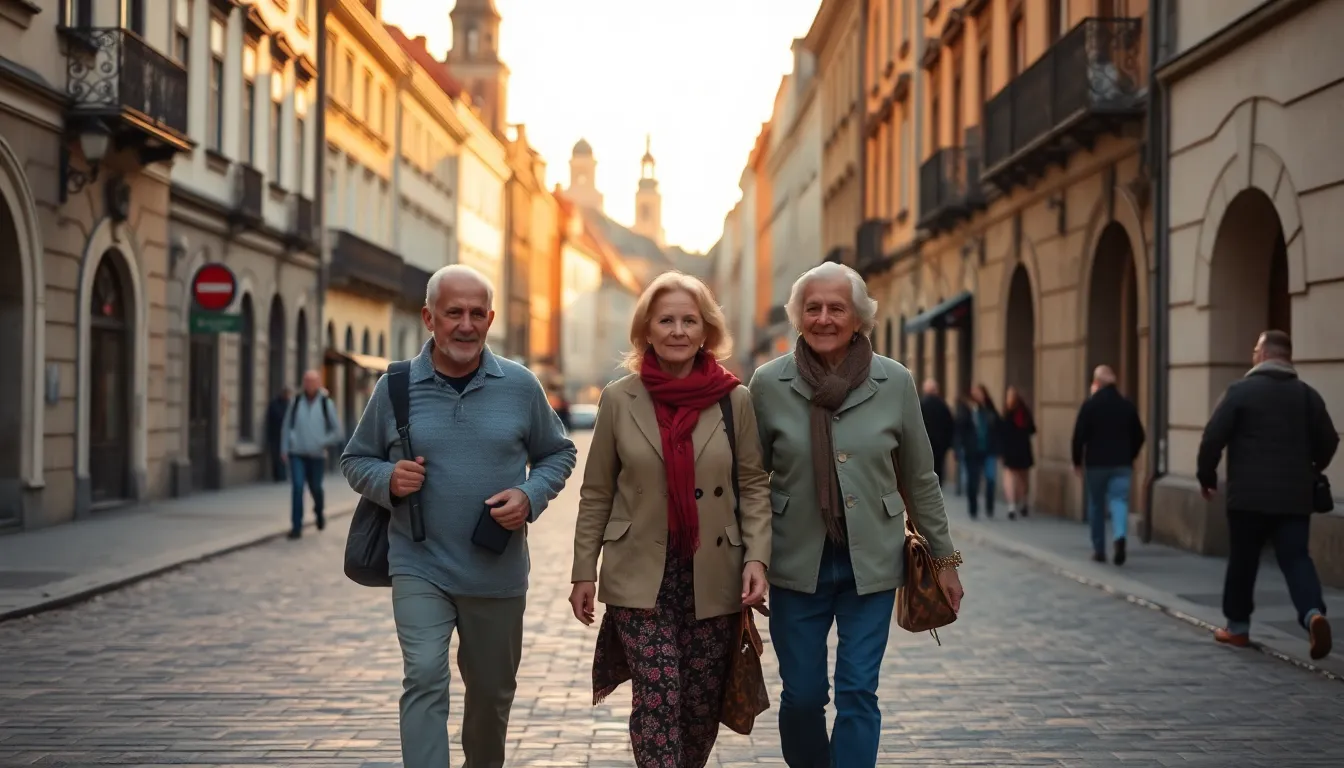
The most moving Poland trips I have led were not the ones with the fittest, fastest groups. They were the ones with three generations on the bus. A grandmother who remembered the stories her own parents told. Her son, leading the congregation. And the grandchildren, twelve and fourteen, who had never imagined any of this was real until they stood in front of it.
A multigenerational group is a gift, and it is also a planning challenge, because the same day that energizes a fifteen-year-old can exhaust an eighty-year-old, and the site that breaks open an adult can frighten a child if you bring them to it cold. The whole art of this kind of itinerary is pacing. You build a trip that holds the youngest and the oldest in the same arc without leaving anyone behind.
This plan is shorter and gentler than a standard heritage route. It keeps the days to a length everyone can manage, builds in real rest, and gives the family-anchored congregation a way to experience Poland together. If you want the deeper, fuller version for a more uniform group, the 10-day Poland heritage itinerary is the place to start, and this plan borrows its emotional arc.
A Note on Pacing for Mixed Ages
Here is the rule I plan around: half-day mornings, lunch as a real break, and afternoons that are either light or free. Grandparents do best with one major site per day, not two. Children do best when there is something to look forward to that is not a museum. And everyone does better with a midpoint rest day that the schedule actually honors rather than fills.
I also tell family groups to expect different reactions across generations, and to treat that as part of the trip rather than a problem to solve. A teenager processes Auschwitz differently than their grandparent does. The bus conversations afterward, where those reactions meet, are often where the real trip happens.
One more thing I ask every family-led group to do before they come. Sit down with the oldest and youngest members and talk about what each of them hopes to get from the trip. The grandmother may be looking for connection to a story she grew up hearing. The teenager may not yet know what they are looking for at all, and that is fine. But naming those hopes out loud before the plane changes how the group travels together, because it turns a tour into a shared family project. I have watched grandparents and grandchildren who barely spoke at home come back from Poland genuinely close, and almost always it started with that one conversation at the kitchen table weeks before departure.
Day 1: Warsaw, Arrival and Rest
Your group lands and settles in. Nothing formal. An easy evening walk through the rebuilt Old Town, dinner together, and an early night. After a transatlantic flight, the oldest and youngest members both need this, and starting slow sets the tone. We arrange airport pickup so no one navigates taxis after a long flight.
Day 2: Warsaw, POLIN Museum
A half day at the POLIN Museum, which is ideal for mixed ages. It is indoor, climate-controlled, with plenty of places to sit, and it tells a thousand years of Jewish life in Poland in a way that holds a child’s attention as well as an adult’s. Give it the morning and take it at a pace that lets grandparents linger and children move ahead with a younger leader.
A small thing that works well with families here: pair each child with a grandparent for part of the visit and let the older generation tell the younger one what they see. It turns the museum into a conversation rather than a lecture, and it gives the grandparents a role that honors what they carry. Some of the warmest moments I have witnessed in that building were an elder and a child standing in front of one exhibit, the older one quietly explaining, the younger one finally understanding why the family came.
The afternoon is free. Lazienki Park is gentle and beautiful and gives everyone a place to breathe, with benches, gardens, and flat paths that suit every age in the group.
Day 3: Warsaw to Krakow
A travel day by train, under three hours, which is the easiest way to move a mixed-age group south. You arrive in Krakow with the afternoon free to settle into the hotel. Keep the evening light. The market square at dusk is the kind of place a family group can simply enjoy being together.
Day 4: Krakow, Kazimierz at an Easy Pace
The historic Jewish quarter, but planned gently. The morning covers the Remuh Synagogue and old cemetery, where five centuries of Jewish religious life sit in one walkable place. Kazimierz is flat and compact, which suits older walkers. In the afternoon, see the living side of the neighborhood, the cafes and the market. Children respond to Kazimierz when they see it is still alive, not only a memorial. Let them buy something at the market. It anchors the day in the present.
Day 5: Krakow, Rest Day
I build a genuine rest day into the middle of every multigenerational trip, and I protect it. No site. The morning is free for sleeping in, the hotel pool if there is one, or a slow cafe breakfast. In the afternoon, I offer an optional gentle outing for whoever wants it, the Wawel Castle grounds or a riverside walk, while others rest. This day is not a luxury. It is what makes the second half of the trip possible for the oldest and youngest members.
Day 6: Auschwitz-Birkenau, With Care for Every Age
This is the day that needs the most thought in a multigenerational group. I do not recommend bringing young children under roughly ten years old to Auschwitz, and I talk this through with each family in advance. For teenagers, the visit can be deeply formative, but only with preparation.
The evening before, gather everyone, and speak to the children directly as well as the adults. Tell them what they will see and that any feeling is allowed. For families who decide a child is too young, we arrange for that child and one adult to spend the day elsewhere with a guide rather than forcing the visit. Our guide to preparing a group for Auschwitz covers this in full.
For those who go, the day moves from Auschwitz I to Birkenau at a pace that allows for sitting, stopping, and silence. We schedule nothing for the evening. In a family group, I encourage the generations to eat together that night if they want to. Some of the most important conversations of a young person’s life happen across that table.
Day 7: Krakow, Closing Together
The final day is not for sightseeing. It is for the family. Gather everyone in the morning, the grandparents and the grandchildren in the same circle, and let each person share one thing they are carrying home. In a multigenerational group this closing is extraordinary, because a child hears what this meant to their grandparent, and a grandparent hears their grandchild put words to it. That exchange is the reason many families take this trip at all.
The afternoon is free for last walks through Krakow and a final meal together. We handle the airport transfers so the last hours belong to your family.
If you are planning to bring a congregation that spans real generations, I would be glad to walk through how this itinerary flexes for the specific ages in your group. You can see how we run group heritage tours, read the Poland destination overview, or share the guide for first-time heritage travelers with the families who have never done a trip like this. When you want to talk it through, contact us here.
FAQ: Multigenerational Poland Heritage Trip
What age is appropriate for children visiting Poland’s heritage sites?
Most sites suit children of any age, and Kazimierz and the POLIN Museum work well for young kids. Auschwitz is the exception. I generally recommend roughly ten and up, and we always arrange an alternative for younger children rather than bringing them somewhere they are not ready for.
How do you pace a Poland trip for older travelers?
One major site per day, half-day mornings, lunch as a real break, and a protected rest day in the middle. The cities we focus on, especially Kazimierz, are flat and walkable. We also keep travel legs short, using the train between Warsaw and Krakow rather than long coach days.
Can grandparents and grandchildren really do this trip together?
Yes, and it is one of the most rewarding ways to do it. The key is a gentler schedule and accepting that different generations will experience the heavy sites differently. The shared reflection at the end, where those reactions meet, is often the high point of the whole journey.
Is there a lot of walking on a Poland heritage trip?
There is walking, but the multigenerational version is built to minimize it. We use compact, flat neighborhoods, keep one site per day, and arrange transport close to each location. If anyone in your group has serious mobility limits, tell me, and I can adapt further or point you toward our accessible itinerary.
Should I prepare my children before the trip?
Yes. Children do best when the trip is not a surprise. Talk through what Poland’s history holds at a level that fits their age, and let them ask questions before you go. The preparation matters most for Auschwitz, and we help families think through exactly how to handle it.