Lublin is the city most of my groups have never heard of before I bring it up, and the one many of them remember most clearly afterward. It does not have the scale of Warsaw or the polish of Krakow. What it has is depth. For centuries this was a center of Jewish learning so significant that people called it the Jerusalem of Poland. The great minds of European Judaism studied here. And almost all of it was erased within a few years.
I have come to think of Lublin as the city that teaches a group what was lost at the level of the mind and the spirit, not just the body. You can stand in a restored study hall here and feel the absence of the scholarship that filled it. A leader who understands what Lublin holds, and how to handle the heavier ground nearby, gives their community an encounter they will carry. So let me walk you through it.
Understanding Lublin Before You Arrive
Lublin sits in eastern Poland, and it is quieter and less touristed than Warsaw or Krakow. The heritage that matters to a faith group clusters in and around the Old Town and the former Jewish quarter, with the Chachmei Lublin Yeshiva a short distance away and the Majdanek memorial just outside the city.
What sets Lublin apart is its texture. Where Warsaw gives you the full arc in a museum and Krakow gives you a surviving quarter, Lublin gives you the intellectual and spiritual heart of Polish Jewry, alongside the quiet of a place that has not been smoothed over for visitors. If you are still mapping out Poland for your community, the Poland heritage travel guide gives the country-wide view. Lublin is the stop that deepens it.
The Chachmei Lublin Yeshiva
The Chachmei Lublin Yeshiva is the reason most groups come to Lublin, and rightly so. When it opened in 1930, it was one of the largest and most ambitious centers of Jewish learning in the world. Rabbi Meir Shapiro, who founded it, also founded the Daf Yomi, the daily page of Talmud study that Jews across the world follow together to this day. That practice began here.
The building still stands, restored, and visiting it gives your group a sense of the scale of ambition that Polish Jewry held for itself. This was not a community on the margins. This was a civilization investing in the next generation of its greatest scholars. The main study hall has been brought back, and standing in it, a group feels both the achievement and the absence at once.
For Jewish groups, the connection to Daf Yomi makes this an especially powerful stop. Many travelers study a page of Talmud each day without knowing the practice was born in this room. Naming that out loud, as a leader, lands deeply.
The Old Jewish Quarter and the Grodzka Gate
Before the war, Jews made up roughly a third of Lublin’s population. The city held dozens of synagogues, a rich Hasidic tradition, and a Jewish community that was central to the city’s identity. The old Jewish quarter sat below the Old Town, near the castle. Almost none of its buildings survived. The quarter was demolished, and much of where it stood is now open ground and roadway.
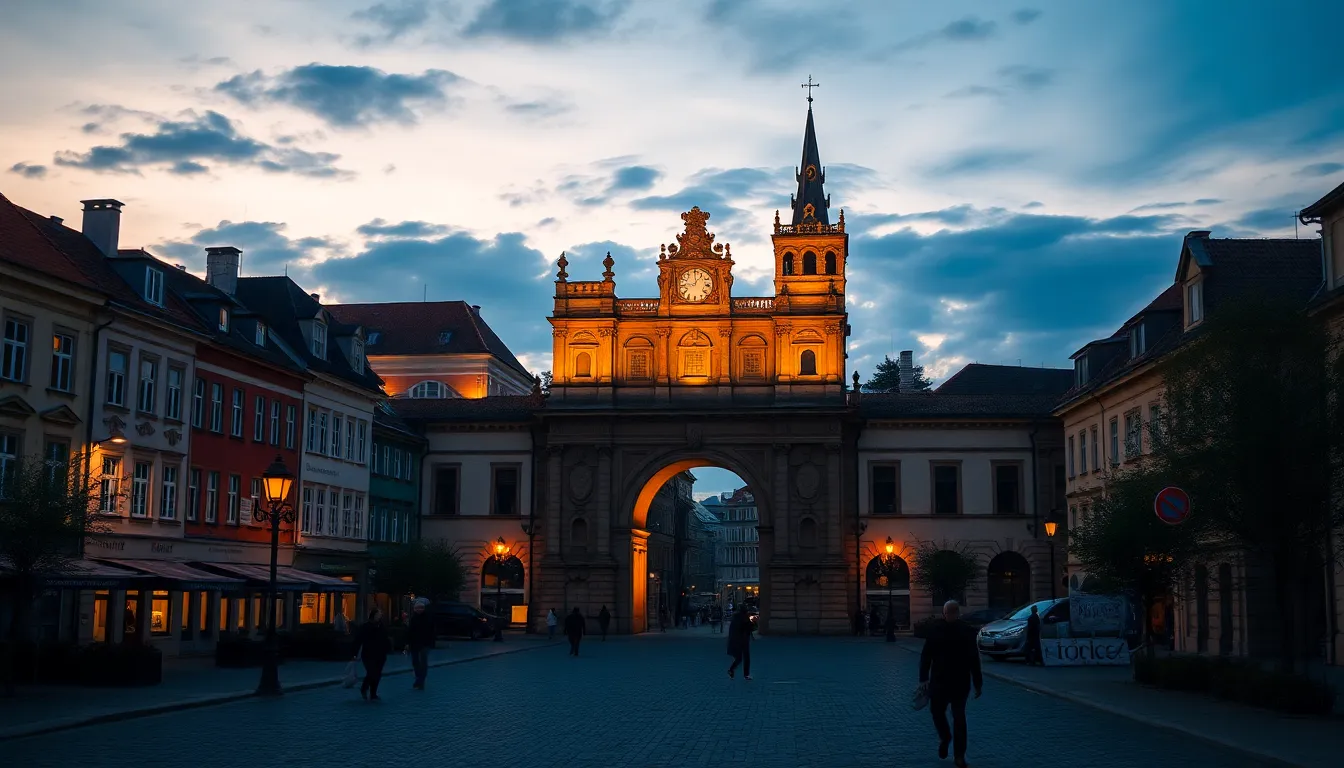
The Grodzka Gate is the threshold of this story. It once separated the Christian Old Town from the Jewish quarter below, and locals knew it as the Jewish Gate. Today it houses the Grodzka Gate NN Theatre center, which preserves the memory of Jewish Lublin through oral histories, photographs, and a vast archive of community records. The center has gathered the names, faces, and stories of the people who lived in the quarter that no longer exists.
I find this site quietly devastating in the best sense. There is no grand monument. There is an archive, and a commitment to remembering individuals rather than numbers. For a group that wants to understand the depth of what was lost, the Grodzka Gate teaches in a way the larger sites cannot. Give your group time here, and the patience to sit with it.
Majdanek: Handling the Ground Nearby
Just outside Lublin sits Majdanek, one of the few major camps that was captured largely intact, because the front moved too fast for it to be destroyed. This makes it different from Treblinka, where almost nothing remains. At Majdanek the structures stand, and the proximity to the city is itself part of the lesson: the camp sits in plain view of residential neighborhoods.
I want to be direct with you as a leader. Majdanek is heavy, and its state of preservation makes it confronting. As with Auschwitz, the preparation matters as much as the visit. A group that has talked together beforehand about what they will see, what may rise up in them, and how they will support one another comes away able to carry the experience. A group that arrives unprepared can struggle to process it at all.
Do not schedule Majdanek on your first morning in Lublin. Let your group encounter the yeshiva and the Grodzka Gate first, so they meet the life and the scholarship before they confront the loss. The sequence holds the experience. Our local educators understand both the history and the emotional weight of leading people through a site like this, and that guidance is not optional here.
The Christian Heritage Layer
Lublin’s Old Town is one of the most atmospheric in Poland, largely untouched by the wartime destruction that flattened other cities. The Catholic heritage runs deep here. The Lublin Cathedral, with its trompe-l’oeil frescoes, and the Dominican Basilica in the heart of the Old Town give Christian groups a layer of heritage that predates and surrounds the Jewish story.
The Krakowska Gate and the medieval streets give the Old Town a coherence that lets a group feel the shape of the historic city. For Christian travelers, Lublin offers a quieter, less crowded encounter with Polish Catholic heritage than the major pilgrimage centers, and the Old Town’s intimacy suits reflection.
Practical Orientation for Group Leaders
Lublin is compact and walkable in its center, though the yeshiva and Majdanek require short transfers. Because the city is less touristed, it offers a calmer rhythm, which suits the reflective nature of what you encounter here. Plan for comfortable walking and weather layers in the Old Town.
One to two nights in Lublin is usually enough. That covers the yeshiva and the Grodzka Gate in one day, Majdanek and the Old Town across another, with room for reflection. Many groups fit Lublin between Warsaw and Krakow, or as an extension for communities that want the full story of Jewish scholarship.
If you are organizing a group of fifteen or more, your travel is covered. You fly free, stay free, and tour free. For a congregation working within a budget, that changes the planning conversation, because the person leading does not also carry the cost.
You can see how we structure these journeys on the Poland destination page, and the group heritage tours page explains how the leader experience works.
How Lublin Fits a Wider Poland Itinerary
Lublin works best as part of a wider journey rather than on its own. Most groups combine it with Warsaw and Krakow. The Warsaw heritage guide covers POLIN and the ghetto memorials, and the Krakow heritage guide covers Kazimierz, Wawel, and Auschwitz nearby. Lublin adds the dimension of scholarship and learning that the other cities touch but do not center. Together they give a group the fullest possible picture of what Polish Jewry built and what was lost.
FAQ: Lublin Heritage Travel
What is the Chachmei Lublin Yeshiva?
The Chachmei Lublin Yeshiva, opened in 1930, was one of the largest centers of Jewish learning in the world before the war. Its founder, Rabbi Meir Shapiro, also began the Daf Yomi, the daily page of Talmud study that Jews worldwide follow together to this day. The restored building lets a group stand in the study hall where that practice was born.
Why is Lublin called the Jerusalem of Poland?
Lublin earned the title because of the depth and intensity of its Jewish scholarly life. Jews made up about a third of the city’s population, and Lublin held dozens of synagogues, a strong Hasidic tradition, and a community central to the city’s identity. For centuries it was one of the great centers of Jewish learning in Europe.
What is the Grodzka Gate?
The Grodzka Gate once separated the Christian Old Town from the Jewish quarter below, and was known locally as the Jewish Gate. Today it houses the Grodzka Gate NN Theatre center, which preserves the memory of Jewish Lublin through oral histories, photographs, and an archive of the people who lived in the quarter that no longer exists. It remembers individuals rather than numbers.
What is Majdanek and how should a group prepare?
Majdanek is a former camp just outside Lublin, captured largely intact because the front moved too quickly for it to be destroyed. The structures still stand. As with any site of this weight, preparation matters as much as the visit. Talk together beforehand, do not schedule it on your first morning, and rely on a local educator who understands both the history and the emotional toll.
How does Lublin fit into a Poland trip?
Lublin works best as part of a wider journey with Warsaw and Krakow. It adds the dimension of Jewish scholarship and learning that the other cities touch but do not center. One to two nights is usually enough, and many groups place it between the capital and Krakow.
If Lublin speaks to the journey you are imagining for your community, I would welcome the chance to talk it through. Not to sell you anything, just to help you think about how it fits your group and your purpose. You can reach us through our contact page whenever you are ready.