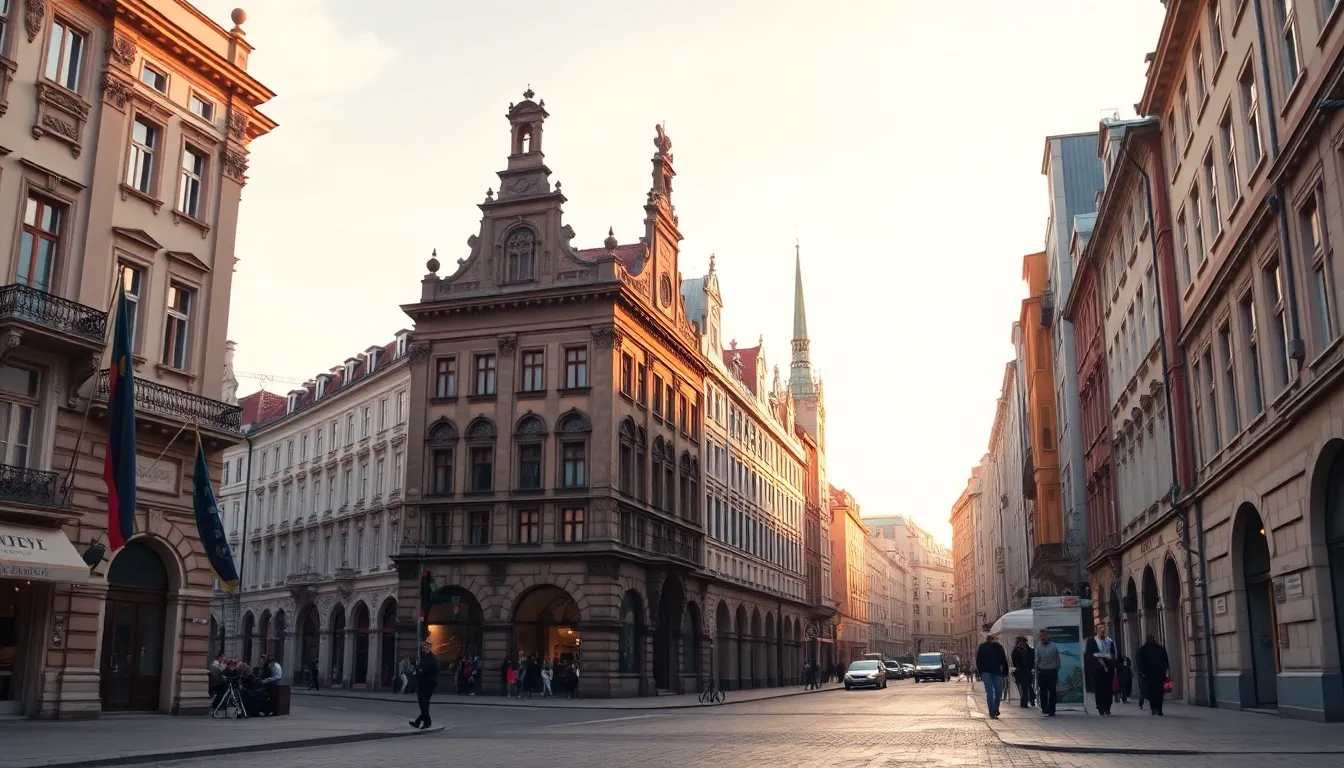
Lodz is not a pretty city in the way Krakow is pretty, and I tell my groups that on purpose. It was a factory city, built fast in the nineteenth century by Poles, Jews, Germans, and Russians who came to make textiles and money. That mixed, industrial character is exactly why it matters. Lodz shows a group a different Jewish Poland than the synagogues and shtetls usually pictured. Here Jewish life was woven into mills, mansions, and modern commerce. And here the Nazis built one of the largest and longest-lasting ghettos of the war.
I bring groups to Lodz when they are ready for a story with fewer monuments and more raw ground. It rewards a leader who can read the city’s layers and help a group see what is not obvious at first glance. So let me orient you to it.
Understanding Lodz Before You Arrive
Lodz sits in central Poland, roughly between Warsaw and Krakow, which makes it a natural stop on a wider route. The heritage that matters to a faith group spreads across a few areas: Piotrkowska Street and the industrial heart, the former ghetto district of Baluty in the north, the great Jewish cemetery, and the Radegast station memorial.
What Lodz offers that the better-known cities do not is the industrial chapter of Jewish Poland, and a ghetto story that unfolded over more than four years rather than a few weeks. If you are mapping out Poland for your community, the Poland heritage travel guide gives the full country picture. Lodz adds a layer the famous cities miss.
The Industrial City: A Different Jewish Poland
Before the war, Lodz was the second-largest city in Poland and home to one of the largest Jewish communities in Europe, around a third of the city’s population. This was not a community of small-town craftsmen. Jewish industrialists built textile empires here. The most famous, Izrael Poznanski, built a factory and palace complex so vast that it now houses a museum, a hotel, and a shopping center known as Manufaktura.
I like to begin a Lodz visit here, in the industrial heart, because it resets a group’s picture of Jewish Poland. Walking through the Poznanski complex and down Piotrkowska Street, the long boulevard of merchant houses and former mansions, your group sees a community that helped build a modern industrial city. Lodz was a place of factories, fortunes, and ambition, shared by Poles, Jews, and Germans living side by side. Establishing that picture first makes what follows land harder, because the group understands the world that was destroyed.
The Lodz Ghetto: Remembrance in Baluty
The Lodz Ghetto, which the Germans called Litzmannstadt, was sealed in early 1940 in the poor northern district of Baluty. It was the second-largest ghetto in occupied Poland and, in a grim distinction, the longest-lasting, kept operating as a forced labor center until the summer of 1944.
Today Baluty is a residential district, and as with the Warsaw Ghetto, much of the physical fabric of the ghetto has been built over or worn away. There is little grand monument here. There are streets where people live, marked by the memory of what happened on them. This is part of why Lodz asks more of a leader. Without preparation and a knowledgeable guide, a group can walk these streets and miss what they are standing on.
Radegast Station
The most affecting ghetto site is the Radegast station memorial, on the northern edge of the city. This was the railway platform from which the residents of the Lodz Ghetto were deported, most of them to the camps. The original station building and a length of track survive, and a memorial has been built around them. Standing on that platform, beside the actual rails, your group confronts the deportations in a direct, physical way that the built-over streets cannot offer.
I handle Radegast with the dignity it requires. I do not rush a group through it. I let the silence do its work. As a leader, your role at a site like this is not to fill the quiet with explanation, but to hold space for it.
The Jewish Cemetery: The Scale of a World
The Jewish Cemetery of Lodz is one of the largest Jewish cemeteries in the world, with around two hundred thousand graves. The scale alone tells the story of how vast this community was. Walking among the graves, your group sees ornate mausoleums of industrialist families alongside row after row of ordinary headstones, the whole social range of a great community in stone.
Within the cemetery lies the Ghetto Field, where those who died inside the ghetto were buried. There is a particular weight to this section, rows of graves dug during the ghetto years, many marked, many not. For a Jewish group especially, the cemetery offers something the deportation sites do not: a place to stand among the names, to say a prayer, to remember individuals. I often place the cemetery thoughtfully in the sequence, so that a group has a place of mourning that is also, in its way, a place of presence.
The Christian and Civic Heritage Layer
Lodz was always a city of many faiths living in close quarters, and that mix is visible in its skyline. Within a short walk you can find Catholic, Protestant, and Orthodox churches alongside the surviving traces of synagogues, a reminder that this was a genuinely multi-faith industrial city.
The Lodz Cathedral, a tall neo-Gothic church, anchors the Catholic heritage. The Old Town and the former market square hold the civic story of the city. For Christian groups, Lodz offers something less common: a chance to see how Catholic, Protestant, Orthodox, and Jewish communities shared a single rapidly growing city, and what the war did to that coexistence. It is a different lesson than the great pilgrimage sites, and a valuable one.
Practical Orientation for Group Leaders
Lodz is more spread out than its center suggests, so plan for transfers between the industrial heart, Baluty and Radegast in the north, and the cemetery. Piotrkowska Street and the Manufaktura complex are walkable, but the ghetto sites and cemetery need transport. The city is less polished and less touristed than Krakow, which suits the reflective character of the visit.
One to two nights in Lodz is usually enough. That covers the industrial city and Piotrkowska in one part, and the ghetto, Radegast, and the cemetery across another, with time for reflection. Because Lodz sits between Warsaw and Krakow, many groups fit it naturally on the route between the two.
If you are leading a group of fifteen or more, your travel is covered. You fly free, stay free, and tour free. For a synagogue or church working within a budget, that changes the math, because the person organizing and leading does not also carry the cost.
You can see how we structure these journeys on the Poland destination page, and the group heritage tours page explains how the leader experience works.
How Lodz Fits a Wider Poland Itinerary
Lodz works best as a stop on a wider route rather than a destination on its own. Its position between Warsaw and Krakow makes it easy to add. The Warsaw heritage guide covers POLIN and the ghetto memorials, and the Krakow heritage guide covers Kazimierz, Wawel, and Auschwitz nearby. Lodz adds the industrial chapter and the long ghetto story that the other cities do not hold. Groups wanting the fullest picture often add Lublin as well for the story of Jewish scholarship.
FAQ: Lodz Heritage Travel
What was the Lodz Ghetto?
The Lodz Ghetto, which the Germans called Litzmannstadt, was sealed in early 1940 in the northern Baluty district. It was the second-largest ghetto in occupied Poland and the longest-lasting, operating as a forced labor center until the summer of 1944. Much of it has been built over today, so a knowledgeable guide and group preparation are essential to understanding what the streets hold.
What is the Radegast station memorial?
Radegast was the railway platform from which the residents of the Lodz Ghetto were deported. The original station building and a length of track survive, and a memorial has been built around them. Standing beside the actual rails gives a group a direct, physical encounter with the deportations that the built-over ghetto streets cannot offer.
Why visit the Jewish Cemetery in Lodz?
The Jewish Cemetery of Lodz is one of the largest in the world, with around two hundred thousand graves. Its scale alone conveys how vast the community was, and the Ghetto Field within it holds those who died inside the ghetto. For a Jewish group especially, it offers a place to stand among the names, to pray, and to remember individuals.
How is Lodz different from Krakow or Warsaw?
Lodz shows the industrial chapter of Jewish Poland, a community of factory builders and merchants rather than small-town craftsmen, in a genuinely multi-faith city. Its ghetto story unfolded over more than four years rather than a few weeks. The city is less polished and less touristed, which suits the reflective nature of the visit.
How does Lodz fit into a Poland trip?
Lodz sits between Warsaw and Krakow, which makes it a natural stop on a wider route. One to two nights is usually enough. Most groups add it to a journey that already includes the capital and Krakow, and some add Lublin as well for the story of Jewish scholarship.
If Lodz fits the journey you are imagining for your community, I would welcome the chance to talk it through. Not a sales pitch, just a conversation about how it fits your group and what you hope your people carry home. You can reach us through our contact page whenever you are ready.