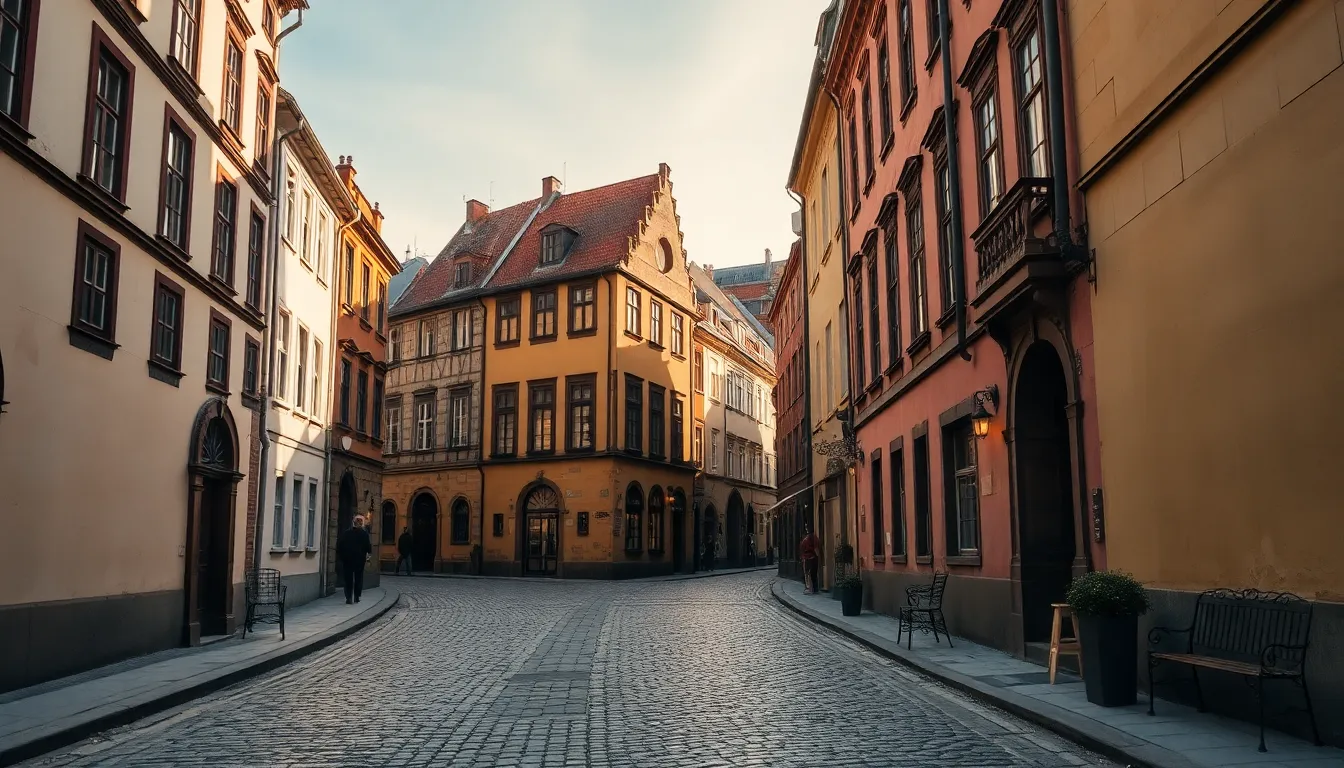
The first time I brought a group into Kazimierz, an older man in the back of the bus went quiet. He had spent the morning at a memorial site, and he was braced for more weight. Then we turned onto Szeroka Street, and he saw children playing outside a cafe, a synagogue with its doors open, a bookshop with Hebrew lettering in the window. He leaned over to me and said, “It’s still here.” That is the gift Kazimierz gives a heritage group. After the places that hold grief, this is a place that holds life.
Kazimierz is the historic Jewish quarter of Krakow, and it is the single best place in Poland to understand what a thriving Jewish community looked like before the war, because so much of it survived. The buildings stand. The synagogues stand. And in the last three decades, Jewish life has returned to these streets in a real, if changed, form.
If you are a rabbi or a pastor planning a journey through Jewish Poland, you need to understand Kazimierz, and you need to understand how to place it within your itinerary so your group receives what it offers. This guide is what I share with every leader before they come.
A City Within a City: The History of Kazimierz
How Kazimierz Began
Kazimierz was founded in 1335 by King Casimir the Great as a separate town next to Krakow, and it carries his name. For its first century it was a Christian town. Jews began settling there in larger numbers in the late fifteenth century, after tensions in Krakow proper pushed the Jewish community to relocate. By the sixteenth century, Kazimierz had become the heart of Jewish Krakow.
What developed there was not a ghetto in the modern sense. It was a self-governing Jewish town. It had its own council, its own courts, its own market, its own religious authorities, and a wall that separated the Jewish district from the Christian one for a time. Within those streets, a community managed its own affairs and built institutions that lasted for four hundred years.
The Golden Age of Jewish Kazimierz
The sixteenth century was a high point. This was the era of Moses Isserles, known as the Remuh, one of the most influential rabbinic authorities in Jewish history. His legal rulings shaped Ashkenazi practice and are studied in every yeshiva to this day. He lived, taught, and is buried in Kazimierz.
Around figures like the Remuh, Kazimierz grew into a center of learning and trade. Synagogues multiplied. Printing houses produced Hebrew books that traveled across Europe. The community was poor and rich, pious and worldly, all at once, the way real communities always are.
The District Through the War
When the Germans occupied Krakow in 1939, they did not destroy Kazimierz. Instead, in 1941, they forced the city’s Jews across the river into a sealed ghetto in the Podgorze district, the place later associated with the Krakow ghetto and the Plaszow camp. Kazimierz itself was emptied of its people but largely spared physical destruction. That is the painful irony of the district. The buildings survived because the community was removed from them.
After the war, Kazimierz fell into decades of neglect under communist rule. The synagogues stood empty or were used as storehouses. The streets decayed. For a long time, almost no one came.
Walking Kazimierz Today
Szeroka Street: The Heart of the Quarter
Szeroka Street is where I usually begin a group’s walk. It is wide, almost a square, and it is ringed by the buildings that defined Jewish Kazimierz. The Old Synagogue anchors one end, the Remuh Synagogue sits along its side, and the rhythm of the street still follows the shape it held for centuries. Standing here, you can ask your group to picture the market days, the prayer, the ordinary traffic of a Jewish town, and the picture holds, because the stage is still standing.
The Seven Synagogues
Kazimierz is home to seven historic synagogues, more than any comparable district in Poland. Each tells part of the story.
The Old Synagogue is the oldest surviving synagogue building in Poland, dating to the fifteenth century. It is now a museum of Krakow’s Jewish history. The Remuh Synagogue, built in the sixteenth century, is the one active congregational synagogue in the district and still holds services. Alongside them stand the Isaac Synagogue, the High Synagogue, the Kupa Synagogue, the Popper Synagogue, and the Tempel Synagogue, each with its own character and its own history. I cover the Old Synagogue and the Remuh in detail in separate guides, because each deserves its own visit and its own preparation.
For a group, you do not need to enter every one. What matters is helping people understand that this density of synagogues is itself the testimony. Seven houses of prayer in a few streets is the footprint of a community that lived a full religious life here for four hundred years.
The Revival
Here is what surprises most groups. Kazimierz is not a museum quarter frozen behind glass. Since the 1990s, it has come back to life. The annual Jewish Culture Festival, held each summer, fills these streets with concerts, lectures, and study, and draws tens of thousands of people, Jewish and not. The Jewish Community Centre of Krakow runs programs for the small but real Jewish community that lives here today. Kosher and Jewish-style restaurants have opened. The Galicia Jewish Museum documents Jewish heritage across the region with care and seriousness.
This revival is complicated, and an honest guide says so. Some of what you see is genuine community renewal. Some of it is commercial nostalgia, restaurants and shops trading on Jewish atmosphere. I tell my groups to hold both. The complexity is part of the truth of the place.
Placing Kazimierz in Your Itinerary
Why Sequence Matters
I am careful about where Kazimierz falls in a trip. After the heaviest memorial days, walking through a neighborhood where Jewish life continues gives people something they badly need, which is the sense that the story did not end in destruction. For that reason I often place Kazimierz toward the end of a Krakow segment, as a turn from mourning toward continuity.
If you want to understand how I weave the living sites and the memorial sites together across a full journey, our Jewish heritage in Poland guide lays out the whole picture, and it is the piece I would read first.
What to See Alongside Kazimierz
Within the district, the Remuh Synagogue and its cemetery and the Old Synagogue museum are the two anchors I build a Kazimierz visit around. They sit minutes apart, and together they carry the religious and historical weight of the quarter. Plan a half day at minimum. A rushed hour does not serve a group here.
You can see how we structure a full Poland journey on our Poland destination page, and our group heritage tours page explains how the group leader experience works from start to finish.
FAQ: Visiting Kazimierz
What is Kazimierz and why is it important for Jewish heritage travelers?
Kazimierz is the historic Jewish quarter of Krakow, founded in the fourteenth century and home to the city’s Jewish community for roughly four hundred years. Its buildings and synagogues survived the war largely intact, making it the best-preserved Jewish district in Poland. For heritage groups it offers the rare experience of walking through real streets where Jewish life unfolded for centuries and, in a changed form, continues today.
How many synagogues are in Kazimierz?
Seven historic synagogues stand in Kazimierz, including the Old Synagogue, the oldest surviving synagogue building in Poland, and the Remuh Synagogue, which is the one active congregational synagogue in the district. This concentration of synagogues in a few streets reflects the depth of religious life the community maintained here.
Is Jewish life actually present in Kazimierz today?
Yes, in a real if smaller form. There is an active Jewish community, the Jewish Community Centre of Krakow runs ongoing programs, the Remuh Synagogue holds services, and the annual Jewish Culture Festival draws large crowds each summer. Alongside this genuine renewal there is also commercial nostalgia, and a good guide helps a group understand both honestly.
How much time should a group spend in Kazimierz?
I recommend at least a half day. The two anchor sites, the Remuh and the Old Synagogue, deserve unhurried time, and the district itself rewards walking. A rushed hour does not let a group absorb what the place holds.
Where should Kazimierz fall in a Poland itinerary?
I usually place Kazimierz toward the end of a Krakow segment, after the heavier memorial days, so that a group moves from mourning toward the sense that Jewish life continues. Sequence matters more than people expect, and we build it deliberately into every Poland journey.
If you are thinking about bringing your community to Krakow, I would welcome the conversation. Kazimierz is one of the places where I watch groups shift, where the weight they have been carrying loosens just a little, because they see with their own eyes that the story did not end. Tell me about your community and what you hope this journey will give them, and we will build it together.
Contact us whenever you are ready to begin.