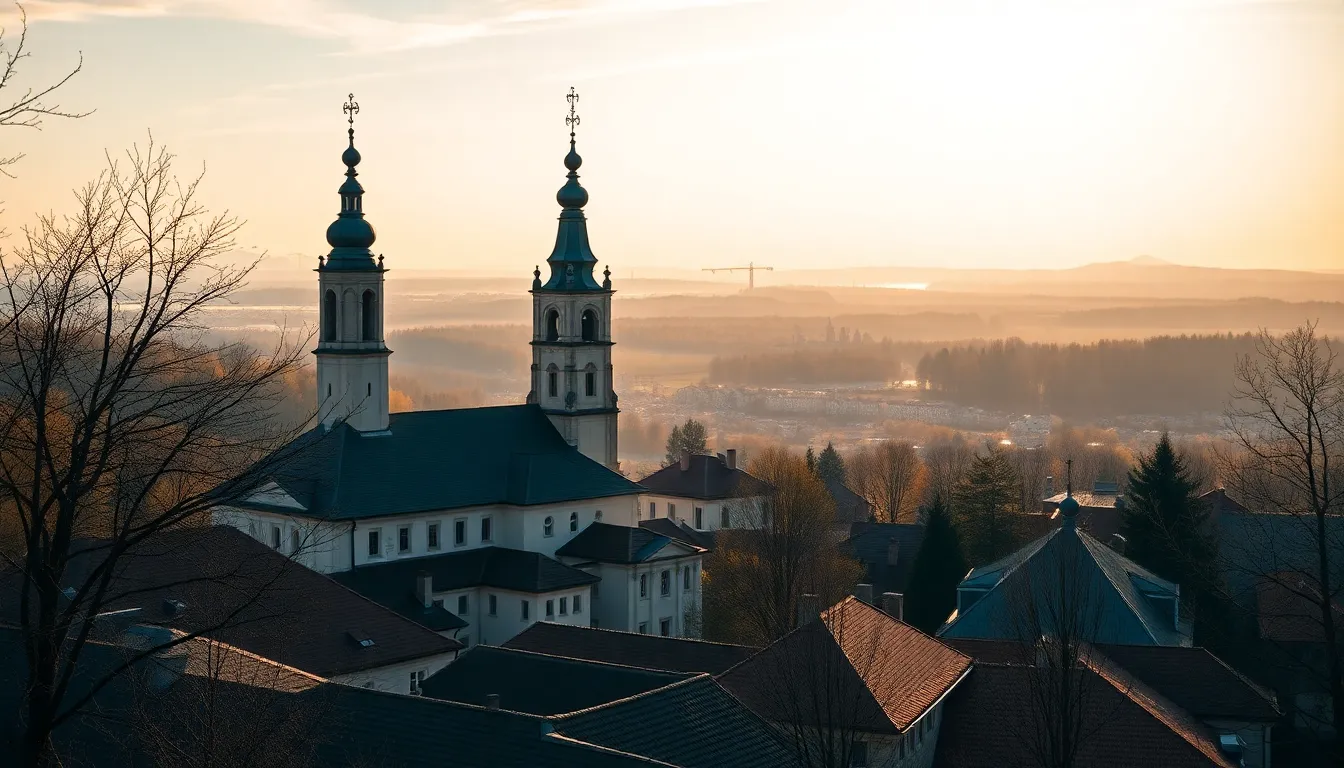
The first time I brought a group to Jasna Gora, we arrived just before the silver cover over the Black Madonna was raised. A fanfare of trumpets sounds when it happens, and the chapel goes still. I watched grown adults, pastors among them, lower their heads without being told to. Whatever you believe about the icon, the room teaches you something in that moment. This is not a museum. This is the spiritual center of a nation.
I have walked groups through a lot of churches in Europe. Few of them carry the weight of this one. If you are bringing a Catholic congregation to Poland, Jasna Gora is not a stop on the itinerary. It is the reason for the itinerary. And if you are bringing a Protestant or interfaith group, it is still one of the clearest windows you will find into how faith and national identity fused in Polish history.
This guide covers what the shrine is, what the icon means, and how to plan a visit that does it justice. For the wider picture of sacred Poland, our overview of spiritual sites in Poland is the place to start.
What Jasna Gora Is
Jasna Gora, which means Bright Hill, is a Pauline monastery in the city of Czestochowa in southern Poland. The Order of Saint Paul the First Hermit founded it in 1382, and the monks have kept it ever since. That continuity matters. The same religious order has guarded this place for more than 600 years, through invasions, partitions, two world wars, and a communist government that tried hard to empty Poland’s churches.
The monastery sits on a low hill above the city. The approach is part of the experience. A long avenue, Aleja Najswietszej Maryi Panny, runs straight toward it, and for centuries pilgrims have walked the final stretch on foot. Some still walk the entire way from Warsaw, a journey of more than 200 kilometers, arriving each August for the Feast of the Assumption.
Inside the walls you find the basilica, the treasury, the Knights’ Hall, and the heart of it all, the Chapel of the Miraculous Image. That chapel is where the Black Madonna hangs.
The Fortress That Held
One detail I always make sure groups understand: Jasna Gora is a fortress as much as a shrine. The bastions and walls are real military fortifications, built and rebuilt over centuries.
In 1655, during the Swedish invasion known as the Deluge, a small force of monks and defenders held Jasna Gora against a much larger Swedish army for 40 days. The Swedes withdrew. Poles read the survival of the monastery as a sign, and the event became a turning point in the war and in the national story. You cannot separate the religious meaning of this place from that history. They are one thing.
The Black Madonna
The Black Madonna of Czestochowa is an icon of the Virgin Mary holding the child Jesus. Tradition attributes the original painting to Saint Luke the Evangelist, said to have painted it on a cedar tabletop from the home of the Holy Family. Art historians date the panel later, but for the faithful the tradition carries its own truth.
The icon has been at Jasna Gora since 1382, brought here according to legend by Prince Wladyslaw Opolczyk. Two long scars cut across the Madonna’s right cheek. In 1430, raiders attacked the monastery and slashed the painting. Restorers have never been able to fully cover the marks, and so the wounds remain part of the image. Polish Catholics see meaning in that too: a Madonna who carries her scars rather than hiding them.
The skin tone of the figures is dark, the result of centuries of candle smoke, age, and the materials used, and it gives the icon its name.
Why She Is Called Queen of Poland
After the defense of 1655, King John Casimir made a formal vow in the cathedral at Lviv. He proclaimed the Virgin Mary the Queen of the Polish Crown and placed the nation under her protection. The title stuck. To this day, Polish Catholics call Mary the Queen of Poland, and the Black Madonna is her image.
This is the thing non-Catholic visitors most need to grasp before they arrive. The Black Madonna is not only a religious icon. She is a symbol of Poland itself, of survival under occupation, of faith that outlasted empires. During the communist era, when the state suppressed the church, millions still came here. The shrine became quiet resistance. When John Paul II, a Polish pope, returned to his homeland, Jasna Gora was central to everything he said and did.
Visiting the Chapel of the Miraculous Image
The Black Madonna hangs above the altar in the chapel, normally covered by an ornate silver and ebony screen. Several times each day, the cover is ceremonially raised and lowered, accompanied by a trumpet fanfare. The unveiling is the moment most groups want to witness, and it is worth timing your visit around it.
Crowds gather early. During the major feasts, especially the Feast of Our Lady of Czestochowa on August 26 and the Assumption on August 15, the monastery fills with hundreds of thousands of pilgrims. If your group wants quiet and space to reflect, avoid those dates. If your group wants to feel the full force of Polish Catholic devotion, those are the dates to choose. There is no wrong answer, only a choice about what you want your people to experience.
Practical Notes for Group Leaders
A few things I tell every group before we go in:
- Dress modestly. Shoulders and knees covered. This is an active shrine, not a tourist site, and standards are taken seriously.
- Expect silence in the chapel. Photography is restricted, and during Mass and the unveiling, no photos at all.
- Build in time. The basilica, the treasury, the Knights’ Hall, and the ramparts each deserve attention. A rushed hour does not work here. Half a day is closer to right.
- Consider the walk. Approaching on foot along the main avenue, even part of it, changes how the visit lands. Pilgrims have done it for 600 years for a reason.
For groups combining this with the rest of southern Poland, Czestochowa pairs naturally with Krakow. You can read about the sites tied to Pope John Paul II in Krakow and the broader history of Wawel Cathedral, both within easy reach.
Where Czestochowa Fits in a Poland Itinerary
Czestochowa sits about two hours by road from Krakow, which makes it a comfortable day trip or a stop on the way south. Most of the faith groups I bring to Poland anchor their trip in Krakow and travel out to Jasna Gora for a full day.
If your itinerary leans Catholic, Czestochowa belongs near the emotional center of the trip, alongside the Divine Mercy Sanctuary and the towns connected to John Paul II. If your group is mixed or Protestant, Jasna Gora still earns its place. Standing in a room where a nation’s faith and survival converge teaches something no lecture can.
Heritage Tours builds custom faith itineraries across Poland for groups of every denomination. Group leaders travel free with 15 or more participants, which changes the math when you are planning a trip for your congregation. You can see how we structure these journeys on our Poland destination page or learn how the group leader experience works.
FAQ: Jasna Gora and the Black Madonna
What is the Black Madonna of Czestochowa?
The Black Madonna is a revered icon of the Virgin Mary and the child Jesus, housed at the Jasna Gora monastery in Czestochowa, Poland. Tradition attributes it to Saint Luke. It has been venerated here since 1382 and is the most sacred religious image in Poland. The Madonna’s dark skin tone, the source of the name, comes from centuries of age and candle smoke, and two scars on her cheek date to a raid in 1430.
Why is the Black Madonna called the Queen of Poland?
After Jasna Gora withstood a 40-day Swedish siege in 1655, King John Casimir formally placed the nation under the protection of the Virgin Mary and proclaimed her Queen of the Polish Crown. The title endured, and the Black Madonna became the image of that devotion. For Polish Catholics she represents faith, national survival, and identity bound together.
Can non-Catholic visitors enter Jasna Gora?
Yes. The monastery, basilica, and the Chapel of the Miraculous Image are open to visitors of all faiths. Modest dress and respectful, quiet behavior are expected, especially during Mass and the daily unveiling of the icon. Many Protestant and interfaith groups visit to understand how deeply faith shaped Polish history.
When is the best time to see the unveiling of the icon?
The silver cover over the Black Madonna is raised and lowered several times daily, with the schedule posted at the monastery. Plan your visit to align with an unveiling. For quieter conditions, avoid the major feast days of August 15 (Assumption) and August 26 (Our Lady of Czestochowa), when hundreds of thousands of pilgrims arrive.
How far is Czestochowa from Krakow?
Czestochowa is roughly two hours by road from Krakow, which makes Jasna Gora a comfortable day trip or a stop on the route south. Most faith groups base themselves in Krakow and travel out for a full day at the shrine.
If you are thinking about bringing your community to Jasna Gora, I would be glad to talk it through. The shrine sits at the heart of nearly every Poland itinerary I build, and planning the visit well is part of what makes it land. Contact us whenever you are ready to start.