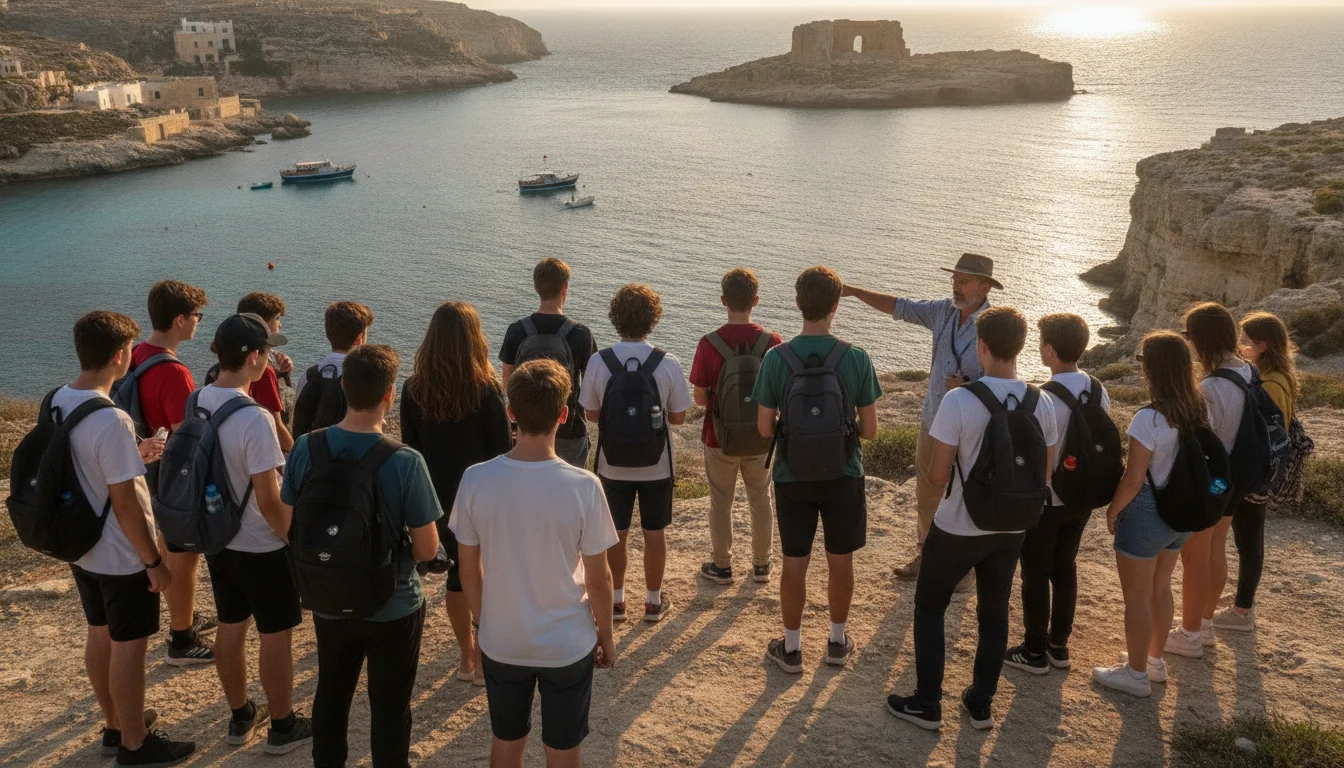
A youth pastor called me a few years ago with a question I hear in different forms every season: “Will my teenagers actually care about any of this?” She had led two adult congregational trips already and knew Malta cold. What she did not know was whether sixteen-year-olds would sit still for a cathedral floor made of tombstones, or whether they would just want the beach.
The honest answer is that teenagers respond to Malta differently than adults do, and if you plan for that difference instead of ignoring it, the trip works. If you hand a sixteen-year-old the same slow, reflective itinerary you would build for a group of retirees, you will lose them by day two. This is what I have learned building youth itineraries for this island specifically.
Why Malta Actually Works Well for Teenagers
Malta has an advantage most heritage destinations do not: the story is physical, not just historical. A shipwreck. A cave someone hid in. A cathedral floor made of four hundred graves. A snake bite that didn’t kill anyone. Teenagers respond to concrete, visceral detail far more than they respond to dates and dynasties, and Malta is full of exactly that kind of detail.
The compact geography also matters more for youth groups than any other group type. Teenagers have shorter patience for long bus rides, and Malta’s small size means you are never more than thirty or forty minutes from the next site. That keeps energy up in a way a sprawling multi-city circuit cannot.
Pacing: The Single Biggest Difference From an Adult Itinerary
The mistake I see youth leaders make most often is copying an adult congregational itinerary and just adding a free afternoon. That is not enough of an adjustment. Teenagers need shorter blocks at each site, more physical movement built into the day, and clearer payoff moments spaced closer together.
Where an adult group might spend ninety unhurried minutes inside St. John’s Co-Cathedral absorbing the Caravaggio and the marble tombstones, a youth group does better with a tighter forty-five minutes with a guide who front-loads the most striking facts: the painting is the only one Caravaggio ever signed, and he signed it in the blood of the beheaded saint. That single detail holds a room of teenagers better than twenty minutes of general art history.
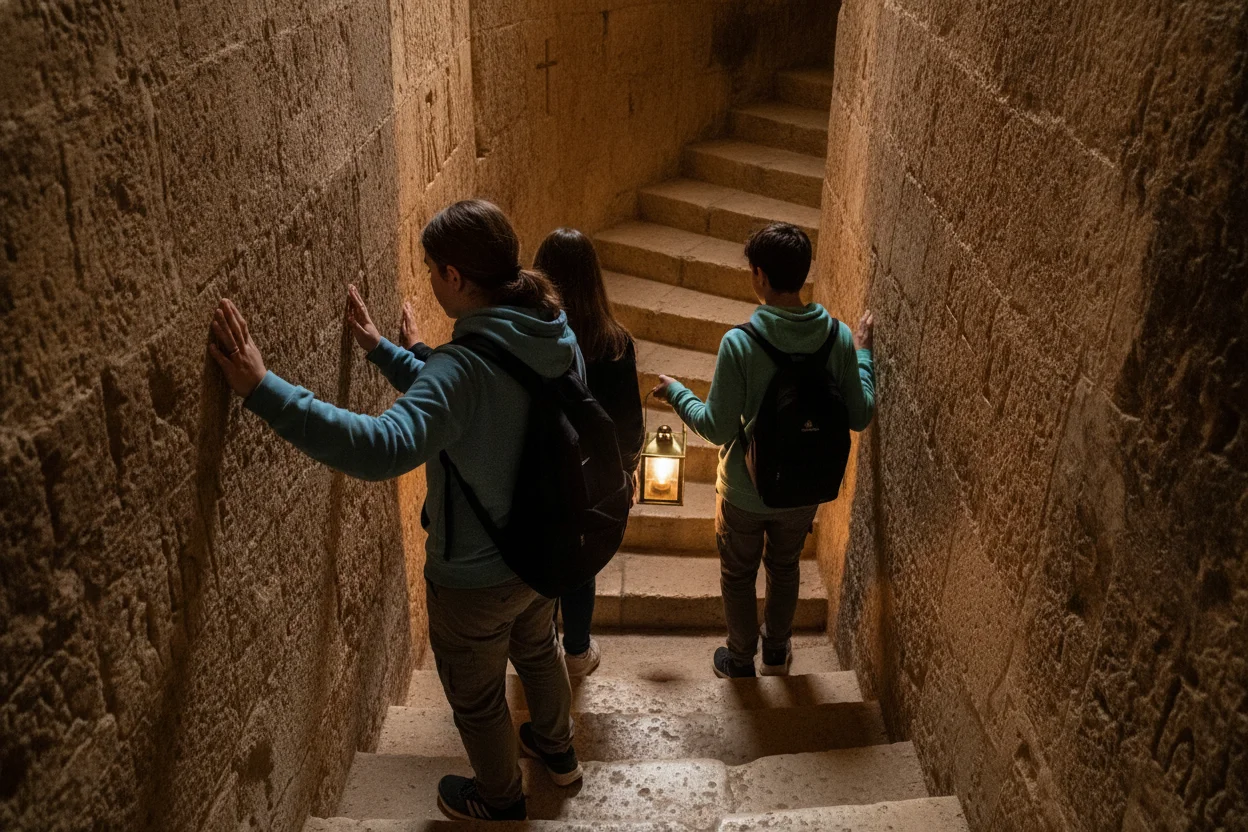
I also build in more days with a clear physical component. The Gozo ferry crossing, the walk through Mdina’s narrow lanes, the descent into the Rabat catacombs: these give teenagers something to do with their bodies, not just their attention span, and they remember those days more vividly than the ones spent mostly in pews.
A Sample Five-Day Structure for a Youth Group
Day 1 is arrival and an easy orientation walk through Valletta, ending at the Upper Barrakka Gardens for the view over the Grand Harbour. Keep the first evening light. Jet lag and a long flight do not mix well with a packed schedule.
Day 2 is St. Paul’s Bay and the Grotto of St. Paul in Rabat. I always open this day with the story itself, the fourteen-day storm, the 276 people on board, the shipwreck, before the group ever sees the water. Teenagers who hear the story as a story, not a Bible reference, connect with the site when they arrive.
Day 3 covers Mdina and Rabat: the Giudecca, the Jewish quarter with its layered history, and the catacombs beneath Rabat where Christian, Jewish, and pagan burial chambers sit within meters of each other. This is consistently the day youth leaders tell me surprised them most. Our guide to Malta’s spiritual sites covers this ground in more depth if you want to preview it for your team before the trip.
Day 4 is Gozo. The ferry ride itself is a highlight for most teenagers, and the Ġgantija temples, older than the Egyptian pyramids, give you a genuine “whoa” moment that lands with this age group better than almost anything else on the island.
Day 5 closes with St. John’s Co-Cathedral and free time in Valletta before departure, giving the group a final full-immersion moment paired with something lighter to end on.
Chaperone Ratios and Practical Logistics
For a youth group, I recommend one adult chaperone for every six to eight teenagers, tighter than you would need for an adult congregational trip. Malta’s pedestrian old cities, Valletta and Mdina in particular, make it easy for a teenager to wander off around a corner, so a tighter ratio keeps the group together without feeling like a leash.
Build in one genuinely free block per multi-day trip, an afternoon near the hotel in Sliema or St. Julian’s where teenagers can swim or just decompress. A youth trip with zero unstructured time burns out even motivated teenagers by day three, and a burned-out group stops absorbing the heritage content you brought them for in the first place.
Phones are worth addressing directly before departure rather than fighting about on the ground. I tell youth leaders to set clear expectations, phones away during guide talks and devotional moments, free use during meals and downtime, rather than a blanket ban that creates friction for no real benefit.
Making the Sites Land With a Teenage Audience
A good local guide matters more for a youth group than for any other group type, because the difference between a guide who recites facts and a guide who tells the shipwreck as a survival story is the difference between a group that checks out and a group that leans in. When we build a youth itinerary, we match your group with guides who have experience with younger audiences specifically.
Give your teenagers something to do at each site beyond listening. At St. Paul’s Bay, have a few of them read the relevant passage from Acts aloud rather than reading it yourself. In the catacombs, let them find and identify a menorah carving before the guide points it out. Small participation moments turn passive tourists into engaged travelers.
The Group Leader Benefit Still Applies
The group leader travels free when you bring fifteen or more participants, and for a youth group that often means the pastor or director leads for free while parent chaperones pay their own way, which is worth factoring into how you price the trip for families. If you are building the budget case for your church board, our breakdown on group vs. private touring in Malta is a useful companion piece, since youth groups sit squarely in group-tour territory at most sizes.
Malta rewards a youth group that comes prepared to engage physically and emotionally with the story, not just observe it. Get the pacing right, staff it with guides who know how to talk to teenagers, and this island holds a young group’s attention as well as any destination we run.
FAQ: Youth Group Heritage Trips to Malta
What age range works best for a Malta heritage youth trip?
Middle school through college age all work, though the itinerary should shift with the group. Middle schoolers need shorter site blocks and more built-in physical activity. High school and college groups can handle longer reflective stretches, especially at St. Paul’s Bay and the catacombs, once the story has been set up well.
How many chaperones do we need?
Plan for one adult per six to eight teenagers, tighter than an adult group ratio. Malta’s pedestrian old cities make it easy to lose track of a wandering teenager, and a tighter ratio keeps the group together without feeling overly restrictive.
Will teenagers actually engage with the religious history, or just tune out?
They engage when the material is delivered as story rather than lecture and when the itinerary includes physical, hands-on moments like the Gozo ferry and the catacombs. A guide experienced with youth audiences makes the single biggest difference in whether a site lands or falls flat.
Should we build in free time on a youth trip?
Yes, at least one unstructured block per multi-day trip. A schedule packed wall to wall burns out teenagers faster than adults, and a tired group absorbs less of the heritage content, not more.
Does the free group leader policy apply to youth trips?
Yes. With fifteen or more participants, the group leader travels free, the same policy that applies to all Heritage Tours group trips. For many youth programs this means the director or pastor leads at no cost while chaperones and students cover their own seats.
If you are weighing Malta for your youth group and want an itinerary built around teenagers rather than adapted from one, I would be glad to put a draft together with you.
Contact us and let’s build something your students will actually remember.