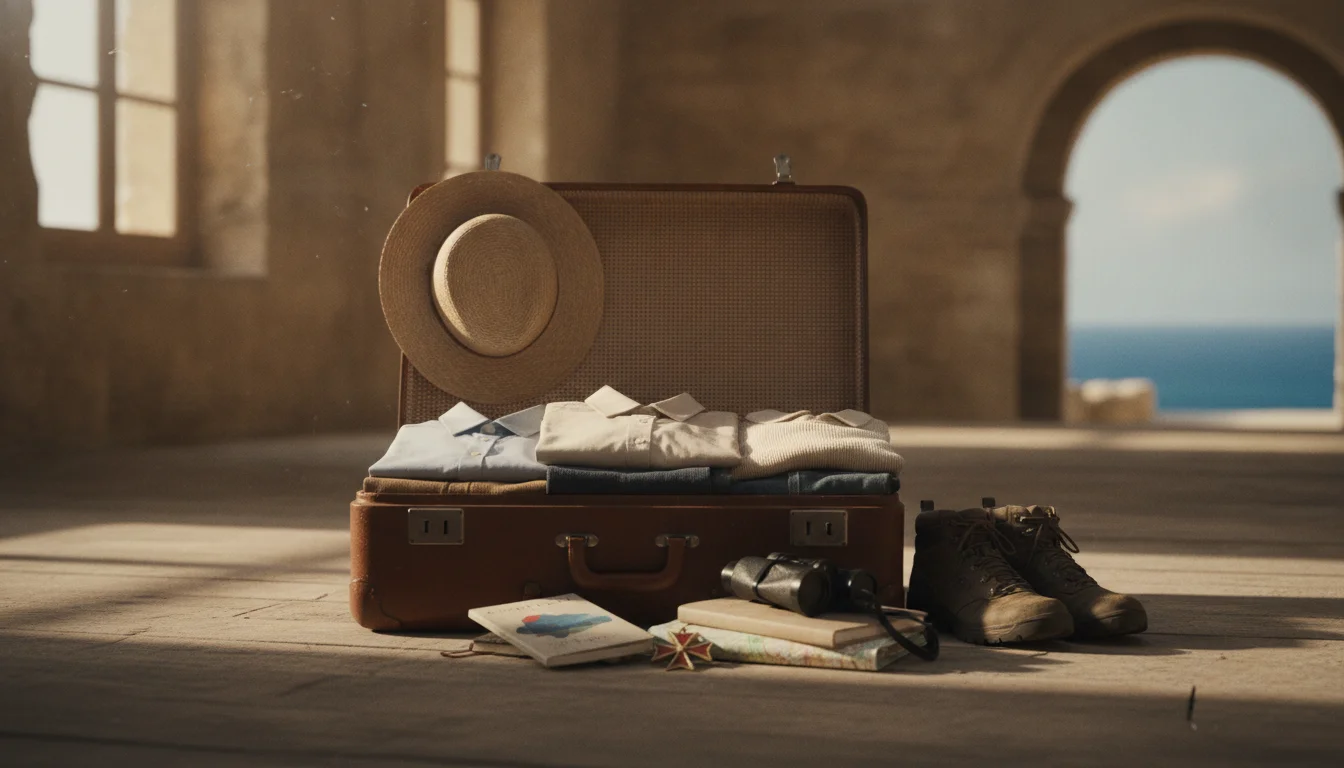
A pastor once told me his group leader packing list was three pages long and included a suggestion to bring “business casual for dinner.” I laughed, gently, and told him to throw it out. Nobody on a Malta heritage trip needs business casual. What they need is a pair of shoes that can survive a medieval street and a shirt with sleeves for the moment they walk into St. John’s Co-Cathedral. Packing for a heritage trip is a different exercise than packing for a beach vacation or a business trip, and Malta has its own specific demands that a generic list will not cover.
So let me give you the list I actually send my groups, built around what Malta’s climate, its churches, and its stone streets require, not what a travel blog assumes every European trip needs.
Dress for the Churches, Not Just the Weather
This is the item that catches first-time travelers most often, and it deserves to be first on the list. Malta’s churches, including St. John’s Co-Cathedral, the Mdina Cathedral, and the many parish churches your itinerary will include, expect modest dress for entry. Shoulders and knees should be covered. This is not a strict enforcement everywhere, but it is a real expectation, and a group leader does not want to be the one explaining to a security guard at the door why half the congregation cannot enter the site they flew across an ocean to see.
For warm-weather trips, which is most of the year in Malta, this means packing lightweight clothing that still covers appropriately rather than assuming shorts and tank tops will work for the whole day. A light cardigan, scarf, or wrap that a traveler can pull on before entering a church solves this cleanly without requiring anyone to sweat through long sleeves all day in the Mediterranean sun. I tell every group: pack for the street in whatever is comfortable, and carry one modest layer in your bag for the church door. That single habit prevents almost every wardrobe problem Malta churches present.
Shoes That Can Handle Cobblestones and Slopes
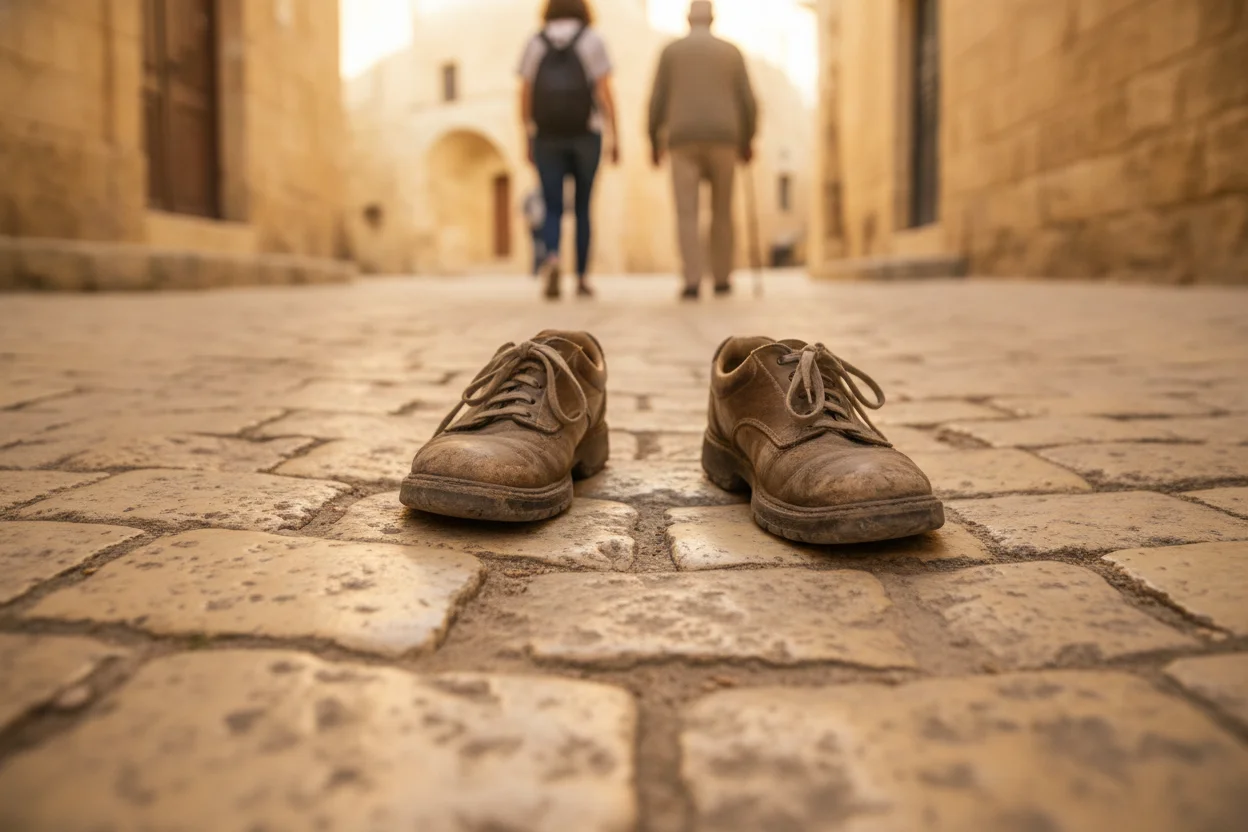
Malta’s most meaningful heritage sites are also its most demanding on footwear. Mdina’s medieval streets are uneven limestone, worn smooth by centuries of foot traffic in some spots and roughly cobbled in others. Valletta involves real slopes and steps as you move between the harbor level and the upper city. The archaeological grounds at Ħaġar Qim and Mnajdra are open, uneven terrain, not paved museum floors.
Broken-in, closed-toe walking shoes with real support are non-negotiable for this trip. This is not the destination for brand-new shoes worn for the first time on day one, and it is not the destination for sandals, however comfortable they feel in a warm climate. I have watched too many travelers spend the second half of a trip in discomfort because they packed for the weather and forgot to pack for the stone. Comfortable socks matter here too, particularly for a group that will be walking several hours most days.
Sun and Heat Protection
Malta’s golden limestone is beautiful to look at and unusually effective at radiating heat back at everyone standing near it. For trips between April and October, and honestly for any sunny day regardless of season, pack a wide-brimmed hat, sunscreen, and sunglasses. A reusable water bottle is worth bringing too, since staying hydrated across a day of walking between St. Paul’s Bay, Mdina, and Valletta matters more in Malta’s sun than travelers expect. I cover the broader heat-management picture, including how we schedule around it, in our Malta heritage travel tips post.
Practical Essentials Specific to Malta
A few smaller items make a real difference and are easy to forget:
- A UK-style three-pin adapter (Type G). Malta uses British-standard outlets, which surprises travelers coming from the US or continental Europe.
- A light rain layer if traveling in winter. December and January bring real rain, though nothing that requires heavy gear.
- A day bag with a secure closure. For crowded moments in Valletta, particularly during cruise ship hours, a bag that zips closes is simply more practical than one that does not.
- Cash in small denominations. Malta uses the Euro, and cards are widely accepted, but church donation boxes and small market stalls often work better with cash on hand.
- A copy of your itinerary and insurance information, kept both digitally and on paper, especially for older travelers in the group.
What to Leave at Home
Just as useful as what to pack is what not to bother bringing. Formal or “dressy” evening wear is unnecessary. Malta’s restaurant culture, even at nicer establishments, is relaxed, and a heritage trip does not involve the kind of evening events that call for anything beyond neat casual clothing. Heavy coats are unnecessary outside of winter, and even then a mid-weight layer is usually enough. And travelers do not need to over-pack toiletries or medications available locally, since Malta’s pharmacies are well stocked. Prescription medications are the one exception: bring your own supply in original, labeled containers, since you should never plan around sourcing a specific prescription abroad.
Packing for a Multi-Generational Group
Most congregational trips include people at every stage of life, and a good packing briefing accounts for that range. Older travelers benefit from an extra reminder about supportive footwear and a hat, since heat and uneven ground affect them first. Families traveling with teenagers benefit from a reminder that modest dress applies to them too, not just the adults, since church visits are a daily feature of the itinerary, not an occasional stop. A written packing list distributed a month before departure, rather than a verbal mention at the pre-trip meeting, tends to actually get followed. We provide one for every Heritage Tours group as part of standard pre-departure materials.
If you want the fuller planning picture beyond packing, our first-time heritage traveler’s guide to Malta covers what surprises most groups on their first visit, and our Malta destination page lays out the sites your itinerary is likely to include.
FAQ: Packing for a Malta Heritage Tour
What should we pack for church visits in Malta?
Modest clothing that covers shoulders and knees, since sites like St. John’s Co-Cathedral and Mdina Cathedral expect this for entry. A light cardigan, scarf, or wrap that travelers can add before entering a church works well for warm-weather trips without requiring long sleeves all day.
What kind of shoes work best for Malta’s heritage sites?
Broken-in, closed-toe walking shoes with real support. Mdina’s medieval streets, Valletta’s slopes and steps, and the open ground at sites like Ħaġar Qim and Mnajdra are uneven, and sandals or new shoes tend to cause problems partway through the trip.
Do we need an electrical adapter for Malta?
Yes, a UK-style three-pin adapter, known as Type G. Malta uses the British electrical standard, which catches visitors from the US and continental Europe off guard if they pack a standard European adapter instead.
How should we pack for Malta’s heat?
A wide-brimmed hat, sunscreen, sunglasses, and a reusable water bottle. Malta’s limestone heritage sites have little shade and can be genuinely hot between April and October, so sun protection matters more here than in many European destinations.
Do we need formal clothing for a Malta heritage trip?
No. Malta’s restaurant and travel culture is relaxed, and a heritage itinerary does not include the kind of evening events that call for formal wear. Neat casual clothing covers every part of a typical trip, dinners included.
If you want a full pre-departure packing list tailored to your specific group and travel dates, we build one for every congregation we work with.
Contact us and we will help you get your group ready down to the last detail.