What Malta Feels Like When You First Arrive
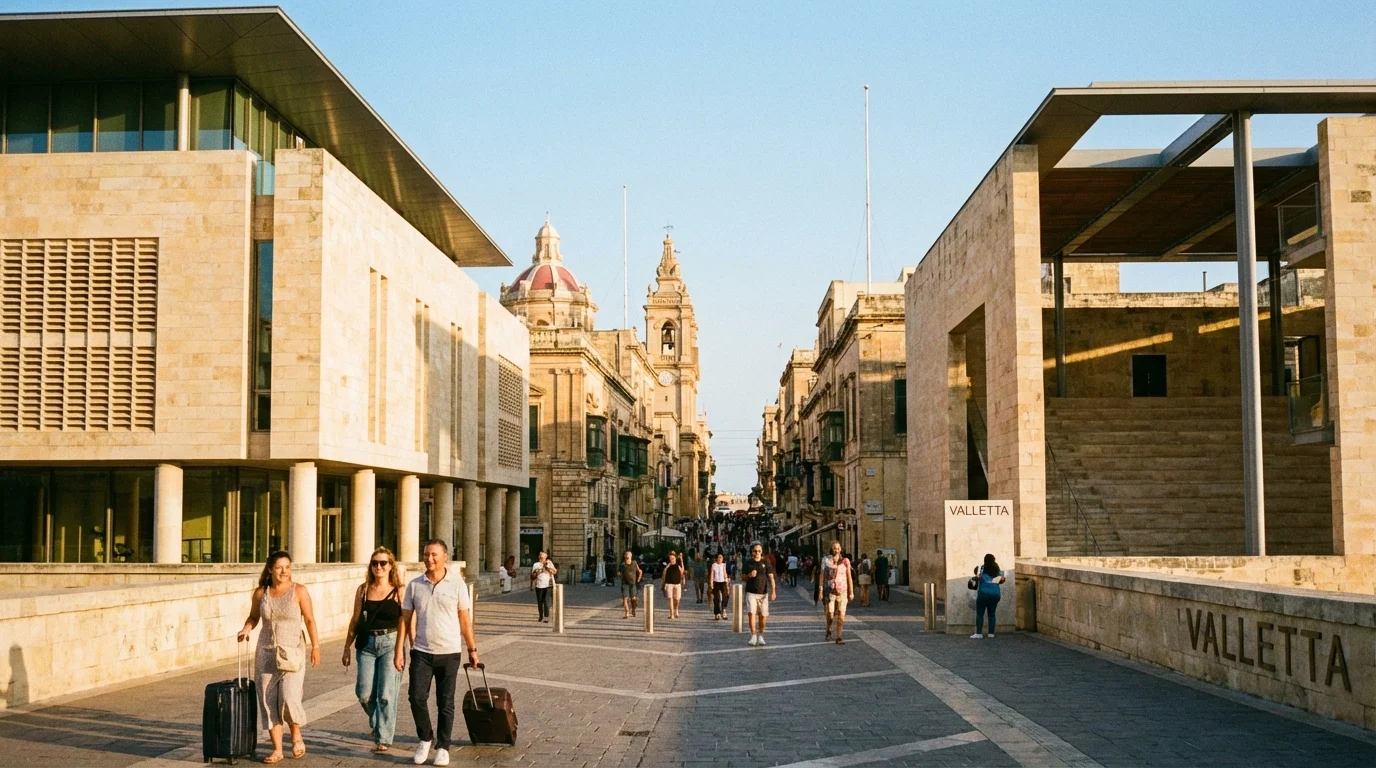
The first thing you notice is the color. Malta is golden. Not metaphorically. The entire island is built from the same honey-colored limestone, and because the buildings, the walls, the roads, and the cliffs are all made of it, the effect is unlike anywhere else in the Mediterranean. In afternoon light, the island glows.
The second thing you notice is the churches. Malta has the highest density of churches per square kilometer of any country in Europe. Even small towns have enormous baroque cathedrals that would be the pride of a mid-sized European city. The scale is surprising. You expect a small island and find a place that feels monumental.
The third thing you notice, and this is the one that matters most for heritage travelers, is how alive the faith is. Malta is not a place where churches are museums. They are active houses of worship, full of flowers, candles, and the signs of daily use. When you walk into a church in Valletta or Mdina, you are not visiting a monument. You are entering a place where people pray today, as they have for centuries.
For first-time heritage travelers, this combination of beauty, density, and living faith is what makes Malta feel different from almost any other destination in Europe.
What Will Surprise You (Even If You’ve Read About It)
Every group I have sent to Malta comes back with the same set of surprises. Let me save you the discovery and name them now.
The limestone is everywhere. Not just the buildings. The ground, the field walls, the cliffs, the stairways. It is the same warm golden stone from surface to sky. There are almost no trees in much of the island, which means the golden color is unbroken. First-timers find this either austere or beautiful, usually both.
The churches are bigger than you expect. The parish church of a town of 5,000 people may have a dome that rivals a European capital’s cathedral. The Maltese invested centuries of devotion into building churches that are far larger than their towns would suggest. This is not accidental. It tells you something about the depth of faith on this island.
English is everywhere. Maltese is the national language, and it is genuinely unique, a Semitic language with heavy Italian and Arabic influence that sounds like nothing else in Europe. But English is widely spoken, often as a first language, and every sign, menu, and official document is in English. For group leaders worried about language barriers, there are none.
The St. Paul’s connection is more physical than you expect. You read about St. Paul’s Bay in a guidebook and you think it is a name. Then you stand at the bay and realize it is a real shoreline, with real water, where a real shipwreck happened in 60 CE, and the moment shifts from historical knowledge to something more personal. For Christian first-timers, this is often the most unexpectedly moving part of the trip.
The Three Experiences That Define a First Faith Visit to Malta
If your group has only three experiences in Malta, these are the ones that should be on the list.
Standing at St. Paul’s Bay. This is the site of the biblical shipwreck described in Acts 27 and 28. For a Christian group, arriving at this bay and reading from Scripture while looking at the water where it happened is one of the defining moments of a heritage trip to Europe.
Walking the floor of St. John’s Co-Cathedral. The Knights of St. John built this cathedral in Valletta, and over 400 of them are buried beneath its marble floor. Walking across their tombstones, each with a coat of arms and a name, while surrounded by Caravaggio’s work and gilded vaults, gives you a physical understanding of what faith meant to the men who defended this island.
Descending into the catacombs at Rabat. Beneath the streets of Rabat, Jewish, Christian, and pagan burial chambers share the same rock. The menorahs in the Jewish section, the agape tables in the Christian section, and the simple chambers of the pagan dead are all carved into the same golden limestone. It is a place where three traditions coexist in silence.
These three experiences cover the spiritual range of Malta: the biblical, the medieval, and the ancient. They are all accessible in a single trip and together they define what Malta offers to faith travelers that most European destinations cannot.
Practical Things to Know Before the Trip
Getting there. Malta International Airport (MLA) receives direct flights from most major European hubs and connecting flights from North America. The airport is small, efficient, and about fifteen minutes from the main hotel areas.
Getting around. A group bus with a local driver is the standard and best option. Malta’s roads can be congested and narrow, and parking in Valletta and Mdina is restricted. Your local driver handles all of this. Valletta and Mdina are pedestrian cities where your group walks.
Currency. Malta uses the Euro. Credit cards are accepted almost everywhere.
Weather. Mediterranean climate. Hot and dry in summer, mild in winter. Spring and fall are the best seasons for heritage travel. See our season-by-season guide for more detail.
Dress code. Many of Malta’s churches require modest dress for entry: covered shoulders and knees. Group leaders should remind participants before departure.
Physical demands. Malta involves walking on stone streets, some slopes and steps (especially in Valletta), and stairs down into the catacombs and the Grotto of St. Paul. The sites are manageable for most adults, but group leaders should assess their group’s mobility and plan accordingly.
Common First-Timer Mistakes in Malta
Assuming churches are always open. Many churches in Malta close from noon until 3pm or later, and some close on Sunday afternoons. Plan your church visits for morning hours and confirm opening times with your guide.
Underestimating the summer heat. Malta is hot in July and August, and the exposed limestone reflects and radiates heat. Heritage sites have very little shade. If your group travels in summer, schedule outdoor sites for early morning and late afternoon.
Skipping Gozo. Some first-time groups treat Gozo as optional. It should not be. The Ggantija temples, built around 3,600 BCE, are among the oldest religious structures on earth. The ferry crossing is short and the day trip is easy to manage.
Cramming too much into a day. Malta is small, and it is tempting to think you can see everything quickly. You can see the sites quickly. You cannot absorb them quickly. Leave time for reflection, especially at St. Paul’s Bay and the catacombs.
What to Tell Your Group Before They Land
If you are leading a group to Malta for the first time, here is what to tell them before they board the plane.
Malta is not what you picture when you think of a Mediterranean island. It is golden, dense, and deeply Catholic. The churches are enormous and alive. The heritage is not in museums. It is in the streets, the stone, and the living faith of the people.
Bring comfortable walking shoes. Pack a light jacket for church interiors and evening. Cover shoulders and knees for church visits. Bring a hat and sunscreen if traveling in warm months.
And prepare yourself for the St. Paul’s Bay visit. Read Acts 27 and 28 before you go. When you stand at that bay and look at the water, you will be glad you did.
Heritage Tours prepares group participants for Malta before departure and provides local guides who bring the St. Paul’s narrative to life at every site. If you are planning your first group heritage trip to Malta, visit our Malta destination page or contact us. We would be glad to help you prepare.
Frequently Asked Questions
Is Malta a good destination for a first faith heritage group trip? Malta is one of the best first heritage destinations in Europe for faith groups. It is English-speaking, compact, safe, and holds deep spiritual significance for both Christian and Jewish travelers. The single-base logistics make it far simpler to organize than multi-city circuits, which is especially valuable for first-time group leaders.
What language do they speak in Malta and is it a barrier? Maltese is the national language, but English is widely spoken and is an official language. Signs, menus, and public services are in English. There is no language barrier for English-speaking heritage groups.
How physically demanding is Malta for older adults in a heritage group? Malta involves walking on stone streets, some slopes and stairs (particularly in Valletta), and descending stairs into the catacombs and the Grotto of St. Paul. The distances are short because the island is compact. Most heritage sites are manageable for older adults, though group leaders should plan rest breaks and assess their group’s mobility in advance.
What is the most surprising thing about Malta for first-time visitors? The golden limestone that covers the entire island, the improbable scale of the churches in small towns, how well English is spoken, and the physical immediacy of the St. Paul’s Bay connection. Most first-time heritage visitors are surprised by how directly they can connect to the biblical narrative in Malta.
How easy is it to get around Malta without a car? For heritage groups, a private bus with a local driver is the standard and recommended option. Malta has public buses, but they are not practical for group travel. The island is small enough that all sites are within short driving distances, and a local driver handles Malta’s narrow streets and traffic.