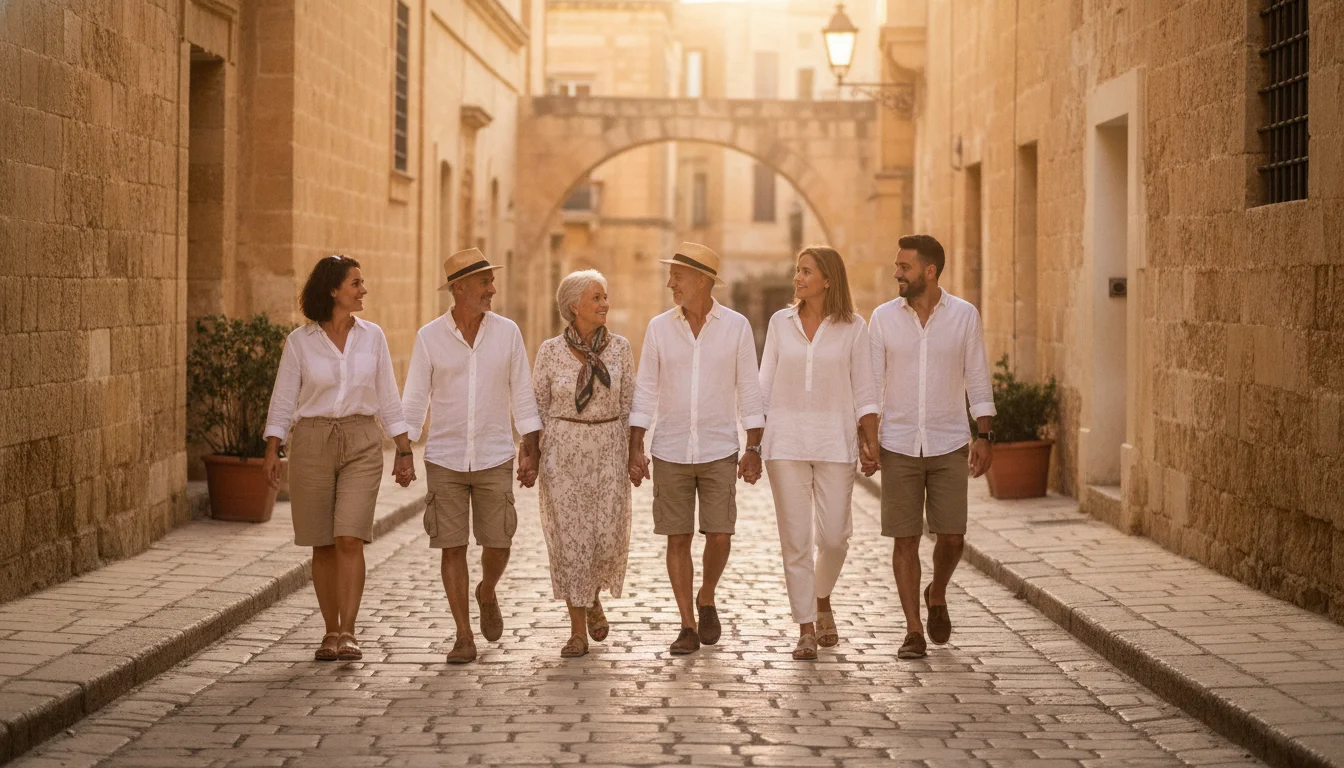
A rabbi once described his congregation’s Malta trip to me before we had even booked it. “I’ve got an eighty-four-year-old who was born in Europe before the war, and I’ve got her nine-year-old great-grandson coming with his parents. I need this trip to mean something to both of them.” That sentence has stuck with me because it names the real challenge of a multigenerational heritage trip: not logistics, but relevance. The site has to land for an eighty-four-year-old and a nine-year-old at the same time, in the same afternoon.
Malta is genuinely one of the easier places I know to pull this off, and I want to walk you through why, and how to build the itinerary so every generation in your group gets something real out of the same days.
Why Malta’s Shape Helps a Mixed-Age Group
The island’s compact geography does more work for a multigenerational trip than for almost any other group type. When your oldest traveler needs frequent rests and your youngest needs frequent stimulation, short drives between sites, all under forty-five minutes, mean nobody is stuck on a bus for hours while either extreme suffers. You can end a site visit the moment attention starts to fade and be somewhere new in less time than it takes to finish a snack.
Malta also offers real content at more than one register. St. Paul’s Bay is a biblical narrative for the adults and grandparents in your group, and a genuine shipwreck story, ships breaking apart, snakes, survival, for the children. The Ġgantija temples on Gozo are an ancient civilization mystery that fascinates a ten-year-old and a meditation on faith across five and a half millennia for a grandparent. The same site, two different doors in.
Structuring Days Around the Group’s Slowest and Fastest Members
The itinerary math for a multigenerational trip is different from a same-age congregational trip. I plan around two constraints at once: the physical pace of the oldest members and the attention span of the youngest, and I build slack into the schedule rather than pretending both groups move at the same speed.
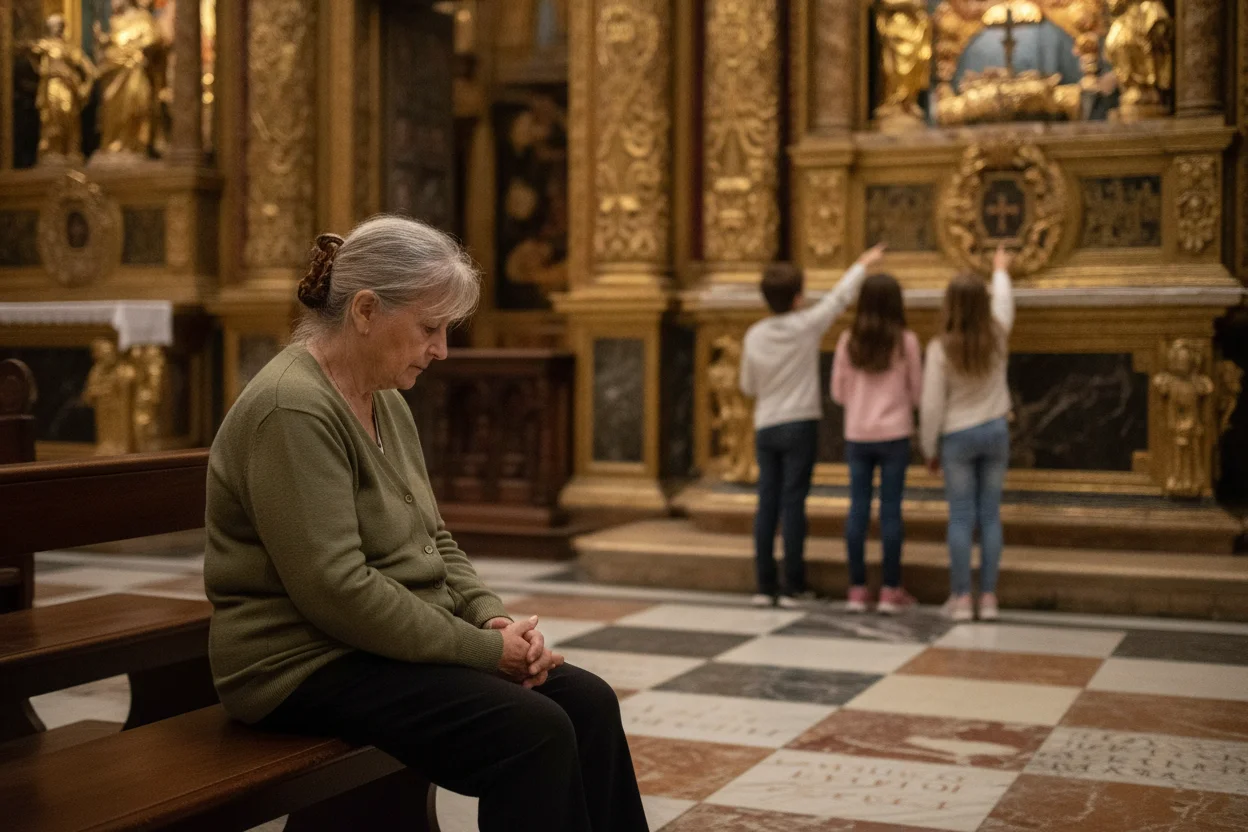
Mornings, when energy is highest across every age, go to the sites with the most walking or the most stairs: Mdina’s streets, the descent into the Rabat catacombs, the Grotto of St. Paul. Afternoons shift to sites where people can sit, stand still, or move at their own pace, like the interior of St. John’s Co-Cathedral, where grandparents can rest in a pew while grandchildren wander the side chapels under supervision.
I also build a standing rest option into every day: a bench, a café, a shaded courtyard, somewhere a traveler who needs to sit out fifteen minutes of a stop can do so without missing the group or feeling like a burden. This single practice, more than any other, is what makes a multigenerational trip feel comfortable rather than stressful for the family members managing an aging parent’s needs alongside a child’s.
Sites That Work Across Every Generation
Some stops on the standard Malta itinerary earn their place in a multigenerational trip more than others because they have layers.
St. Paul’s Bay works as biblical history, adventure story, and a simple, beautiful shoreline where a family can just stand together. The Rabat catacombs work as ancient history for older travelers and as a genuinely spooky, memorable underground adventure for kids, who tend to love the caves in a way that surprises their parents. Gozo and the Ġgantija temples give you a full day off the main island that functions as both pilgrimage and outing, with a ferry ride kids enjoy and a 3,600 BCE temple complex that impresses everyone regardless of age. Our full 5-day Malta itinerary covers the day-by-day detail on these stops if you want the fuller version to adapt for your family group.
Mdina’s Giudecca, the old Jewish quarter, deserves a special mention for Jewish multigenerational groups specifically. It is quiet, walkable at any pace, and gives a rabbi room to tell 1,500 years of community history to grandparents who may know pieces of that history already and grandchildren hearing it for the first time, all in the same narrow street. Our guide to Malta’s Jewish heritage lays out that full story if you want to prepare the narrative in advance.
Mobility and Accessibility, Honestly
I want to be direct about this rather than soft-pedal it, because multigenerational groups need the real picture. Valletta and Mdina involve cobblestone streets, some slopes, and stairs, and the catacombs and the Grotto of St. Paul both require descending narrow stone stairs that do not accommodate wheelchairs or walkers. For a traveler with significant mobility limitations, some sites will need to be experienced from the top of the stairs rather than the bottom, and I tell families that plainly during planning rather than after arrival.
What Malta does have going for it is that almost every site offers some version of the experience even for a traveler who cannot manage the hardest stretch. A grandparent who cannot descend into the Grotto of St. Paul can still sit in the church built above it while the rest of the family goes down. That kind of built-in alternative is part of why I keep recommending Malta for groups spanning a wide age and mobility range.
Keeping Kids Engaged Without a Separate Program
Some multigenerational trips run a split program, adult activities in one track, kids’ activities in another. I generally discourage that for a Malta heritage trip specifically, because the whole point of the destination is a shared experience across generations, and splitting the group undercuts that.
Instead, give children small jobs at each site. Let a ten-year-old be the one who reads the Acts 27 shipwreck account aloud at St. Paul’s Bay. Let a grandchild count the marble tombstones in a section of St. John’s Co-Cathedral floor while a guide explains what they represent. These small roles keep children invested in the same stop the adults are absorbing, rather than waiting for it to end.
The Group Leader Policy and Family Pricing
The group leader travels free at fifteen or more participants, and for a multigenerational family or congregation trip, that free seat often goes to whichever family member or clergy leader organized the trip, with the savings frequently passed along to make the trip more affordable for the younger adults in the group who are often managing both their parents’ costs and their own children’s. If you are working out whether your numbers support a group trip or a smaller private format, our comparison of private versus group touring in Malta walks through that decision in more detail.
A well-built multigenerational Malta trip does not ask any generation to sit through content meant for another. It gives everyone real access to the same sacred ground, at a pace that respects where each traveler actually is.
FAQ: Multigenerational Heritage Trips to Malta
Is Malta a good destination for a trip spanning three generations?
Yes, and it is one of the easier destinations for this specifically. The compact geography keeps travel times short regardless of the group’s pace, and most major sites, from St. Paul’s Bay to the Ġgantija temples, offer real content for both older and younger travelers rather than appealing to only one age group.
How do we handle mobility limitations for older travelers?
Plan honestly around them. The Rabat catacombs and the Grotto of St. Paul both require descending narrow stone stairs, which some older travelers may need to skip, and most churches and cathedrals offer seating and shorter walking routes as an alternative. We flag these limitations during planning so no family is surprised on the ground.
Should we split the group by age for parts of the trip?
Generally not for the heritage content itself. Malta’s sites work well across ages when children are given small participatory roles, like reading a passage aloud or identifying details in a catacomb, rather than being run through a separate program. A brief free-swim afternoon near the hotel is a good exception if the group wants some age-specific downtime.
How many days should a multigenerational Malta trip run?
Five days is the standard length and works well for mixed-age groups, since it allows slower mornings, rest blocks between sites, and a full day on Gozo without feeling rushed. Families with very young children or very limited-mobility elders sometimes extend to six days to build in more rest.
Does the group leader still travel free with a family or multigenerational group?
Yes. The policy is the same across all Heritage Tours group trips: the group leader travels free with fifteen or more participants, regardless of the age spread within the group.
If you are trying to plan a trip that genuinely works for your ninety-year-old and your nine-year-old at once, that is exactly the kind of itinerary we build.
Contact us and let’s design a Malta trip your whole family can stand inside together.