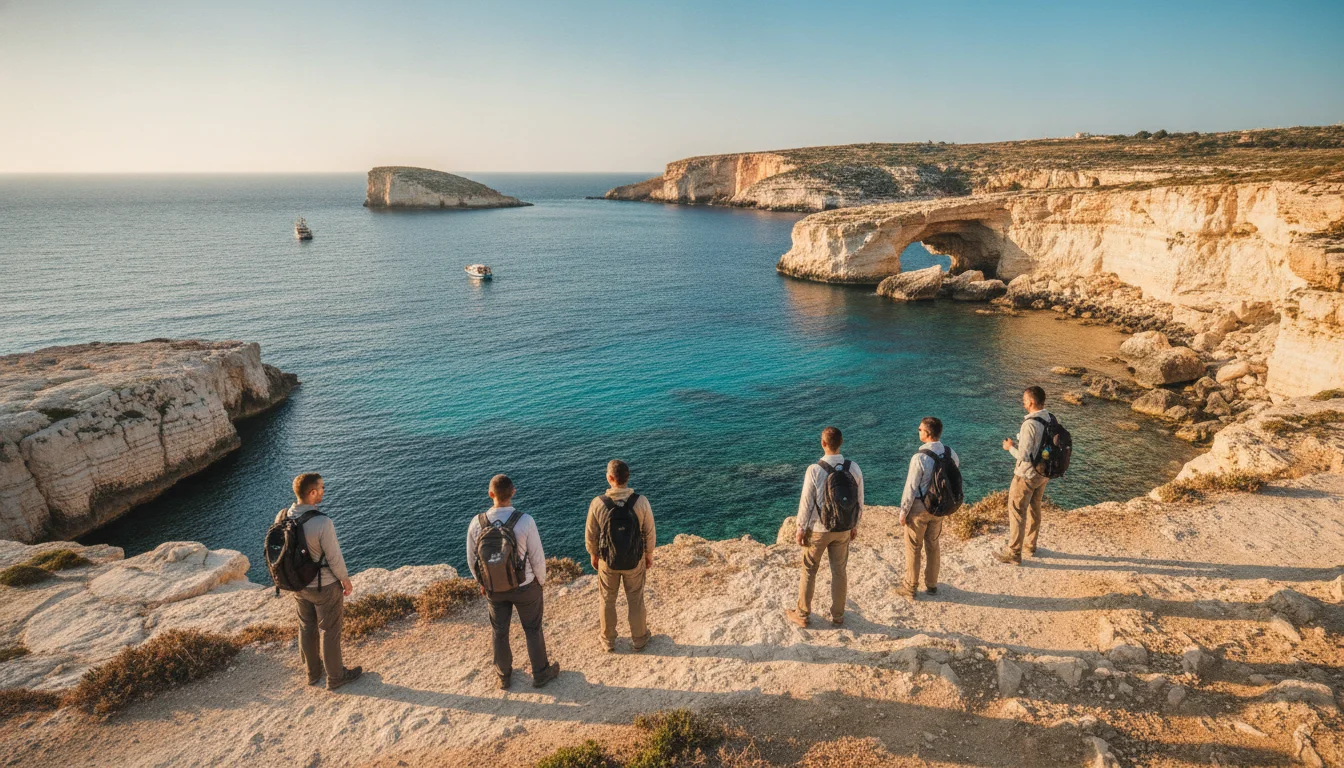
A pastor called me last spring, three weeks after her associate had come back from a scouting trip to Malta, and asked me a version of the question I hear before almost every congregational trip. “Everyone keeps telling me Malta is the easy one. Easy on what, exactly? Because my board is going to ask me for a number, not a feeling.”
She was right to push. “Easy” is true, and I will get into why below, but it is not a budget line. So let me give you the honest breakdown of what a Malta heritage trip actually costs, the way I would walk a finance committee through it, not the way a brochure would.
Malta Is a Shorter, Simpler Trip, and the Cost Reflects That
Before the numbers, one point of context that matters. Malta is a compact island heritage trip, typically four to six days, not the nine or eleven-day multi-region circuit you would run in a larger country. Your group stays in one hotel for the whole visit and reaches every major site within a thirty to forty-five minute drive. Fewer travel days, no internal flights, and one hotel booking instead of three or four all pull the cost down compared to a larger European or Middle Eastern circuit. That is the main reason Malta numbers look different from what you may have priced out for a bigger trip.
The Two Halves of Every Malta Trip Cost
Split the cost into two pieces before you do anything else: the flight to get there, and the land package once you land. Treating them as one blurry number is how budgets get scary. Treated separately, they are both manageable.
Flights to Malta
From most U.S. East Coast cities, round-trip economy airfare to Malta International Airport runs roughly $750 to $1,150 per person in shoulder season, usually routed through a European hub like London, Rome, or Frankfurt. From the West Coast or the middle of the country, add $150 to $350. These are planning ranges, not fixed quotes, since fuel prices and demand shift them.
Group fares help here the same way they help everywhere. Booking ten or more seats together lets us hold a price for months while your families pay deposits, which protects your group from the swings that hit solo travelers booking late. Timing also matters, and I cover the seasonal tradeoffs, including the Easter Week window, in more depth on our best time to visit Malta guide.
The Land Package
This covers your hotel nights, breakfast and most dinners, a private coach with a local driver, a licensed guide, all site entrance fees, and the Gozo ferry crossing if your itinerary includes the day trip, which most do. For a well-run four to six-day Malta heritage itinerary, a quality land package generally falls between $1,100 and $1,900 per person, double occupancy.
That range moves for the same reasons it moves anywhere: hotel tier, group size, and season, plus one Malta-specific factor, whether Gozo is built into the itinerary.
What Drives the Land Package Up or Down
Hotel Tier
This is the biggest lever, same as it is everywhere. A comfortable four-star hotel in Sliema or St. Julian’s, the standard base for heritage groups, runs meaningfully less per night than a five-star property on the harbor. Over five nights that difference adds up. Most congregations I work with are well served by a solid four-star base, close to Valletta and well positioned for the daily drives north and inland.
Group Size
The coach, the guide, and the fixed costs of running the trip get shared across everyone aboard. A group of fifteen pays more per head than a group of thirty five for the same itinerary. This is also where the group leader math kicks in, which I will get to.
Gozo Day Trip
Almost every Malta heritage itinerary includes a full day on Gozo for the Ggantija temples, which is genuinely one of the highlights of the trip. The ferry crossing and a full day of Gozo-side guiding and transport add a modest per-person cost, typically $40 to $70, but I have never had a group regret including it. Leaving Gozo off the itinerary to save that amount is one of the few cost-cutting moves I actively discourage.
Season
Peak summer, June through August, costs more and delivers a rougher experience: the heat radiates off Malta’s limestone with almost no shade at outdoor sites like St. Paul’s Bay and the temples. Spring and fall cost less and walk better, which I break down fully in our seasonal guide.
What’s Usually Included, and What’s Not
Typically included in a good land package:
- All hotel nights, double occupancy, based in Sliema or St. Julian’s
- Daily breakfast and most dinners
- Private coach with a local driver
- Licensed English-speaking guide throughout
- All site entrance fees on the itinerary
- The Gozo ferry crossing and Gozo-side transport, if included
- Airport transfers on arrival and departure
Typically not included, and worth naming up front:
- International airfare, unless bundled
- Lunches, budget $10 to $18 per person, per day
- Tips for guide and driver, plan $8 to $10 per person, per day
- Travel insurance, which I treat as non-negotiable and cover in our guide on travel insurance for a Malta heritage group
- Personal spending and optional extras beyond the core itinerary
Lunches and tips are the two line items groups forget most often. Over five days they add up to a real number. Build them into your published price so nobody is caught off guard on the ground.
How the Group Leader Budget Actually Works
With Heritage Tours, the group leader travels free when you bring fifteen or more participants. The cost of your seat, land and air, gets spread across the group as a small per-person amount baked into the package price. Most leaders do not advertise it as a personal discount. They simply price the trip so the math works, and it does.
This matters for two reasons. First, it removes the personal cost barrier that keeps some pastors and rabbis from leading a trip at all. Second, it gives you flexibility. Some leaders use that built-in value to shave a little off the per-person price. Others fund a scholarship seat for a member who could not otherwise afford to come. Either is a good use of it.
Our group heritage tours page lays out how we structure the full experience, and our Malta destination page shows the sites a complete itinerary covers.
A Realistic All-In Estimate
For a five-day Malta heritage trip in shoulder season, a four-star land package with Gozo included, traveling from a U.S. East Coast gateway, a realistic all-in cost per participant, double occupancy, lands somewhere around $2,200 to $3,200. That includes flights, the land package, lunches, tips, and insurance.
That is the honest number. Careful timing and a larger group bring it toward the lower end. A West Coast departure or an upgraded hotel push it higher. But if you tell your congregation to plan for roughly $2,700 per person, all in, you will rarely have to walk that back later.
FAQ: Malta Heritage Tour Costs
How much does a 5-day Malta heritage tour cost per person?
Plan for roughly $2,200 to $3,200 all in, double occupancy, from a U.S. East Coast gateway in shoulder season. That covers international flights, the land package (hotel, most meals, coach, guide, site fees, Gozo ferry), plus lunches, tips, and travel insurance. The land package alone, without international airfare, generally runs $1,100 to $1,900.
Why does Malta cost less than a trip to somewhere like Turkey or Israel?
Malta is a compact, single-base island trip, typically four to six days rather than nine to eleven. There are no internal flights, no multiple hotel changes, and every site sits within a short drive of one base in Sliema or St. Julian’s. Fewer travel days and simpler logistics bring the total cost down compared to a longer, multi-region circuit.
What is usually not included in the tour price?
International airfare is sometimes separate depending on how you bundle it. Lunches, tips for guide and driver, travel insurance, and personal spending are typically extra. The two costs people forget most are lunches ($10 to $18 a day) and tips ($8 to $10 a day). Build both into your published price.
Does the group leader really travel free?
Yes. With fifteen or more participants, the group leader’s seat, land and air, is covered, spread across the group as a small per-person amount. Leaders often use that built-in value to lower the group price or fund a scholarship seat for someone who otherwise could not come.
Is the Gozo day trip worth the extra cost?
I think so, and I tell every group that plainly. Gozo’s Ggantija temples are among the oldest freestanding structures on earth, and the day trip adds a modest $40 to $70 per person for a genuinely memorable stop. Cutting Gozo to save that amount is one of the few budget cuts I actively push back on.
If you want a real number to bring to your board or your congregation, I would be glad to build one with you. A short conversation usually settles more than a week of guessing.
Contact us whenever you are ready to put figures on paper.