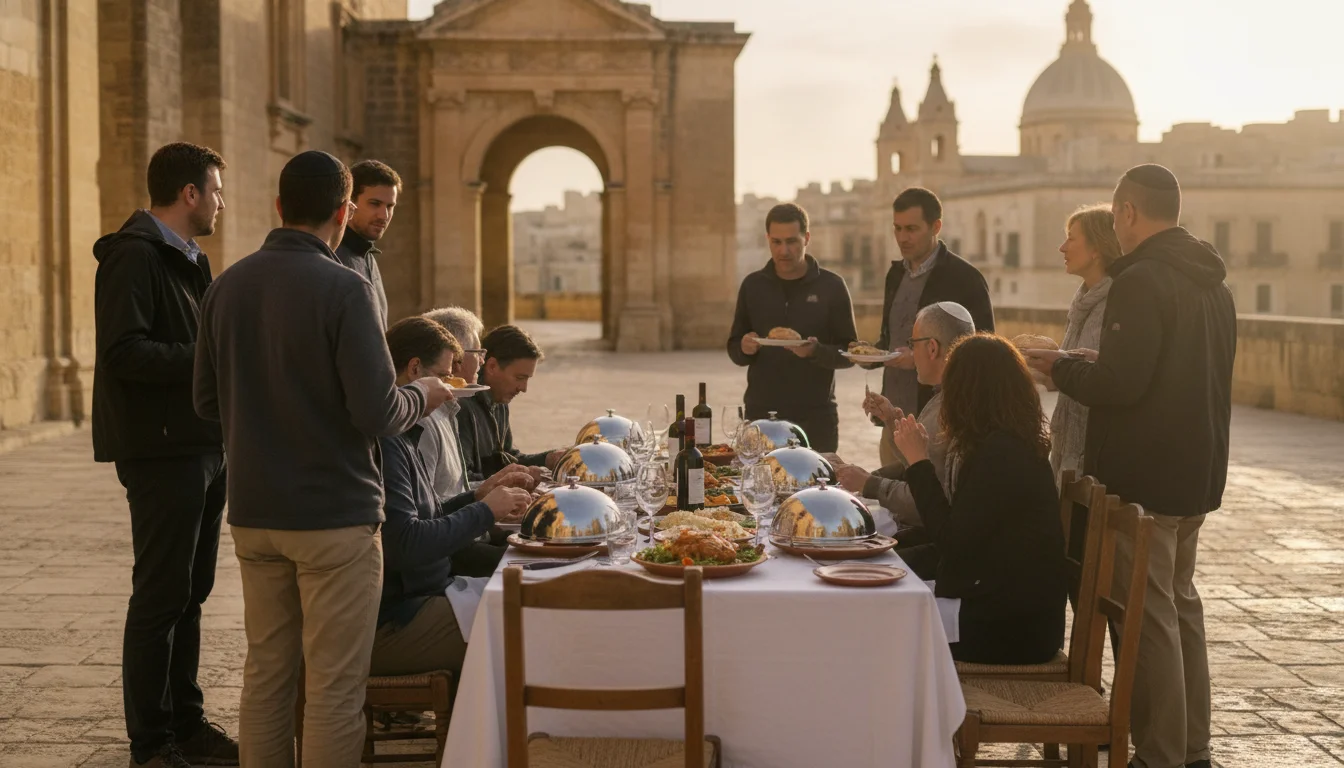
A rabbi who had led groups to Istanbul and Tel Aviv asked me a version of this question in almost the same words those groups always use: “Can we keep kosher in Malta?” But when I answered him, I had to give a different answer than I give for those two cities, and I want to be upfront about why. Malta’s Jewish community is small. The kosher infrastructure that exists in a large Jewish center simply does not exist here in the same form. That is not a reason to avoid Malta for a kosher group. It is a reason to plan further ahead and be honest about what the trip requires.
So let me walk through what keeping kosher in Malta actually looks like, plainly, without overselling it as easier than it is.
The Honest Starting Point: Malta’s Jewish Community Is Small
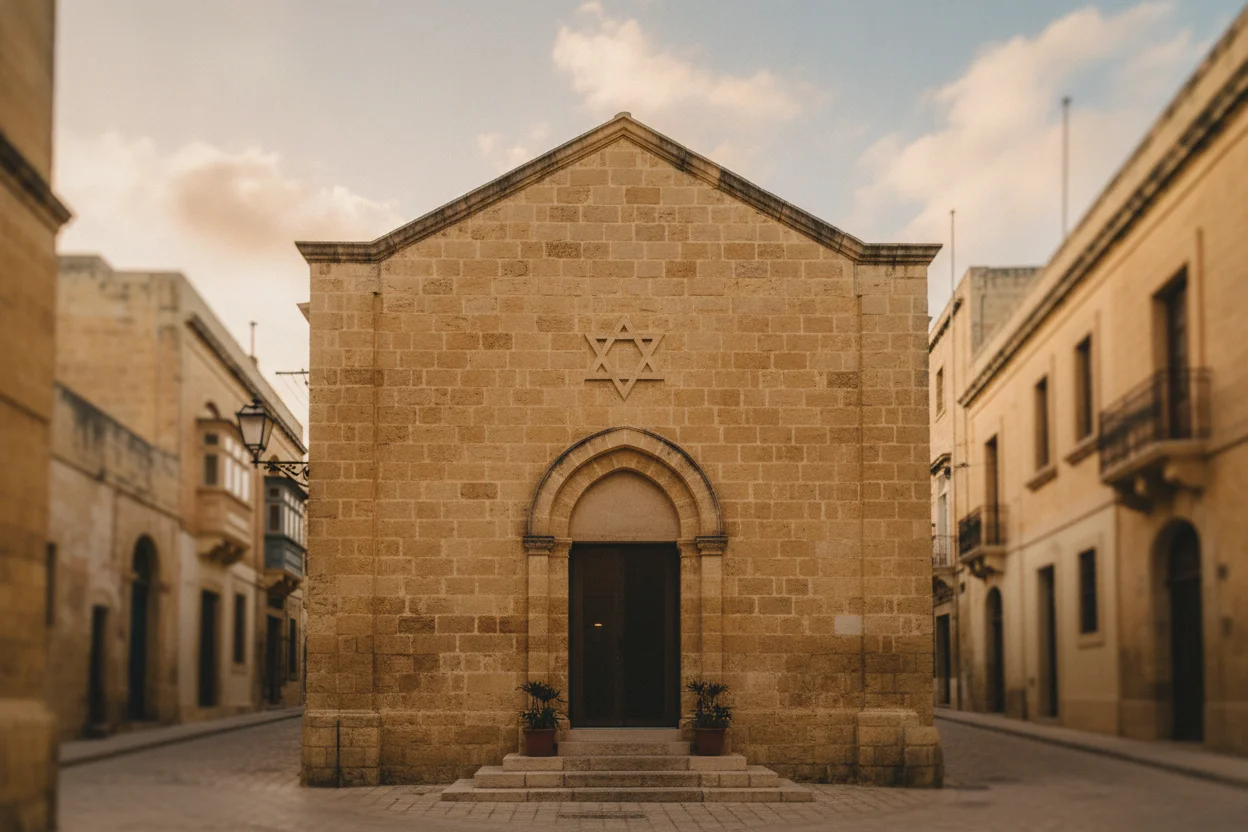
Malta’s Jewish story is a remarkable one, stretching back roughly 1,500 years before the 1492 expulsion ended continuous Jewish life on the island, as I cover in our post on Jewish heritage in Malta. But the community that exists today is small, and it is still rebuilding. A new synagogue has been established in Valletta, the first dedicated Jewish house of worship on the island since the expulsion, and it is a genuinely hopeful development. What it is not, yet, is a large, established community with the kind of standing kosher restaurant scene, supervised bakeries, and multiple kosher caterers you find in a city like Istanbul, which has roughly fifteen thousand Jews and centuries of continuous communal infrastructure to show for it.
I want to be direct about this comparison because I think it serves group leaders better than false reassurance. If you have led a kosher trip to Istanbul or a major Jewish center and you are picturing Malta working the same way, adjust that expectation now, before you are standing in Valletta on day one. Malta is workable. Malta is not effortless the way a large Jewish center is.
What This Means in Practice: Plan Before You Land
The single most important sentence in this entire post is this: in Malta, kosher food happens because you arranged it in advance, not because you found it on the ground. There is no walk-in kosher restaurant scene to fall back on if planning slips. The work has to happen weeks before departure, not once your group is already on the island.
In practice, this usually means one or more of the following, arranged ahead of time:
Pre-arranged catering. We work with contacts connected to Malta’s Jewish community and, where needed, coordinate catering brought in specifically for the group’s meals, rather than assuming a restaurant on the itinerary can accommodate kashrut on request.
Bringing some supplies. For groups with strict observance requirements, we sometimes advise bringing certain sealed, shelf-stable kosher items from home to supplement what can be arranged locally, particularly for the parts of the trip furthest from Valletta. This is not unusual for smaller Jewish communities and is a normal part of planning well rather than a sign that the trip is failing.
Building meals around what is genuinely available. Malta’s Mediterranean food culture leans on fresh vegetables, grains, and fish, which adapt reasonably well to kashrut when the kitchen and sourcing are handled correctly. The gap is less about the raw ingredients and more about supervised preparation, which is exactly why advance coordination matters so much.
Naming Your Group’s Standard Early
Just as with our kosher planning for other destinations, the first real step is naming your group’s specific standard rather than leaving it vague. Some groups require full supervision under a specific hashgacha with a mashgiach traveling along. Others are comfortable with kosher-style eating, sourcing vegetarian and fish options and avoiding non-kosher meats and mixing, without requiring the strictest supervision at every meal. In a place with thin infrastructure like Malta, this distinction matters even more than usual, because it changes how much advance coordination is required and what is realistically achievable.
I would rather have this conversation with a rabbi in the first planning call than discover a mismatch on day three of the trip. Tell us your standard clearly, and we build the logistics, and the honest limits of what Malta can offer, around it from the start.
Shabbat in Malta
Shabbat requires its own attention here. The Valletta synagogue and its small community can help coordinate Shabbat arrangements, including meals and guidance on walking-distance accommodations, but this is a newer, smaller effort than the centuries-deep Shabbat infrastructure you would find in a place like Istanbul. We plan Shabbat around Valletta specifically, choosing a hotel within walking distance and arranging meals well in advance, so your group’s day of rest does not become the most stressful logistics problem of the trip.
For a rabbi bringing a group during a Shabbat that falls mid-trip, this is one of the first details we lock down, well before flights are booked, precisely because the margin for last-minute adjustment is smaller here than in a larger Jewish center.
Malta Is Still Worth It for a Kosher Jewish Group
None of this is a reason to skip Malta. The Jewish heritage story here, the ancient Giudecca in Mdina, the Jewish catacombs of Rabat with menorahs carved into the rock, the 1492 expulsion that mirrored Spain’s, and the hopeful new synagogue in Valletta, is a story almost no one in your congregation has heard, and it deserves to be told in person. What I want group leaders to walk away with is not hesitation. It is clarity: Malta’s kosher logistics take more advance planning than a place like Istanbul, and with that planning, a kosher group eats appropriately and observes Shabbat properly for the whole trip.
This is exactly the kind of coordination Heritage Tours handles as part of building a Jewish heritage itinerary in Malta, so the planning burden sits with us rather than with you. With fifteen or more participants, the group leader also travels free, which is worth factoring into your budget from the start of planning.
You can see the fuller Jewish heritage picture in our Jewish heritage in Malta guide, and our Malta destination page lays out how the rest of a heritage itinerary comes together around it.
FAQ: Keeping Kosher in Malta
Can you keep kosher on a Malta heritage tour?
Yes, but it takes more advance planning than in a country with a larger Jewish community. Malta’s Jewish community is small, so kosher meals are arranged through pre-coordinated catering and, in some cases, supplemented with supplies brought from home, rather than found readily on the ground.
Is kosher food as easy to find in Malta as in Istanbul or Tel Aviv?
No, and it is worth being honest about that upfront. Malta’s Jewish community is much smaller and its kosher infrastructure is thinner. Where a large Jewish center has standing kosher restaurants and multiple caterers, Malta requires meals to be specifically arranged in advance for a visiting group.
Do we need to bring our own kosher food to Malta?
Some groups, particularly those with strict observance requirements, choose to bring sealed, shelf-stable kosher items to supplement local arrangements. This is a normal part of planning well for a smaller Jewish community destination, not a sign that the trip cannot work.
How is Shabbat handled for a kosher group in Malta?
Shabbat is planned around Valletta, home to the island’s new synagogue and small Jewish community, with a hotel chosen for walking distance and meals arranged well in advance. This takes more lead time than in a larger Jewish center, so it is one of the first things we lock down in planning.
Should we still consider Malta for a kosher Jewish heritage trip?
Yes. Malta’s Jewish story, from the ancient Giudecca and the Rabat catacombs to the 1492 expulsion and the new Valletta synagogue, is remarkable and rarely known. With proper advance planning around kosher meals and Shabbat, a kosher group can experience it fully.
If you are considering a kosher heritage trip to Malta, I would rather set honest expectations now and build a plan that actually works than promise something the island cannot deliver on short notice.
Contact us and let’s start planning the kosher logistics early, the way Malta requires.