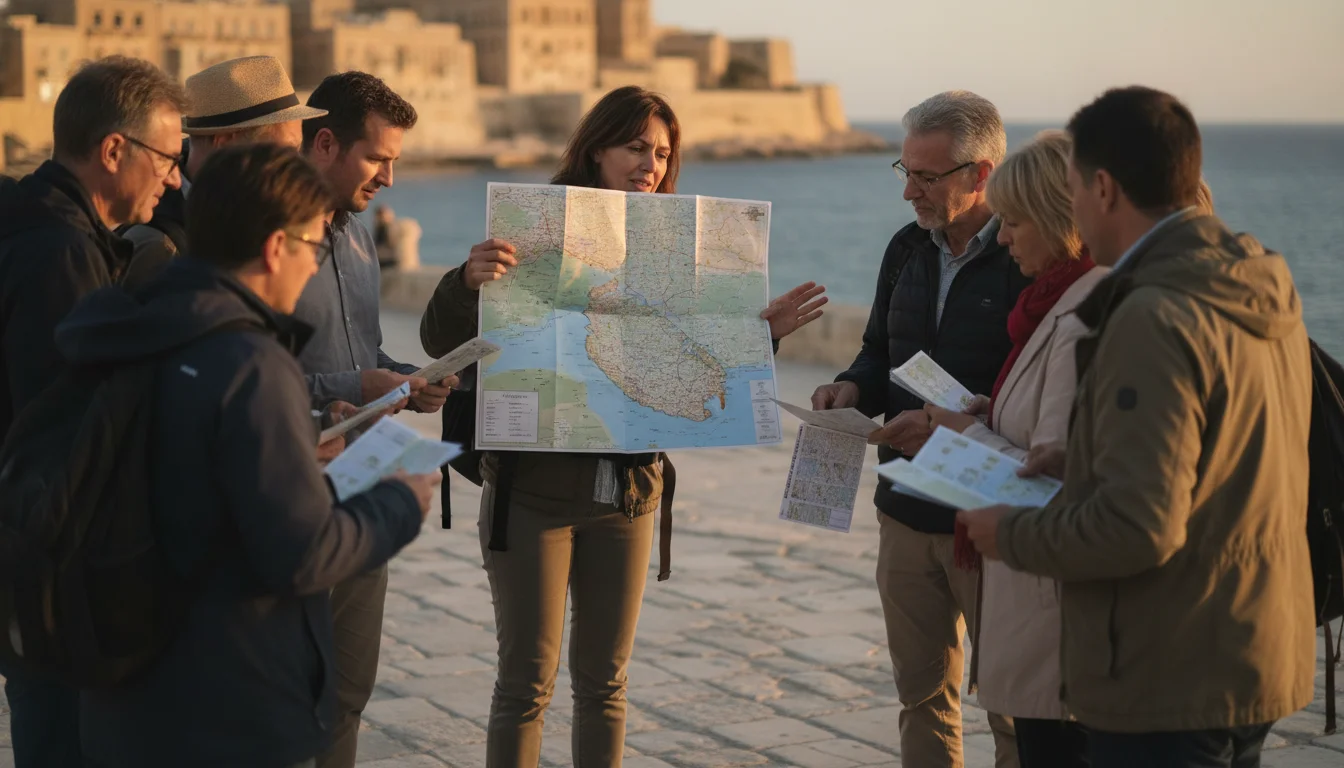
Almost every group leader who calls me about Malta for the first time asks some version of the same question: “Where do I even start?” They have an idea, sometimes a strong one, but no sense of the order things need to happen in. Do you announce the trip first or lock the itinerary first? Do you collect deposits before or after you know the group size? I have walked enough congregations through this now to have a real answer, and it is a specific order, not a vague list of things to think about.
So let me lay out the actual sequence, start to finish, for building a congregation’s Malta trip from a bare idea to a boarding gate.
Step One: Decide the Why Before the What
Before you touch dates, budgets, or itineraries, answer one question honestly: why Malta, for this congregation, right now. Is it the St. Paul’s shipwreck narrative, a biblical connection your congregation has been studying? Is it Jewish heritage, the Giudecca and the story of the 1492 expulsion? Is it simply that Malta is an accessible, single-base European destination well suited to a first trip? The answer shapes every decision after this one, and skipping it is why some trips end up feeling like a generic Mediterranean vacation with a few churches added rather than a heritage journey with a clear spine.
Write this down in one or two sentences. You will use it in your first announcement, your fundraising pitch, and your own planning conversations with us.
Step Two: Get a Realistic Read on Interest Before You Commit to Numbers
Before locking a date or a budget, take an informal pulse of your congregation. A short survey, an announcement with a non-binding interest form, or simply a few conversations with the people most likely to come. You are trying to answer one question: are you likely to land above or below fifteen participants, since that threshold determines whether the group leader travels free, and it meaningfully changes your budget math either way.
You do not need exact numbers yet. You need a realistic range, because that range determines whether you are planning a full group tour or should be considering a smaller private format, a decision our group versus private touring in Malta guide walks through if you are unsure which fits your likely numbers.
Step Three: Choose Your Season
Malta runs comfortably from April through November. Within that window, Easter week draws large crowds and features moving Christian processions if that timing fits your congregation’s calendar and your comfort with crowds. Summer is hot, and the exposed limestone holds heat with little shade at outdoor sites. Fall offers a quieter, more contemplative pace. Our best time to visit Malta guide covers these tradeoffs in full detail.
Pick your season before you build the itinerary or announce a firm date, since season affects flight pricing, site crowding, and how physically demanding the outdoor days will feel for your group.
Step Four: Build the Skeleton Itinerary
With your why and your season settled, sketch a skeleton: how many days, and what the non-negotiable stops are. For most congregation trips, five days is the right length, long enough to cover Valletta, St. Paul’s Bay and the Grotto in Rabat, Mdina, and a full day trip to Gozo without rushing, and our 5-day Malta heritage itinerary is a solid starting template to adapt rather than build from a blank page.
At this stage you are deciding priorities, not finalizing details. If your congregation’s why is the St. Paul narrative, that gets more time and a slower pace at St. Paul’s Bay and the Grotto. If it is Jewish heritage, the Giudecca and the Rabat catacombs move to the center of the schedule. Let your step-one answer drive these calls.
Step Five: Get a Real Cost Number and Announce It Honestly
This is the step where I see the most first-time leaders stall, because they are afraid to name a number before it is perfect. Get a real quote from us at this stage, not a guess, covering flights, land package, meals not included, tips, and insurance. Then announce the trip to your congregation with that honest range rather than a soft estimate you will have to walk back later.
Include the group leader policy in this announcement: at fifteen or more participants, the leader travels free, and many congregations use that built-in value either to lower the per-person price slightly or to fund a scholarship seat for someone who could not otherwise afford to come. Decide which of those two uses fits your congregation before you announce, since it is easier to build that decision into the initial pricing than to add it later.
Step Six: Open Deposits With a Real Deadline
Once you have announced with real numbers, open deposits with a specific, firm deadline rather than an open-ended “let us know if you’re interested.” A firm deadline does two things: it gives you an accurate headcount in time to finalize group airfare and hotel blocks, and it creates the gentle urgency that turns “I’m thinking about it” into an actual commitment.
Tie travel insurance to the deposit step directly. Encourage, or require, that travelers arrange insurance within about two weeks of their deposit, since many policies only offer a pre-existing condition waiver within that early window. Building this into your deposit instructions protects your older or higher-risk travelers without singling anyone out.
Step Seven: Confirm the Final Itinerary and Logistics
With your headcount locked, finalize the itinerary in detail: exact site order, meal arrangements, any dietary accommodations including kosher needs if your congregation includes observant members, and a clear day-by-day schedule you can hand to your travelers. This is also when you confirm practical details like dress code reminders for Malta’s churches, modest coverage of shoulders and knees, and any mobility considerations for specific stops like the stairs into the Rabat catacombs or the Grotto of St. Paul.
Step Eight: Prepare Your Congregation Before Departure
The trips that land hardest spiritually are the ones where the congregation arrives already prepared, not cold. If your trip centers on the St. Paul narrative, teach Acts 27 and 28 from the pulpit in the weeks before departure. If Jewish heritage is central, teach the story of the 1492 expulsion and Malta’s place in it. Hold a pre-trip meeting covering practical logistics, packing, weather, physical demands, so questions get answered before the airport rather than during it.
Step Nine: Lead the Trip, Then Close the Loop After
On the ground, your job shifts from planning to presence: showing up fully at St. Paul’s Bay, in the Giudecca, at St. John’s Co-Cathedral, and letting the sites do their work rather than over-scheduling around them. After you return, build in a debrief, a service, a small group series, where travelers share what moved them. This is also where the seed for a future trip usually gets planted, since a well-run first trip almost always generates interest in a second one, whether to Malta again or to a new destination.
The Order Matters More Than Any Individual Step
Each of these nine steps is straightforward on its own. What trips up first-time leaders is doing them out of order: announcing before knowing the why, pricing before choosing a season, opening deposits before having a real cost number. Follow the sequence and the trip builds itself in a way that feels steady rather than chaotic, for you and for the congregation trusting you to lead them.
FAQ: Building a Congregation Trip to Malta From Scratch
What is the very first thing I should do before planning a Malta trip?
Decide why Malta specifically, in one or two sentences, before touching budgets or itineraries. That answer, whether it is the St. Paul narrative, Jewish heritage, or simply accessible single-base logistics, shapes every decision that follows and keeps the trip from feeling generic.
How do I know if my congregation will hit the fifteen-person threshold for a free leader seat?
Take an informal pulse before locking numbers: a short interest survey or a round of direct conversations with likely travelers. You do not need an exact count this early, just a realistic sense of whether you are likely above or below fifteen, since that changes your budget approach.
When should I get an actual cost quote rather than estimating?
Before you announce the trip publicly. Announcing with a real number from your tour operator, rather than a soft estimate, means you rarely have to walk the price back later, which builds trust with your congregation from the start.
How far ahead should deposits and travel insurance be handled?
Open deposits with a firm deadline once you have a real cost number and enough interest confirmed. Tie travel insurance to the deposit step directly, encouraging travelers to buy insurance within about two weeks of their deposit to preserve pre-existing condition coverage.
What should happen after the trip ends?
Build in a debrief, whether a Sunday service, a small group series, or an informal gathering, where travelers share what moved them. This closes the loop on the trip and, for most congregations, plants the seed for the next one.
If you are standing at step one with an idea and no roadmap yet, that is exactly where I like to start the conversation.
Contact us and let’s build your congregation’s Malta trip the right way, in the right order.