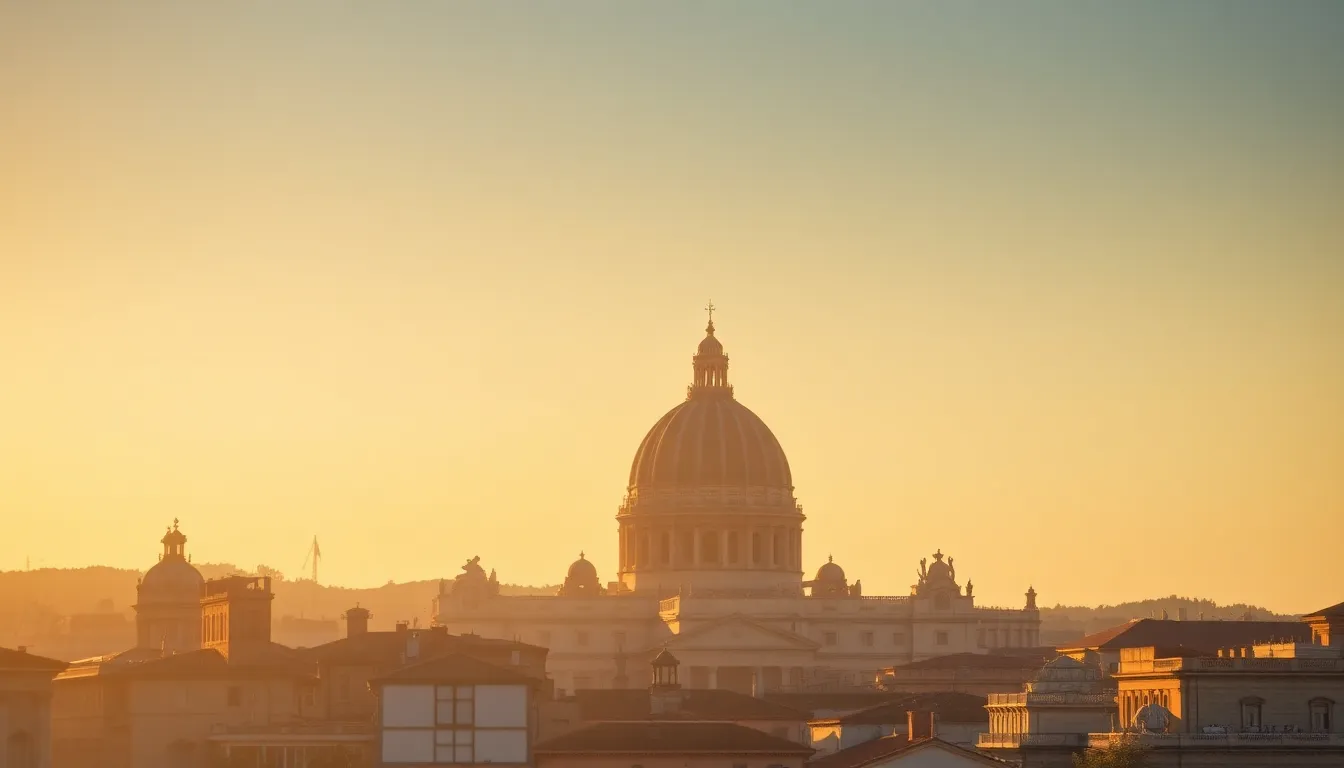
Not every group has ten days. Some of the best trips I have led were three days long, built around a single long weekend, with a congregation that could not get away for more. People sometimes assume a short trip means a shallow one. It does not have to. Rome holds enough heritage in a two-mile radius to fill a month, which means a focused weekend can be genuinely deep if you make the right cuts and refuse to rush.
The mistake leaders make with a weekend in Rome is trying to see everything. They cram in the Colosseum, the Forum, the Vatican, the Trevi Fountain, the Spanish Steps, and three churches, and the group comes home exhausted with a blur of photos and no real encounter. A weekend works when you choose three things and let your group actually stand in them. That is what this itinerary does. Three days, three threads of Rome’s faith history, each one given room to breathe.
This route is built for groups with limited time: a congregation doing a long weekend, a leadership team on a short trip, or a group adding a heritage weekend onto other travel. It assumes you arrive on a Friday and leave on a Monday, but it adapts to any three full days. The pace is realistic, the walking is manageable, and the focus stays on depth over distance.
Day 1: The Jewish Ghetto and the Heart of Old Rome
Start where Rome’s faith story is oldest. The Jewish Ghetto is the oldest continuously inhabited Jewish quarter in the Western world, and Jewish families have lived in this part of Rome since the second century BCE, before the rise of Christianity. Beginning here, rather than at the Vatican, sets the right tone and reminds the group how many layers this city holds.
Spend the morning in the Ghetto. The Great Synagogue of Rome stands on the banks of the Tiber, and the museum inside tells a story that runs from ancient Rome through the deportations of 1943. Walk the narrow streets, see the stumbling stones set into the pavement marking where families were taken, and let the group feel that this is not history behind glass. It is still a living neighborhood. For groups that include both Jewish and Christian travelers, starting here frames the whole weekend in the shared and complicated history of the two traditions.
In the afternoon, walk the surrounding old center on foot, because it is close and it is beautiful. The Portico of Octavia, the Theatre of Marcellus, and a crossing to the Tiber Island bring the ancient city alive. End with an early dinner in the Ghetto itself, where the Roman Jewish cuisine, including the famous fried artichokes, gives your group a shared meal rooted in the place. A good first day in Rome combines a serious site with a warm table, and this one does both.
Day 2: The Vatican, Done Right
The Vatican is the centerpiece of the weekend, and the whole day belongs to it. Do not try to combine it with other sites. A group that rushes the Vatican to fit something else in always regrets it.
Arrive early, before the heaviest crowds build. Spend the morning in the Vatican Museums, but do not try to see every gallery. I tell every leader the same thing: choose the Raphael Rooms and the Sistine Chapel, and give your group time to sit with them. The Sistine Chapel ceiling needs twenty minutes of quiet looking. Brief your group beforehand, because no talking and no photos are allowed inside, and tell them to find one figure and simply look at it. Rushing the ceiling loses the entire experience.
In the afternoon, move to St. Peter’s Basilica. The scale of it is the point. Stand under the dome, see Michelangelo’s Pietà, and if your group has the energy, climb to the top of the dome for a view across the whole city. Break for lunch between the Museums and the Basilica to keep energy manageable for the full group. A weekend in Rome can hold one truly big day, and this is it. Let it be big and do not dilute it.
Day 3: The Catacombs and the Underground Church
The final day goes beneath the city to the Catacombs of San Callisto or San Sebastiano on the Appian Way. This is where early Christians gathered and buried their dead when their faith could cost them their lives. After the grandeur of the Vatican, the contrast is deliberate and powerful. The narrow corridors, the carved fish and anchor symbols, the tombs of early martyrs, these speak in a quieter register than the basilica, and for many groups this is the most moving day of the three.
The catacombs sit on the Via Appia Antica, the ancient road with its original paving stones and umbrella pines. If time and footing allow, walk a short stretch of the road itself. This is where Paul approached Rome as a prisoner, and where generations of Christians traveled to remember their dead. A weekend that ends underground, in the church of the persecuted, leaves your group with the right final impression: that Rome’s faith began small and hidden, long before it became marble and gold.
If your departure is in the afternoon, use the final hour for a brief group reflection somewhere quiet, perhaps a coffee in a small piazza, where each traveler shares one moment from the weekend. It takes thirty minutes and turns three days of sights into a shared story.
Making the Most of a Short Trip
A weekend in Rome lives or dies on logistics, because there is no slack in the schedule. We handle the timed entries, the catacomb access that requires advance arrangement, and the transport, so your group is never stuck in a two-hour line that eats half a day. We also keep the hotels central, because in a three-day trip you cannot afford long transfers. Every hour saved on logistics is an hour your group spends actually present at a site.
This itinerary flexes to your group’s interests. A primarily Jewish group can expand the Ghetto day and add the Jewish catacombs, some of the oldest in Rome. A Christian group can deepen the early church thread with a layered church like San Clemente. Groups wanting to follow Paul can connect this weekend to our Footsteps of Paul itinerary, and those wanting the early church in more depth can build on our early church itinerary.
If your group later finds more time, this weekend is the natural opening to a longer journey. Our 10-day Italy itinerary adds Assisi, Florence, and Venice to the Rome core, and many groups start with a weekend and return for the full route once they have tasted it.
The group leader makes a short trip work. With only three days, the leader’s ability to keep the group together, hold the focus, and lead the reflection is what gives the weekend coherence. We handle the ground. You bring your people.
With fifteen or more participants, the group leader travels at no cost. That holds true for a weekend just as it does for a longer trip, because the leader’s presence is what makes a heritage weekend more than a quick visit.
FAQ: A Weekend Heritage Trip to Rome
Is three days enough for a heritage trip to Rome?
Three days is enough to encounter Rome’s faith history with real depth if you focus. This itinerary covers three threads, the Jewish Ghetto, the Vatican, and the early Christian catacombs, and gives each a full day. You will not see all of Rome in a weekend, and you should not try. What three focused days deliver is the chance to actually stand in these places rather than rush past them, which is worth far more than a checklist of sights.
What should a faith group prioritize in a weekend in Rome?
Prioritize one major site per day and resist the urge to add more. The Jewish Ghetto gives you the oldest layer of Rome’s faith history, the Vatican deserves a full day on its own, and the catacombs offer the moving contrast of the early persecuted church. These three cover the breadth of Jewish and Christian Rome and work for mixed groups, while leaving the energy to be genuinely present at each one.
How much time does the Vatican take with a group?
Plan a full day. The Vatican Museums take three to four hours if you focus on the Raphael Rooms and the Sistine Chapel, and St. Peter’s Basilica needs at least two more hours. Groups that try to fit the Vatican into a half day consistently feel rushed. An early entry helps avoid the worst crowds, and breaking for lunch between the Museums and the Basilica keeps the group’s energy steady.
Can a weekend Rome trip cover both Jewish and Christian sites?
Yes, and this itinerary is built for that. Rome’s Jewish Ghetto and the Vatican are less than two miles apart, and the catacombs include both Jewish and Christian sites. The heritage of both traditions is woven into the same compact part of the city, which makes a combined weekend feel natural rather than forced. We adjust the emphasis based on who is in your group.
Can we extend a weekend into a longer Italy trip later?
Absolutely, and many groups do. A Rome weekend is the natural foundation for a longer journey, and our full ten-day itinerary adds Assisi, Florence, and Venice to the Rome core. Some leaders run a weekend first to build interest in their congregation, then return with a larger group for the complete route. We help you plan either path.
If a focused Rome weekend fits your group, I would welcome the conversation. Start with our Italy destination page or see how our group heritage tours are structured.
Contact us when you are ready to plan your weekend.