Most groups that come to Italy to follow Paul start in the wrong place. They begin in Rome, see the major churches, and treat the apostle as one figure among many in a city full of saints. That works, but it misses something. Paul did not arrive in Rome by choice or by an easy road. He came as a prisoner, by sea, and walked the last stretch on foot up the Appian Way. If you follow that approach, starting where he landed and moving the way he moved, the whole story changes shape.
I have led Pauline study groups through Italy for many years, and the ones that stay with people are the ones built around the journey itself. Acts 28 gives you the route in remarkable detail. Paul lands at Puteoli, stays with believers for seven days, then travels toward Rome. Fellow Christians come out to meet him at the Forum of Appius and the Three Taverns, and when Paul sees them, the text says he thanked God and took courage. That single human moment, an exhausted prisoner encouraged by people who walked out to meet him, is the heart of this itinerary.
This route is built for adult Christian groups, Bible study communities, and pastors leading congregations who want to read Acts on the ground where it happened. It is a study trip more than a sightseeing trip. Bring your Bibles. We will read at the sites.
Day 1: Arrival in Naples and the Bay of Puteoli
Fly into Naples, because this is where Paul’s Italian journey began. Puteoli, the ancient port where Paul’s ship landed, is modern Pozzuoli on the Bay of Naples. After arrival and rest, gather the group for an orientation reading of Acts 28. Reading the landing account while looking out over the same bay sets the tone for everything that follows.
Pozzuoli still holds Roman remains, including the Macellum, often called the Temple of Serapis, and a large amphitheater. Paul would have walked into a busy Roman port town, and standing among these ruins helps the group picture the world he stepped into as a prisoner under guard, yet welcomed by a small community of believers who asked him to stay seven days.
Day 2: The Bay Area and the World Paul Entered
Spend a full day in the area around Puteoli to understand the setting. This was one of the most important ports in the Roman world, the gateway through which grain, goods, and people flowed into Italy. Paul arrived here on a grain ship from Alexandria, and the detail matters. He was carried into the heart of the empire on the same trade routes that fed Rome.
Depending on your group’s interest, this day can include the ruins at Cumae, with its famous cave of the Sibyl, or a visit to the archaeological richness of the broader bay. The goal is not to chase every site. It is to let the group feel the scale and reach of Rome at the moment Paul entered it, a small chained man in a vast imperial machine, carrying a message that would outlast the empire.
Day 3: The Forum of Appius and the Three Taverns
This is the day the itinerary is built around. We follow the route Paul took from the bay toward Rome along the Appian Way, the great Roman road. Acts names two specific stops where believers came out from Rome to meet him: the Forum of Appius, about forty miles from the city, and the Three Taverns, about thirty miles out.
These are not grand sites. There is no basilica, no crowd. That is the point. We stop at these locations along the ancient road and read the passage where Paul, seeing the brothers and sisters who had walked out to meet a prisoner they had never met, thanked God and took courage. I have watched groups go quiet at the Three Taverns more than once. Something about the ordinariness of the place makes the encouragement feel real. These were people who walked a full day out of the city to meet a man in chains. Standing where that happened, the group understands what Christian fellowship cost and what it meant.
Day 4: The Appian Way into Rome
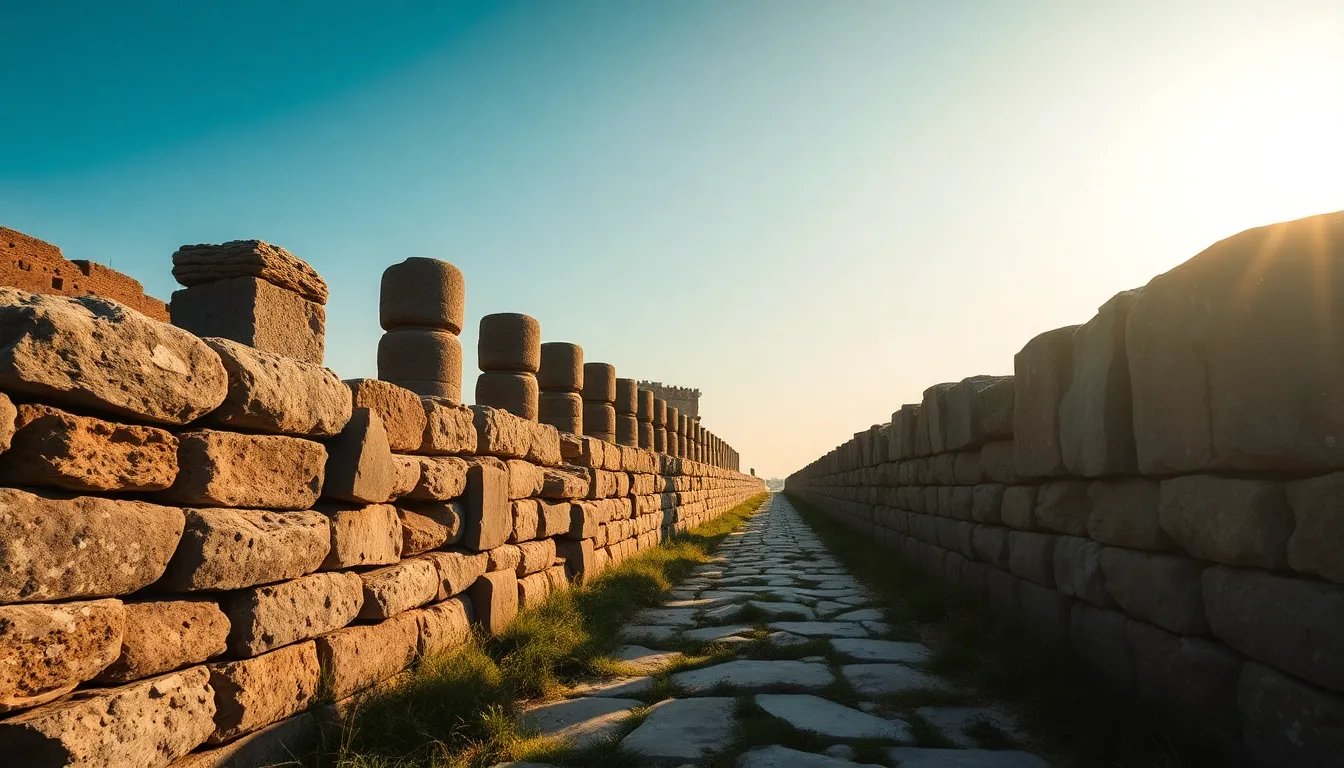
Today we walk a preserved stretch of the Appian Way as it approaches Rome, the Via Appia Antica. Parts of the original Roman paving stones remain, the same stones Paul’s feet would have crossed on his final approach to the city. Walking even a short section of this road, lined with ancient tombs and umbrella pines, is the most physical connection your group will have to Paul’s actual journey.
Along this road sit the Catacombs of San Callisto and San Sebastiano, where early Christians buried their dead and gathered to worship. We go underground here. The catacombs are not part of Paul’s account, but they are part of the same story: the church that grew in Rome in the decades after Paul arrived, often under persecution, leaving its faith carved into the walls. For a Pauline group, this is where the letter to the Romans becomes a community you can almost see.
Day 5: Paul in Rome, the House Arrest and the Witness
Acts ends with Paul in Rome, under house arrest for two years, welcoming all who came to him and preaching the kingdom of God without hindrance. We spend this day on Paul’s Rome. The Mamertine Prison, near the Roman Forum, is traditionally connected to Paul’s later imprisonment, and the lower cell gives a stark sense of what Roman confinement meant.
The Basilica of San Paolo Fuori le Mura, St. Paul Outside the Walls, is built over the traditional site of Paul’s tomb. It is one of the four major basilicas of Rome and it is enormous, a long colonnaded space that ends at the tomb of the apostle. We read from Paul’s letters here, and the contrast is worth naming aloud: the man who arrived as a chained prisoner is now honored at the center of a vast church, while the empire that chained him is gone.
Day 6: The Mamertine, the Martyrdom, and Reflection
The traditional site of Paul’s execution is Tre Fontane, the Abbey of the Three Fountains, on the outskirts of Rome. According to tradition, Paul, as a Roman citizen, was beheaded rather than crucified, and this quiet abbey complex marks the place. It is a contemplative spot, far less crowded than the central basilicas, and a fitting place to end the journey.
Use the final morning for reflection. We have followed Paul from the port where he landed to the road where he was encouraged, into the city where he witnessed, and to the place where tradition says he died. I encourage group leaders to close with a reading of 2 Timothy 4, where Paul writes that he has fought the good fight and finished the race. Reading those words at the end of a trip that physically retraced the race gives them a weight that no Bible study at home can match.
Shaping This Route for Your Congregation
This itinerary is a study framework, and we adjust it to your group. Some groups want to add the broader Christian Rome of the Vatican and St. Peter’s, where Peter’s story complements Paul’s. Others want to keep the focus tight on Acts and the Appian Way and go deeper into fewer sites. If your community is reading through Romans or the prison epistles together, we can structure the daily readings to follow your study.
We also adjust for pace. The Appian Way walking can be shortened for groups with members who tire easily, and we choose sections with the best footing. For groups with mobility concerns, our accessible Italy itinerary offers a gentler structure that still reaches the key Pauline sites.
The group leader, usually a pastor or a study leader, is what makes this work. You know your people and the questions they are wrestling with. We know the ground and the texts that go with it. When you lead the reading and the reflection and we handle the route and the access, the trip becomes a study you walk through rather than one you sit through.
With fifteen or more participants, the group leader travels at no cost. That is simply how we have always structured group heritage travel, because the leader’s presence is what turns a tour into a shared encounter with the text.
For the broader picture of heritage travel in Italy, our 10-day Italy itinerary covers the wider Jewish and Christian story, and our early church itinerary goes deeper into the catacombs and the age of martyrs that Paul’s arrival set in motion.
FAQ: Following Paul’s Footsteps in Italy
Where did Paul actually arrive in Italy?
Paul landed at Puteoli, the major Roman port on the Bay of Naples, which is modern Pozzuoli. Acts 28 records that he stayed there seven days with local believers before traveling on toward Rome. Starting your itinerary in Naples and Pozzuoli, rather than jumping straight to Rome, lets your group follow the journey in the order Acts describes it, which makes the whole account come alive.
What are the Forum of Appius and the Three Taverns?
They are two stopping points on the Appian Way, roughly forty and thirty miles from Rome, where fellow Christians came out to meet Paul as he approached the city. Acts records that when Paul saw them, he thanked God and took courage. These are quiet, unmarked stretches of the ancient road, and reading the passage at these spots is one of the most moving parts of a Pauline itinerary precisely because of how ordinary the places are.
Can you still walk the Appian Way that Paul traveled?
Yes. A preserved section near Rome, the Via Appia Antica, still has original Roman paving stones, and your group can walk it. The catacombs and ancient tombs line this road, and walking even a short stretch gives a direct physical connection to Paul’s final approach to Rome. We choose sections with good footing and adjust the distance to your group’s ability.
How long does a Footsteps of Paul itinerary in Italy take?
A focused Pauline itinerary works well in six to seven days, covering Puteoli, the Appian Way route, and Paul’s Rome. Groups that want to add the wider Christian story of Rome, including the Vatican and the major basilicas, should plan eight to ten days. We help you decide based on how tightly your group wants to follow the Acts narrative versus exploring the broader heritage of the city.
Is this itinerary suitable for a Bible study group?
It is built for exactly that. This is a study trip more than a sightseeing trip, structured around readings from Acts and Paul’s letters at the actual sites. We coordinate the daily readings with the route, so a group reading through Romans or the prison epistles can study them where they were lived. Bring your Bibles, because the reading on the ground is the heart of the experience.
If your congregation is ready to walk Paul’s road, I would welcome that conversation. Start with our Italy destination page or see how our group heritage tours are structured for study communities.
Contact us when you want to begin planning.