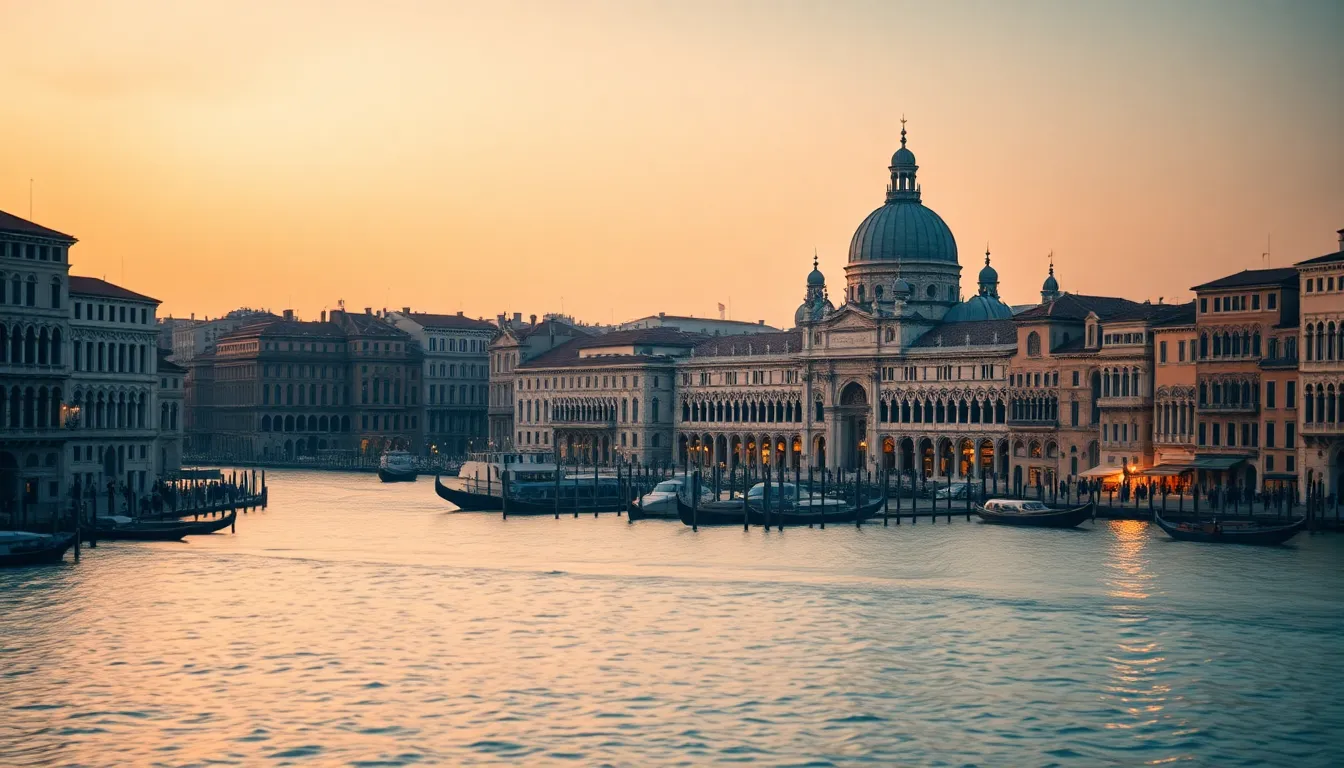
People come to Venice for the canals and the light. Faith groups should come for something heavier and more rewarding. This is the city that gave the world the word “ghetto,” and it is the city where the Christian East and West meet in stone and gold. I have led groups through a lot of beautiful places. Venice is the one where beauty and history refuse to separate, and that makes it one of the richest heritage stops in Italy.
The mistake I see leaders make is treating Venice as a day trip, a quick gondola and a photo in front of San Marco before moving on. Venice deserves more. The Jewish story here is foundational, the Christian story is layered with Byzantine and Roman roots, and the whole city is a lesson in how communities of faith lived under pressure and built something lasting anyway. Let me walk you through the layers.
For the full national picture, our Italy heritage travel guide sets the context. This guide is Venice in focus.
The Jewish Layer: The First Ghetto in the World
The word “ghetto” was born here. In 1516, the Venetian Republic confined its Jewish residents to a small island in the Cannaregio district, on the site of an old foundry. The Venetian word for foundry was “geto,” and that name attached itself to the place, and from there to every enclosed Jewish quarter that followed across Europe. When you stand in the Campo di Ghetto Nuovo, you are standing at the origin of a word that shaped Jewish history for five hundred years.
What strikes most groups first is the height of the buildings. Because the Jewish community was confined to a fixed footprint but kept growing, they built upward, floor on floor, creating some of the tallest residential buildings in old Venice. The architecture itself tells the story of a community boxed in and pressing against the limits.
The Five Synagogues
Within this small quarter sit five historic synagogues, called “scole,” each built by a different Jewish community that settled in Venice: the German, the Italian, the Spanish, the Levantine, and the Canton. From the street they are nearly invisible. Jews were forbidden from making their houses of worship visible from the outside, so you would walk past without knowing. Inside, they are extraordinary, with gilded woodwork and a quiet grandeur that the plain exteriors give no hint of.
The Jewish Museum of Venice, in the heart of the campo, ties the story together and is the right starting point for any group. From there a guided visit can take you into two or three of the synagogues, which remain active spaces of worship and memory.
For a Jewish group, or any group studying how faith communities endured restriction, the Venetian Ghetto is essential. It pairs naturally with Rome’s Jewish Ghetto, which our Rome heritage guide covers in depth. Seen together, the two cities tell the full arc of Jewish life in Italy.
The Christian Layer: San Marco and the Byzantine East
Venice was Western Europe’s bridge to the Byzantine East, and nowhere shows it like the Basilica of San Marco. Most groups expect a typical Italian church. What they find is something that feels closer to Constantinople than to Rome.
San Marco
The basilica is covered, floor to dome, in gold mosaics that took centuries to complete. They glow in a way that flat photographs cannot capture, and they tell the biblical story in image after image for visitors who, for most of history, could not read. For a Christian group, San Marco is a lesson in how the Gospel was taught visually across the medieval world, and a reminder that Christianity is not only a Western inheritance. Much of the church’s earliest theology, art, and tradition came from the East, and San Marco is where you feel that in your bones.
The basilica also holds, by tradition, the relics of the apostle Mark, brought to Venice from Alexandria in the ninth century. The city built its identity around that connection, and the winged lion of St. Mark became the symbol of Venice itself.
The Wider Christian Heritage
Beyond San Marco, Venice is dense with churches that hold real heritage weight. The Frari basilica houses major sacred art and the tombs of Venetian figures. Santa Maria della Salute, the great domed church at the mouth of the Grand Canal, was built as a thanksgiving offering after a plague, an act of communal faith carved into the skyline. For groups that want to go deeper than the postcard, these stops reward the time.
The Roman and Byzantine Foundations
Venice itself is younger than Rome, founded by refugees fleeing the collapse of Roman order on the mainland. But the lagoon holds older roots. A short boat ride takes you to Torcello, the island where Venetian civilization began, and to its cathedral of Santa Maria Assunta, founded in the seventh century. Its Byzantine mosaics, including a towering Last Judgment, are among the oldest Christian artworks in the lagoon and predate San Marco by centuries.
For a group tracing how Christianity moved from the Roman world into the Byzantine and medieval one, Torcello is the quiet, overlooked stop that often becomes the favorite. It is faith at the edge of the water, where a civilization started over.
Planning Venice as a Group Leader
Venice runs on water, and that changes how you move a group. A few things I tell every leader.
Give Venice at least a full day, ideally two. A day handles San Marco and the Ghetto if you are disciplined. Two days lets you add Torcello, the Frari, and time to let the city breathe on your people.
Plan the water transport. Vaporetti and water taxis are how groups move, and getting twenty or thirty people coordinated on the canals takes a guide who knows the system. We handle this so your group stays together instead of scattering across the lagoon.
Mind the Jewish calendar. The synagogues and the Jewish Museum follow Shabbat and festival schedules. For Jewish groups this needs planning months ahead.
Watch the seasons. Venice is at its best in spring and autumn. Summer brings heavy crowds and heat, and the winter “acqua alta” floods can complicate movement. We build itineraries around these realities so the trip stays smooth.
A note that matters to many leaders: with fifteen or more participants, the group leader travels free. The person who carries the teaching and the responsibility should not also carry the cost. You can see how this works on our group heritage tours page.
FAQ: Planning a Venice Heritage Trip
Why is the Venetian Ghetto significant?
It is the origin of the word “ghetto” itself, established in 1516 on the site of a former foundry, the “geto.” It was the first enclosed Jewish quarter of its kind in Europe, and the model spread across the continent. Its five historic synagogues and the Jewish Museum make it one of the most important Jewish heritage sites in Italy.
How much time should a group spend in Venice?
At least one full day, and two if your itinerary allows. One day covers San Marco and the Ghetto with focus. Two days lets you add Torcello’s ancient mosaics, the Frari, and a less rushed pace, which matters for older travelers and for groups that want time to reflect.
Is San Marco worth visiting for non-Catholic groups?
Yes. San Marco is a Byzantine treasure that speaks to all Christians, not just Catholics. Its gold mosaics teach the biblical story visually, and the basilica connects Western Christianity to its Eastern roots. Protestant and evangelical groups find it a powerful encounter with the breadth of the faith’s history.
Can Venice be combined with Rome or Florence on one trip?
Easily, and most of our Italy itineraries do exactly that. Fast trains connect Venice, Florence, and Rome in a few hours each. A common heritage route runs Rome to Florence to Venice, building from the seat of the church through the Renaissance to the Byzantine East. We design the routing so travel time never eats the experience.
When is the best time to visit Venice for a group?
Spring and autumn are ideal: comfortable weather, manageable crowds, and clearer access to the smaller heritage sites. Summer is hot and very crowded. Winter is quiet but can bring high-water flooding that complicates group movement. We plan around the season your congregation can travel.
If Venice belongs on your community’s heritage journey, we would welcome the chance to talk it through. No pressure, no timeline, just a conversation about what this city could mean for your group. Contact us when you are ready, or explore our Italy heritage tours to see how we build them.