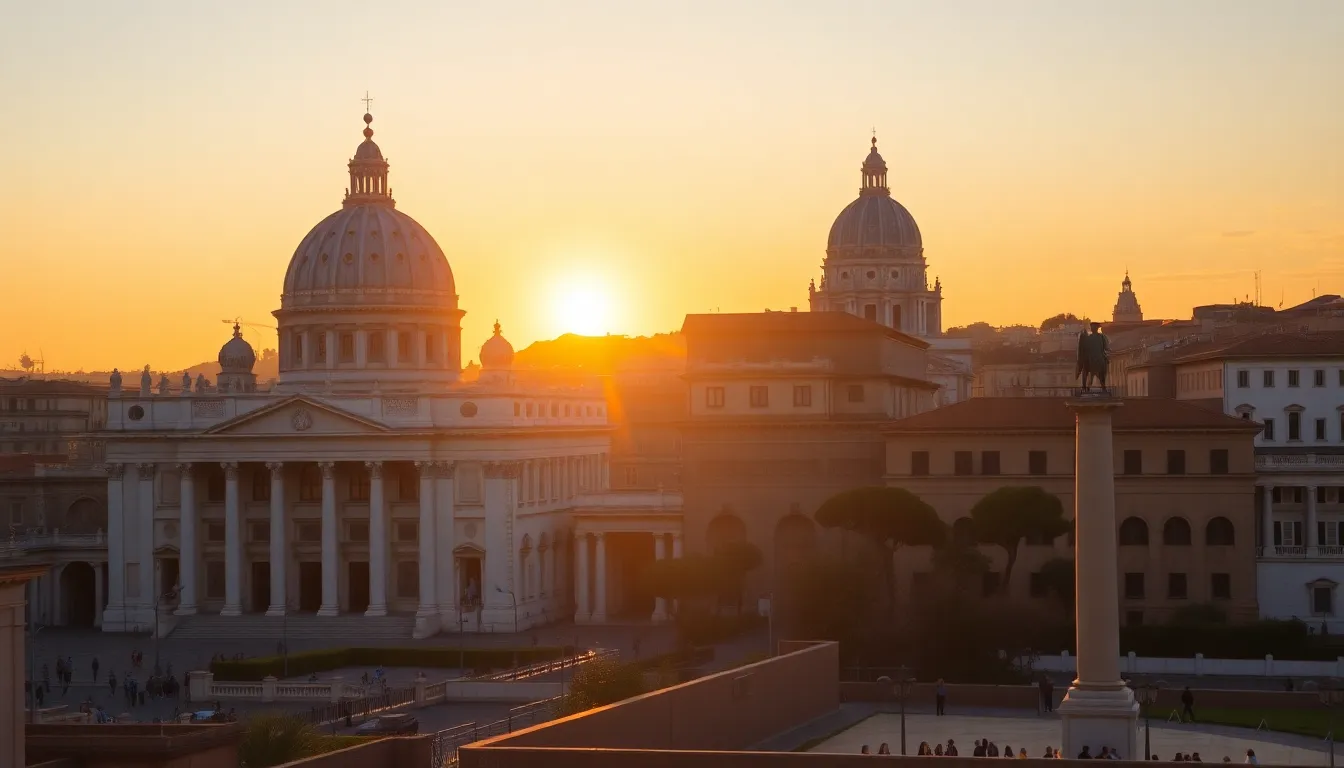
The first time I brought a group into Rome, a pastor in the back of the bus said something I have repeated to every leader since. He said, “I came expecting a museum. I found a living argument about faith.” That is Rome. It does not hand you a tidy story. It hands you two thousand years of overlapping ones, and your job as a group leader is to help your people walk through them without getting lost.
I have been building heritage itineraries for more than forty years, and Rome is the city I am asked about most. It is also the city most groups underestimate. They block out two days and assume the Vatican covers it. The Vatican is one layer. Underneath and around it sit the catacombs, the oldest continuously inhabited Jewish neighborhood in Europe, and the streets where the early church grew up under Roman rule. This guide walks you through those layers so you can plan a trip that does justice to all of them.
For the wider picture across the country, start with our Italy heritage travel guide. This piece zooms in on Rome.
The Christian and Catholic Layer: More Than the Vatican
Most groups arrive in Rome with the Vatican at the center of the plan, and that is right. St. Peter’s Basilica, the Sistine Chapel, and the Vatican Museums hold art and meaning that no photograph prepares you for. Standing under Michelangelo’s ceiling with a group that has read the Genesis account out loud the night before is a different experience than visiting as a tourist. The preparation is what makes it land.
But Rome’s Christian story does not start at the Vatican. It starts underground.
The Catacombs
The catacombs along the Via Appia, San Callisto and San Sebastiano in particular, are where the early Christians buried their dead and gathered when worship in the open was dangerous. Walking those narrow tunnels, you see the earliest Christian symbols carved into stone: the fish, the anchor, the Good Shepherd. For a Christian group, this is often the most moving stop in the entire city, because it is faith stripped of grandeur. No marble, no gold. Just believers who met in the dark because they had to.
The Early Church Above Ground
San Clemente is the building I send every group to, and almost no first-time visitor knows it exists. It is a church stacked on a church stacked on a Roman building. You walk down through the centuries: a medieval basilica on top, a fourth-century church below, and beneath that a Roman house with a pagan temple. In one descent, your group physically travels from the church they know back to the world the apostles lived in. I have never had a group come up those stairs quiet.
The four major papal basilicas, St. Peter’s, St. John Lateran, St. Mary Major, and St. Paul Outside the Walls, round out the Christian itinerary. St. Paul’s, built over the apostle’s traditional burial site, is worth the trip out from the center even on a tight schedule.
The Jewish Layer: The Ghetto and a Community That Never Left
Here is the fact that reframes Rome for most groups: Jewish families were living here before the destruction of the Second Temple. The Jewish community of Rome is the oldest continuously inhabited Jewish community in Europe, dating to the second century BCE. It survived the Roman Empire, the medieval period, the papal ghetto, and the Holocaust. It is still here.
The Jewish Ghetto sits across the Tiber from the Vatican, a fifteen-minute walk that crosses more than two thousand years of shared and separate history. In 1555, a papal decree walled the Jews of Rome into this small quarter, where they lived under restriction for over three hundred years until Italian unification. Today the neighborhood is alive with Roman Jewish life, kosher restaurants, and a depth of memory you can feel in the stones.
The Great Synagogue of Rome, completed in 1904 on the bank of the Tiber, was built deliberately tall and visible after centuries of forced invisibility. It is a statement of survival. Beneath it, the Jewish Museum of Rome tells the community’s story across two millennia, including the brutal October 1943 deportation that the neighborhood still commemorates.
For a Jewish group, or for any group tracing the shared roots of two traditions, the short walk from the Ghetto to St. Peter’s is the single most powerful itinerary decision you can make in Rome. Our Venice heritage guide covers the other essential Jewish heritage city in Italy, and the two together tell a fuller story.
The Roman and Imperial Layer: The World the Faith Was Born Into
You cannot understand the early church without understanding the empire it grew up inside. The Colosseum, the Roman Forum, and the Palatine Hill give your group the political and cultural backdrop for everything else.
The Arch of Titus in the Forum matters especially to Jewish groups and to any group teaching the destruction of Jerusalem. Carved into it is the Roman triumph after the fall of the Second Temple in 70 CE, showing soldiers carrying off the menorah and the sacred vessels from the Temple. For centuries, Roman Jews would not walk under that arch. Standing in front of it with a group, watching the realization land, is one of the moments I plan a Rome itinerary around.
The Mamertine Prison, near the Forum, is the traditional site where both Peter and Paul were held before their executions. It is small, plain, and easy to miss, and for Christian groups it connects the imperial layer directly to the apostolic one.
Planning Rome as a Group Leader
Rome rewards groups that move with intention and punishes groups that try to do everything. A few things I tell every leader before they commit to dates.
Build in at least three full days. Two days forces you to choose between the Vatican and everything else, and the everything else is where the conversations happen.
Pre-book the Vatican. The lines without reservations can swallow half a day, and a tired group is a distracted group. We handle this so your people never stand in a queue wondering why they flew across an ocean to wait.
Mind the Jewish calendar. The Ghetto and the Great Synagogue have specific access patterns around Shabbat and festivals. For Jewish groups, this needs to be planned months ahead, not improvised.
Keep the group together. Roman traffic and crowds separate groups fast. At Heritage Tours we build in hotel pickup and dropoff and local guides who understand that your group is there for heritage, not entertainment, so the spiritual focus is not lost to logistics.
One thing that matters to many leaders: with fifteen or more participants, the group leader travels free. The person who carries the teaching and the responsibility should not also carry the financial burden. You can see how we structure these journeys on our group heritage tours page.
FAQ: Planning a Rome Heritage Trip
How many days do I need in Rome for a heritage group?
Three full days is the realistic minimum to cover the Christian, Jewish, and Roman layers without rushing. Two days will force you to skip either the Ghetto or the catacombs, both of which generate the deepest reflection. Four days lets you add St. Paul Outside the Walls, more time underground, and a slower pace for older travelers.
Can a Rome trip serve both Jewish and Christian groups?
Yes, and Rome is one of the few places where the two stories sit physically side by side. The walk from the Jewish Ghetto to St. Peter’s covers both traditions in under thirty minutes. The Arch of Titus speaks to Jewish history and Roman history at once. A well-built itinerary can honor either tradition deeply, or hold both in conversation.
Is the Vatican appropriate for non-Catholic Christian groups?
Absolutely. Protestant and evangelical groups visit the Vatican constantly, not as an act of devotion to Rome but as an encounter with the art, history, and weight of Western Christianity. The Sistine Chapel and St. Peter’s are part of every Christian’s heritage, whatever their tradition. A good guide frames the visit in a way that serves your group’s theology.
What is the most overlooked site in Christian Rome?
San Clemente, the church built over a church built over a Roman house. Most first-time visitors have never heard of it, yet descending through its layers is the clearest physical experience of how the early church grew out of the Roman world. I put it on every itinerary I build.
How far in advance should I book a Rome heritage trip?
Twelve months is ideal, especially for spring or autumn travel and absolutely for any trip near Easter Week. That lead time secures preferred hotels, specialist heritage guides, and Vatican access, and it gives your congregation time to commit. Six months is workable but limits options during high season.
If Rome has been on your mind for your community, we would welcome the chance to talk it through. There is no pressure and no timeline, just a conversation about what this trip could mean for your people. Contact us whenever you are ready, or explore our Italy heritage tours to see how we build them.