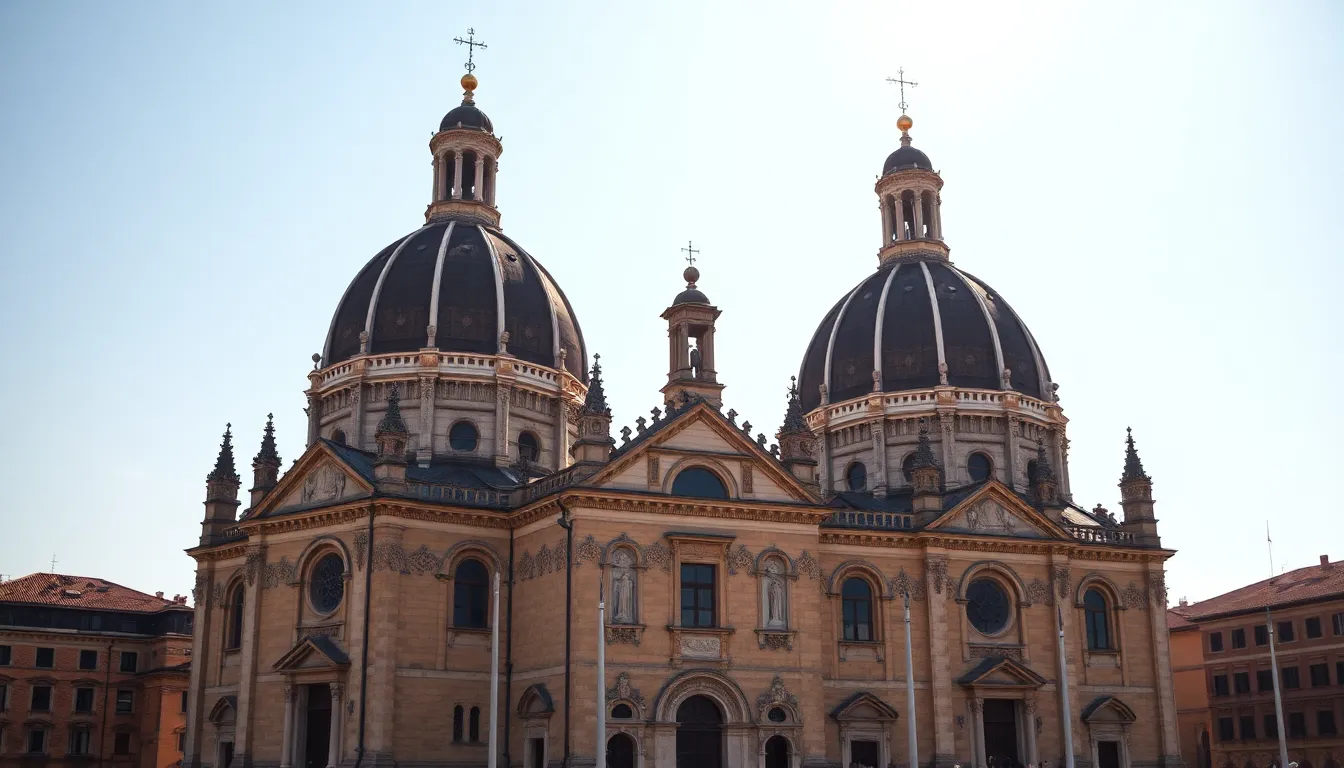
Most groups heading to Venice pass right through Padua without stopping. The train runs between the two cities in under half an hour, and the assumption is that there is nothing in Padua worth a delay. I want to argue the opposite. Padua holds one of the most visited pilgrimage churches in the world, the Basilica of Saint Anthony, and the devotion there is not a museum piece. It is alive, present, and intense, and watching a group encounter it is one of the reasons I keep building Padua into Italy itineraries.
Let me tell you who Anthony was, what the basilica holds, and why the living pilgrimage there does something for a group that few other sites can.
Who Saint Anthony Was
There is a common confusion worth clearing up right away. Saint Anthony of Padua was not from Padua, and he was not Italian. He was born in Lisbon, in Portugal, around 1195, which is why he is also called Anthony of Lisbon. He began as an Augustinian, but after encountering the relics of early Franciscan martyrs, he was so moved that he joined the new Franciscan order founded by Francis of Assisi, who was still alive at the time.
Anthony turned out to be one of the most gifted preachers the church had ever produced. He had a deep knowledge of Scripture and a voice that drew enormous crowds across Italy and France. People came from miles to hear him. He spent his final years in and around Padua, and he died there in 1231 at just thirty-six years old. He was canonized less than a year after his death, one of the fastest canonizations in church history, a sign of how powerfully he had touched ordinary people.
Today he is loved around the world as the patron saint of lost things, the saint people pray to when something is missing, and his appeal crosses cultures in a way few saints match.
The Basilica: Il Santo
The Basilica of Saint Anthony, known affectionately to locals simply as “il Santo,” the Saint, was begun shortly after his death and built over the following decades, with additions for centuries after. The result is one of the most distinctive churches in Italy, a striking mix of styles, with a row of domes that look almost Byzantine and tall thin spires that recall a different world entirely. It does not look like any other church in Italy, and that strangeness is part of its memory.
Inside, the scale and decoration are remarkable, but I always steer groups toward the specific places that matter most for a pilgrimage.
The Tomb and the Chapel of the Saint
The heart of the basilica is the Chapel of Saint Anthony, holding his tomb. This is where the living devotion is most visible. People file slowly past the tomb, and many reach out to lay a hand flat against the marble of the wall behind it, praying, leaving written petitions, asking for help with the lost and the broken parts of their lives. The wall is worn smooth by centuries of hands.
I tell groups to simply watch for a moment before they approach. The faith on display here is not historical or academic. It is happening right now, in front of you, in the faces of people who have come with real needs. For a faith community, witnessing that kind of present, unguarded devotion can be more moving than any work of art. Our overview of the spiritual sites of Italy for faith travelers returns again and again to this point, that living faith reaches people in a way that monuments alone do not.
The Relic Chapel
Behind the main altar is the Chapel of the Relics, where some of the saint’s relics are displayed. Among them, famously, is his preserved tongue. When Anthony’s tomb was opened decades after his death, tradition holds that his body had returned to dust but his tongue was found intact, which was taken as a sign honoring the great preacher whose words had moved so many. Whatever a visitor makes of that account, the relic chapel is a focal point of devotion, and it tells you something about how this community remembers Anthony specifically as a man of the spoken word.
The Donatello Bronzes
For groups with an eye for art, the high altar holds magnificent bronze sculptures by Donatello, one of the great masters of the early Renaissance, and outside in the square stands his bronze equestrian statue of the mercenary commander Gattamelata, a landmark in the history of sculpture. These are world-class works, but I treat them as a bonus rather than the point. The point is the tomb.
The Living Pilgrimage
What sets Padua apart from many heritage stops is that it is not primarily a heritage stop at all. It is a working pilgrimage site that draws millions of visitors a year, and it has done so without interruption for nearly eight centuries. The feast of Saint Anthony on June 13 brings huge crowds and processions through the city, and the basilica sees a steady stream of pilgrims all year round.
This continuity is what I want groups to feel. The faith that built this church in the thirteenth century is the same faith filling it today. Standing in that current of unbroken devotion connects the heritage your group has seen elsewhere, the ancient stones and the old frescoes, to a faith still being lived out with intensity right in front of them. Our piece on Assisi and Saint Francis covers the founder of the order Anthony joined, and the two sites speak to each other well in an itinerary.
Practical Notes for Groups
Padua sits about thirty to forty minutes from Venice by train, which makes it an easy and natural addition to any itinerary that includes the Venice area. The basilica is an active place of worship, so modest dress is required, with shoulders and knees covered, and quiet is expected near the tomb and in the chapels. The site is large, so a guide helps a group find the tomb chapel, the relic chapel, and the Donatello works without wandering.
If your itinerary allows, the Scrovegni Chapel is also in Padua, holding Giotto’s greatest fresco cycle, though it requires timed reservations booked well in advance. For a group that has already seen Giotto’s work in Assisi, adding his masterpiece in Padua completes the story.
Because group leaders travel free with fifteen or more participants, adding a Padua stop to a Venice itinerary is realistic for a congregation or study group. Our group heritage tours page explains how that works, and our Italy destination page shows how Padua fits a broader trip.
FAQ: Saint Anthony of Padua
Was Saint Anthony actually from Padua?
No. Anthony was born in Lisbon, Portugal, around 1195, which is why he is sometimes called Anthony of Lisbon. He joined the Franciscan order, became one of the most famous preachers of his time, and spent his final years in and around Padua, where he died in 1231. He is buried in the city, which is why he is most often called Saint Anthony of Padua.
What relics are kept in the basilica?
The Chapel of the Relics behind the main altar holds several relics of the saint, the most famous being his preserved tongue. Tradition holds that when his tomb was opened decades after his death, his tongue was found intact, which was seen as a fitting sign for a man whose preaching had moved so many. The relics remain a major focus of devotion for pilgrims.
Why do people pray to Saint Anthony for lost things?
Anthony is widely loved as the patron saint of lost things, and people pray to him when something is missing, whether an object, a person, or a sense of direction. The tradition is connected to stories from his own life, and it has made him one of the most popular and approachable saints across many cultures, far beyond Italy.
Is the Basilica of Saint Anthony good for a faith group?
Very much so. It is one of the most visited pilgrimage churches in the world, with living devotion that groups can witness directly at the tomb, where pilgrims lay their hands on the marble and leave written petitions. Combined with the relic chapel and the Donatello bronzes, it offers a rich stop, and watching present-day faith in action often moves groups deeply.
How do groups visit Padua from Venice?
Padua is about thirty to forty minutes from Venice by train, making it an easy addition to any Venice-area itinerary. The basilica is an active place of worship, so modest dress and quiet are required. Groups can also add the Scrovegni Chapel with Giotto’s frescoes nearby, though that requires timed reservations booked well in advance.
If your community is traveling near Venice and you want to give them the experience of a living pilgrimage at the tomb of Saint Anthony, I would love to help you build Padua into the trip. Contact us whenever you are ready to start planning.