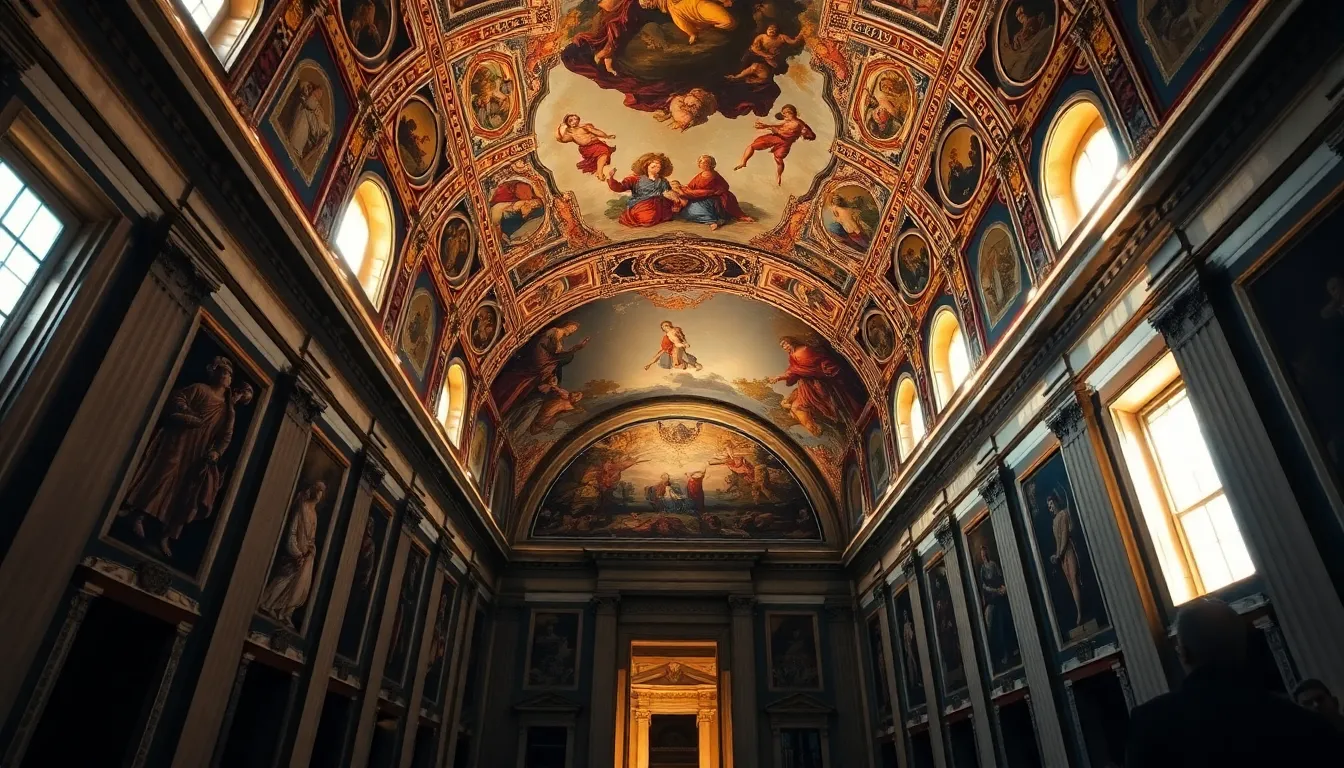
The first time I brought a group into the Sistine Chapel, I made the mistake most leaders make. I let them walk in cold. They craned their necks, took it in for a minute or two, and then drifted toward the exit because the guards were already saying “silenzio” and moving people along. We had stood under one of the greatest acts of religious imagination in human history, and my people barely connected with it.
I have not made that mistake since. The Sistine Chapel rewards a group that arrives prepared. If your community knows what they are looking at before they step through the door, those fifteen minutes become one of the high points of the entire trip. Let me give you what I wish someone had given me.
What the Sistine Chapel Actually Is
The chapel takes its name from Pope Sixtus IV, who had it built between 1473 and 1481. It is, first and foremost, a working room. This is where the College of Cardinals gathers in conclave to elect a new pope, and it is where popes have held important liturgies for more than five centuries. The art was never decoration for its own sake. It was commissioned to teach, to declare doctrine, and to frame the most solemn acts of the Roman church.
The dimensions are deliberate. The chapel measures roughly the same proportions that the Bible gives for Solomon’s Temple in Jerusalem. That choice was not an accident. The men who built it wanted a space that pointed back to the sacred architecture of the Hebrew Scriptures.
The walls came first. In the early 1480s, a team of painters including Botticelli, Perugino, and Ghirlandaio covered the side walls with two parallel cycles: the life of Moses on one side, the life of Christ on the other. The arrangement makes a theological argument that runs through the whole room. The law given through Moses and the grace revealed in Christ are placed face to face, scene answering scene, across the chapel.
Michelangelo’s Ceiling: The Story Most Visitors Miss
When people picture the Sistine Chapel, they picture the ceiling. Michelangelo painted it between 1508 and 1512, working under Pope Julius II, who pulled him away from a sculpture project he wanted far more. Michelangelo considered himself a sculptor, not a painter, and he resented the commission at the start. What he produced anyway changed Western art permanently.
The ceiling tells the opening chapters of Genesis across nine central panels: the separation of light from darkness, the creation of the sun and moon, the creation of Adam, the creation of Eve, the fall, and the flood. The most famous image in the world sits near the center, God reaching toward Adam, their fingers nearly touching. I always tell my groups to look at the gap between those two hands. Michelangelo left it open on purpose. The current of life has not yet passed across. You are watching the instant before.
Around the central narrative sit the prophets and the sibyls, the Hebrew figures who foretold the coming of the Messiah set alongside the pagan oracles who, in the church’s reading, also pointed toward Christ. For a Christian group, this is the engine of the whole ceiling. It places the prophets of Israel at the structural heart of the room, holding up the entire story of salvation.
The Last Judgment: A Different Michelangelo
More than twenty years after he finished the ceiling, Michelangelo came back. Between 1536 and 1541 he painted the enormous fresco that covers the entire altar wall, the Last Judgment. He was an older man by then, and the world had changed. Rome had been brutally sacked in 1527, the Reformation had split Western Christianity, and the mood of the church had darkened.
You can feel all of it in the wall. Christ stands at the center, his arm raised, and the whole composition spins around him like a wheel. The saved rise on one side, the damned are dragged down on the other. There is no gold, no comfort, none of the serene order of the ceiling above. This is judgment as a storm.
Look for the flayed skin held by Saint Bartholomew near the center. Michelangelo painted his own face onto that empty, hanging skin. After a lifetime of work for the church, he signed the most fearsome image he ever made with a self-portrait of a man stripped bare before God. I have watched that detail land on group members in total silence. It is one of the most honest things any artist has ever put on a wall.
How to Read the Chapel With a Faith-Heritage Group
The Sistine Chapel works best when you prepare your people on the bus, in the hotel lobby, or at dinner the night before. The room itself does not allow guiding. Talking is discouraged, photography is forbidden, and the crowd is constant. So the teaching has to happen beforehand.
I give my groups three things to find once they are inside. First, the creation of Adam and that unclosed gap between the hands. Second, the prophets and sibyls around the edge, the Hebrew voices that carry the ceiling. Third, Bartholomew’s flayed skin on the altar wall and the self-portrait hidden in it. When people walk in with those three anchors, they stop drifting. They search the ceiling with purpose, and the fifteen minutes stretch into something they remember for years.
For Christian groups, I frame the room as a single argument: law and grace on the walls, creation and prophecy on the ceiling, judgment on the altar wall, the whole arc of Scripture in one chamber. For groups with a Jewish dimension, the Moses cycle and the prophets reward real attention, and the temple proportions of the room itself open a conversation worth having. This is one of several Vatican and Roman sites that reward this kind of slow, prepared looking, the same approach I recommend for the Pantheon’s journey from Roman temple to Christian church and for reading the Colosseum through the lens of the martyr tradition.
Practical Access for Groups
The Sistine Chapel sits at the end of the Vatican Museums, and you cannot reach it without passing through them. That matters for planning, because the museums are vast and the walk to the chapel takes a group through several galleries before they arrive. Budget at least three hours for the full route, more if your group moves slowly.
Lines at the Vatican are notorious. Standard entry can mean two or more hours of queuing in the sun. For a group, advance timed-entry tickets are not optional, they are the difference between a good morning and a wasted one. Early-entry and after-hours options exist that let smaller groups into the chapel before the general public arrives, and for a community that wants to actually experience the room rather than fight a crowd, those slots are worth the premium.
Dress code is enforced. Shoulders and knees must be covered, for everyone, no exceptions at the door. I tell every group this twice, because a member turned away at the entrance over a sleeveless top is a problem you cannot fix on the spot.
A trained guide can walk your group through the museums and prepare them right up to the chapel doors, then hand the teaching over to you for the silent room inside. We build these visits to give your people both the context and the quiet. You can see how that fits into a wider Italian itinerary on our Italy heritage destination page, and how the group leader experience works, including that group leaders travel free with fifteen or more participants.
FAQ: Visiting the Sistine Chapel
Can you talk or take photos inside the Sistine Chapel?
No. The chapel is a consecrated space and a working part of Vatican liturgy, so silence is requested and photography is forbidden. Guards enforce both. This is why I prepare groups thoroughly before entering. The teaching happens outside, and inside your people look and reflect rather than listen.
How long does a group spend in the Sistine Chapel?
The chapel visit itself usually runs fifteen to twenty minutes, because the crowd keeps moving and the room is small. The full route through the Vatican Museums to reach it takes around three hours. A prepared group uses those fifteen minutes far better than an unprepared one uses an hour.
Do I need to book Vatican tickets in advance for a group?
Yes, always. Walk-up lines at the Vatican can exceed two hours. Groups need timed-entry tickets booked well ahead, and early-access or after-hours slots are worth considering for communities that want a quieter experience of the chapel before the general crowd arrives.
What is the dress code for the Sistine Chapel?
Shoulders and knees must be covered for all visitors, men and women alike. The code is enforced at the entrance, and members in sleeveless tops or shorts can be turned away. I remind every group to carry a scarf or wrap if there is any doubt.
What should a Christian group look for in the Sistine Chapel?
I give groups three anchors: the creation of Adam with the unclosed gap between the hands, the Hebrew prophets and sibyls that frame the ceiling, and Saint Bartholomew’s flayed skin on the Last Judgment wall, which carries Michelangelo’s own self-portrait. The whole room reads as one argument running from creation through prophecy to judgment.
If your community is ready to experience the Sistine Chapel the way it deserves to be experienced, prepared, unhurried, and understood, we would be glad to help you plan it. Contact us and tell us what matters most to your group.