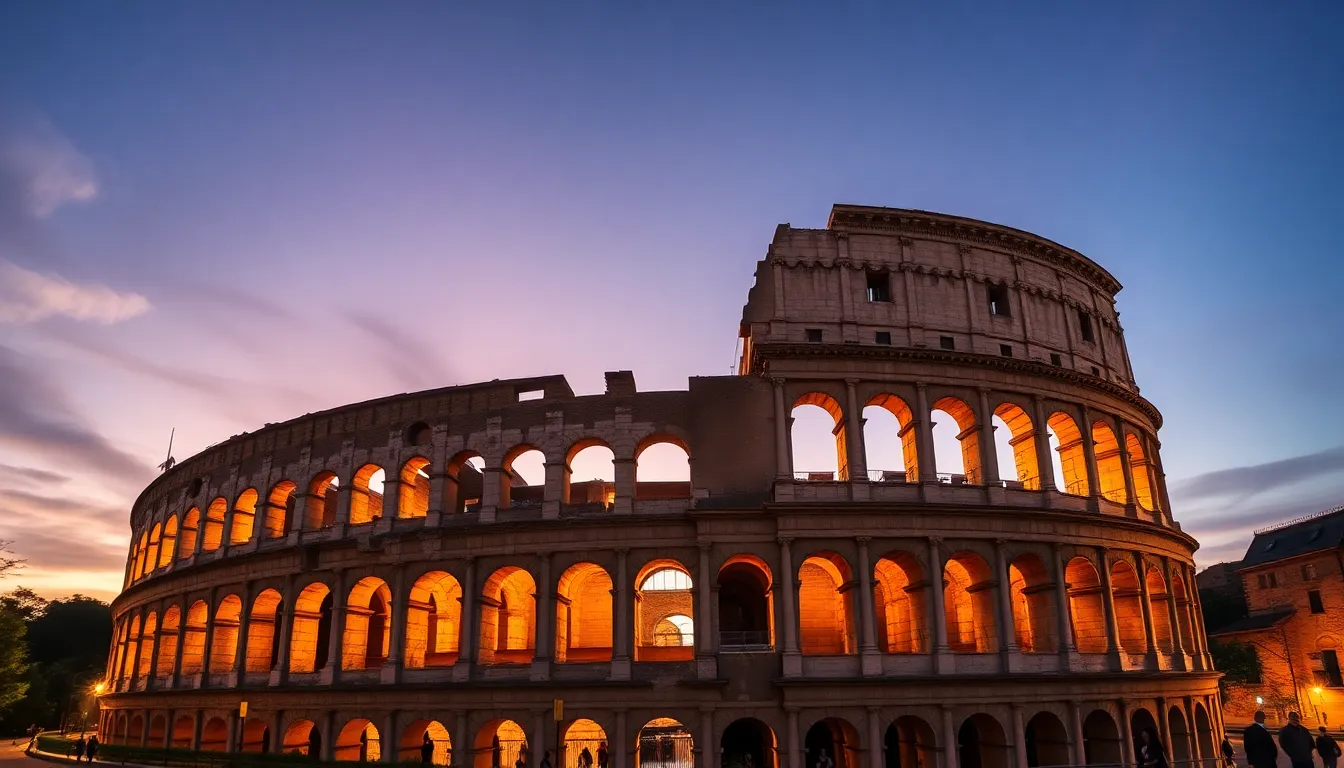
Most groups arrive at the Colosseum thinking they already know it. They have seen it in films, on postcards, on the back of the Italian euro coin. They expect gladiators and lions, and they expect to take a photo and move on. Then I ask them to stand still for a moment and consider what this building meant to the early church, and the whole visit changes shape.
For a faith-heritage group, the Colosseum is not a ruin to photograph. It is a place where memory and meaning press against each other in a way few sites can match. Let me walk you through how to read it.
What the Colosseum Was Built to Do
The emperor Vespasian began construction around 70 to 72 AD, and his son Titus opened it in 80 AD with a hundred days of games. Its proper name is the Flavian Amphitheatre, after the dynasty that built it. The name Colosseum came later, from a colossal bronze statue of Nero that once stood nearby.
It held somewhere between fifty and eighty thousand spectators, seated by rank, with the emperor and senators closest to the action and the poor highest up. The engineering still astonishes people. A network of vaults and corridors moved enormous crowds in and out within minutes. Beneath the arena floor ran the hypogeum, a two-level underground complex of cells, ramps, and lifts that raised animals and fighters into the arena as if from nowhere.
What happened on that sand was killing as entertainment. Gladiatorial combat, staged animal hunts, public executions. This was Roman power made visible, the state demonstrating its absolute control over life and death before tens of thousands of cheering citizens. To understand the martyr tradition, you have to understand that this was the machinery it ran into.
The Martyr Tradition
Here is where I slow my groups down, because the history asks for honesty. The popular image of Christians being fed to lions in the Colosseum is older than the evidence behind it. We do not have firm documentary proof that large numbers of Christians were martyred inside this specific building. Roman executions of Christians happened across the empire, in many arenas and circuses, and the Circus Maximus and the area of the Vatican Hill are more securely tied to the early Roman persecutions than the Colosseum is.
I tell groups this plainly, and it never diminishes the visit. It deepens it. Because what is true is this: the Colosseum became, over the centuries, the great symbol of the martyr church. By the medieval period, Christians understood it as sacred ground sanctified by the blood of witnesses. The word martyr itself simply means witness, someone whose testimony to their faith was sealed with their life.
The early church did face real and brutal persecution under emperors such as Nero, Decius, and Diocletian. Men and women were executed in arenas exactly like this one for refusing to offer sacrifice to the Roman gods or to the emperor. The Colosseum stands as the most complete surviving example of the kind of place where that confrontation, the witness of faith against the power of the state, played out. That is why it matters to a faith group, whether or not the lions ever ran here.
The Cross at the Center of the Arena
If you walk to the edge of the arena today, you will see a simple cross standing on one side. It marks the church’s claim on this place as holy ground, consecrated to the memory of the martyrs.
That consecration has a long history. In the 18th century, Pope Benedict XIV formally dedicated the Colosseum to the Passion of Christ and the suffering of the martyrs, partly to protect the crumbling structure from being quarried for its stone, which had been happening for centuries. He set up Stations of the Cross around the arena and declared it a sacred site.
That decision still shapes how the building is used today, which brings us to the part of its story that most modern visitors never see.
The Good Friday Way of the Cross
Every year on Good Friday evening, the pope leads the Way of the Cross, the Via Crucis, at the Colosseum. The fourteen Stations of the Cross are prayed and meditated upon as a torchlit procession moves through the ancient arena, with the floodlit ruin rising above thousands of pilgrims and a global audience watching the broadcast.
There is a deep logic to holding it here. The Stations of the Cross trace the suffering and death of Christ. To pray them inside a building that the church remembers as a place of suffering and witness joins the Passion of Christ to the passion of those who followed him. For a Christian group, understanding that this annual liturgy happens in this exact arena transforms the Colosseum from a tourist site into a place of living devotion.
I make a point of telling Christian groups about the Good Friday procession even when we visit in another season, because it reframes everything they are standing in front of. The cross by the arena is not a museum label. It is the marker of a service that the head of the Roman church still leads here every year.
How Groups Visit the Colosseum
Practically, the Colosseum is one of the busiest monuments on earth, with millions of visitors a year, so a group needs structure to have a good experience. Standard tickets are timed-entry and sell out, especially in spring and summer, so advance booking for a group is essential, not optional.
I recommend a combined ticket that includes the Roman Forum and Palatine Hill alongside the arena, because the three sit together and tell a connected story. For groups that want the full experience, special-access tickets open the arena floor itself, where you stand at the level of the combatants, and the underground hypogeum, where you walk the corridors beneath the sand. Those areas require a guide and a separate booking, and for a faith-heritage group they are well worth it, because standing on the arena floor by the cross is where the meaning lands hardest.
The site involves a fair amount of walking on uneven ancient stone, with stairs and few places to sit, so I always flag accessibility for older members and plan the pace accordingly. Roman summer heat is real, and the arena offers little shade, so morning or late-afternoon slots are kinder to a mixed-age group.
A guide who can hold the history honestly, the engineering, the brutality, and the martyr tradition without overstating it, makes the difference between a photo stop and a genuine encounter. The Colosseum pairs naturally with other Roman sites that reward this kind of reading, including the Pantheon’s transformation from pagan temple to Christian church and the Sistine Chapel’s vision of judgment and salvation. You can see how we weave these into a wider route on our Italy heritage destination page.
FAQ: Visiting the Colosseum
Were Christians really martyred in the Colosseum?
The honest answer is that we lack firm documentary proof of large-scale Christian martyrdom inside this specific building. Roman persecution of Christians was real and brutal, but it happened across many arenas and circuses. The Colosseum became the great symbol of the martyr church over the centuries, and the medieval and modern church has honored it as sacred ground. I share this with groups directly, and it deepens the visit rather than diminishing it.
Why is there a cross in the Colosseum?
The cross marks the church’s consecration of the arena to the Passion of Christ and the memory of the martyrs. Pope Benedict XIV formally dedicated the site in the 18th century, set up Stations of the Cross, and declared it holy ground, which also helped protect the ruin from being quarried for stone.
Does the pope still hold services at the Colosseum?
Yes. Every Good Friday evening, the pope leads the Way of the Cross, a torchlit procession through the fourteen Stations of the Cross, in the floodlit arena. It is one of the most significant annual liturgies in Rome and connects the suffering of Christ to the witness of the martyrs.
Can a group go onto the Colosseum arena floor?
Yes, with a special-access ticket and a guide. Standard tickets give you the upper tiers and the view across the arena. Arena-floor and underground hypogeum access require a separate booking, and for faith-heritage groups they are worth it, because standing at the level of the arena by the cross is where the history lands most powerfully.
How far in advance should a group book the Colosseum?
Well ahead, especially for spring and summer travel, when timed-entry slots sell out. Special-access and underground tickets are limited and go fastest. For a group of fifteen or more, early booking also secures the combined ticket with the Roman Forum and Palatine Hill and the morning slots that work best in the heat.
If your group is ready to stand in the Colosseum and understand what it has meant to the church across nearly two thousand years, we would be glad to help you plan that visit. Contact us and tell us what your community is hoping to encounter.