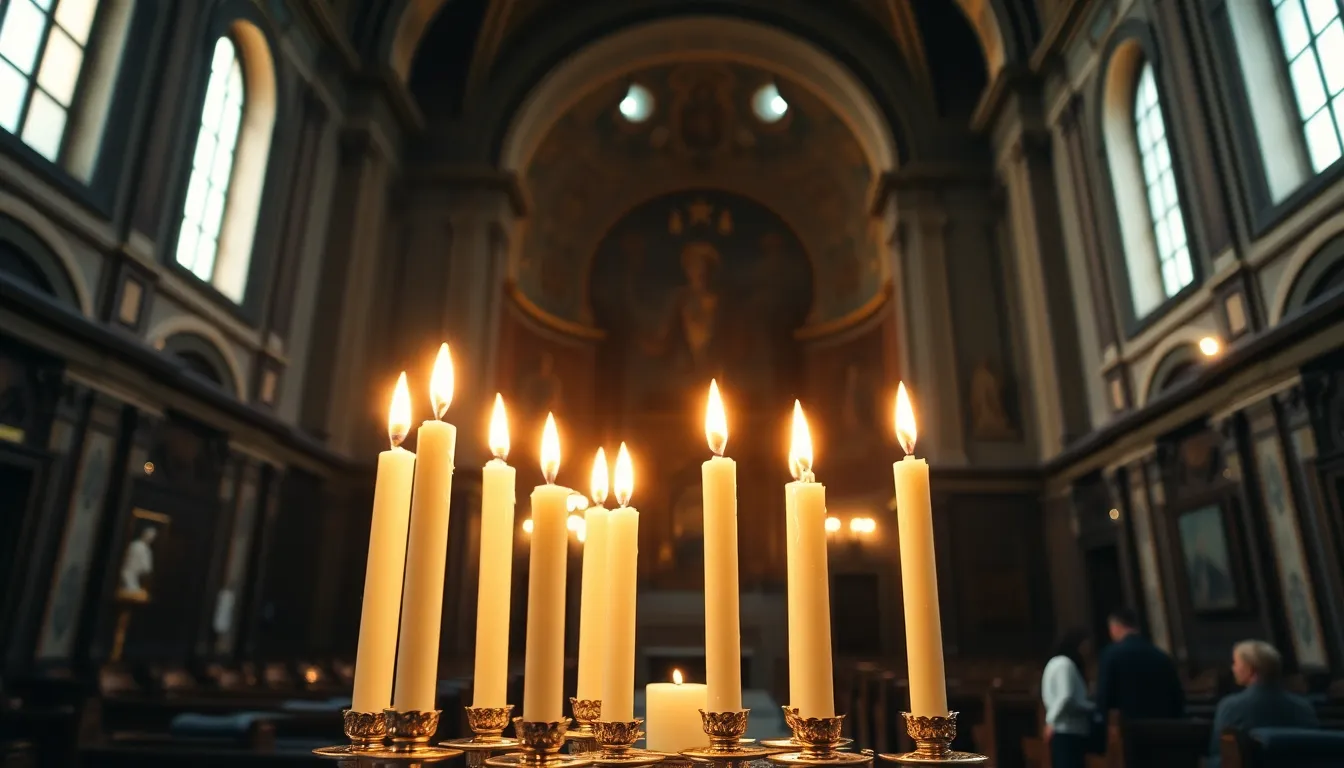
I have watched a lot of groups travel through Italy, and I can tell you the moment that changes a trip from a tour into a journey. It is Friday night. The group has spent the week walking through two thousand years of Jewish history, through ghetto walls and synagogue doors and the quiet of the catacombs. And then they sit down to Shabbat, in Italy, surrounded by people they have come to know, and something settles. The history they have been studying all week is suddenly something they are living.
Shabbat is the spine of a meaningful Jewish heritage trip. Get the rest of the itinerary right and a poorly handled Shabbat will still leave a gap. Get Shabbat right and even an imperfect week comes together around it. So when a rabbi asks me how to plan an Italy trip, I often start at the end of the first week, with Friday night, and build outward from there.
Why Shabbat Abroad Hits Differently
There is a particular power to keeping Shabbat in a place where Jews have kept it for centuries, sometimes under terrible pressure. When your group prays Kabbalat Shabbat in a synagogue that was built inside a locked ghetto, or in a sanctuary that survived a war that tried to erase the community around it, the words carry a weight they do not always carry at home.
This is the heritage dimension of Shabbat that I want every group leader to plan for deliberately. You are not just finding a place to daven. You are placing your community inside a continuous chain. The Jews of Rome have welcomed Shabbat in that city for longer than almost any community on earth. When your group joins that, even for one Friday night, they become part of something far larger than their trip.
That is why I treat the Shabbat location not as a logistics question but as a centerpiece decision. Where your group spends Shabbat shapes the emotional core of the whole journey.
Shabbat in Rome: Joining the Oldest Community
Rome is, for most groups, the natural home of Shabbat on an Italy itinerary. The Jewish community here is the oldest continuously inhabited in Europe, and it is alive. The Great Synagogue of Rome, with its square dome rising over the Tiber, holds services, and the Ghetto around it has the kosher infrastructure to support the meals that make Shabbat what it is.
For a group, spending Shabbat in Rome means several things come together at once. You can pray in or near the historic heart of Roman Jewry. You can walk to your Shabbat meals rather than travel to them, which matters enormously for an observant group. And you can spend Shabbat afternoon in the Ghetto itself, in the streets where Jewish life persisted through papal decree and emancipation and the twentieth century, without breaking the rest of the day.
I often anchor the first Shabbat of an Italy trip in Rome for exactly these reasons. It gives the group a strong, well-supported entry into the rhythm of Shabbat abroad before the itinerary moves on to cities where the community is smaller.
Shabbat in Venice: Small Community, Deep Resonance
Venice asks for more careful planning, and rewards it. The Jewish community of Venice is small, and the kosher and Shabbat infrastructure is far more limited than in Rome. But the resonance of Shabbat in the Venetian Ghetto, the original Ghetto, the place that gave the word to the world, is hard to match.
The historic Ghetto holds five synagogues built by five communities, the Scola Tedesca, Canton, Italiana, Levantina, and Spagnola. To welcome Shabbat in that small campo, surrounded by the buildings where Venetian Jews lived under curfew and locked gates for centuries, is a profound experience. The community there still maintains Jewish life, and for groups that spend Shabbat in Venice, that continuity is the whole point.
Because the infrastructure is thinner, a Venice Shabbat needs to be arranged in advance with real specificity. Meals confirmed, service times verified, the group’s needs coordinated with a small community that cannot absorb surprises. When that planning is done, a Shabbat in the Venetian Ghetto becomes one of the moments people talk about for years. When it is not done, it falls flat. The difference is entirely in the preparation.
Shabbat in Florence and Beyond
Florence offers another strong option. Its Great Synagogue, with the green copper dome that survived being used as a Nazi garage, is one of the most beautiful Jewish buildings in Europe, and the community holds services there. For a group, a Shabbat in Florence pairs the spiritual experience with one of the architectural high points of the whole trip.
Smaller communities across Italy can also host meaningful Shabbat experiences for groups, depending on the route. The principle is consistent everywhere outside Rome: the smaller the community, the earlier and more carefully the Shabbat must be arranged. We handle that coordination so the group leader does not have to negotiate it from across an ocean.
Building Shabbat Into the Itinerary
The practical art of a Shabbat-observant Italy trip is in the structure. A few things I hold to when I build these itineraries:
The Shabbat city is chosen first, and the rest of the week is built around it, not the other way around. For an observant group, where you are when the sun sets on Friday determines everything else: walking distance to synagogue, walking distance to meals, no travel until Shabbat ends. That constraint is a gift in disguise, because it forces a calm, rooted day into the middle of a busy travel week.
Meals are arranged in advance for every Shabbat, with the supervision standard confirmed for the group’s level of observance. Our companion guide to keeping kosher on an Italy heritage tour covers the kashrut side in detail, and the two questions, kosher and Shabbat, are really planned together.
Shabbat afternoon is treated as part of the heritage experience, not dead time. A walk through the Ghetto, a quiet discussion, time to process the week. Some of the deepest conversations a traveling congregation has happen on Shabbat afternoon, when the cameras are away and the pace finally slows. For the wider story your Shabbat sits inside, our overview of Jewish heritage in Italy gives the group the context that makes those conversations richer.
With fifteen or more participants, the group leader travels at no cost, which for a rabbi planning a Shabbat-anchored trip removes a real barrier to making it happen.
FAQ: Observing Shabbat in Italy
Where is the best place to spend Shabbat on an Italy heritage tour?
Rome is the natural anchor for most groups. The Jewish community is the oldest continuously inhabited in Europe and remains alive, with the Great Synagogue holding services and the Ghetto offering kosher meals within walking distance. Venice and Florence also host meaningful Shabbat experiences, with Venice carrying the deep resonance of the original Ghetto and Florence pairing it with one of Europe’s most beautiful synagogues. Smaller communities require earlier, more careful arrangement.
Can an observant group keep Shabbat fully while traveling in Italy?
Yes, with the itinerary built around it. The Shabbat city is chosen first so that synagogue and meals are within walking distance and no travel falls on Shabbat. Meals are arranged in advance to the group’s supervision standard. Rome supports this most easily; Venice and Florence work well with earlier and more specific coordination, which Heritage Tours handles.
What makes Shabbat in the Venetian Ghetto special?
The Venetian Ghetto is the original ghetto, the place that gave the word to the world, and it holds five historic synagogues built by five distinct communities. Welcoming Shabbat in that small campo, surrounded by the buildings where Venetian Jews lived under curfew for centuries, places your group inside a continuous chain. Because the community is small, a Venice Shabbat must be arranged in advance with real specificity.
How does the Shabbat plan connect to keeping kosher?
They are planned together. Every Shabbat meal is arranged in advance with the supervision standard confirmed for your group’s level of observance. Rome offers the richest kosher infrastructure, while Venice and Florence require more careful coordination. The kosher plan and the Shabbat plan are two halves of the same conversation.
How far ahead should we plan a Shabbat-anchored Italy trip?
Planning roughly twelve months ahead is recommended, and earlier is better when Shabbat falls in a smaller community like Venice. Small communities cannot absorb last-minute requests, so meals, service times, and group needs are confirmed well in advance. The earlier the Shabbat city is locked, the more smoothly the rest of the week falls into place.
If you want Shabbat to be the heart of your community’s Italy journey rather than a logistical worry, let me help you build the week around it. Learn more about our Italy heritage tours, see how the group leader experience works, and reach out whenever you are ready to begin.